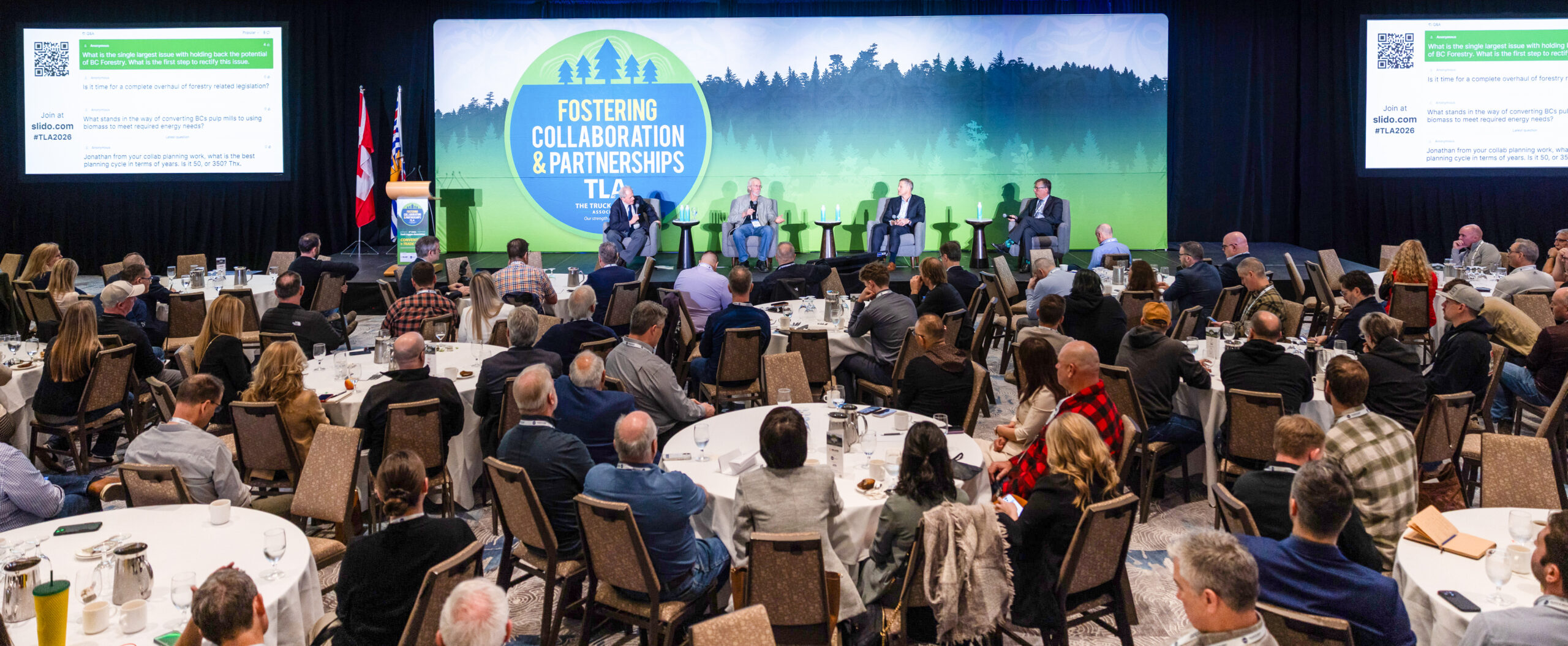
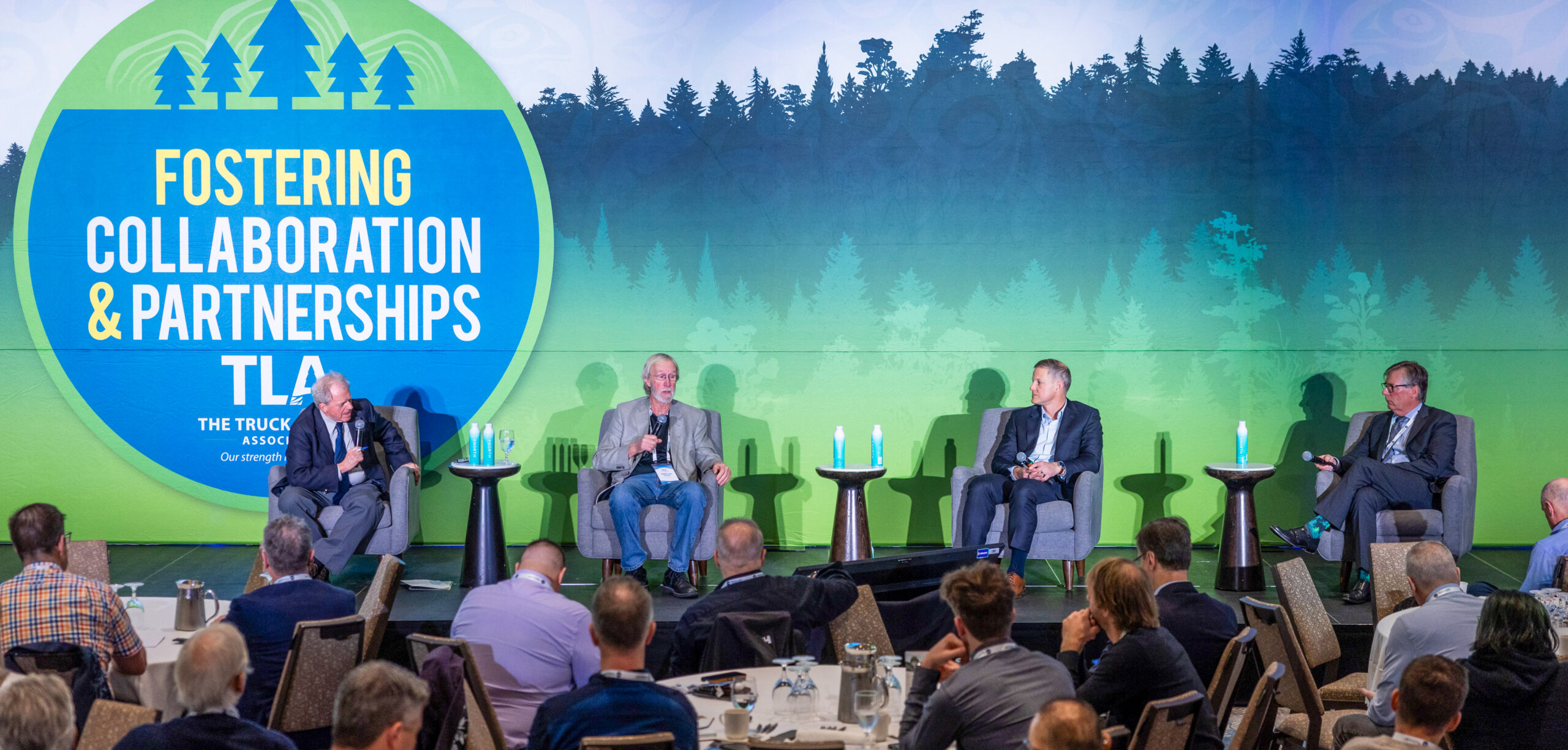
 The Closing the Gap on Fibre Supply panel at the Truck Loggers Association Convention examined the BC government’s Path to 45 initiative and what progress is being made toward restoring harvest levels to 45 million cubic metres from public lands. Moderated by Vaughn Palmer, the session featured Jim Girvan, Associate at IFS; Paul Sadler, GM & CEO of Harmac Pacific; and Jonathan Armstrong, Vice President of Forestry and Fibre Supply at Western Forest Products. The discussion focused on fibre availability, the economics of harvesting, and what the Path to 45 target means for contractors.
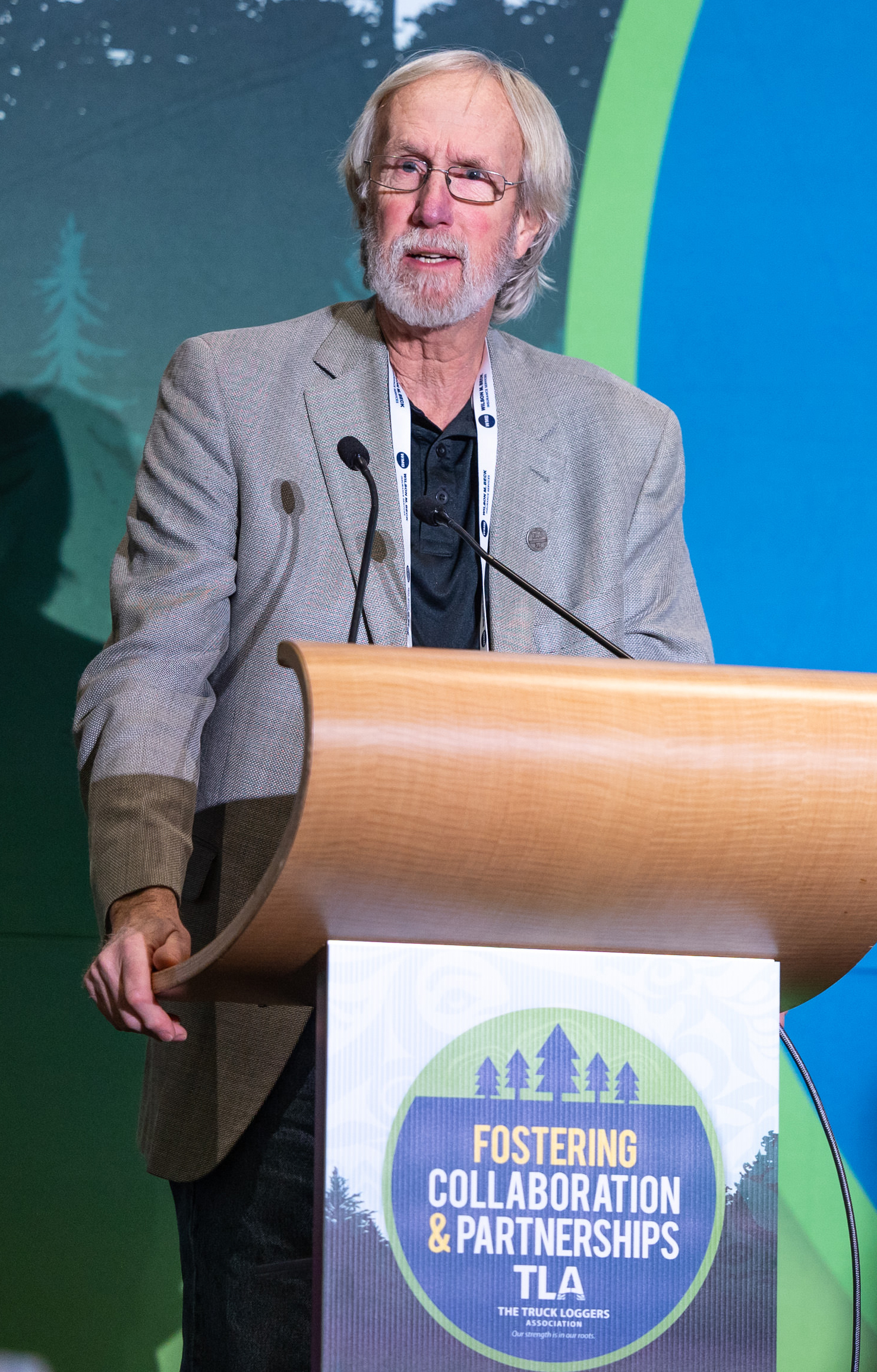 Jim Girvan opened by noting that BC’s harvest levels have declined sharply in recent years and that the government’s Path to 45 objective reflects an acknowledgment that higher harvest levels are needed. He said the Ministry of Finance’s current projection is about 28 million cubic metres for the fiscal year, “and that may be optimistic,” well below the stated goal of 45 million cubic metres. While he reviewed the factors behind the decline, Girvan emphasized that the central issue is how government policy translates into actual permitted and harvestable volumes.
Girvan said the Path to 45 target should be understood as a goal rather than a guaranteed outcome, and that achieving it will depend on how policy is implemented on the ground. He emphasized that the real challenge is not simply increasing volume, but ensuring that fibre is economically viable to harvest. Asked what actions would most improve competitiveness, he said directly: “There’s not three key immediate actions, there’s one. Getting economic sustainable cut to 45 million metres is job number one, and don’t let anything distract you from that.” He warned that many initiatives may sound constructive, but that fibre availability must remain the central focus. Girvan also acknowledged that lower harvest levels carry significant fiscal implications for government, a point that echoed earlier remarks by Don Wright on the relationship between fibre supply, public revenues, and broader economic activity.
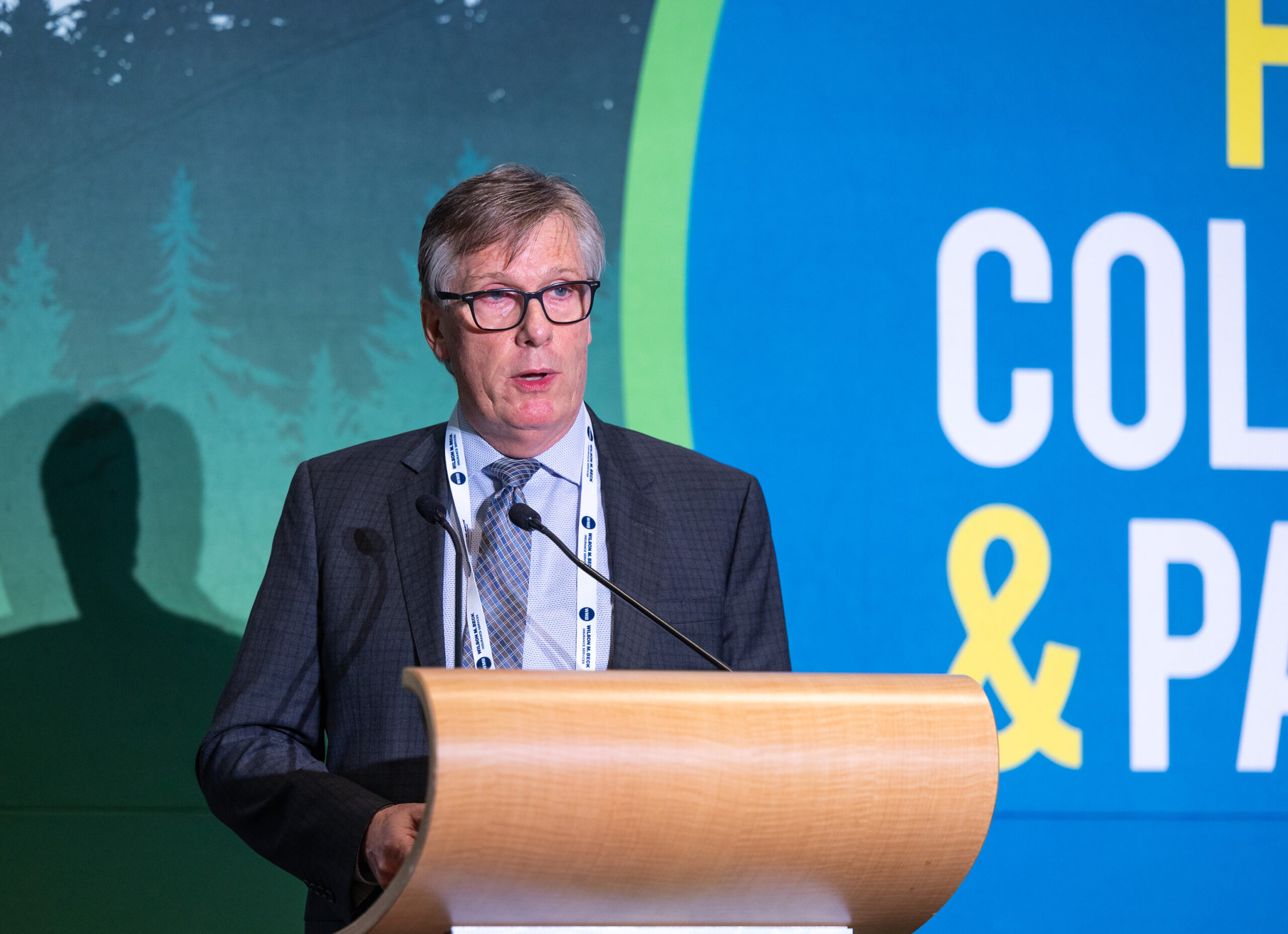 Paul Sadler followed with a manufacturing and employer perspective, focusing on what declining and uncertain fibre supply means for mills and contractors. He said that while Path to 45 sends an encouraging signal, it must translate into fibre that can actually be delivered to mills at a cost structure that allows operations to remain competitive. For contractors, he said, volatility in timber supply directly affects harvesting plans, equipment utilization, and workforce retention, all of which depend on predictable volumes. Sadler emphasized the difference between stated harvest targets and what is achievable on the ground. Access, permitting timelines, terrain, and operating costs all shape whether fibre is truly available. In his view, Path to 45 should be judged not by headline numbers but by whether timber can be harvested safely, efficiently, and profitably. Without addressing those operational realities, he said, Path to 45 may not translate into workable outcomes for contractors and licensees.
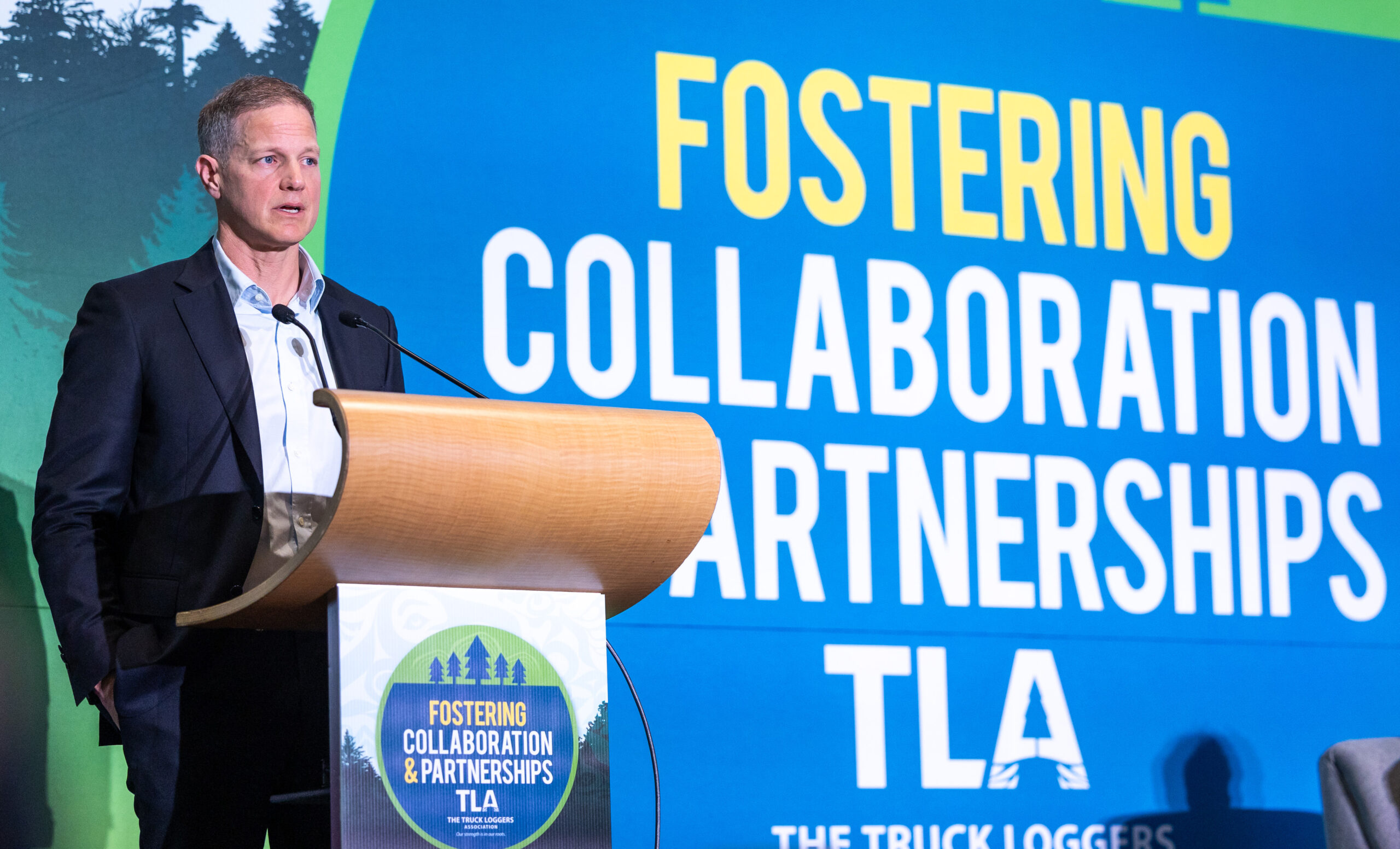 Jonathan Armstrong then provided a coastal licensee perspective. He said the decline in available fibre has been compounded by policy and regulatory layering that has made it increasingly difficult to plan and permit operations. Armstrong described how these constraints affect long-term planning, capital investment, and relationships with contractors, who require continuity of work to sustain their businesses. Uncertainty around fibre supply, he said, makes it difficult to commit to investments or maintain stable operating schedules. Armstrong also addressed the distinction between theoretical fibre availability and what can actually be brought to market. He said many remaining harvest areas are more remote, lower productivity, or more costly to access, and that the economic margin for harvesting such timber is often thin. From a coastal perspective, he noted that rising costs associated with road building, environmental compliance, and operational complexity must be weighed against delivered log values. In that context, Armstrong said the Path to 45 target must be paired with reforms that improve permitting efficiency and reduce unnecessary complexity if it is to be meaningful for operating companies and contractors.
In the discussion period, Palmer focused questions on what Path to 45 means for contractors, who bear much of the operational risk in the current environment. The panelists agreed that uncertainty around fibre supply directly affects contractors’ ability to plan equipment purchases, maintain skilled crews, and operate efficiently. Responding to questions from the floor, the panelists said that many of the recent declines in harvest volumes reflect policy and regulatory constraints rather than limits in the resource itself. Girvan argued that permitting complexity has become a primary bottleneck. Armstrong added that clearer regulatory pathways and better coordination across agencies could allow responsible harvesting to proceed more efficiently without undermining environmental standards. While Path to 45 establishes a clear numerical target, the panelists emphasized that achieving it depends on how policy is implemented on the ground. For contractors and operating companies, the central issue is not simply whether higher harvest levels are promised, but whether those volumes can be permitted, accessed, and delivered at costs that allow sustainable operations.
Drafted with the assistance of digital tools to streamline the process.