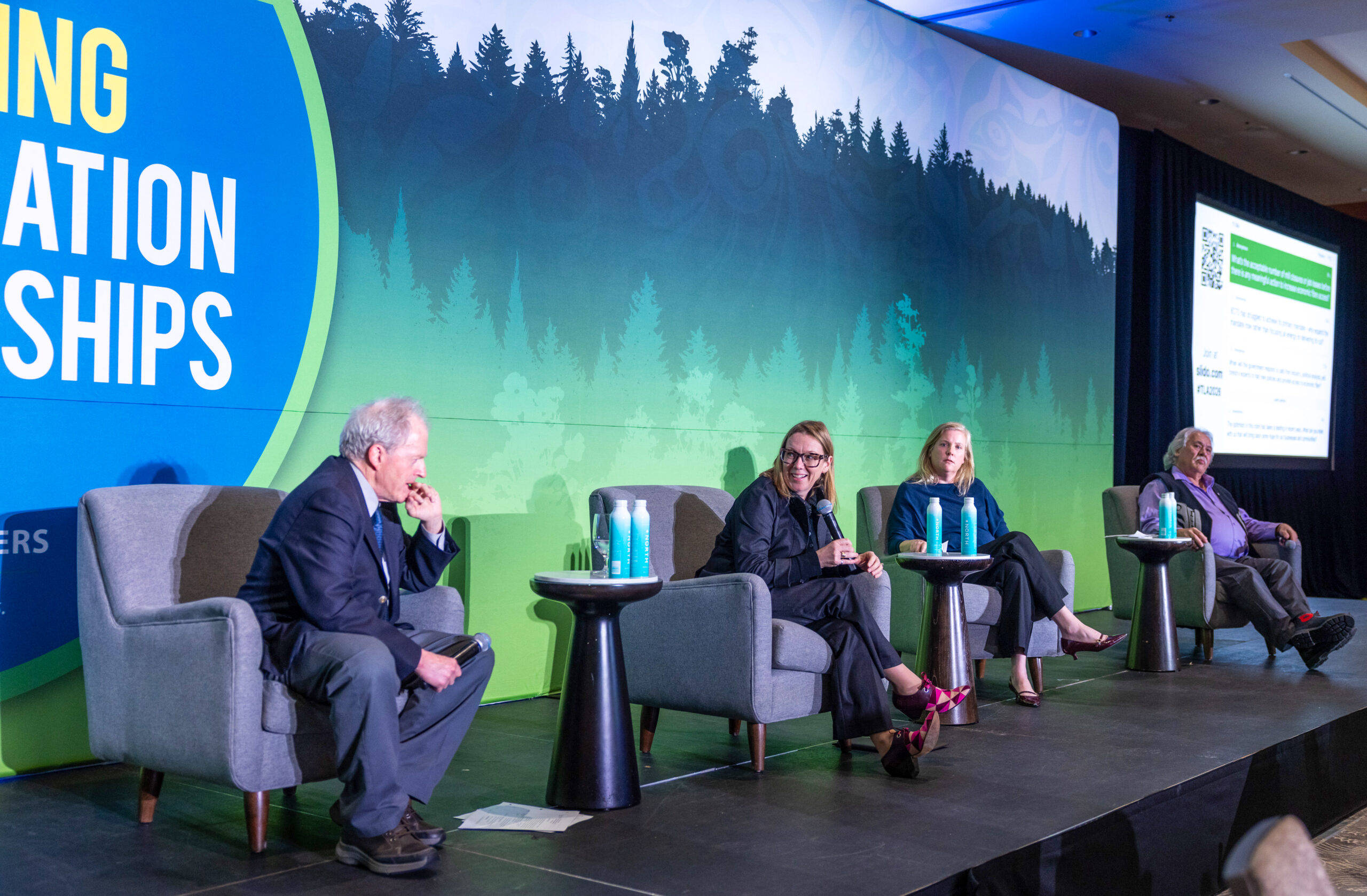
 The Government Initiatives Update panel at the Truck Loggers Association Convention provided an overview of current policy work within the Ministry of Forests, progress on BC Timber Sales reforms, and a longer-term assessment of how British Columbia’s forest management system may need to evolve. Moderated by Vaughn Palmer, the session featured Makenzie Leine, Deputy Minister of Forests; Melissa Sanderson, Assistant Deputy Minister; and Garry Merkel, Co-Chair of the Provincial Forestry Advisory Council. Together, they addressed short-term responses to market and trade pressures, the Path to 45 initiative, changes underway at BC Timber Sales, and the deeper structural challenges facing the sector.
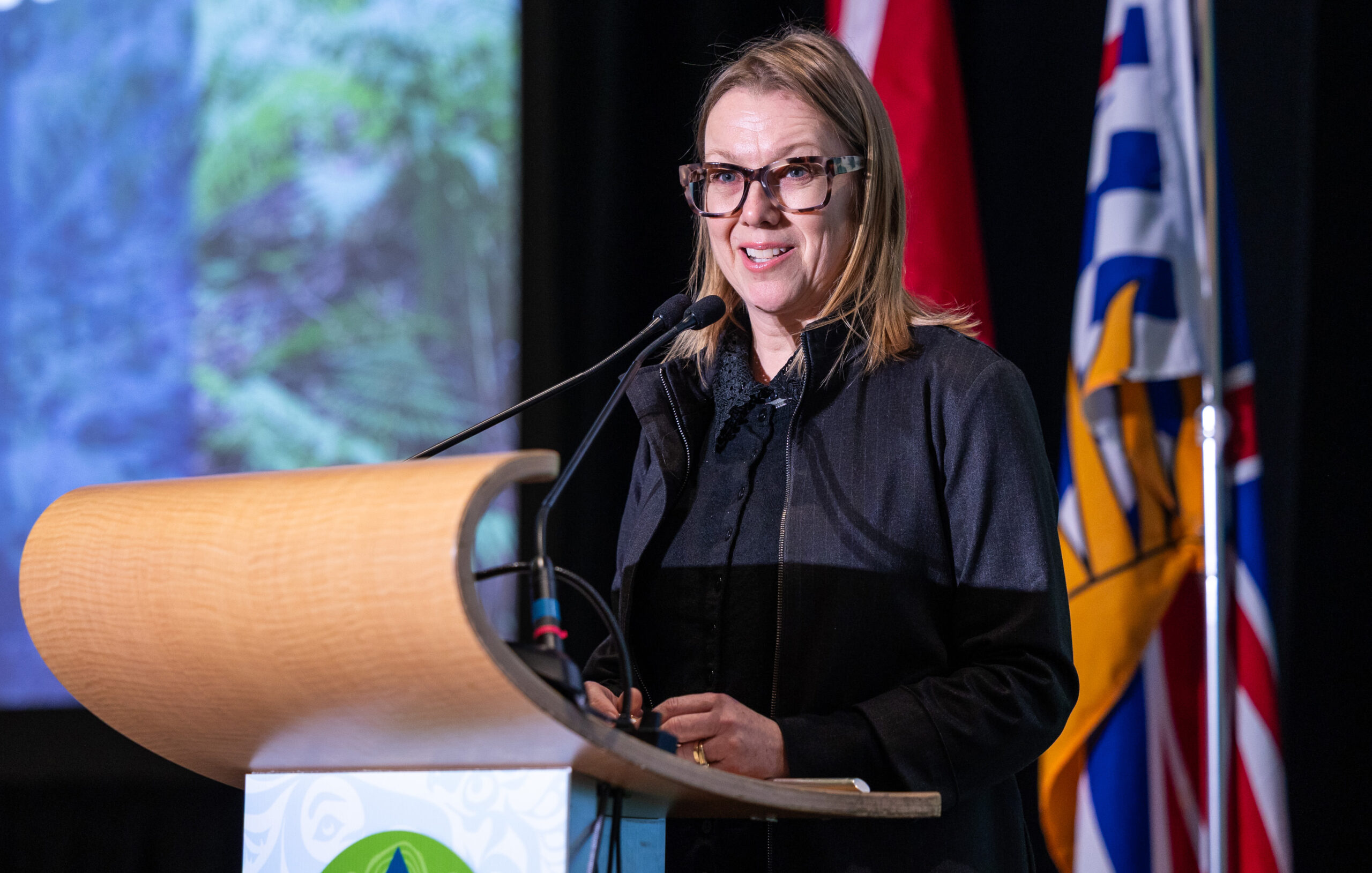 Makenzie Leine opened by thanking TLA members for their continued engagement with the ministry and encouraging delegates to speak directly with ministry staff throughout the conference. Leine said the ministry is working within a policy framework developed in a very different economic and environmental context. Over time, that framework has been adjusted to respond to new values and expectations, but she said it remains fundamentally based on trade-offs between economic and environmental objectives. In her view, the province has reached a point where many parties feel there is “nothing left to trade,” contributing to tension across the land base and increasingly complex policy layering. She argued that the system is now under strain, where incremental adjustments may address one issue but often create new challenges elsewhere.
Leine described the current moment as an inflection point requiring systemic change rather than continued policy “tweaking.” She said the ministry must address immediate pressures while also working toward a different long-term model that avoids recurring cycles of instability. She outlined how the ministry has organized its work into three broad categories: urgent actions, transformational initiatives, and longer-term generational change. Within that framework, she highlighted three priorities—tariff response, unlocking timber supply through the Path to 45 initiative, and broader sector transformation.
On tariffs, Leine characterized the ministry’s work as focused on short-term stabilization, including support for liquidity, investment, and critical infrastructure during periods of market disruption. She said this involves coordination with other ministries and the federal government, as well as efforts to reduce administrative burden where possible. She emphasized that contractors are part of the province’s critical infrastructure, including for wildfire response, and that maintaining sector capacity is essential for recovery.
Turning to timber supply, Leine said the Path to 45 initiative has required moving beyond broad policy lists to detailed, management-unit-level analysis. She said the ministry initially identified nearly 100 possible policy changes, but quickly recognized that progress depends on understanding fibre flow on the ground. This has involved engagement with licensees and sector participants to identify specific barriers to fibre movement. She stressed that there is “no low-hanging fruit,” noting that if easy solutions existed they would already have been implemented. Instead, the work requires targeted action plans to address localized constraints, with collaboration across government and industry. She said this approach reflects a move toward identifying and addressing specific operational barriers at the management-unit level.
Leine added that the ministry is strengthening its economic analysis of policy decisions, including revenue and socioeconomic impacts on communities. She highlighted the designation of Path to 45 as a major project within government to elevate forestry as a cross-ministry priority. While acknowledging the need for short-term stabilization, she said longer-term change must respect First Nations rights and title, avoid destabilizing the sector, and focus on reducing policy layering rather than adding complexity. In her view, durable reform requires clearer alignment of economic and environmental objectives at the regional level and a transition process that provides greater certainty for operators and communities.
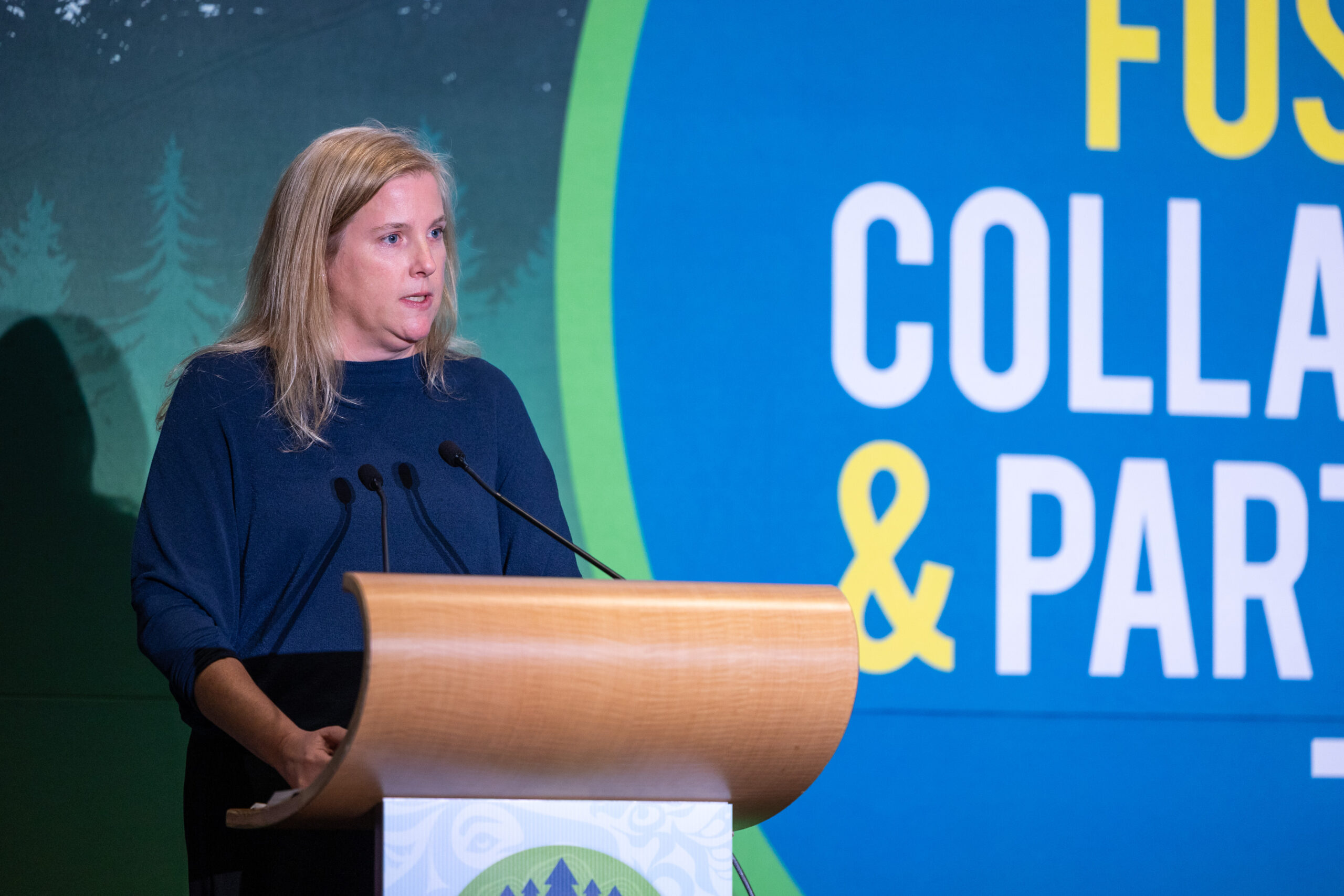 Melissa Sanderson followed with an update on reforms underway at BC Timber Sales (BCTS), stemming from the independent review launched in July 2025. Sanderson explained that BCTS was originally created to establish market pricing for timber, particularly in support of Canada’s position in the softwood lumber dispute. While that function remains important, she said government has broadened BCTS’s mandate to reflect additional public-interest objectives. Under the new vision, BCTS is intended to steward forests for long-term benefit, reflect public values, uphold First Nations rights and title, and support resilient communities through more equitable access to forest resources. She said the new mandate positions BCTS as a community-oriented organization while continuing to provide predictable fibre access.
She outlined four guiding cornerstones emerging from the review: strong partnerships with First Nations; resilient forest ecosystems; thriving communities and economic opportunities for workers; and diversification of fibre and manufacturing. Operational excellence and efficiency were also identified as priorities. Sanderson acknowledged that BCTS has historically operated within a rigid legislative and policy framework, limiting its ability to adopt new approaches even where local conditions warranted them. Some recommendations, she said, will require regulatory or legislative change, but others are already being implemented.
Among early actions, Sanderson highlighted the commitment to double fibre supply for value-added manufacturers through the Category 4 program, with a target of 20 percent of licences. She said BCTS had reached 19 percent of auctions in this category by the end of the second fiscal quarter. She also pointed to expanded use of BCTS expertise in forest stewardship initiatives, including wildfire risk reduction, forest health treatments, and hazardous tree removal in recreation areas.
Sanderson described efforts to improve block-ready inventory by enabling BCTS to purchase developed blocks from licensees, expand data sharing and technology use, and improve utilization of residual fibre to support sectors such as pulp. She said BCTS has auctioned approximately 1.4 million cubic metres of pulp-focused sales this fiscal year. She also noted increased partnerships with First Nations to sell tenured volumes through the auction system, along with initiatives in commercial thinning and partial harvesting to enhance future stand value and reduce wildfire risk. On the coast, she said the first commercial thinning sale has been completed.
For contractors, Sanderson said BCTS has worked to streamline contract execution, adjust contract sizes and terms to reflect differing capacity, and reduce barriers to participation. She highlighted changes to minimum purchase standards that have reduced the number of no-bid auctions, returning wood to the market more quickly. She also referenced work in silviculture and prescribed fire. She said the review places particular emphasis on supporting contractors and maintaining a viable operating base in communities. Looking ahead, Sanderson said implementation will continue alongside consultation with First Nations and industry, and that legislative reforms are being explored to expand BCTS’s ability to act in the public interest.
Garry Merkel then turned to longer-term system design. Speaking on behalf of the Provincial Forestry Advisory Council, he said the council’s work was not intended as another short-term review, but as an effort to understand why repeated studies have failed to deliver lasting stability. He said the council asked why so many reviews arrive at similar conclusions, yet meaningful change remains elusive. Merkel described a targeted engagement process with individuals with long-standing experience in the sector, and said the council’s interim report identified many barriers rooted within government structures and legislation.
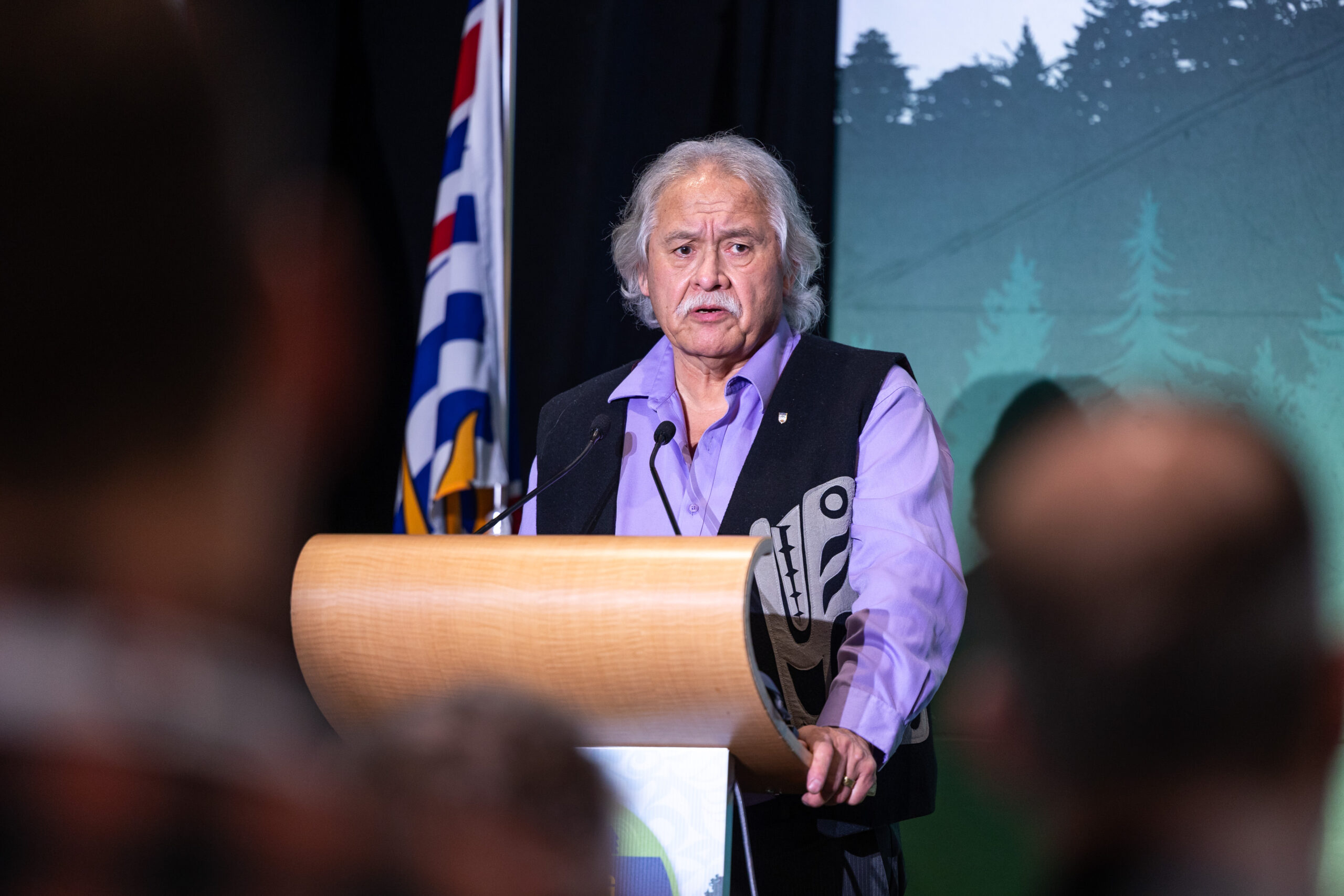 Merkel argued that much of the current policy architecture was built decades ago in a different context, and that overlapping mandates and internal silos now produce conflicting direction on the ground. He said operators often receive inconsistent guidance from different parts of government, complicating planning and investment. He also described what participants termed “bureaucratic amnesia,” where shifting political priorities repeatedly divert attention away from long-term reform. In his view, this has produced a system layered with partial solutions rather than a coherent framework.
He said the council concluded that stability cannot be built on structures shaped by short political cycles and frequent policy reversals. Drawing on the council’s work on old-growth policy, Merkel argued that forest ecosystems and regional economies operate on much longer timelines than electoral mandates, making it essential to develop governance models that endure. He proposed a shift toward what he termed “land care,” recognizing that community well-being, economic activity, and forest ecosystems are fundamentally interconnected. Merkel also addressed concerns around data and planning. He said there is limited confidence in high-level modelling and allowable-cut projections when they are disconnected from operational realities. He suggested that effective planning must be grounded in actual management practices.
Drafted with the assistance of digital tools to streamline the process.