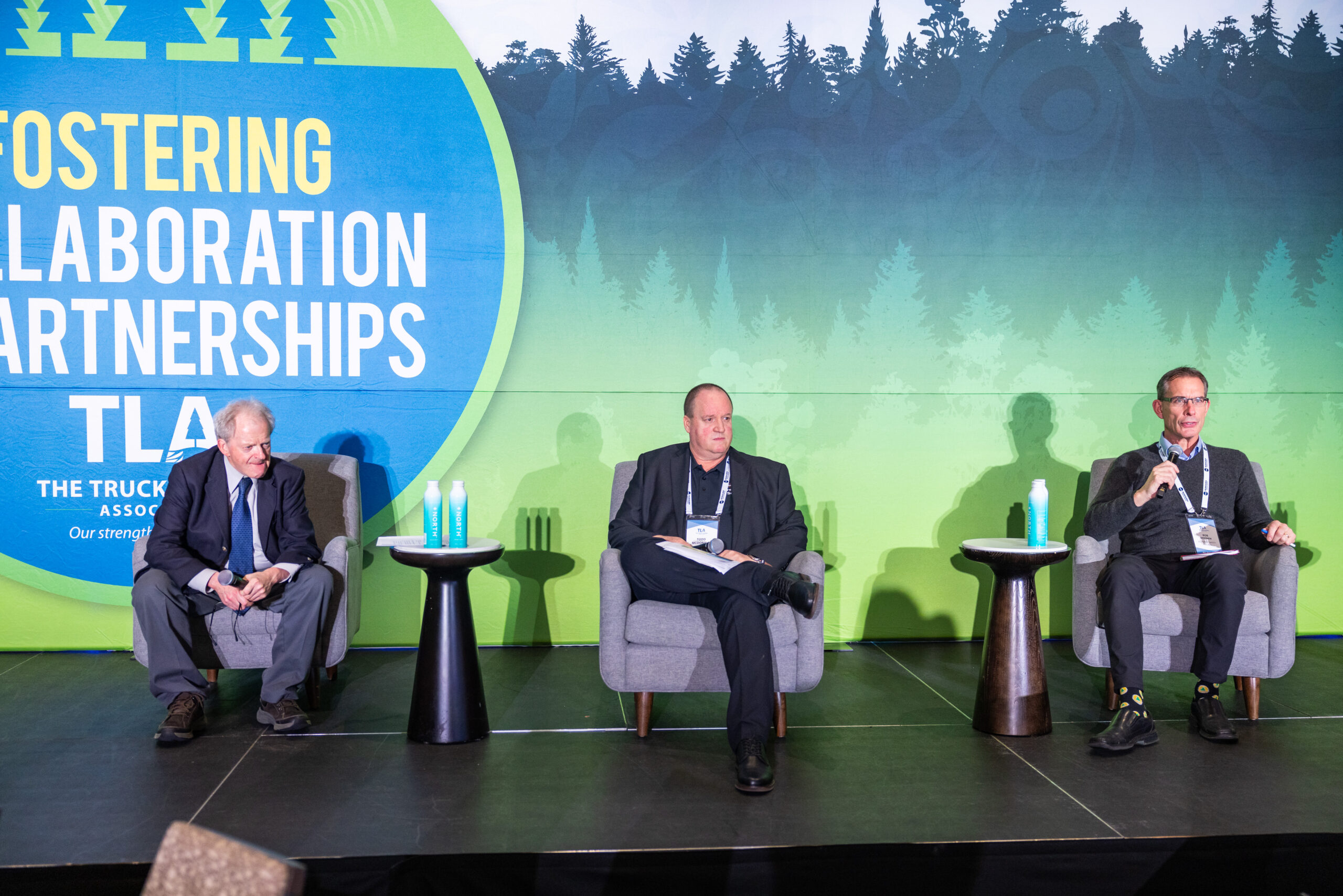
 The Improving Workplace Safety panel at the Truck Loggers Association Convention focused on the continuing risks facing forestry workers and how both industry and regulators are responding during a period of economic pressure and operational uncertainty. Moderated by Vaughn Palmer, the session featured Rob Moonen, CEO of the BC Forest Safety Council (BCFSC), and Todd McDonald, Head of Prevention Services at WorkSafeBC. While both speakers acknowledged the significant improvements made in forestry safety over the past two decades, they emphasized that current conditions present new challenges that require sustained attention and leadership.
 Moonen opened by noting that he will be retiring at the end of March after nearly four decades in the forest sector. He described the industry as being at a “crossroads,” saying that while forestry has always moved through cycles, today’s conditions feel different, with no clear path forward and increased risk as operators face cost pressures and tighter margins. He said his intent was to leave delegates with a “cautionary tale” drawn from experience, and to encourage them to apply the lessons in their own workplaces.
Moonen emphasized that the BC Forest Safety Council exists to work with industry to eliminate serious injuries and fatalities, and that injury prevention is most effective when it is industry-led. He said the Council does not direct companies but works with contractors, licensees, and workers to develop practical solutions that can be adopted in the field. Safety culture, he argued, is built collectively, and progress depends on the active engagement of those doing the work. He noted that the Council now has 35 staff across the province and is governed by a board focused on ensuring forestry workers get home safely each day.
He warned that today’s economic pressures are creating what he described as a “perfect storm” for operational risk. Increased demands for efficiency, higher utilization rates, and tighter margins place pressure throughout the supply chain, from planning and road building to harvesting and hauling. One of the industry’s greatest dangers in such conditions, he said, is a “race to the bottom,” where contractors may feel compelled to accept work under conditions that compromise safety because someone else is always willing to take the job. He argued that competitiveness must be balanced with the systems and practices that have supported safety improvements over time. Moonen reflected on earlier periods when the industry made major safety gains only after tragedy. His central message was that the industry “cannot afford to wait for another crisis before acting.”
Moonen also addressed mental health, which he said has become an increasingly prominent issue across the sector. He noted that mental health concerns now dominate many discussions within the Council’s program committees, and that small contractors in particular often lack access to employee assistance programs or local counselling services. In response, the BC Forest Safety Council has launched Connection to Care, a two-year initiative providing forestry workers with access to confidential counselling through a province-wide hotline, in partnership with the BC Association of Clinical Counsellors and the BC Municipal Safety Association. He described the program as a way to reach workers in rural communities and small operations, where stigma and limited resources remain barriers. He urged employers and industry organizations to ensure workers are aware of the service. Moonen concluded by acknowledging the progress the sector has made while stressing that zero fatalities remains an unrealized goal. He noted that six workers were lost the previous year and said continued vigilance is required.
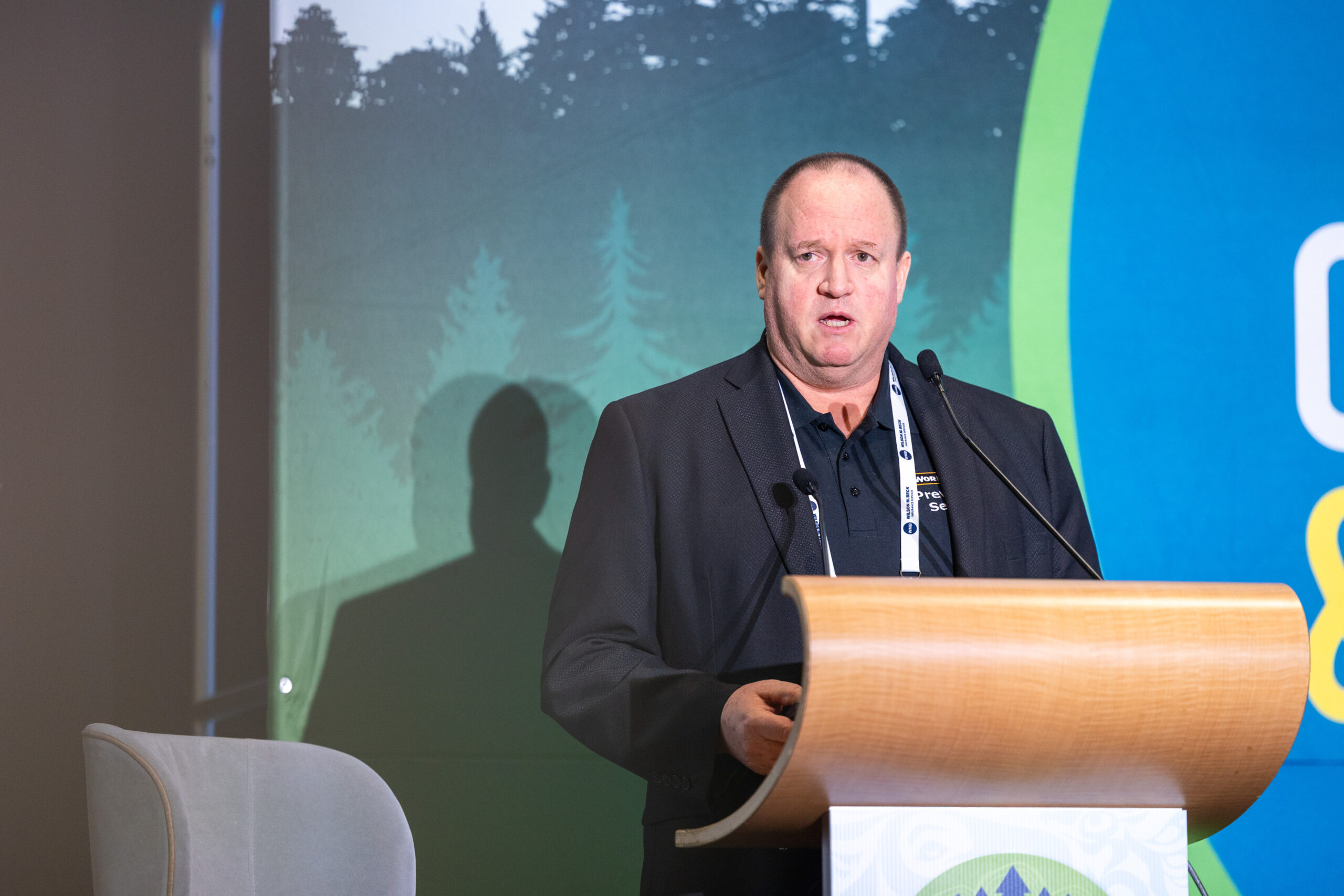 Todd McDonald outlined WorkSafeBC’s role as a regulator, but also as a provider of education and consultation services designed to help employers understand and manage risk. He emphasized that enforcement is not the organization’s first response, noting that most inspections result in remedial orders intended to correct hazards rather than punish employers. McDonald addressed employer concerns about assessment rates, explaining that WorkSafeBC is funded by employers and that recent investment returns have generated surplus reserves. Rather than issuing rebates, he said those surpluses have been used to discount employer rates, including in forestry and logging, to provide greater stability. McDonald then described how WorkSafeBC identifies and manages occupational health and safety risks through data analysis and ongoing monitoring of injury trends. Where risks are not adequately controlled, the organization may pursue regulatory updates, expand education and consultation, or use enforcement when necessary. He identified four areas of particular concern: environmental hazards, motor vehicle incidents, ergonomics, and mental health.
On environmental risks, McDonald said extreme weather events—such as atmospheric rivers, heat domes, and prolonged cold spells—are becoming more frequent and severe, creating new operational hazards including road failures and worker exposure. These conditions, he said, require stronger planning and risk assessment to protect workers from both immediate dangers and secondary risks. Motor vehicle incidents, he noted, remain the leading cause of traumatic workplace fatalities in British Columbia and are especially challenging to address. McDonald said WorkSafeBC is seeking to work with industry to find new ways to reduce these risks, as vehicle-related incidents continue to be a major contributor to serious injuries in forestry. Ergonomics, he said, are the largest driver of injury-related costs, particularly soft-tissue injuries such as strains and repetitive-use conditions. He cited silviculture and log hauling as areas of concern, pointing to tasks such as cinching binders and throwing wrappers as common sources of shoulder and joint injuries. Mental health was the fourth major risk area, with McDonald acknowledging both trauma exposure and the growing number of claims related to workplace stress, bullying, and harassment. While employers cannot control all sources of stress, he said many are increasingly implementing supports that contribute to healthier and more productive workplaces.
Turning to compliance, McDonald emphasized the importance of prime contractor responsibilities, describing them as the foundation of effective site safety management. He said these responsibilities must be clearly documented and implemented in practice. WorkSafeBC officers, he explained, look for evidence of risk assessments, hazard identification, and the controls in place to protect workers in specific operating environments. He also referenced recent regulatory updates, including changes to first aid and equipment standards, noting that many were introduced in response to serious incidents and fatalities. McDonald closed by encouraging employers to make greater use of WorkSafeBC’s consultation services and industry specialists, who can provide guidance without issuing penalties. He said WorkSafeBC remains committed to working collaboratively with industry and with partners such as the BC Forest Safety Council to improve safety outcomes.
Drafted with the assistance of digital tools to streamline the process.