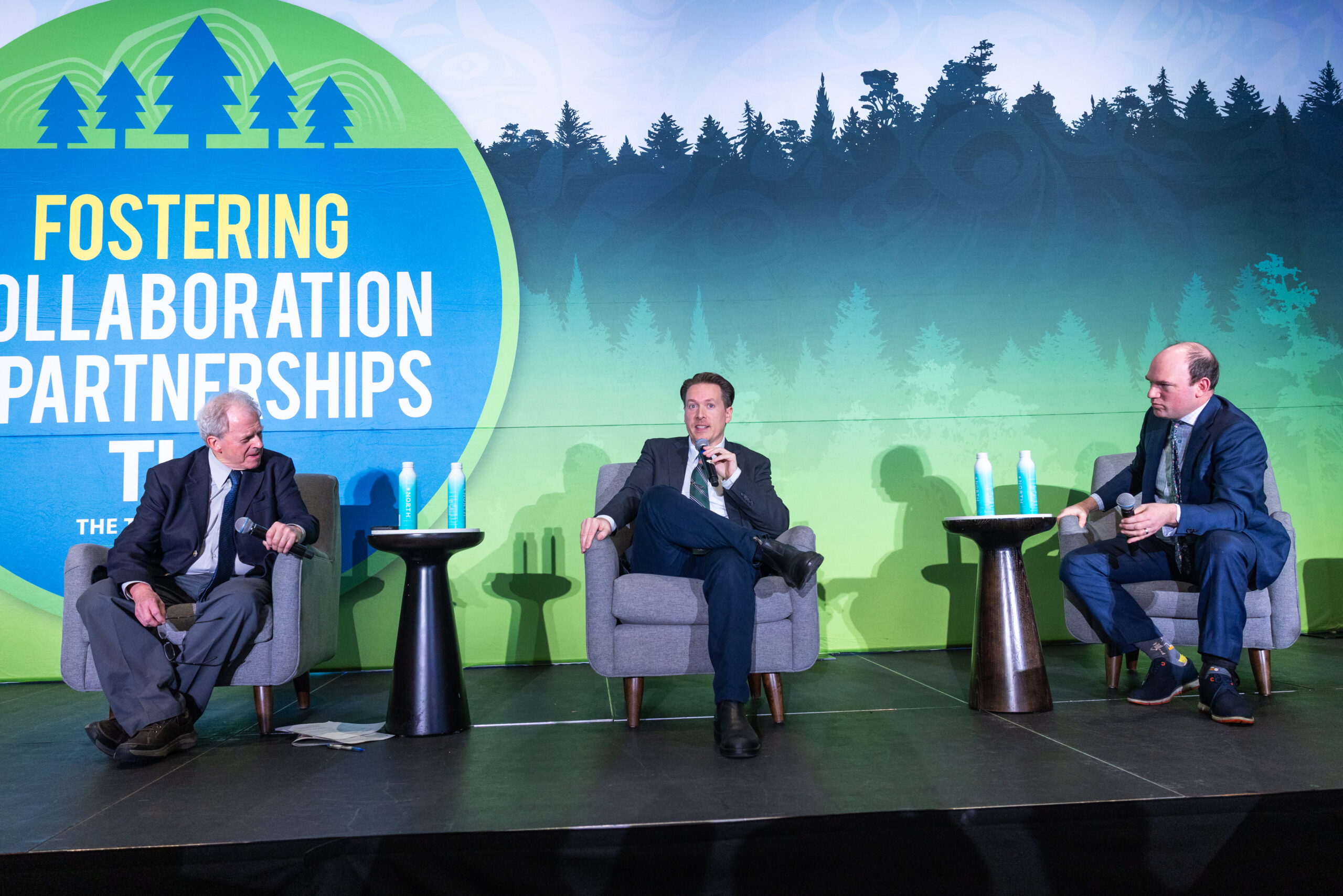
 The Politics over Lunch session at the Truck Loggers Association Convention offered a wide-ranging and candid look at BC’s political landscape, delivered in a conversational format. Moderated by Vaughn Palmer, the luncheon featured Rob Shaw, Political Correspondent with CHEK News, and Richard Zussman, Vice President of Public Affairs at Burson. The discussion opened with an observation that Premier David Eby was not in attendance, something both speakers said was notable given his past appearances. They acknowledged that he was on a trade mission to India, but but used the moment to reflect more broadly on how forestry policy is managed within government. Zussman argued that decisions are often split between the Premier’s Office, the Ministry of Forests, and the Ministry of Jobs, leaving the sector unclear about who is ultimately accountable. Shaw said that from the industry’s perspective, it is often unclear who actually ‘owns’ the forestry file within government.
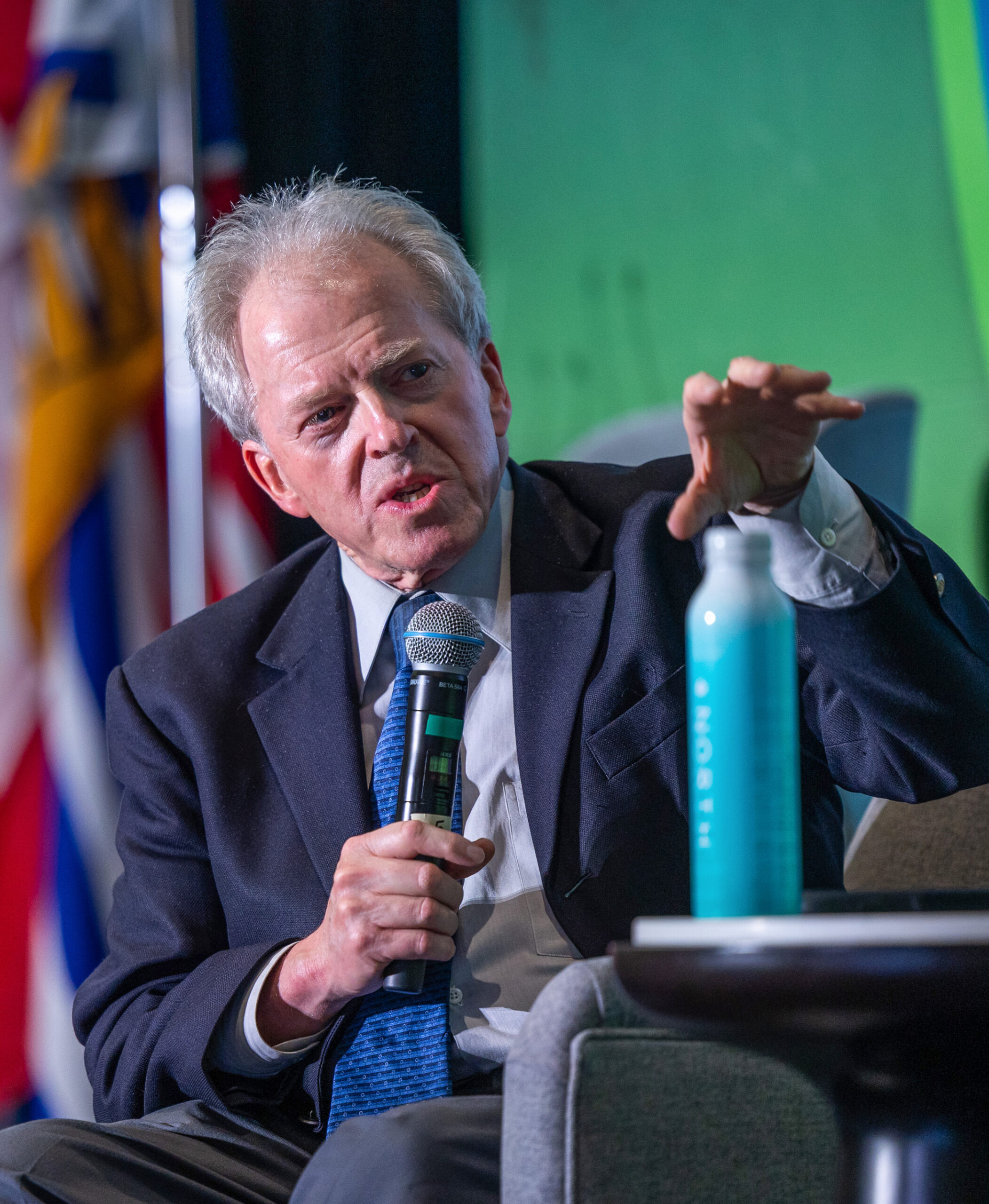
Vaughn Palmer
The discussion then turned to shifting government priorities. Zussman argued that, in practice, the government has begun moving toward a more overt focus on economic growth and employment, driven by trade uncertainty, fiscal pressures, and broader geopolitical risks. He characterized Premier Eby as increasingly “a jobs guy,” suggesting that while environmental and reconciliation commitments remain central, economic imperatives are now exerting greater influence over policy decisions. Shaw agreed that the government’s tone has evolved, but he emphasized that the communication of this shift has been uneven. In his view, many industries remain uncertain about what the government’s priorities actually are, particularly when policy signals appear to conflict.
A substantial portion of the discussion focused on the BC Conservative leadership race and what it may mean for the political landscape. Shaw outlined the field of candidates and the mechanics of the contest, stressing that leadership races are often about narrative and positioning as much as specific policy commitments. He noted that while forestry and resource issues are of deep concern in many regions, electoral success in BC is largely determined in Metro Vancouver, where those issues often have limited resonance. He also highlighted the relative weakness of riding associations in many parts of the province, suggesting that industry voices can have meaningful influence if they engage early in leadership races and policy development.
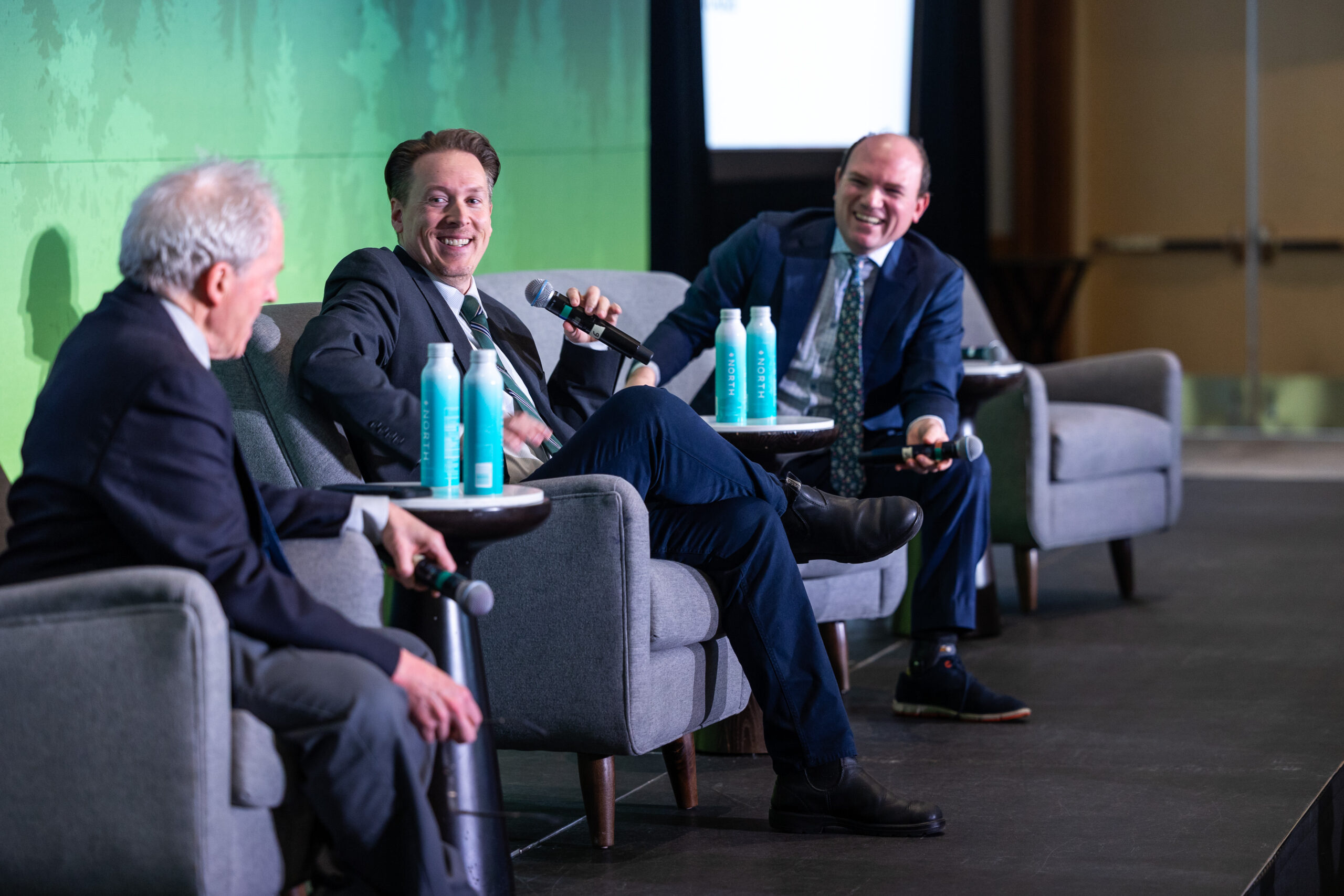
Rob Shaw
From there, the conversation shifted to reconciliation, land use, and regulatory uncertainty, with particular attention to the Declaration on the Rights of Indigenous Peoples Act (DRIPA). Zussman cautioned that simply repealing or revising legislation would not, on its own, resolve the underlying uncertainty businesses face. He said that while private property concerns and project delays are frequently raised, the deeper problem is the lack of clear processes that allow development to proceed in a predictable way. Shaw added that the government has struggled to communicate how reconciliation frameworks will operate in practice, contributing to public unease and investor hesitation. Both speakers said that without clearer guidance and consistent implementation, uncertainty around how reconciliation and development intersect is likely to continue.
Fiscal management emerged as another major theme. Zussman contrasted the government’s earlier surplus years with the current projected $11-billion deficit, arguing that structural deficits limit the government’s capacity to respond to emerging challenges. He said there are few politically viable options for significant spending cuts, making economic growth an increasingly important lever for restoring fiscal balance. Shaw linked this to affordability concerns, noting that cost-of-living pressures continue to dominate public discourse and constrain political choices. Both speakers agreed that resource sectors, including forestry, remain central to any serious discussion of economic recovery and long-term fiscal sustainability.
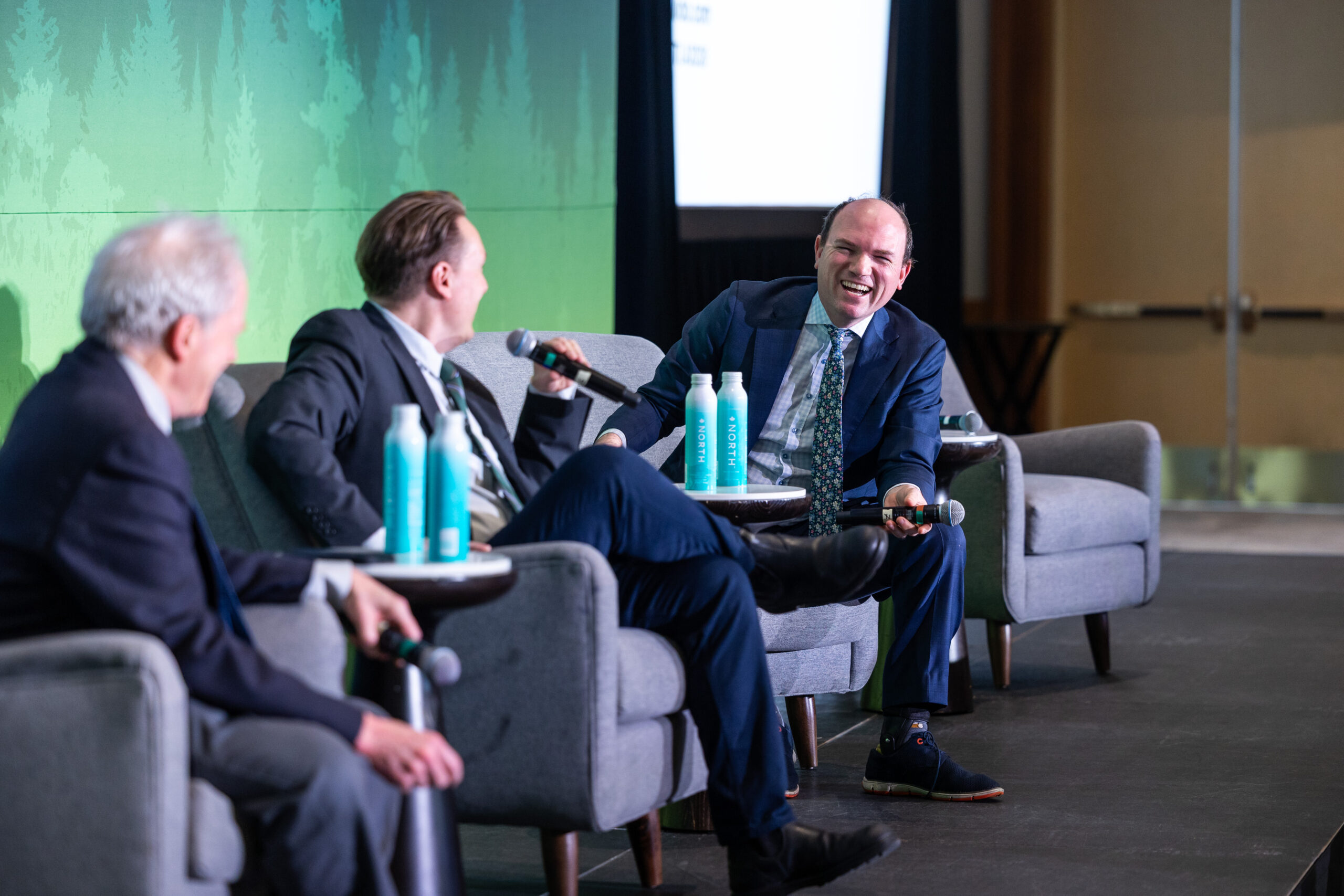
Richard Zussman
In response to questions about the gap between government rhetoric and industry reality, Zussman recounted his reporting on Premier Eby’s acknowledgement that old-growth policy has had tangible impacts on the sector, while also emphasizing the government’s reluctance to alter its course. Shaw compared BC’s situation with that of Alberta, noting the stark differences in timber access and regulatory complexity. Both said that government officials appear to understand the challenges facing forestry, but political realities limit how far they are prepared to go in changing policy.
Throughout the session, Palmer’s questions prompted sharp one-liners and self-deprecating remarks from both speakers, underscoring the informal tone of the luncheon while allowing for pointed observations about power, policy, and political messaging. The laughter that accompanied many exchanges reflected not only the rapport between Shaw and Zussman, but also the audience’s recognition of the frustrations and contradictions they were describing.
Despite the lightness of tone, both speakers portrayed a political environment in which economic pressures, reconciliation commitments, fiscal constraints, and electoral realities are increasingly colliding. For industries such as forestry, they suggested that the challenge lies not only in navigating specific regulations, but in understanding how broader political priorities are being set and how those priorities shape policy outcomes. While neither offered prescriptive solutions, their analysis highlighted the complexity of the current moment and the limits of incremental change.
Drafted with the assistance of digital tools to streamline the process.