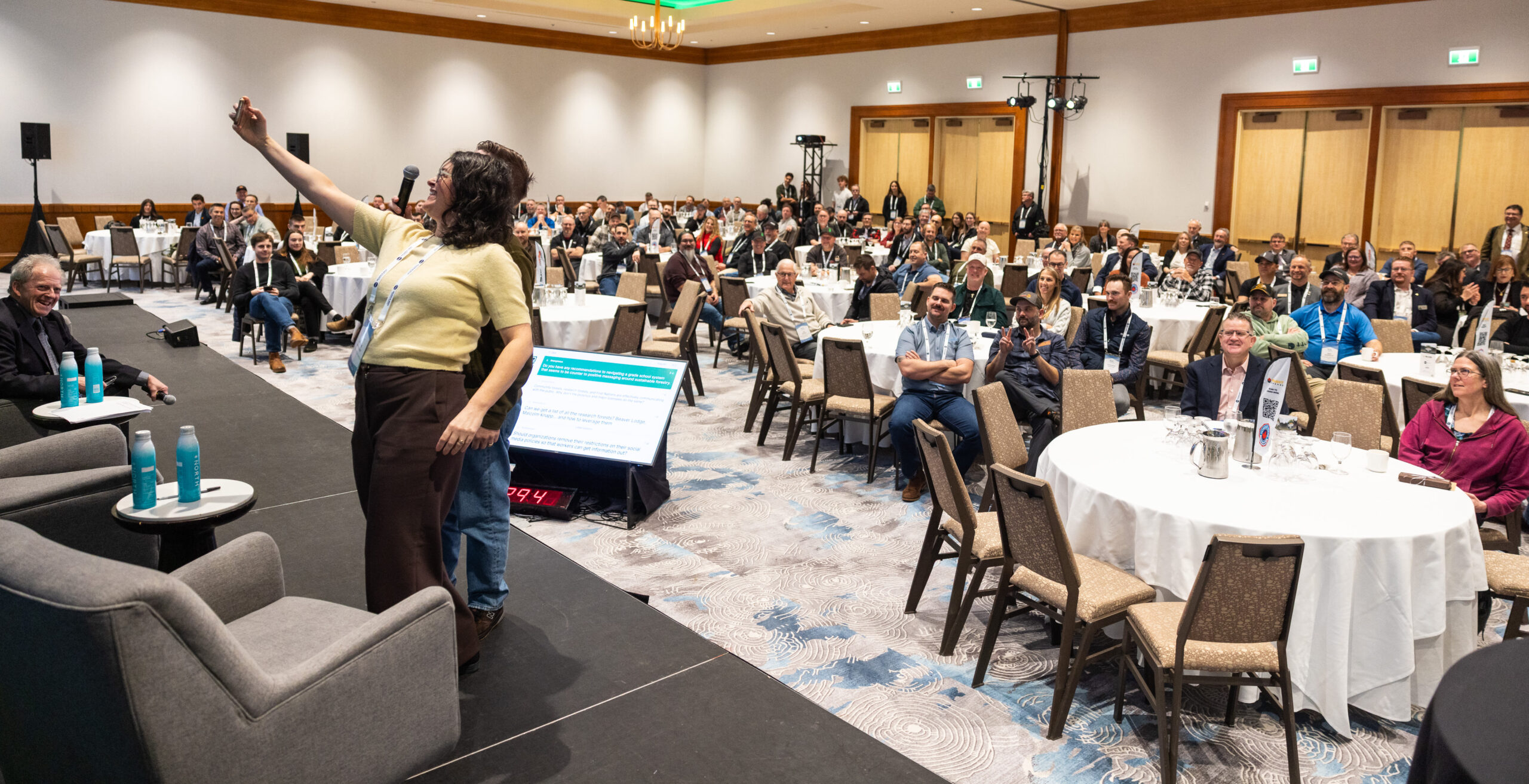
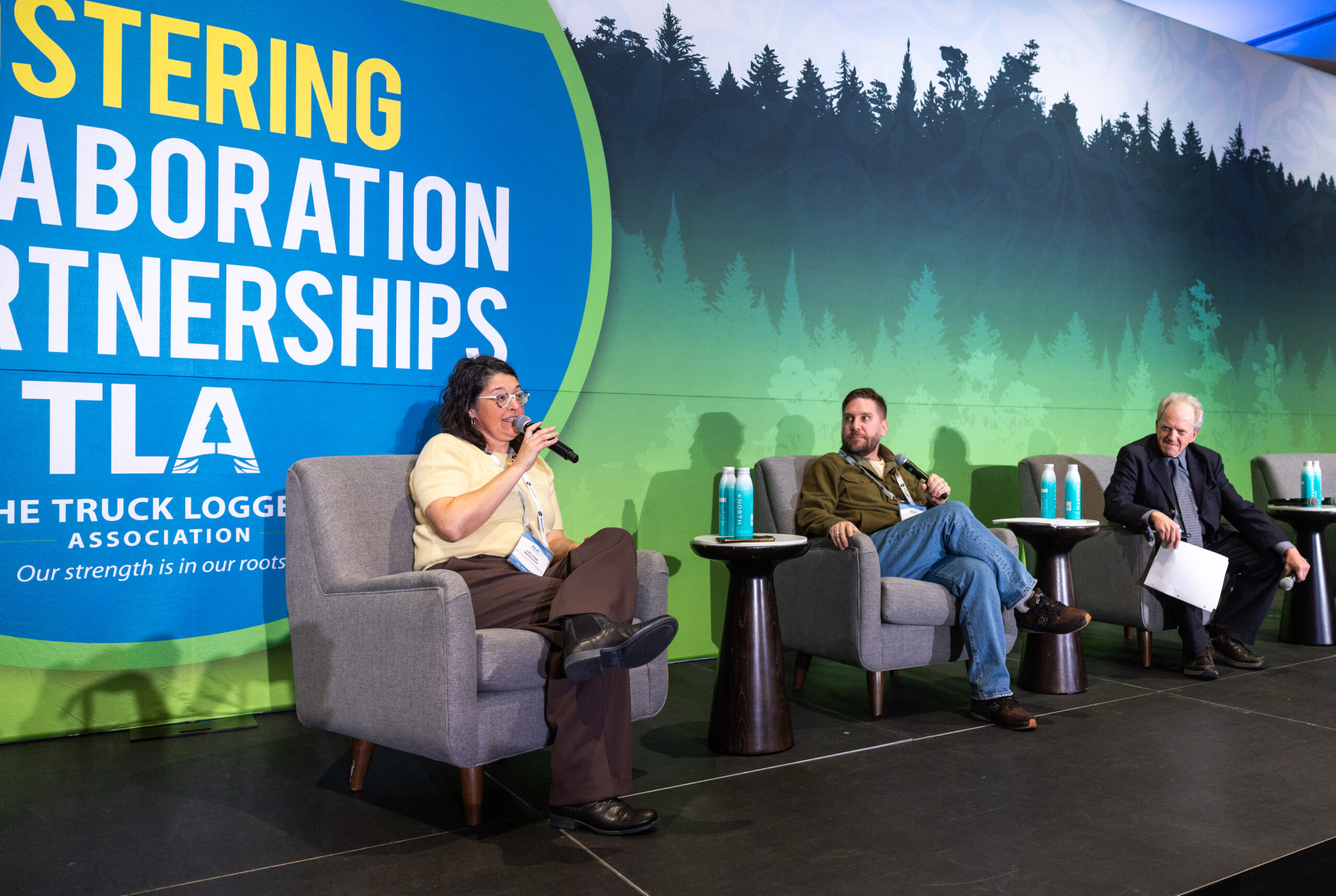
 The Public Perceptions of Forestry session brought together two speakers with very different platforms but a shared focus on how forestry is understood by the public. Moderated by Vaughn Palmer, the discussion featured Hélène Marcoux, Director of the UBC Malcolm Knapp Research Forest and Co-Director of UBC’s Master of Sustainable Forest Management program, and Bob Kronbauer, creator journalist known as BC Bob. The session focused on practical experience engaging communities, communicating complexity, and reaching audiences with limited direct exposure to forestry.
Marcoux began by situating her remarks in the context of the Malcolm Knapp Research Forest, a 5,000-hectare working forest located near Maple Ridge and one of the few places within Metro Vancouver where logging trucks regularly operate. She explained that the forest has a mandate centred on research, education, and innovative forest management, and functions as a self-funded unit within UBC’s Faculty of Forestry. Annual harvesting typically ranges from roughly 17,000 to 32,000 cubic metres and is integrated, where possible, with research and teaching objectives. Public engagement, she added, has long been part of the forest’s role, with archival records from the 1980s showing hundreds of people participating in tours each year.
Drawing on her experience as an ecologist, educator, and outreach practitioner, Marcoux outlined lessons learned from decades of interacting with members of the public, municipal officials, students, and community groups. One example she cited was a newspaper article from the 1990s that criticized logging along trails at the research forest. While the article was negative, she said a later conversation with a former director highlighted that the criticism contained a legitimate concern about visual impacts and public experience. She linked that experience to the importance of listening carefully to feedback, even when it is uncomfortable.
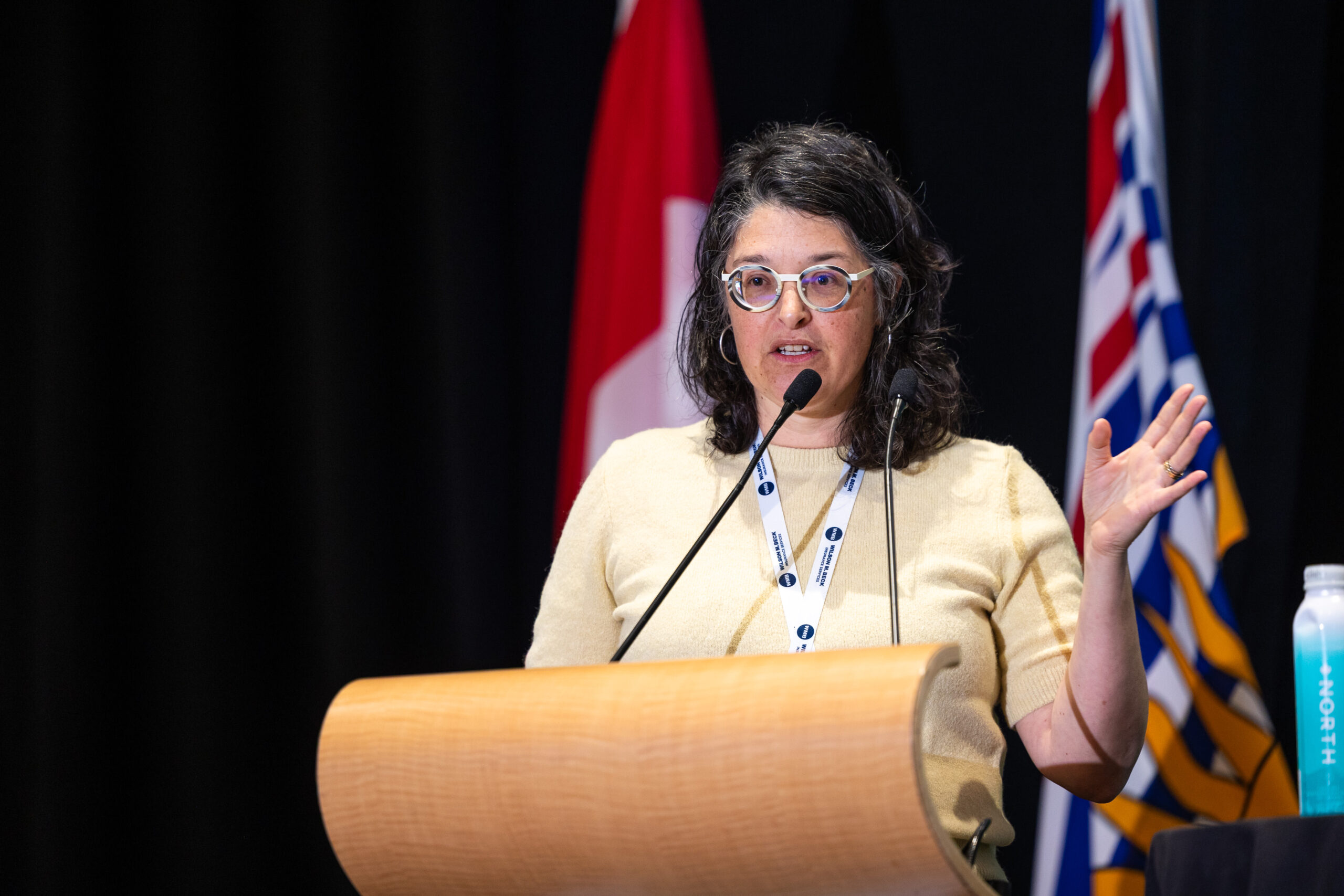 Marcoux connected that lesson to the value of engaging people directly in the forest rather than relying solely on written communication or media coverage. She described tours with Maple Ridge mayor and council that included visits to a range of forest conditions, from older stands to areas under partial harvesting. During one such tour, a councillor later disclosed having protested logging in the past and asked pointed questions throughout the day. Marcoux said the discussion evolved over time into a more constructive exchange.
A recurring theme in her presentation was the need to understand audiences and avoid assuming prior knowledge. Marcoux cautioned against the use of forestry acronyms and technical language when engaging non-specialists, noting that such language can quickly create barriers. She referred to research on learning that distinguishes between experts, who have dense networks of connected knowledge, and beginners, whose understanding is more fragmented, and said communication needs to account for that difference. As a practical example, she described a public tour titled From No Growth to Old Growth, which traces forest change over time by visiting sites affected by harvesting, insects, windthrow, and regeneration, ending in older stands.
Marcoux also spoke about the importance of acknowledging past decisions and lessons learned. Sharing examples of imperfect outcomes, she said, can help build trust and credibility. Partnerships have been central to this work, including collaborations with Katzie First Nation, local museums, schools, and community organizations. Activities such as cedar bark harvesting workshops, mushroom walks, and moss identification tours were cited as ways of bringing new audiences into the forest. These interactions, she said, often lead to what she described as “aha moments,” including during tours marking 75 years of research at Malcolm Knapp that showed how heavily altered landscapes from the 1970s have regenerated over time.
She also described efforts to broaden engagement by combining forestry education with other interests, including food, art, and astronomy, allowing forestry to be part of a broader experience rather than the sole focus. Engagement with youth was another priority. Since 2019, the research forest has hosted forest schools, preschools, and camps, with more than 16,000 participants. Marcoux concluded her prepared remarks by outlining plans for a Forestry Learning Centre at the forest’s entrance, which would include exhibits on wood innovation, wildland–urban interface construction, and forest research. While still in the fundraising stage, she said the project reflects a long-term commitment to education and public access.
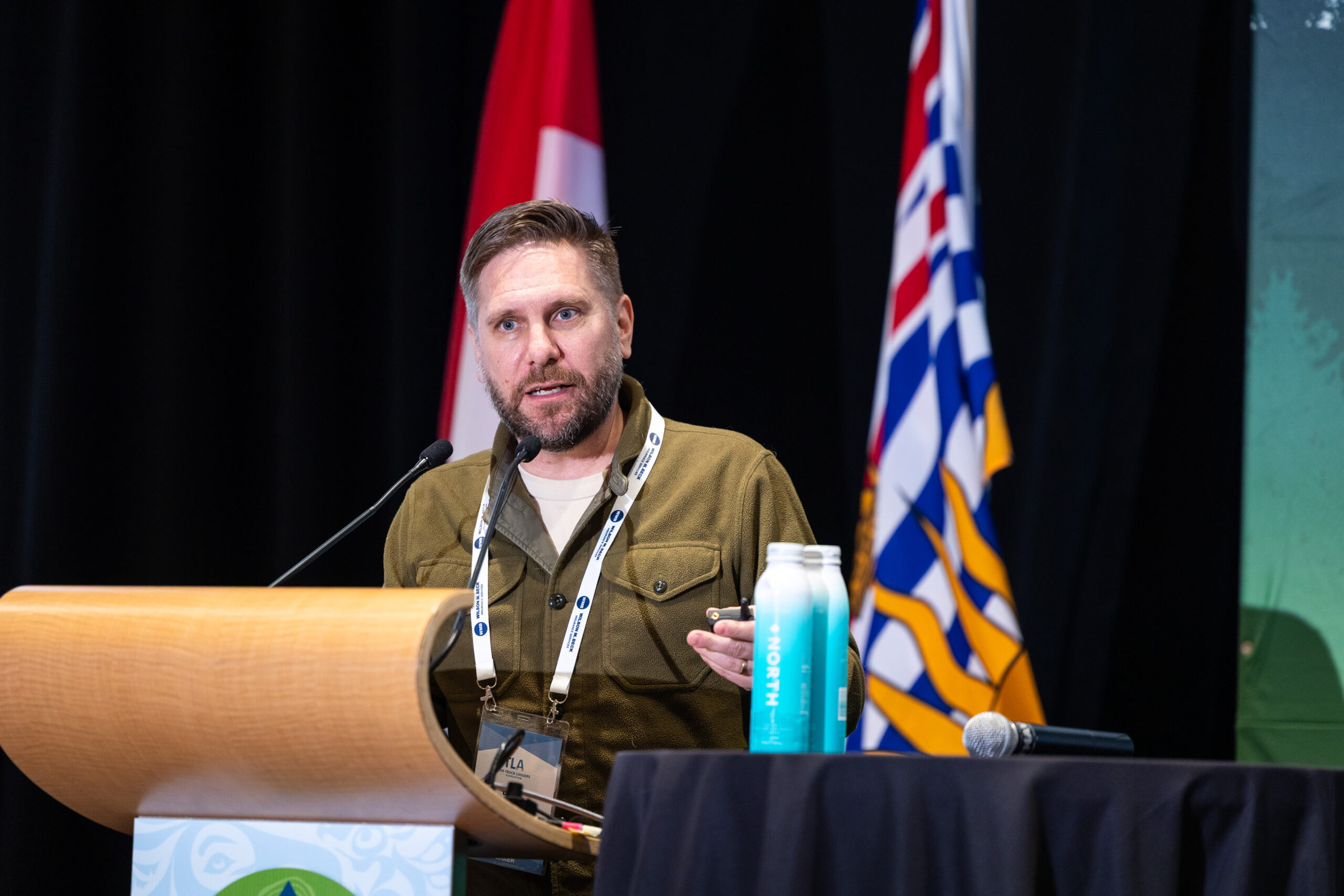 Kronbauer followed with a perspective shaped by digital media and large online audiences. Introducing himself as a creator journalist, he explained that his work focuses on telling stories about British Columbia through social media, television, and print, reaching hundreds of thousands of followers and generating millions of views each month. He described his personal connection to forestry through his uncle, who founded a family-run timber company in the Interior, and said that while he does not consider himself a forestry expert, that early exposure helped him recognize how unfamiliar the sector is to many people in Metro Vancouver.
Working with the Truck Loggers Association, Kronbauer said he visited active operations and produced short videos featuring workers and their roles. Each clip focused on what the person does, how they entered the work, and what they enjoy about it, deliberately avoiding policy discussion. Filmed on a phone with minimal equipment, several of the clips reached large audiences across multiple platforms. Kronbauer said the videos were brief and visually engaging, often 20 to 30 seconds long, and featured equipment and settings unfamiliar to many viewers.
He said reactions to the content were generally positive, and that despite high view counts, hostile comments were uncommon. Kronbauer attributed this in part to tone. Rather than making arguments, he said he prefers to show people at work and allow viewers to form their own impressions, which he said tends to reduce defensiveness and encourage curiosity.
In discussion with Palmer, both speakers addressed questions related to education and communication constraints. Marcoux emphasized the value of engaging teachers directly, noting that educators often lack access to forestry information or opportunities to visit working forests. Bringing teachers into the forest, she said, benefits classroom instruction and student understanding. Kronbauer addressed questions about social media policies, cautioning against removing guardrails entirely but encouraging organizations to provide guidance that allows workers to share experiences responsibly, noting that authentic voices often resonate more strongly than polished institutional messaging.
Drafted with the assistance of digital tools to streamline the process.