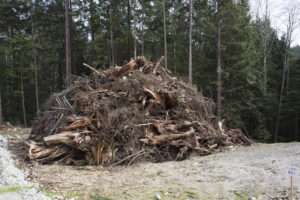
 Finland’s economy has long been rooted in its forests—but in 2026, the sector sits at the intersection of energy transition, environmental regulation, and global market uncertainty. A glance at Finland’s real-time energy production reveals a system increasingly diversified across nuclear, hydro, and renewables. Yet beneath this transition lies a quieter but equally critical story: the evolving role of forestry in powering both industry and energy systems. Finland’s energy picture depends heavily on whether we look at electricity output or total primary energy consumption. …The broader energy balance tells a different story. When heat, fuels, and industrial energy are included, bioenergy remains Finland’s largest energy source, at roughly 135 TWh, ahead of nuclear energy at about 105 TWh. Oil remains significant at around 70 TWh, while hydro and wind contribute roughly 25 TWh and 20 TWh, respectively. This matters for forestry because forest-based energy remains central to Finland’s energy system, even as its role is slowly declining.