 Wildfire is no longer a distant or hypothetical concern for communities in British Columbia. Increasingly hot, dry summers, changing climate patterns, and continued development in forested landscapes have pushed wildfire risk to the forefront of municipal planning. For the Municipality of North Cowichan, located on Vancouver Island’s forested eastern slopes, this reality has prompted a deliberate shift from reactive response to proactive readiness.
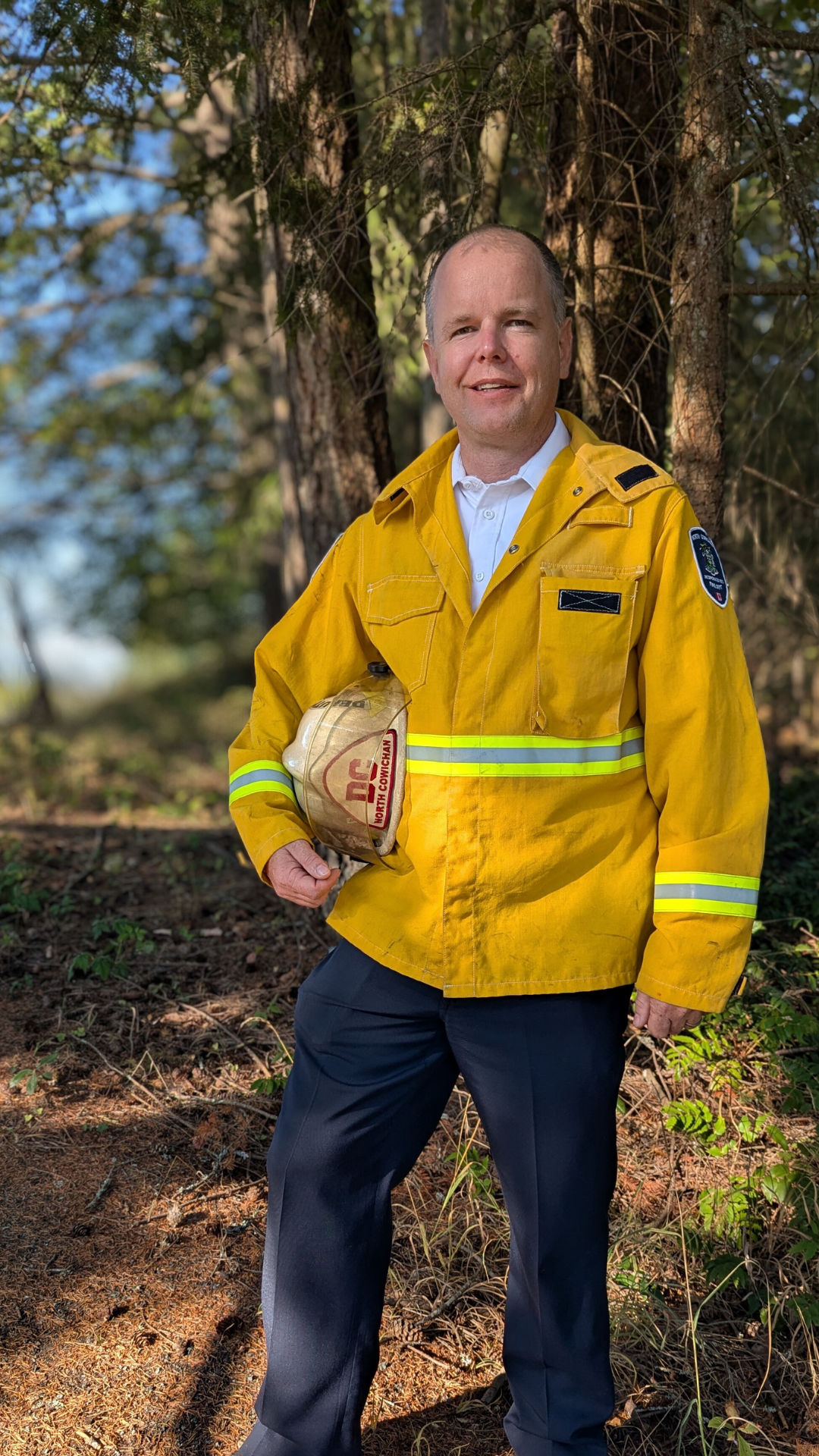
Chris Jancowski
Over the past several years, North Cowichan has taken meaningful steps to better understand and reduce its wildfire risk—investing in planning, expertise, and long‑term resilience. These efforts are grounded in a growing recognition that while wildfires are inevitable, their impacts on people, infrastructure, and landscapes can be significantly reduced through preparation, coordination, and informed response.
Learning From Local Experience
North Cowichan’s approach to wildfire preparedness has been shaped by lived experience. Several wildfire events and near‑misses over the past several years has reinforced the community’s vulnerability and the urgency of preparedness.
The Wesley Ridge Interface Fire, which affected the nearby community of Dashwood, provided a stark reminder of how quickly wildfire can threaten homes in interface areas. Fanned by dry conditions and challenging terrain, the fire highlighted the complexity of managing incidents where forest fuels and residential development meet.
The Mount Underwood fire further demonstrated how wildfire risk extends across landscapes and jurisdictions, including areas that may not be perceived as high risk outside of peak fire conditions. More recently, a Cowichan Tribes interface fire near the Cowichan River reinforced the interconnected nature of wildfire risk throughout the valley and the importance of coordination between Indigenous partners, and provincial agencies.
Collectively, these incidents underscored that wildfire risk in North Cowichan is not theoretical. They served as catalysts for strengthening municipal planning and improving how the community prepares for, responds to, and recovers from wildfire events.
Understanding the Wildland–Urban Interface
North Cowichan is a classic wildland–urban interface (WUI) community. Residential neighborhoods, farms, transportation corridors, and critical infrastructure are closely interwoven with forests, parks, and rural lands. While this setting contributes to the community’s character and appeal, it also increases exposure to wildfire—particularly during extended dry periods and extreme heat events.
As wildfire seasons across British Columbia become longer and more intense, North Cowichan has recognized that wildfire must be addressed as an ongoing operational and planning consideration rather than a seasonal concern.
Investing in Dedicated Expertise
A key step in advancing this work was the creation of a dedicated wildfire specialist role. This position reflects an understanding that effective wildfire preparedness and response require focused expertise, long‑range planning, and coordination across multiple municipal functions.
The wildfire specialist works collaboratively across fire services, emergency management, planning, engineering, and parks. This integrated approach helps ensure that wildfire considerations are embedded into municipal operations—supporting everything from response readiness and access planning to vegetation management and infrastructure design.
By establishing this role, North Cowichan has strengthened its capacity to manage wildfire risk more effectively before, during, and after incidents.
Enhancing Existing Plans Into a Wildfire Response Framework
Rather than developing a standalone wildfire document, North Cowichan is enhancing its existing municipal and emergency planning framework to expand into a more comprehensive wildfire response plan. This approach recognizes that wildfire response is interconnected with emergency management, infrastructure planning, land use, and inter‑agency coordination.
Through this work, wildfire risk assessments, response priorities, access and egress considerations, and operational coordination are being more clearly integrated into current plans and procedures. The intent is to ensure the municipality is better positioned to respond quickly, safely, and effectively when wildfire events occur.
By building on established plans and processes, North Cowichan is creating a practical, flexible wildfire response framework that can evolve alongside changing risks, operational lessons, and community needs.
Building Shared Responsibility
 North Cowichan’s evolving approach also reinforces that effective wildfire response depends on shared responsibility. Municipal leadership and emergency services play a central role, but strong outcomes rely on cooperation with neighboring jurisdictions, Indigenous governments, provincial agencies, and residents themselves.
Community engagement remains an important component of preparedness. The experiences of the Wesley Ridge, Mount Underwood, and Cowichan River interface fires have made wildfire risk more tangible for residents, helping support conversations around evacuation readiness, FireSmart practices, and community awareness.
Clear communication and public education are essential to ensuring residents understand both the risks they face and the actions they can take to support safe and effective wildfire response.
Looking Ahead
North Cowichan’s efforts reflect a broader shift among municipalities across British Columbia: treating wildfire as an enduring and evolving risk that requires continuous attention. By learning from local experience, investing in dedicated expertise, and strengthening existing plans into a more cohesive wildfire response framework, the municipality is improving its readiness for future wildfire events.
While no community can eliminate wildfire risk entirely, North Cowichan’s approach demonstrates how preparation, coordination, and local leadership can significantly improve response capability and resilience.
As wildfire continues to shape the future of communities across the province, North Cowichan’s work offers a practical, real‑world example of how municipalities can adapt and prepare for the inevitability of fire.