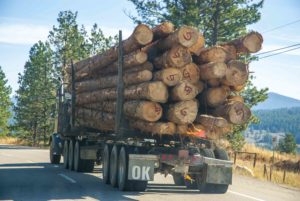
 As of 2024 there are 2,500 sawmills in the U.S. and 850 in Canada. However, these numbers have to be looked at in context of housing starts in both countries. An interesting number: The rebuilding of 16,000 houses that burnt down in California require 4,300 fully loaded eight-axle trailer trucks with dimensioned lumber. We must be innovative and need more skilled workers. We should have a few smaller mills and/or machinery producing metric size timber for Europe and Japan. …We cannot change what is happening in the US, but despite an executive order from higher up, many mills in the US are suffering from a steady lack of timber supply and do not have the manpower or loggers required to steadily feed some of the mills. In Montana for example, 36 mills have closed over the last years because of a lack of timber supply, as well as a lack of loggers.

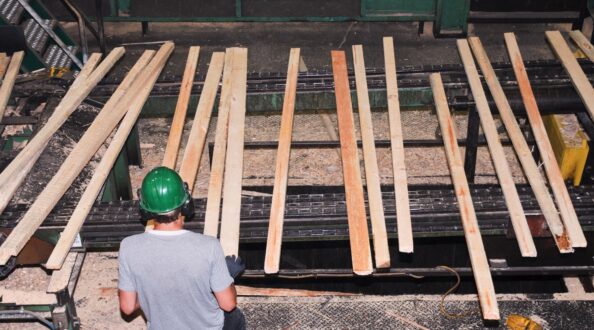 At the Council of Forest Industries convention, Premier David Eby underscored the provincial government’s commitment to forestry as a major project — and made it clear that forestry will be treated with the same focus and urgency, saying, “This is a shared project that we can get to that 45 million (cubic metre) target, which we all know is absolutely essential.” …Eby’s commitment to a “whole of government” approach is exactly what the sector needs. …We applaud Forest Minister Ravi Parmar’s recent announcements… Equally important is ensuring BCTS delivers its full potential. Consistently hitting 90 per cent or more of its annual harvest target is critical to a thriving wood products industry that supports communities and workers throughout the province. We also can’t lose sight of reconciliation. Increasing the distribution of stumpage fees to First Nations is one achievable step that would help advance shared prosperity and strengthen Indigenous participation in the sector.
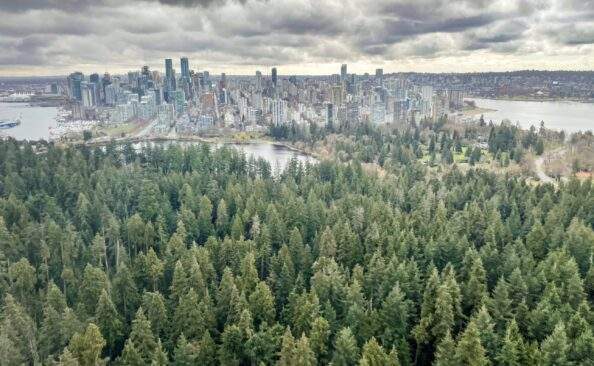 The Sḵwx̱wú7mesh Úxwumixw (Squamish Nation) is calling for better education on Stanley Park’s Indigenous history after a First Nations group threw their connection into question during a logging protest earlier this month. A “sacred fire” lit March 15 was kept ablaze for over a month at Brockton Park’s totem poles by a woman who identified, according to protest group Save Stanley Park, as a “matriarch” of the land. The woman claimed to be a descendent of “Portuguese Joe”, an early B.C. settler with Musqueam lineage, and was in protest of the Vancouver Park Board’s ongoing project to remove hundreds of trees affected by the looper moth disease. Squamish Nation elected councillor Wilson Williams says the claims are still yet to be verified, and his own community is left reeling at the group’s failure to address the history of the Squamish people that dates back thousands of years within the park.
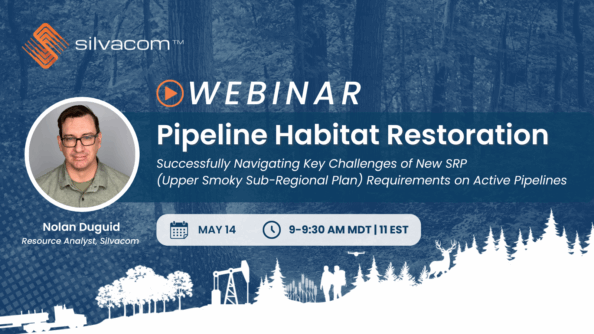 Silvacom is hosting a free webinar titled “Pipeline Habitat Restoration: Strategies and Innovations” MAY 14, 2025 9:00 AM MDT | 11 EST. This event will bring together industry experts, environmental scientists, and key stakeholders to discuss the latest developments and best practices in habitat restoration in areas affected by pipeline projects. Join Our Webinar on Pipeline Habitat Restoration: Successfully Navigating Key Challenges of New SRP Requirements on Active Pipelines (Upper Smoky Sub-Regional Plan). With Alberta’s Sub-Regional Planning Process introducing new regulatory requirements for caribou habitat restoration, the energy sector must adapt and implement habitat restoration on active pipeline corridors. Unlike decommissioned or abandoned pipelines, active right-of-ways (ROW) present unique operational, regulatory, and ecological challenges. This webinar will explore the complexities of meeting habitat restoration objectives while balancing: Ecological restoration goals; Operational efficiencies; Regulatory requirements; and Indigenous community and stakeholder values.
 The BC Council of Forest Industries (COFI) is now accepting applications for the 2025 Forestry Scholarships. As part of our commitment to supporting the next generation of forestry professionals, COFI will award 10 scholarships of $2,000 each to students from across British Columbia pursuing post-secondary studies or skilled trades training related to the forest sector. The scholarships are open to BC residents entering a forestry-related program at an accredited post-secondary institution in fall 2025 or spring 2026—whether you’re from a rural community, coastal town, or urban centre.