 The situation surrounding tariffs remains fluid, with a flurry of activity in Washington this week. …On March 6, Trump announced a one-month tariff delay until April 2 on all products from Mexico and Canada that are covered by the United States-Mexico-Canada Agreement (USMCA). While there is no specific language in the USMCA addressing Canadian softwood lumber, NAHB worked with the White House to ensure it was covered under the latest pause on tariff implementation. Two essential materials used in new home construction, softwood lumber and gypsum (used for drywall), are largely sourced from Canada and Mexico, respectively. …If the new tariffs on Mexico and Canada go into effect next month, they are projected to raise the cost of imported construction materials by more than $3 billion. NAHB has received anecdotal reports from members that they are planning for tariffs to increase material costs between $7,500 and $10,000 on the average new single-family home.

 Let me propose that we respond to President Donald Trump and his supporters in a more direct fashion: by wiping them out. No, not with violent force, or vain attempts at economic annihilation, but in a way that is more, shall we say, fundamental. It would be shockingly easy to empty America’s store shelves of toilet paper. A weeks-long bog-roll panic could be provoked, right now, with only a few words from a Canadian leader. The tissue of lies behind the trade war would be wiped away, exposing the backside of Mr. Trump’s bizarre trade claims in a way that would be far more noticeable than any retaliatory tariff. …Supply chains for the rolls of tissue are so constrained, lacking in stored reserves and Canada-dependent, Kruger CEO Dino Bianco explained, that it would only take a tiny push to cause panic buying and the anxiety-inducing sound of empty cardboard tubes rattling on bathroom spindles. …It sends a clearer message: Canadians believe in trade. We want trade. And if you deprive us of it, we know how to hit you where it really hurts. [Globe and Mail subscription required for full access]
 President Donald Trump on Thursday signed executive actions that delay for nearly one month tariffs on all products from Mexico and Canada that are covered by the USMCA free trade treaty, a significant walkback of the administration’s signature economic plan that has rattled markets, businesses and consumers. The executive actions follow a discussion Trump held Thursday with Mexican President Claudia Sheinbaum and negotiations between Canadian and Trump administration officials. …Energy from Canada, however, is not included in the USMCA, the White House official said. So that lower 10% tariff is expected to remain in place… but the Trump reduced the tariff on Canadian potash to 10%. …Canada will now pause their planned second round of tariffs on over 4,000 US goods until April 2, Canadian Minister of Finance Dominic LeBlanc said.
 GENEVA — Canada has requested consultations with the United States on “unjustified tariffs” at the
  OTTAWA — Steve Verheul used to get under the American trade negotiator’s skin. …Eventually, the Americans forged a deal with the Mexicans and Canadians, and in 2018 signed the U.S.-Mexico-Canada Agreement. …Now, as Trump slams Canada and Mexico with new tariffs, Verheul and a pair of trade veterans want to save the USMCA. …Verheul is co-launching the Coalition for North American Trade, a three-nation business group advocating for the long-term benefits of free trade. The CNAT is the brainchild of Kevin Brady, the Republican former chair of the House Ways and Means Committee. …Earlier this year, the trio launched their coalition and today, they’re bringing their pitch to Washington. …But until tariffs disappear, Verheul sees no prospect for productive talks. “I think the only hope is that the impact on the US economy, and the stock market, and various companies is extreme enough to create pushback within the US,” he says.
 This year’s COFI convention will tackle the most pressing challenge facing BC’s forest sector – predictable access to fibre. Without this, BC’s global competitiveness and the family-supporting jobs forestry provides remain at risk. There is a path forward. Within the sustainable Allowable Annual Cut there are opportunities to surpass a minimum target of 45 million cubic meters of harvest while maintaining environmental stewardship. Achieving these outcomes will require changes to BC Timber Sales (BCTS), innovative approaches to forest landscape planning, stronger partnerships with First Nations, and community-led solutions. Join us for a solutions-oriented discussion, featuring distinguished experts: George Abbott, Treaty Commissioner, Former BC Cabinet Minister & Member, BC Timber Sales Review Task Force; David Elstone, Managing Director, Spar Tree Group; Makenzie Leine, Vice President, Business Development, A&A Trading; Jennifer Gunter, Executive Director, BC Community Forest Association; moderated by Michael Armstrong, VP and Chief Forester at COFI.

 By easing the current restrictions on timber harvesting and natural gas development, B.C. Premier David Eby can reduce B.C.’s reliance on U.S. markets and improve affordability… This policy shift would create jobs, help address the cost-of-living crisis and insulate B.C. from U.S. trade volatility by diversifying its trading partners. Natural resources, namely forestry, energy, mining and agriculture, make up about 75 per cent of B.C.’s exports as of November 2024. …Yet both sectors face government-imposed constraints, from caps on logging to opposition to pipelines. Since forestry and energy dominate B.C.’s exports, robust growth depends on expanding these sectors. B.C.’s forestry industry has long been a global leader, but policies restricting access to fibre are undermining its viability. The annual allowable cut and a cap on how much timber can be harvested, along with actual cuts, have been reduced in recent years due to environmental concerns and pressure from within the NDP’s base.
 VICTORIA – The United Steelworkers union (USW) acknowledges the difficult position facing the B.C. government in its 2025 budget and applauds the thoughtful, diligent focus on priorities by Minister of Finance Brenda Bailey. U.S. President Donald Trump’s threats and the imposition of tariffs have created uncertainty for important exports, including lumber, copper, zinc and other essential products. …“Workers are calling for action to grow and diversify the economy and supply chains, reducing dependence on the U.S. market while ensuring jobs in mining, critical minerals and processing, forestry and lumber manufacturing,” said Scott Lunny, USW Western Canada Director. …B.C. should prepare for a wave of layoffs in the forest sector due to rising duties. …The USW is urging the B.C. government to increase the supply of fibre and streamline the permitting process in the logging sector to support the primary industry and facilitate ongoing efforts to expand manufacturing, Mass Timber and other value-added industries.


 VANCOUVER, BC — Canfor Corporation reported its fourth quarter of 2024 results. Highlights include: Q4 2024 operating loss of $46 million; shareholder net loss of $63 million; Supply-driven uptick in North American lumber markets and pricing through the fourth quarter led to improved results from the Company’s Western Canadian and US South operations; another quarter of solid earnings from Europe; Improved
  The B.C. Council of Forest Industries (COFI) welcomed B.C.’s responses to American tariffs, but questioned aspects of the provincial budget tabled Tuesday. B.C.’s forests minister, meanwhile, is calling on Ottawa to step up supports. Kim Haakstad, president and CEO of COFI, said her organization welcomes the budget’s focus on responding to new tariffs announced March 4. “We are disappointed by the absence of dedicated support for the forest sector,” Haakstad said. “As Premier (David) Eby and (Forests) Minister (Ravi) Parmar have acknowledged, the forest sector will be particularly hard hit by the new tariffs at a time when the industry is already facing significant challenges. These broad-based tariffs apply to all forest product exports … adding further pressure on workers, companies and communities already affected by softwood lumber duties.” …COFI remains committed to working with the government to advance solutions that strengthen the forestry sector, improve the provincial economy and diversify markets.
 These are the headlines you’ll find in this month’s newsletter:
 Planning, design and construction must adapt to this new world of tariffs and trade barriers. Canada has already imposed its own tariffs on products made in the US… but it is not just about materials and products; we must change what we build and where we build it. Some ideas for a Patriotic Canadian Built Environment: 1) More Mass Timber. Nordic, Element 5, Structurecraft and others have made major investments in mass timber, much of which is exported south. If the industry is to survive, we need a massive pivot to mass timber construction in Canada. …2) Make Canadian Wood Fibre Insulation. TimberHP in Maine has shown how a pulp and paper-based timber economy can pivot to insulation. …3) Electrify everything. Canada is an electricity powerhouse. Make every building Passivhaus to reduce demand and increase resilience. …4) Restructure from north-south to east-west. …5) More renovation and retrofit. …6) Design for a Sufficiency Economy. …7) Ban Sprawl.
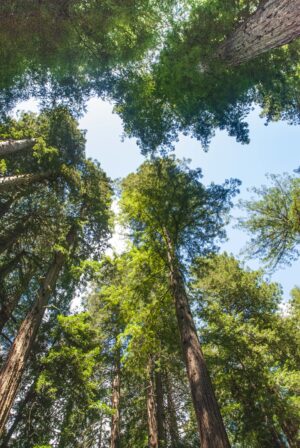 President Trump is promising to unleash the US timber industry by allowing companies to raze swaths of federally protected national forests. …His order — which calls for the ramping up of the domestic timber production to avoid reliance on “foreign producers” — was followed by sweeping 25% tariffs on Canadian products, including lumber. …However, it’s more complex than simply swapping out Canadian imports for homegrown timber, said industry experts. …Meanwhile, environmental groups say clearcutting national forests will pollute the air and water and exacerbate climate change. Anna Kelly, White House deputy press secretary, referred to multiple organizations that have released statements of support about opening up federal land for logging, including the American Loggers Council, the American Forest Resource Council and the Forest Landowners Association. Increasing logging on federal lands would increase the supply of logs for US industry, said FEA’s Rocky Goodnow… but it won’t replace Canadian imports in the near term.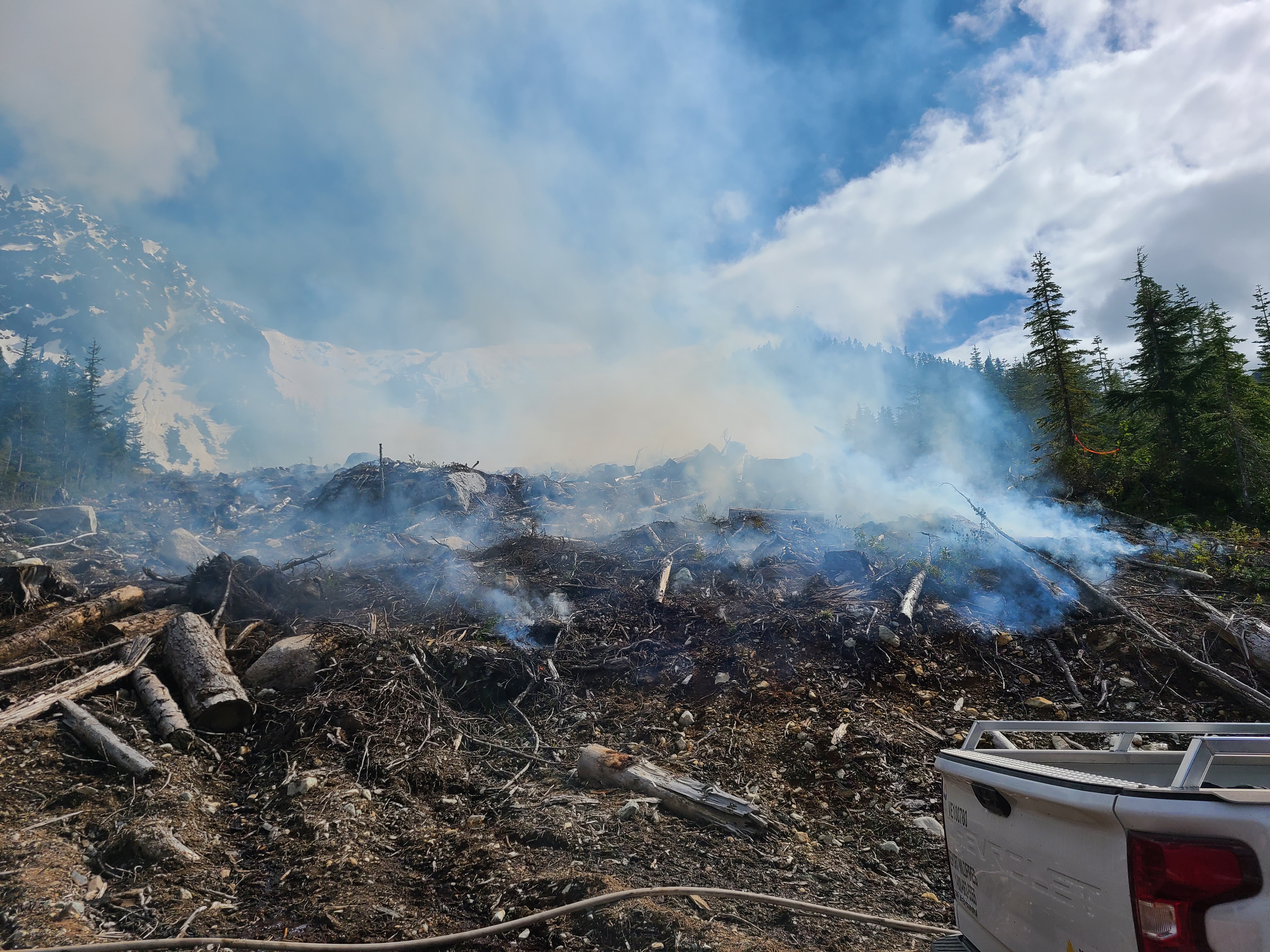

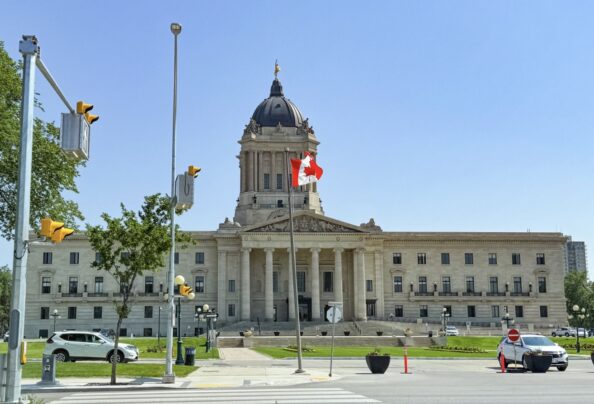 WINNIPEG, MB

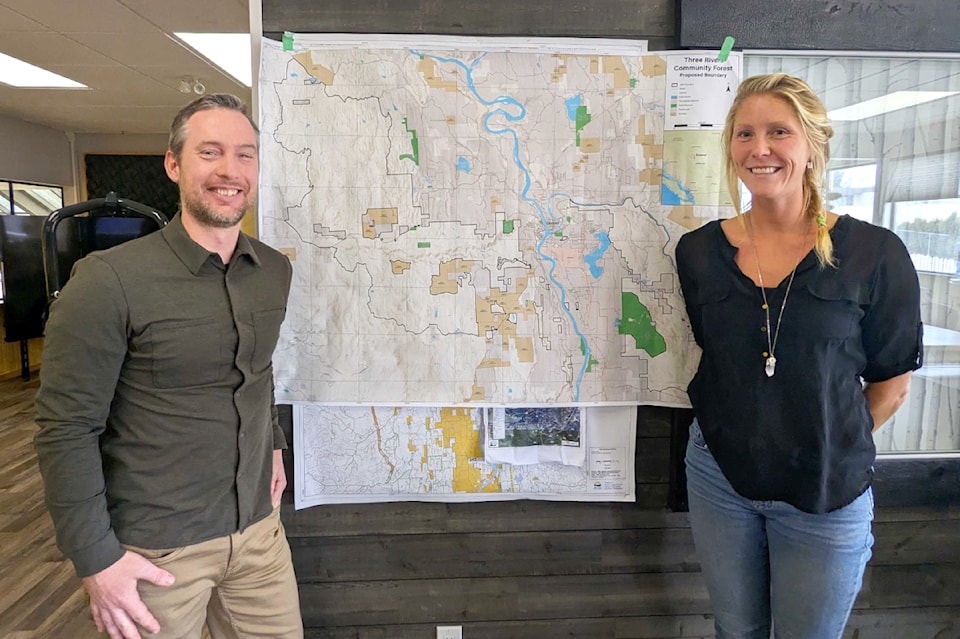
 B.C.’s Ministry of Forests will pump $28 million into 74 wildfire-prevention projects across all eight of the province’s natural resource regions, an investment applauded by NDP MLAs given its nearly $3-million investment in Kootenay communities. Through the Forest Enhancement Society of BC (FESBC), 43 new and expanded fibre-recovery projects and 31 new and expanded wildfire-mitigation projects will receive the funding, with all 74 projects expected to be complete by end of March. …In the Kootenay natural resource region, some $2,854,000 is supporting seven projects. These include $1.6 million for Nk’Mip Forestry in Castlegar; $593,000 for the Slocan Integral Foresty Cooperative; $396,000 and $46,500 for the Nakusp and Area Community Forest in Nakusp and New Denver, respectively; $101,000 for the Harrop-Procter Community Co-operative; $96,500 for the West Kootenay Woodlot Association in Nelson; and $21,000 for the Creston Valley Forest Corporation.
 …sustainable aviation fuel (SAF) is considered the most practical option for decarbonizing air travel, which in Canada accounts for about four per cent of Canada’s total greenhouse gas emissions. Biofuels made from … wood waste can lower fossil fuels’ carbon intensity and … require no major modifications to airplanes. B.C. has all of the conditions and resources needed to develop a sustainable aviation fuel industry, according to a panel discussion on SAF by the Greater Vancouver Board of Trade. But right now, most of the SAF that airlines are buying comes from suppliers in the U.S. and Europe. Despite the efforts of companies like Parkland Corp., a sustainable aviation fuel production industry is having a hard time getting off the ground in Canada. It all comes down to costs, and the Americans can produce SAF at a more cost competitive price than Canadian producers can, thanks in no small part to subsidies in the U.S.
 Join us for the Interior Safety Conference (ISC) on Thursday, May 1, 2025! This annual event is a must-attend for BC forestry professionals, offering a unique opportunity to delve into safety-related issues and learn ways to enhance safety across the industry. This Year’s Theme: Building Safety Through Shared Experiences. Gain powerful insights and practical knowledge through a series of compelling presentations by industry experts and speakers. The conference is FREE for anyone working in any phase of the forest industry, from silviculture to harvesting to wood products manufacturing.