 WASHINGTON — Canadians are waking up to a new and uncertain reality after U.S. President Donald Trump’s deadline for economy-wide tariffs passed with no relent overnight, triggering a continental trade war. The president’s executive order hitting Canada and Mexico with 25 per cent across-the-board tariffs, with a lower 10 per cent levy on Canadian energy, took effect at 12:01 a.m. ET. …Prime Minister Justin Trudeau is set to hold a press conference in Ottawa Tuesday morning with Finance Minister Dominic LeBlanc, Foreign Affairs Minister Mélanie Joly and Public Safety Minister David McGuinty. Canada’s response is to start with tariffs on $30 billion worth of goods immediately and tariffs on the remaining $125 billion worth of American products 21 days later. The S&P 500 dropped two per cent in Monday afternoon trading. The Dow Jones Industrial Average dropped 1.5 per cent and the Nasdaq composite slumped 2.6 per cent. Ontario Premier Doug Ford warned Americans that Canada would have a strong response and suggested he could shut down the movement of critical minerals and energy into the United States. He said Trump needs to pull back for the sake of Americans and Canadians.
In related coverage:
- The Whitehouse: Trump Proceeds With Tariffs On Canada and Mexico
- Forbes: Trump’s Tariffs Start Today—Here’s How They Could Impact Prices
- NY Times: China and Canada retaliate with Mexico to counter on Sunday
- 11News Colorado: Experts weigh in as Colorado and the country prepare for tariffs
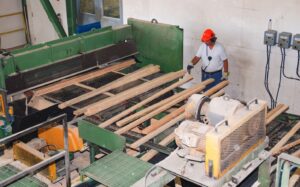 The U.S. Commerce Department today announced new preliminary anti-dumping duties on Canadian softwood lumber imports of 20%. …The duties won’t become final until August, when final determinations are expected to be made. …The new preliminary duties is just the first shot across the bow in what is expected to be a nasty trade war, with additional tariffs that may be layered on top of duties. …Anti-dumping and countervailing duties have been in place on Canadian softwood lumber at varying levels since 2017, following the expiration of the last softwood lumber agreement in 2015. The duties on Canadian softwood lumber have been effective in shrinking Canada’s market share… from about 35% in 2016, to about 24% as of the end of 2024.
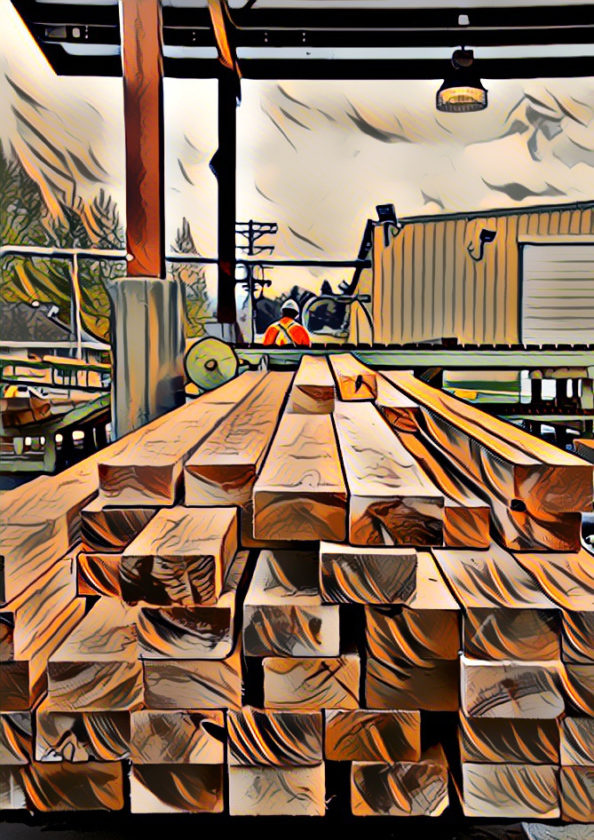 Canadian homeowners can expect to face higher premiums when they renew their home insurance, as new U.S. tariffs add pressure on property and casualty insurers by raising the cost of building materials and appliances. …The tariffs placed by Mr. Trump on building materials such as aluminum, steel and lumber will add extra costs for insurers to the goods used in replacing and repairing homes, cars and businesses, Brett Weltman, spokesperson for the Insurance Bureau of Canada, said. “While we don’t yet have a precise picture of the scope of these effects, over time, tariffs will hurt consumers and families on both sides of the border,” he said. …Bill Premdas, executive director of KPMG’s Canadian insurance practice, said a prolonged tariff battle with the U.S. could put pressure on claims costs as many of the resources used to rebuild and repair homes are covered by cross-border trade agreements. [Globe and Mail subscription required for full access to this story]





 Overnight, Jake Power went from reflecting on one of the best months that his Agassiz-based custom sawmill has ever had to staring into a potential recession sparked by U.S. President Donald Trump’s tariffs. Power, along with every other British Columbian, woke up to the reality of a trade war. …“Our business was growing, our customers were doing well,” said Power, CEO of Power Wood. “Now, I think we all expect a North American recession if this continues.” …Premier David Eby declared that “all bets are off” in terms of his response to standing up for the province. …Trade economist Werner Antweiler said he worries the most about B.C.’s forest industry, which was “already struggling (at) the edge of profitability.” …There is another looming danger in a trade war if it results in continuing depreciation of the Canadian dollar versus the U.S. currency, according to economist Bryan Yu.

 Vancouver — The BC Lumber Trade Council (BCLTC) strongly opposes the U.S. Department of Commerce’s preliminary decision to increase anti-dumping duties on Canadian softwood lumber to 20.07%. This unjustified move will negatively impact forestry workers and communities in British Columbia, while further burdening homebuilders, consumers, and the broader construction sector in the United States. “It is deeply disappointing that the U.S. continues to impose these protectionist trade measures” said Kurt Niquidet, President of the BC Lumber Trade Council. “The fact remains that the United States relies on Canadian softwood lumber imports and these duties will harm not only the B.C. forestry industry, but also U.S. consumers, who will bear some of the cost”. Ongoing rebuilding efforts in North Carolina and California, where affordable and reliable lumber is critical to recovery, will be more expensive as a result of this decision.
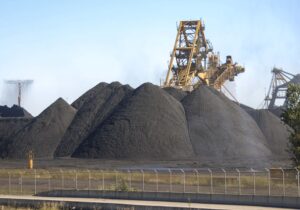 KAMLOOPS — The U.S. Department of Commerce has announced plans to almost triple the anti-dumping duties on Canadian softwood lumber. …“It’s going to be devastating for our industry if we can’t come up with some cost saving methods to be able to not only be more competitive but also trading with our largest partner when it comes to our softwood lumber agreement. …Kamloops-North Thompson MLA and Forest Critic Ward Stamer believes B.C. needs to place a carbon tax on coal as a response. “Our party proposed a carbon tax on U.S. thermal coal through our ports last Monday, and really what we should be doing — whatever they are charging us in duties, we should be charging them back with a carbon tax. …The BC Conservatives asked for an update on their carbon tax proposal during Monday’s question period.

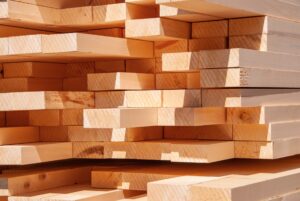 Lumber prices have risen to their highest level in more than two years on news that U.S. President Donald Trump has ordered an investigation into softwood imports from Canada. The lumber probe is the latest salvo in an escalating trade war between the neighbouring countries. Analysts say that the investigation lays the groundwork for potential new %Tariffs on Canadian lumber, notably softwood imports. …Consequently, lumber futures on the Chicago Mercantile Exchange have risen 3.5% over the past day to trade at $657 U.S. per 1,000 board feet, the highest level since mid-2022. However, while lumber prices are marching higher on the threat of U.S. tariffs, the stocks of Canadian lumber companies are tanking. Shares of Interfor fell 9% while the stock of %Canfor declined 6% in Toronto trading on March 4, the day that the 25% tariffs went into effect.


 The full scope of the new investigation is not yet certain. The




 In response to the Whitebark Pine Harvesting complaint response from the Forest Practices Board (FPB). Having been aware of and having followed the complaint over the last couple of years, it is interesting to read the FPB’s response summarized by Gazette staff in the Feb. 19, 2025 edition. The gravity of harvesting the Cut Block in question has more potential consequences than what meets the eye….We as local inhabitants of the Boundary have not yet convinced the Government to take these high elevation forests out of the Timber Harvesting Land Base (THLB) within the Boundary Timber Supply Area (TSA) or TFL 8. Doing so would help aid in preventing droughts and floods. Subalpine forests are harsh environments where tree establishment and growth is very difficult and slow. Will the Whitebark Pine seedlings survive in sufficient numbers to reestablish a new forest?…What are we doing?
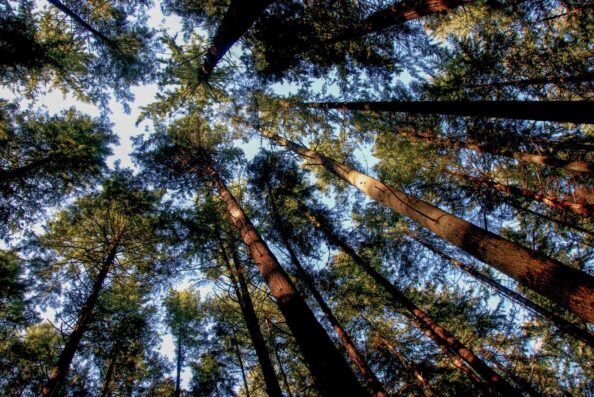 A new wildfire risk reduction project in Bella Coola is set to benefit the community by improving forest safety and supporting local jobs. North Coast-Haida Gwaii MLA Tamara Davidson says the initiative will help reduce wildfire threats while increasing the fibre supply for the forestry industry, which continues to face challenges from U.S. tariffs on softwood lumber. The Bella Coola Community Forest is a cherished part of the region for both locals and visitors, said Davidson. Projects like this not only help protect against wildfires but also provide valuable community education and create good-paying jobs—critical as we deal with climate change and rising wildfire risks. The Bella Coola Community Forest organization is receiving nearly $149,000 to complete wildfire mitigation work in an area south of Hagensborg and the Bella Coola airport.
 Rick Maddison, who lost his home in the 2003 Okanagan Mountain wildfire, and Murray Wilson, a retired forester of Vernon have teamed up to create the film B.C. Is Burning, a documentary that focuses on solutions, rather than devastation. “I’m hoping if these ideas in the film are adopted, more communities can be protected from this ongoing threat,” said Maddison. The project began in 2024, and the team is looking to raise funds to help finish the project and distribute the film. …“We’ve spoken with some of the leading people in the field,” said Wilson. “Their insights could change how we manage our forests — and how we protect our communities.” The team is hoping to raise $45,000. Recognizing the film’s importance for B.C.’s future, Kelowna-based Homestead Foods, a local hydroponics and sustainable farming operation, has agreed to match donations up to $22,500 to fund the final stages and the launch of the documentary. To watch the trailer and donate, visit


 Here are the headlines from the winter newsletter. Click the read more link to see these stories and more. We hope you enjoy reading it and we welcome your feedback.
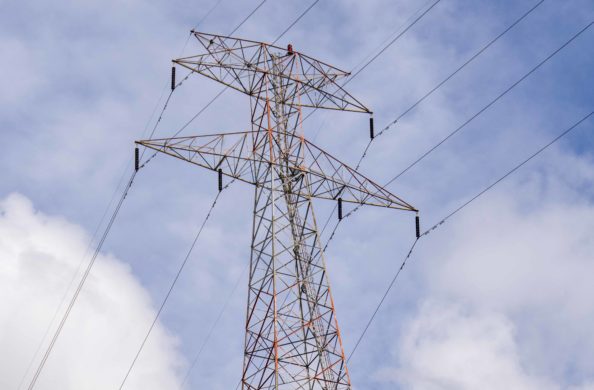 …”We’re focused on … looking at clean fuel for the power plant, and attracting industries that use clean fuel to produce a value-added product,” said Denis Caron, the president and CEO of the Port of Belledune in New Brunswick. …The Conservation Council of New Brunswick is “first and foremost … happy” the port wants to transition away from fossil fuels to more renewable technologies, said Moe Qureshi, director of climate research and policy. But it’s “not very happy” about the biomass plan for N.B. Power’s Belledune generating station. Burning wood isn’t an efficient way to generate electricity, Qureshi said, and it would be difficult to regrow trees at the rate they are burnt up as wood pellets. …N.B. Power is looking at using black wood pellets at Belledune, Caron said. These are more energy dense and similar to coal, and may not require any refitting or capital spending at the power plant.