 Vancouver — The BC Lumber Trade Council (BCLTC) strongly opposes the U.S. Department of Commerce’s preliminary decision to increase anti-dumping duties on Canadian softwood lumber to 20.07%. This unjustified move will negatively impact forestry workers and communities in British Columbia, while further burdening homebuilders, consumers, and the broader construction sector in the United States. “It is deeply disappointing that the U.S. continues to impose these protectionist trade measures” said Kurt Niquidet, President of the BC Lumber Trade Council. “The fact remains that the United States relies on Canadian softwood lumber imports and these duties will harm not only the B.C. forestry industry, but also U.S. consumers, who will bear some of the cost”. Ongoing rebuilding efforts in North Carolina and California, where affordable and reliable lumber is critical to recovery, will be more expensive as a result of this decision.
 US President Trump on Saturday
  Donald Trump has ordered a probe into dumping in the US lumber market, setting the stage for the industry to join the widening basket of commodities targeted by Washington’s global trade war. The president directed the Department of Commerce to investigate whether imports of lumber and wood products were undermining domestic loggers in a way that posed a risk to US national security, days after ordering a similar review of the copper industry. …Forestry is big business for Canada. In 2022, the sector contributed C$33.4bn to real GDP, or about 1.2%. In the same year Canada’s forest product exports were valued at C$45.6bn, with the majority destined for the US. …Derek Nighbor, FPAC president, said any increase in tariffs on lumber would hurt forest sector employees on both sides of the border. …But Andrew Miller, chair of the US Lumber Coalition, said: “Canada’s unfair trade comes at the direct expense of US companies and workers.”



 Landscape to Local: Integrated solutions to wildfire, conservation, community safety and economic development: As wildfires intensify and land use policies evolve, finding solutions requires cooperation across governments, First Nations, local communities, labour and industry. The “Landscape to Local” panel will tackle critical issues, shedding light on real world strategies, innovative practices and community-driven approaches to address the dual challenges of protecting our forests while supporting local economies. Join our distinguished panel of experts: John Kitzhaber, Former Governor of Oregon; Ward Stamer, MLA for Kamloops-North Thompson and BC Conservative Critic for Forests; Klay Tindall, General Manager of Lil’Wat Forestry Ventures; James Whitehead, Engagement Analyst with the Mitigating Wildfire Initiative at SFU’s Wosk Centre for Dialogue; and Moderator Zara Rabinovitch, Vice President of Sustainability & Public Affairs at COFI.
 A key government program designed to help older forestry workers transition into retirement has officially closed after assisting more than 2,200 individuals since its inception in 2019. The Bridging to Retirement Program, launched in response to economic challenges in the forestry sector, has distributed over $92 million in funding, helping affected workers retire early while opening up job opportunities for younger employees, according to the government. The program, which began in October 2019, reached capacity and officially ceased intake on February 26, 2025. Initially funded with $40 million, the program was later expanded to $50 million and renewed in 2021 with a three-year funding commitment. Eligible workers aged 55 and older were provided with financial support of up to $75,000 each, based on their experience and employer contributions. …When first announced in 2019, the provincial government pledged $69 million in forestry support programs to mitigate job losses, strengthen community resilience, and promote economic recovery. …While the program has concluded, new concerns loom over the B.C. forestry sector.
 The perpetually moving target of tariffs on Canadian lumber shipments to the US frustrated traders and had broad impacts on sales in many species. Despite middling demand, the threat of tariffs combined with relatively tight supplies left many prices higher for the week. The delay in announcement of preliminary AD rates by the Commerce Department injected further uncertainty. Despite inconsistent trading throughout February, the Random Lengths Framing Lumber Composite Price recorded its fourth straight increase and hit $461. That is its highest level since July 2023. Western S-P-F sales were steady but uneventful. Canadian mills weighed their responses to potential tariffs with plans ranging from adders on quoted levels to managing production and focusing sales to non-US destinations. Lumber futures were extremely volatile, swinging aggressively to every news report. The Southern Pine market was in disarray as traders processed a constant flow of mixed signals.


 A new wildfire risk reduction project in Bella Coola is set to benefit the community by improving forest safety and supporting local jobs. North Coast-Haida Gwaii MLA Tamara Davidson says the initiative will help reduce wildfire threats while increasing the fibre supply for the forestry industry, which continues to face challenges from U.S. tariffs on softwood lumber. The Bella Coola Community Forest is a cherished part of the region for both locals and visitors, said Davidson. Projects like this not only help protect against wildfires but also provide valuable community education and create good-paying jobs—critical as we deal with climate change and rising wildfire risks. The Bella Coola Community Forest organization is receiving nearly $149,000 to complete wildfire mitigation work in an area south of Hagensborg and the Bella Coola airport.
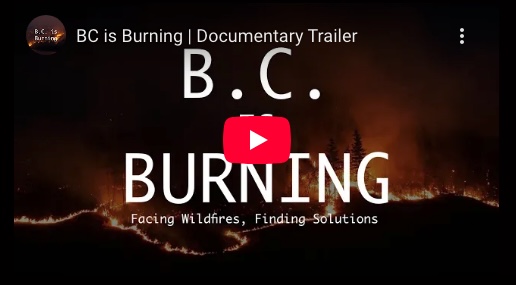 Rick Maddison, who lost his home in the 2003 Okanagan Mountain wildfire, and Murray Wilson, a retired forester of Vernon have teamed up to create the film B.C. Is Burning, a documentary that focuses on solutions, rather than devastation. “I’m hoping if these ideas in the film are adopted, more communities can be protected from this ongoing threat,” said Maddison. The project began in 2024, and the team is looking to raise funds to help finish the project and distribute the film. …“We’ve spoken with some of the leading people in the field,” said Wilson. “Their insights could change how we manage our forests — and how we protect our communities.” The team is hoping to raise $45,000. Recognizing the film’s importance for B.C.’s future, Kelowna-based Homestead Foods, a local hydroponics and sustainable farming operation, has agreed to match donations up to $22,500 to fund the final stages and the launch of the documentary. To watch the trailer and donate, visit

 VICTORIA – Workers and communities throughout B.C. are benefiting from Forest Enhancement Society of BC (FESBC) supported projects that reduce wildfire risk and increase fibre supply, keeping local mills and energy plants running in the face of U.S. tariff threats and unjustified softwood lumber duties. With $28 million from the Province, FESBC is supporting 43 new and expanded fibre-recovery projects and 31 new and expanded wildfire-mitigation projects. “In tough times, I want workers in our forest sector to know I’ve got their back,” said Ravi Parmar, Minister of Forests. “Whether it’s better utilizing existing sources of fibre or helping protect communities from wildfire, the projects are supporting workers and companies as they develop new and innovative forest practices.” Projects are taking place in all eight of the Province’s natural resource regions, helping create jobs, reducing wildfire risk and supporting B.C.’s pulp and biomass sector. They will be complete by the end of March 2025, in advance of wildfire season.
 BURNABY, BC
 The Willow Creek watershed project will restore wetlands and watercourses in the Homalco First Nation’s territory to reduce flooding and other climate disaster risks, but also boost cultural values and sustainable economic development, said Xwémalhkwu (Homalco) Chief Darren Blaney. Wetlands and riparian areas are critical because they slow and store water moving across the landscape during heavy rains to prevent floods and reduce the wildfire risk created when forests dry out. The Xwémalhkwu, whose territory is in the Campbell River area, recently secured $1.5 million in provincial funding for watershed mapping to identify flood risks and environmentally important areas, Blaney said. The project will focus on balancing the community’s climate resiliency with ecological needs. …Collaborating with partners like Strathcona Regional District will create a holistic approach to flooding that will also protect downstream neighbours, like Campbell River’s Willow Point community, David Carson, Homalco’s emergency planning and land use consultant noted.
  The province’s review of B.C. Timber Sales (BCTS) is based on a false contention the industry is running out of wood because of allowable annual cut reductions, says the Valhalla Wilderness Society (VWS). VWS said the Ministry’s review of BCTS to ensure the province’s forestry sector “is continually evolving to overcome challenges and create a guideline for a stronger, more resilient future” is barking up the wrong tree. VWS’ Anne Sherrod said the province’s intention to protect more old-growth and reform forestry in a more environmentally beneficial manner lasted only until the forest industry applied enough pressure. …Logging companies were already moving their mills and jobs out of B.C. long before U.S. President Donald Trump was elected, said Sherrod, and claims the province continues to reduce the allowable annual cut, or isn’t signing permits fast enough and environmentalists are depriving them of wood, are just excuses.
 British Columbia is set to require Canadian products to fulfil renewable fuel standards for gasoline and diesel, a move Energy Minister Adrian Dix said was aimed at building a “cleaner, stronger and more self-reliant” province. Dix said B.C. is too reliant on fuels from outside Canada, making the province vulnerable to market fluctuations and other external pressures. At the same time, he said the United States provides “dramatic subsidies” for its own biofuel industry to a degree that curtails the industry in B.C. and Canada. “For too long, B.C. biofuel producers have operated in a market where their American counterparts benefited from subsidies that gave them a considerable competitive advantage,” he told the news conference announcing the changes. …Ian Quartly, chief financial officer of Tidewater Renewables, joined Dix and said the changes are a positive step toward supporting an economically viable domestic renewable fuels industry.
