While drinking tree sap does not immediately sound appealing, Canadian producers are hoping that it will be the next must-try soft drink around the world. We have all heard of maple syrup, which is made by boiling down the sap of maple trees to produce a thick, sweet, golden-to-brown coloured syrup that is typically poured over pancakes. What is far less well known is that you can drink the sap itself, which is called maple water. Clear in colour, it contains just 2% natural sugars, so it is only slightly sweet. A small but growing number of producers in Canada are now selling this maple water in bottles or cartons, after first giving it a filter and pasteurisation to kill off any microbes. “People feel like they’re drinking the wild Canadian forest,” says Yannick Leclerc of Maple3, a producer of maple water drinks, based in Quebec City.
 Trump’s executive order to implement 25% tariffs on all Canadian imports, with a lower 10 per cent levy on Canadian energy, was delayed until March 4. …Foreign Affairs Minister Melanie Joly said Monday that Canada needs to send the message it will “fight back” after U.S. President Donald Trump said steep tariffs are indeed coming next week. In a press conference with French President Emmanuel Macron at the White House on Monday, Trump was asked directly whether he was moving ahead with levies against America’s closest neighbours. …While the original executive order was tied to the flow of deadly fentanyl, the president said earlier this month the pause would allow time to reach a “final economic deal.” Prime Minister Justin Trudeau spoke to Trump by phone Saturday ahead of Monday’s virtual G7 meeting… updating the president on efforts at the Canada-U.S. border to counter trafficking in fentanyl.
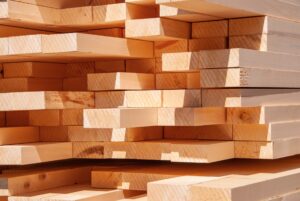 The U.S. Department of Commerce initiated the



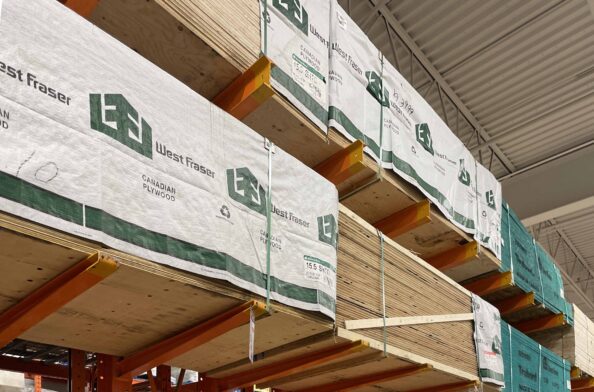 Production at High Prairie Forest Products would be impacted by potential tariffs on forest products going to the United States. General manager Brandon Marsh addressed Big Lakes County council about the negative impacts at its regular meeting Feb. 12. …“Here in High Prairie, we rely on our southern neighbours for roughly 50 per cent of our trade,” said Marsh, “This 25 per cent tariff would greatly reduce our ability to move the volume of product we produce here in our community. With the existing solid wood lumber agreements with the U.S., we already have varying levies of penalty applied to our product, which gets compounded with an additional dumping duty. …Part of West Fraser Forest Products Co. Ltd., the High Prairie operation has a staff of about 140 full-time employees while also supporting a large contractor base for other services. Those people rely an a strong market for their jobs to support families and communities, he said.
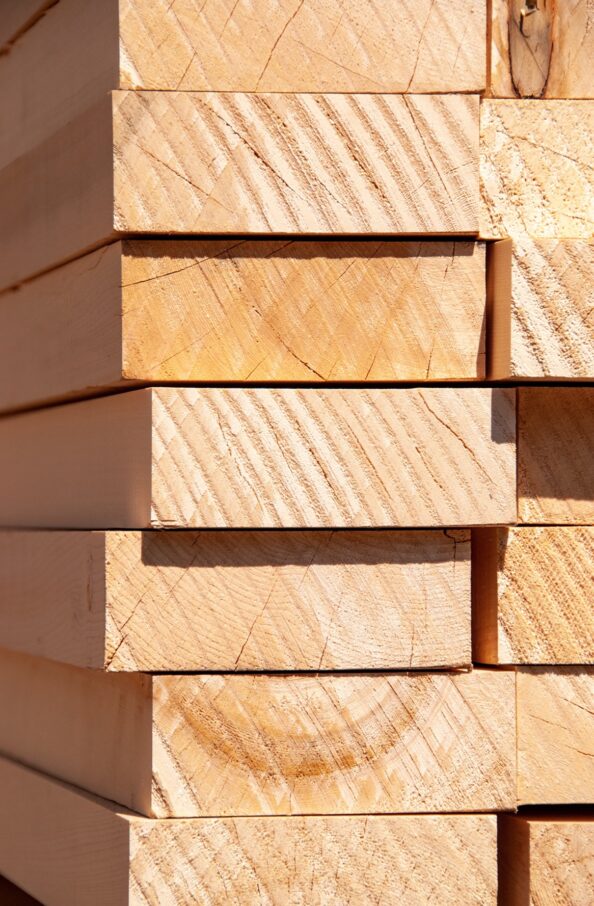 VICTORIA — B.C.’s Forests Minister Ravi Parmar says the expectation of more duties and additional tariffs piled onto Canadian softwood lumber would “absolutely be devastating” for the country’s industry. Parmar says the government expects the U.S. Commerce Department will issue anti-dumping duties by Friday of as much as 14 per cent, on top of the current 14.4 per cent duty. It comes after U.S. President Donald Trump told media on Air Force 1 that his administration was eyeing a 25 per cent tariff on lumber some time around April. Parmar says he knows many forestry workers are going to be worried about their jobs and he’ll continue to fight for them. He says the extra tariffs are “very likely” and Canada should take Trump at his word. …He said provincial and federal governments need to continue to make the case that while such tariffs hurt Canadians, they will also hurt Americans.
 Hinton Town Council will add its voice in support of the Alberta Forest Products Association (AFPA) advocacy efforts. Nicole Galambos of the AFPA – of which both West Fraser and Mondi are members – appeared as a delegation before council with a presentation called Trade Barriers and Albert’s Forest Industry. “Today [there are] some pressing trade challenges facing our sector, particularly some of the softwood lumber duties and tariffs, in addition to emerging US trade barriers and global competition,” Galambos told council, asking for their help. …AFPA suggested there are six steps the Government of Alberta can take to support the forest industry, the first of which is advocate for Alberta forest products in the US. The second is keep Alberta’s regulatory costs low, with Galambos pointing out that high costs have led to mill closures in BC. The third is … a Build With Alberta Wood Act similar to those in BC and Quebec.
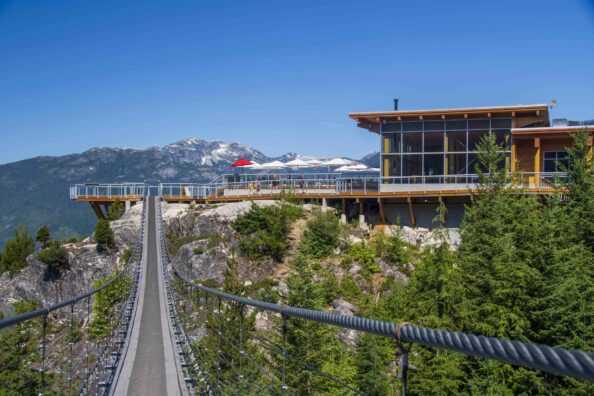 SQUAMISH, BC — Peter Dickson has owned FraserWood Industries, a Squamish-based timber manufacturer, since 1998. He has grown his business, earning contracts near and far, including the Sea to Sky Gondola service building and log cabins at Walt Disney World. One third of his business is exported to the US. …“The biggest problem is our American customers will be reluctant to sign moving forward with the uncertainty.” …David Girard sits on the government relations committee for the Sea to Sky Canadian Home Builders Association, and he said the tariffs would have an outsized impact on consumers and demand for Canadian products, and cause reduced employment. According to a recent survey by KPMG, 48% of Canadian companies contacted said they would invest or produce in the U.S. to retain American customers and reduce costs. But for FraserWood, that’s not an option.
 NEW YORK — Mercer International reported fourth quarter 2024 net income of $16.7 million compared to a net loss of $87.2 million in the fourth quarter of 2023 and a net loss of $17.6 million in the third quarter of 2024. Q4 revenues were $488 million, down from $502 million in Q3, 2024 but up from $470 million in Q4, 2023. Mr. Juan Carlos Bueno, CEO, stated: “In the fourth quarter of 2024, softwood pulp prices remained strong, decreasing slightly from recent record prices.” …Hardwood pulp prices in China and North America decreased in the fourth quarter of 2024 as the market absorbed capacity increases from earlier in the year. …Lumber sales realizations increased, driven by modestly higher prices in the U.S. market, while in Europe, prices remained stable.
  If Canada is hit with 25% tariffs… the trade impacts for the forest products sector will be wide ranging. …Lumber is the most talked about commodity with respect to tariffs, largely due to the size of the market but also the fact that tariffs would be in addition to duties which are already being paid and are set to rise come August. The US can’t supply its own lumber demand and will have to continue to import Canadian lumber. Prices will rise. …The US is even more reliant on OSB from Canada. …In softwood, ~70% of demand is met by imports and in hardwood the proportion is even higher, at 89%. Canada is the largest softwood pulp supplier to the US, representing 74% of imports; a 25% tariff on Canadian goods would inevitably result in higher costs for US customers that produce paper, packaging and tissue. There are no easy near-term substitution options.
 High Point, N.C. — After a successful first year, British Columbia wood expert
  The Government of British Columbia recently approved and enacted changes to the BC Building Code to enable just a single staircase for new small multi-unit residential buildings. However, in response to Vancouver City Council’s approved directive requesting City staff to consider similar changes to the separate Vancouver Building Code, City staff are strongly opposing such a flexible allowance, primarily due to safety concerns. This negative recommendation to City Council takes into account critical feedback previously provided by fire rescue departments in BC during the provincial government’s consultation on its proposed changes. The provincial government’s new regulations enable residential buildings up to six storeys — designed for no more than 24 residents per floor — to have just one egress staircase. Previously, such buildings with three or more storeys required at least two egress staircases.
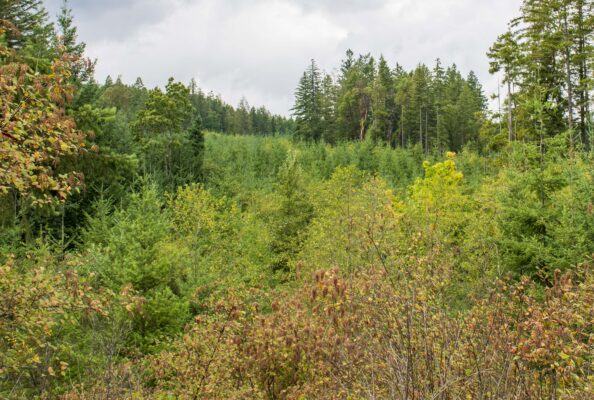 OTTAWA — The federal government has been ordered to reassess its 2022 approval of a popular weed-killer after a Federal Court judge ruled this week the original approval was unreasonable. Justice Russell Zinn gave Health Canada six months to reassess the health risks of glyphosate after the agency failed to show it considered new scientific evidence identifying new or elevated risks associated with the herbicide when it renewed the registration for a product containing it. …Monsanto, has faced multiple lawsuits in the US with multi-million-dollar awards to the plaintiffs, while others have been overturned. …The US Environmental Protection Agency reported in 2020 there were no risks to human health from current uses of the herbicide, but its assessment was overturned. …While the Federal Court’s ruling didn’t speak to the health risks of glyphosate, Zinn said Health Canada failed to show any evidence that it evaluated the new studies.
 In the February newsletter you’ll find these stories and more:
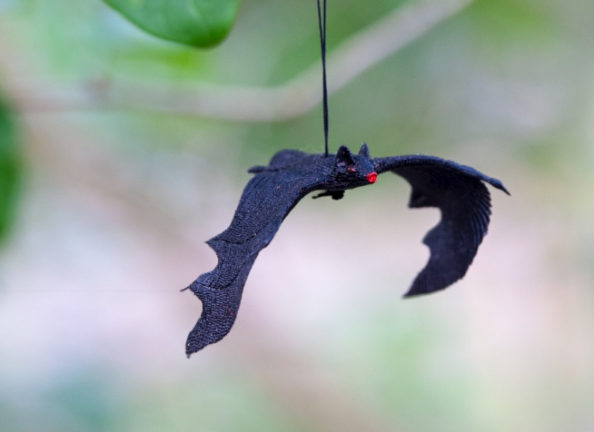 Bat species considered to be at risk seem to be in “relative abundance” on the east coast of Vancouver Island. Scott Wilson, wildlife research biologist with Environment and Climate Change Canada, gave a first look into data he’s been gathering during a presentation Feb. 20 hosted by Nanaimo and Area Land Trust and Nature Nanaimo. “I’ve worked on migratory birds most of my life and the bats a bit more recently, and we know so much less about bats in comparison to migratory birds,” said Wilson. “I’d say we’re where we were 30 years ago with birds in terms of understanding their habitat needs and their ecology.” …The data shows that in the Nanaimo area, wetlands were significantly preferred by the myotis species, with a relative abundance 6-10 times higher compared to non-wetlands. They were also preferred by the silver-haired hoary and big brown group, but less significantly, with the species also frequenting meadow bluffs.
 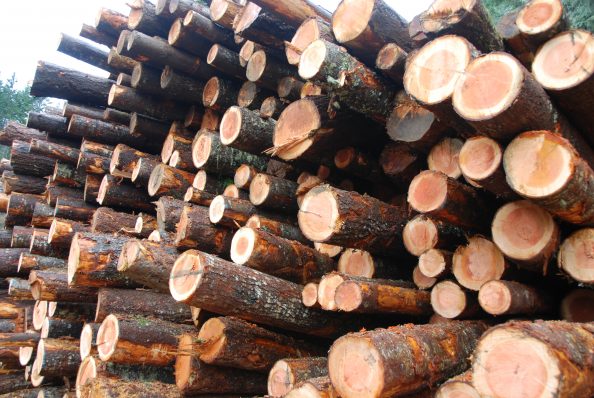 In 2019, the residents of Glade, B.C., learned they had no right to clean drinking water, after members of the Kootenay community waged a legal battle against forestry companies logging in their watershed. A judge sided with the timber companies, arguing that their economic interests outweighed the community’s concerns about its water supply. A similar story has emerged in Wynndel, B.C. — another town in the drought-stricken region — as residents worry about planned logging in their watershed, Duck Creek. Here, in the Kootenays, logging on both private and Crown land is pretty widespread. One resident told reporter Steph Kwetásel’wet Wood that forestry in the area has gotten out of hand, and lack of management on sustainable practices has turned the practice into “corporate slaughter.” …about five per cent (or 4.5 million hectares) of B.C.’s forests are privately owned, which means that the public has little insight, and even less say, into what happens.
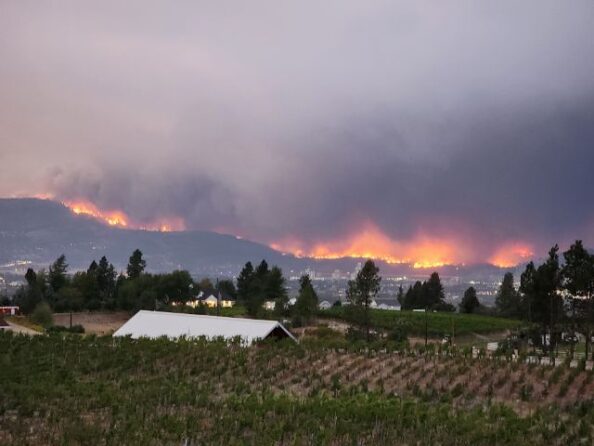 Kelowna, B.C. – A new documentary, B.C. is Burning, is tackling British Columbia’s wildfire crisis by exploring forest management solutions. The project was sparked in 2024 when Kelowna entrepreneur Rick Maddison, who lost his home in the 2003 Okanagan Mountain Park wildfire, came across an article by retired forester Murray Wilson about wildfire prevention. The two teamed up to create a film focused on solutions rather than devastation. “I’m hoping if these ideas in the film are adopted, more communities can be protected from this ongoing threat,” says Maddison. …The documentary features interviews with leading experts, including scientists, carbon specialists, and forestry professionals, providing a comprehensive look at the problem and potential solutions. “We’ve spoken with some of the leading people in the field,” says Wilson. “Their insights could change how we manage our forests—and how we protect our communities.” The team is hoping to raise $45,000 to finish production and distribution of their film.
 Carbon offsets are unreliable, fraud-ridden financial tokens that often fail to make any environmental impact at all. And if Mark Carney gets his way, they’re going to be Canada’s next big industry. In his carbon reduction pitch, Carney
  When U.S. President Donald Trump was elected, Canadian officials issued a weaker than expected 2035 emission reduction target to account for the new political reality. Energy and Natural Resources Minister Jonathan Wilkinson said in an interview that after the U.S. election, the government looked at the opportunities and weighed the risks. Competitiveness was top of mind, more so than tariff threat, he said. “Certainly the United States does factor into the competitiveness issue,” he said. “Clearly the United States is moving away from any kind of regulation relating to climate.” …Wilkinson’s comments are the clearest indication yet of American influence on Canada’s plan to navigate the unfolding energy transition away from fossil fuels and toward clean energy. …Caroline Brouillette, executive director of Climate Action Network Canada, characterized Canada’s “weak” target as “obeying in advance” to U.S. interests.