We’re proud to share that in 2024 the Tree Frog Forestry News readership surged by an impressive 44%, reaching 105,411 unique users (per Google Analytics)! This remarkable growth far outpaces our average annual increase of ~20% over the past decade. Even more, our audience is becoming increasingly continental: in 2020, 22% of our readers were US-based, but by 2024, that number climbed to 39%. Canada still leads at 51%, with the remaining 10% representing international readers from the UK, Australia, Japan, India, and beyond.
Your feedback is essential to ensuring the Tree Frog Forestry News remains your trusted source for forestry updates. Completing our quick 6-8 minute survey will help us improve and continue to offer this free, open-access resource. The survey is completely anonymous, and your responses will be kept strictly confidential. Thank you for helping us grow and better serve the forestry community!


 President Trump conceded Sunday that there may be “some pain” from his sweeping tariffs on Mexico and Canada, but they will eventually lead to a new “GOLDEN AGE.” Nice of him to promise a glorious future because the pain is already unfolding. …He also included a blast at these columns for leading the “Tariff Lobby” after our editorial called his 25% across-the-board tariffs on our friends and neighbors “


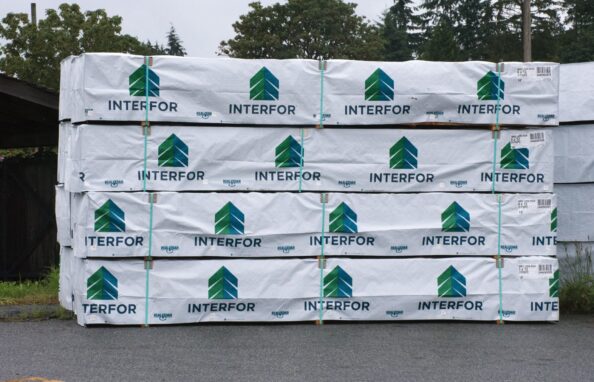 [Companies] in B.C. and across Canada, were given a last-minute, one-month reprieve Monday afternoon after Prime Minister Justin Trudeau spoke with U.S. President Donald Trump… The wood products sector sends $5.7 billion of products to the U.S., and another $962 million in pulp-and-paper products. On Monday, Interfor said it has been closely monitoring the U.S. tariff issue for some time, and as a diversified North American producer, comes into this new environment in as good a position as anyone in the industry. “Our leadership team has been hard at work identifying ways to insulate our company from tariff exposure where possible and put us in the best position to continue to thrive,” said Svetlana Kayumova, Interfor’s vice-president of corporate communications and government relations. “We know there is a housing shortage across North America, and the lumber products we produce are a vital part of the solution.” Interfor has mills on both sides of the border.
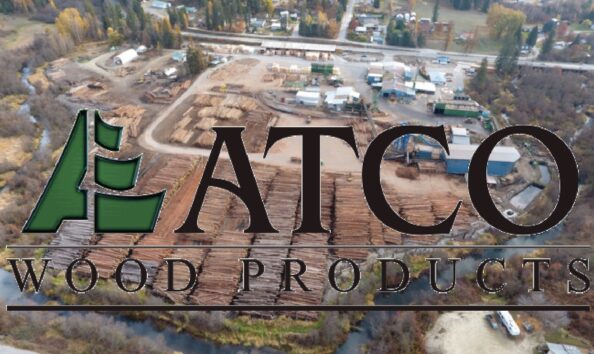 A local forest-sector manufacturer is receiving a boost from the province to help grow its product line. Atco Wood Products — located in Fruitvale, 67 kilometres southwest of Nelson — is considered one of the top producers of softwood veneers and related by-products in the region. Through the B.C. Manufacturing Jobs Fund (BCMJF), the Government of B.C. will hand Atco $50,000 to complete planning for a new veneer-production facility, and purchase and commission new equipment to improve fibre utilization and optimize production. The company — which also manufactures veneer, ties, posts, wood chips, mulch and biomass — has evolved from its sawmilling roots, into a cutting-edge manufacturer of specialized softwood veneer and other wood products. As part of new support for forest-sector manufacturers throughout the province will help create jobs and boost local economies while diversifying the range of fibre sources used to manufacture high-value, made-in-B.C. forest products.
 Premier David Eby is tasking a new cabinet committee with co-ordinating the whole-of-government approach to protect B.C.’s workers, businesses and economy against ongoing tariff threats from the United States. Ravi Kahlon, Minister of Housing and Municipal Affairs, will chair the committee, which will act as a day-to-day war room, co-ordinating actions across government to fight back on behalf of British Columbians and grow the province’s economy. “The proposed U.S. tariffs are a direct attack on B.C.’s families,” Premier Eby said. “This threat isn’t going away anytime soon – not while this president is in power. …Minister Kahlon brings deep experience in government to the table and is uniquely positioned to co-ordinate this work across government ministries.” The B.C. government has stepped up with a three-point strategy to fight back and protect British Columbians …The new committee will ensure that B.C.’s response is fast, tough and fully focused on protecting British Columbians.
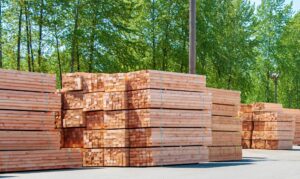 Framing lumber markets hovered in a holding pattern as traders embraced a wait-and-see approach to a potential 25% tariff on Canadian shipments. The Random Lengths Framing Lumber Composite Price finished the week $1 lower. Western S-P-F buyers moved to the sidelines in late trading, citing minimal immediate needs and uncertainty about the tariffs and near-term prospects. …Price weakness lingered in the Southern Pine market amid sluggish to stagnant sales. Buyers lacked urgency and the potential impact of tariffs on demand for SYP was a widespread topic of conversation. …Traders debated how much of a price spread between Western S-P-F and SYP would need to emerge before end users substituted species on a larger scale. …In Coast markets, Hem-Fir dimension continued to face serious downward pressure from soft Inland prices. Meanwhile, dry Douglas Fir dimension prices stabilized, assisted by a green market that has found its footing.
 Lumber futures surged to over $590 per thousand board feet, approaching the two-month high of $600 from January 6th following US President Trump’s decision to implement tariffs on Canada, a major supplier of wood to the US. The tariffs were threatened by the US President shortly after taking office, but conflicting messages from the Presidential administration raised skepticism for investors on whether trade barriers would actually be raised. According to the latest data, Canada supplied around 30% of lumber used in the US last year. The 25% tax on Canadian goods, including wood, add to the already existing anti-dumping duties of 14.5%, raising capacity pressures on domestically produced alternatives. In the meantime, the greater degree of confidence that the Fed will deliver more than one rate cut this year drove benchmark mortgage rates to ease below 7%, giving some respite to construction demand. [END]



 One of the biggest policy changes needed in B.C. is to forestry policy. B.C. policy for the last 50 years has resulted in a rapid clear-cutting of a large part of our forests even as all the research indicates that: Within a 60-80 year time span, only 20-30 per cent of forests can be cut in any one area without harming the hydrological cycle. On this basis, most BC commercial forests have been severely over-cut making a mockery of the Annual Allowable Cut. …Clear-cutting results in increased risk of forest fires up to 30 years when replanted. …Re-planting is a form of green-washing giving companies cover for the forest damage they do. …Due to the increase in forest fires partially due to logging, BC forests have [become a] carbon source. …The Power of Forests: Protecting Communities and Nature with a New Forest Act effort was launched by the
 This is the beginning of convention season and that means many opportunities to learn, connect, and hear from government officials, project partners, and community organizations about problems, policies, and possibilities for the sector. The mood, thus far, is introspective, with reviews planned for BC Timber Sales and the forest sector in general. …At FESBC, we are reviewing applications for funding over the next two years. Demand for funding currently far exceeds supply. In this newsletter: A safety tip from the BC Forest Safety Council; Faces of Forestry features Erin McLeod; Information on FESBC’s 2025-27 second round of funding; Impact and benefits of the Pressy Lake Pilot Project; Nakusp & Area Community Forest’s wildfire risk reduction projects; and a podcast feature from the University of Northern British Columbia Forestry Club.
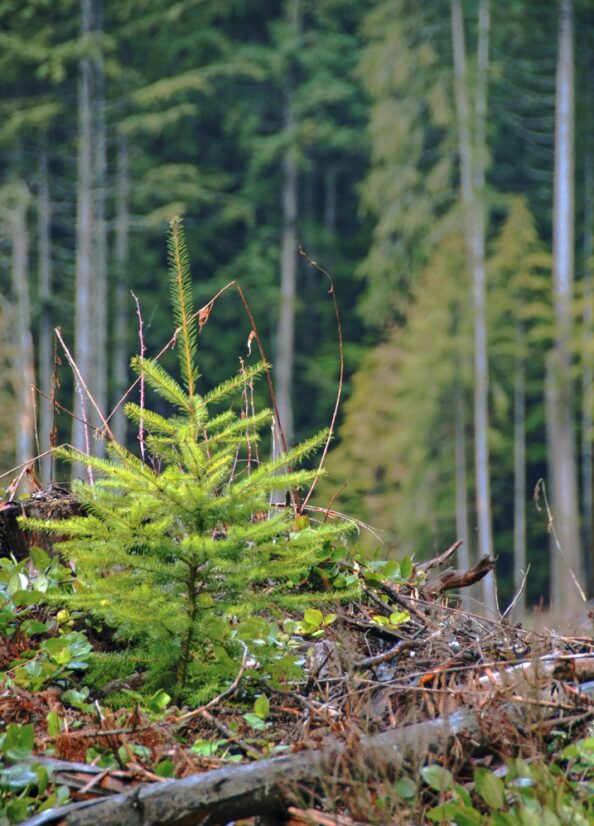 …changes in climate are expected to drive wildlife seeking refuge up mountains and further north. But for trees… the changes in climate are often coming too fast to get out of the way, especially when combined with pressures from logging, said Suzanne Simard, a professor in the University of British Columbia’s Faculty of Forestry. …In a new study published in Global Change Biology, Simard and her UBC colleagues took three-year-old interior Douglas fir seedlings from locations in southern B.C. and planted them as far north as Fort St. James, the northern limit of the species’ range … to find out how the trees would handle the human-assisted migration, and if they would do better in a colder climate. …As early as 2006, University of Alberta researcher Andreas Hamann published a study that concluded climate change could push the range of B.C.’s tree species north at a rate of 100 kilometres per decade.
  Five efforts in Northern Ontario are receiving a total of $2.7 million in federal funding to work on climate change adaptation projects. Four of these projects are based in Sudbury and one is in Mattawa, and they include such things as creating educational programming and climate change adaptation plans. Wednesday’s funding comes from a greater pool of