
Mark Carney
Toronto (Canada) – Prime Minister Mark Carney heads to Asia this week seeking to broaden international trade, part of his plan to reduce Canadian reliance on the United States, which he says has left the country vulnerable. Carney leaves Thursday for India, the first stop on a three-country tour that includes Australia and Japan. “In a more uncertain world, Canada is focused on what we can control,” Carney said in a statement announcing the trip. “We are forging new partnerships abroad to create greater certainty, security and prosperity at home.” Carney has said that the US-led global order is fading and that Canada should not expect the old system to return once President Donald Trump leaves office. Trump’s tariffs on autos, aluminum, lumber and steel are hurting the Canadian economy. Carney says that to safeguard Canada’s economic future, the country needs to massively expand non-US international trade.


 OTTAWA — The Canadian minister responsible for Canada-United States trade said Wednesday that Mexico was keen to maintain a trilateral agreement under the free trade pact between the three North American neighbors that is up for review this year. “I am reassured by the Mexican economy secretary … his desire to work with Canada and to ensure that the review of CUSMA results in a strengthened and ongoing trilateral trade arrangement,” Dominic LeBlanc said in a press conference from Mexico. LeBlanc is heading a group of over 370 delegates to Mexico for a six-day trade mission amid fears that U.S. President Donald Trump could ditch the decades-old three-way free trade agreement between the U.S., Mexico, and Canada when it comes up for review later this year. “The Mexicans have very similar interests to Canada,” LeBlanc said. “We both remain absolutely committed to the trilateral free trade agreement and working together as this review process unfolds,” he added.
 FINLAND — Metsä Group’s demo plant for a new lignin product has started up in Äänekoski, Finland. The plant uses lignin extracted from the bioproduct mill’s production process as its raw material and it has a nameplate capacity of two tons of a new type of lignin product per day. The plant was built in cooperation with the equipment supplier ANDRITZ. Dow, a leading materials science company, is a key partner. Metsä Group’s new lignin products are called Metsä LigO™. According to Ismo Nousiainen, CEO of Metsä Fibre, part of Metsä Group, the company aims to use the wood raw material, including side streams of pulp production, as efficiently as possible to generate the greatest possible added value. …”The purpose of the new demo plant is to ensure the functionality of the lignin product’s production process, as well as the product’s characteristics and suitability for the market.”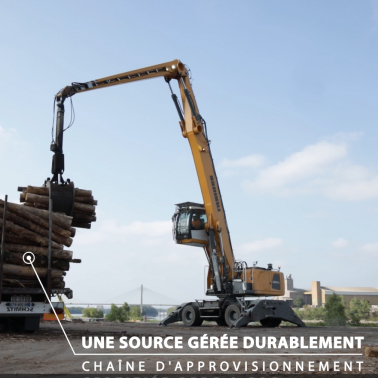

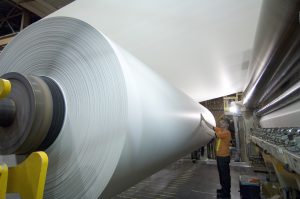 Finland’s forest industry could be forced to reduce capacity again as rising raw material costs and weaker market conditions weigh on profitability. That assessment comes from Juha Varis, senior portfolio manager at S-Bank. …The warning comes amid a more challenging environment for pulp and paper producers. Wood prices remain elevated while demand for several forest industry products has developed more weakly than expected, increasing investor expectations that production cuts may follow. …Björn Wahlroos said that a large and modern pulp mill in Finland could be forced to shut down due to a lack of raw material. His remarks triggered wider discussion within the sector. …Varis said overcapacity in the European forest industry is evident across several segments. He added that investors expect some reduction in capacity but that it remains unclear which companies or plants might be affected.
 NEW YORK, New York — Mercer International reported fourth quarter 2025 Operating EBITDA of negative $20.1 million compared to positive $99.2 million in the same quarter of 2024 and negative $28.1 million in the third quarter of 2025. In the fourth quarter of 2025, net loss was $308.7 million compared to net income of $16.7 million in the fourth quarter of 2024 and a net loss of $80.8 million in the third quarter of 2025. The net loss in the fourth quarter of 2025 included total non-cash impairments of $238.7 million. This included non-cash impairments of $203.5 million recognized against long-lived assets at our Peace River mill due to the continued down-cycle environment of hardwood pulp markets, $12.2 million against certain obsolete equipment and $23.0 million against pulp inventory due to low prices and high fiber costs. …Mr. Juan Carlos Bueno, CEO: “We continue to prioritize improving liquidity and working capital, committing to rebalancing our asset portfolio and maintaining operating discipline.”
 Japan’s housing starts fell 0.4% yoy in January 2026, easing from a 1.3% drop in the previous month and beating market expectations of a 1.6% decline. It marked the third consecutive month of contraction, though the pace was the mildest since July 2024. Rental housing starts declined at a slower rate (-1.5% vs -3.4% in December). Meanwhile, owner-occupied homes rebounded (6.6% vs -1.8%), as did prefabricated housing (5.1% vs -6.1%). Starts for two-by-four homes also accelerated (8.7% vs 2.8%). In contrast, built-for-sale housing fell 4.8%, reversing a 1.9% increase in December.
 Drax Group Plc’s profit declined last year but exceeded analyst estimates, helping lift the shares to their highest level in almost two decades despite significant impairment charges. Adjusted earnings before interest, taxes, depreciation and amortization totaled £947 million ($1.3 billion), beating analyst estimates for £913.7 million. Citigroup Inc. analyst Jenny Ping cited lower pellet costs and record generation at its main biomass plant as supporting the result. The figure was still 11% lower than a year earlier, which Drax attributed to weaker power prices. The company’s share price rose as much as 6.2% to the highest since October 2006 before paring gains. …Drax reaffirmed its target of £600 million to £700 million of annual adjusted EBITDA after 2027 and said it expects 2026 earnings to align with analyst forecasts of about £662 million. The company also expects to return £1 billion to shareholders through dividends and share buybacks from 2025 until 2031, with £2 billion invested in growth areas.
 Russia’s lumber industry is entering a period of sustained pressure as production volumes continue to fall and regulatory risks increase. Official data shows that lumber output declined by more than 2.5% last year, reinforcing concerns across the forestry and wood processing sectors. According to Rosstat, Russia’s lumber production dropped from 29.2 million cubic metres in 2024 to 28.48 million cubic metres in 2025. Output remains well below historical highs. Current production is estimated to be 2 to 3 million cubic metres lower than the 2019 peak of roughly 32 million cubic metres. The downturn reflects structural challenges rather than short-term disruption. Domestic demand has weakened. Export markets have narrowed. Access to European machinery and technology has been reduced. These pressures are being felt across both logging and downstream processing operations. China now absorbs more than 70% of Russia’s lumber exports. …Softwood lumber production fell by 3.5% last year. Output declined to 25.7 million cubic metres.

 Canada Wood’s January market news highlights the continued expansion of Canadian wood products into key international markets, with a strong focus on mass timber, technical innovation, and long-term partnerships. Articles explore new opportunities for Canadian species in China’s growing glulam sector, including efforts to diversify beyond Douglas fir into Hem-Fir, SPF, and yellow cedar. Other features examine rising interest in mass timber construction in South Korea, driven by carbon-reduction goals and modern architectural demand. The January updates also showcase how long-standing Canadian demonstration projects in southern China are building confidence in wood’s durability in challenging climates, helping pave the way for larger, more complex structures. Rounding out the month is news of renewed Canada–China cooperation on wood construction, reinforcing shared commitments to low-carbon building and sustainable urban development. Together, these stories offer a timely snapshot of how Canadian wood expertise is shaping construction practices abroad.
.jpg)

 BHUBANESWAR: India should explore inclusion of wood-based construction and buildings into the national building code to achieve optimal outcomes for climate change and the economy, opined experts at the 14th National Workshop of Japan International Cooperation Agency Assisted Forestry Projects. The three-day workshop is organised by the Odisha Forestry Sector Development Project focuses on strengthening sustainable wood supply systems, promoting forest certification and expanding agroforestry to meet both domestic and global demands. Odisha Forestry Sector Development Society officials said while the National Building Code of India advocates bamboo for use in construction … international experts at the workshop opined that production and use of wood-based and other natural construction materials can also be explored to reduce dependence on carbon-intensive materials further and encourage sustainable forestry.
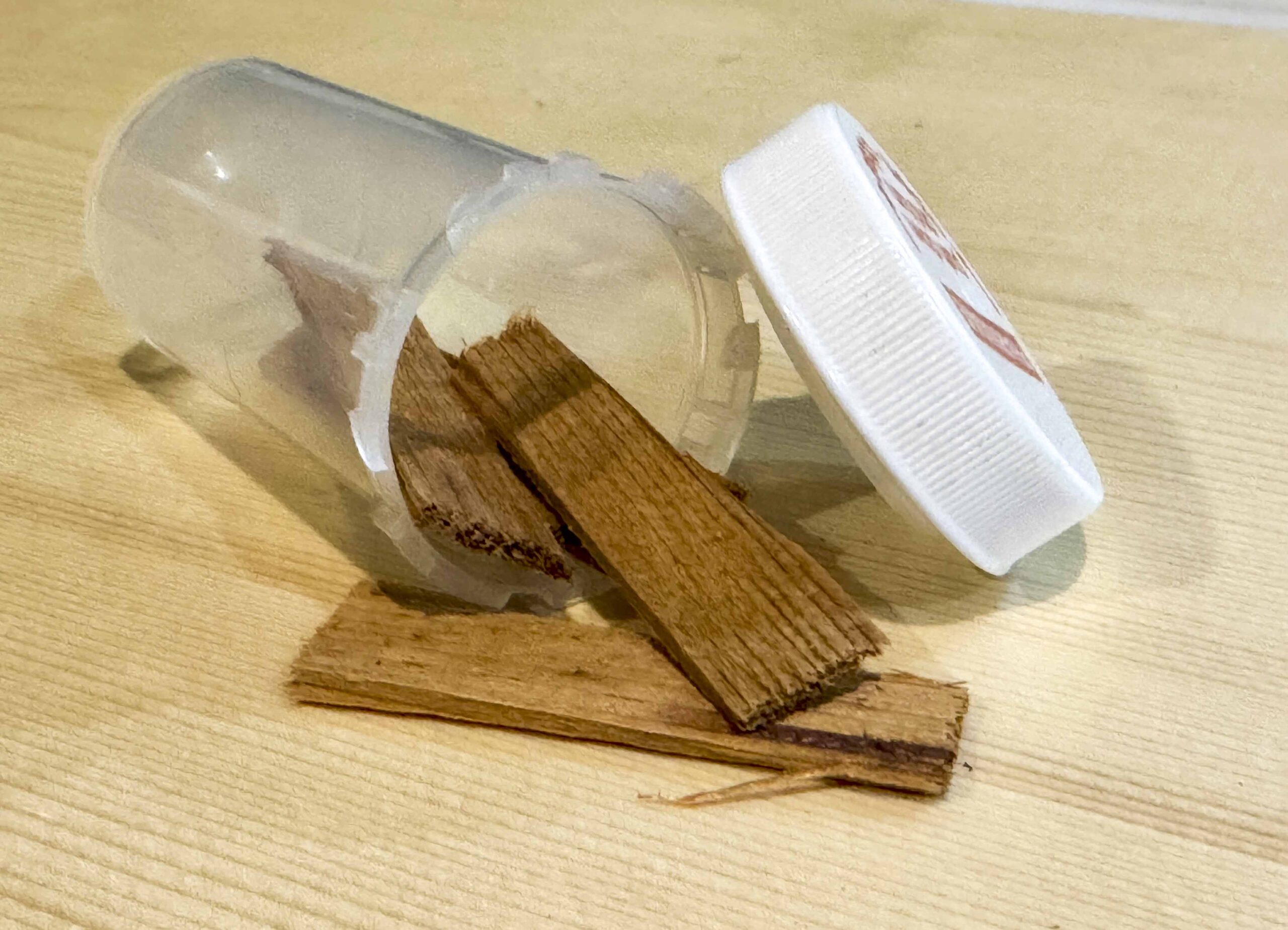 There are two types of suncream: chemical and physical. Chemical suncreams absorb the UV rays into heat … physical sunblocks scatter and reflect the UV rays on top of the skin. While they offer a broader spectrum of protection, their photo-catalytic nature and small particle size carry a potential risk. The synthetic compounds have adverse side effects on humans and the environment. …Wood is a material that is very effective at scattering light as a result of its cellular structure, absorbing light through one of its components, lignin. The compound is an organic polymer in the cells of many plants which makes them rigid and woody. It also offers sun protection factors (SPFs) that exceed 180. Lignin has a natural phenolic network that forms a shield against ultraviolet light, offering protection against the sun without the need for petroleum-based filters.The use of lignin as sun protection for skin is promising, particularly as a renewable and waste-free resource.





 Forests around the world are quietly transforming, and not for the better. A massive global analysis of more than 31,000 tree species reveals that forests are becoming more uniform, increasingly dominated by fast-growing “sprinter” trees, while slow-growing, long-lived species are disappearing. These slower species act as the backbone of forest ecosystems, storing carbon, stabilizing environments, and supporting rich webs of life—especially in tropical regions where biodiversity is highest. …The research also highlights the growing role of naturalized tree species, meaning trees that originated elsewhere but now grow wild in new regions. Nearly 41 percent of these species share traits like rapid growth and small leaves, which help them survive in disturbed environments. …The study shows that tropical and subtropical regions are likely to experience the most severe impacts from forest homogenization. …According to the researchers, human actions are the main force behind these changes in forest composition. …This makes protecting slow-growing tree species increasingly urgent.
 In a controversial study published in April last year, researchers described an astonishing phenomenon: a forest of Norway spruce trees (Picea abies) appeared to ‘sync’ their electrical signaling ahead of a partial solar eclipse. Now there’s a new theory about what was actually going on. Having examined the data, ecologists Ariel Novoplansky and Hezi Yizhaq from Ben-Gurion University of the Negev in Israel propose an explanation that’s not quite as sensational. Novoplansky and Yizhaq suggest that the electrical activity seen in the trees was caused by a temperature drop, a passing thunderstorm, and several local lightning strikes; factors that previous research has shown can trigger similar signaling responses in plants.
 Drax Group is launching a strategic review of its Canadian pellet operations due to a constrained fiber market and low margins. …CEO Will Gardiner discussed the company’s changing pellet production strategy. …“Our US business is fundamentally part of our UK supply chain. That business is doing very well As you will have seen, our Canadian business is more challenged, and we’ve been talking about this for some time as margins have come down due to fiber costs rising in Canada more rapidly than indexed power prices in Asia. As we noted last year, this dynamic contributed to the decision we’ve made to close one of our pellet plants in Williams Lake towards the end of last year.” As a result, Drax is not currently expecting to commit any additional capital to the pellet production segment, including the paused pellet plant planned for development in Longview, Washington.
 With European manufacturing output down by up to 40% since 2018, and 200,000 industrial jobs lost last year, the European Confederation of the Paper Industry (Cepi) wants to put biomass, circularity and decarbonization financing back at the heart of the industrial debate. The trade organization relies on a report commissioned from Deloitte. According to this analysis… the use of biomass and efficiency in the circularity of materials are structural advantages for European industry in the face of imported fossil products. The report highlights the fact that the forestry and timber industry, which is already governed by national legislation, has to contend with over a hundred additional European regulations. In Cepi’s view, this overlap is holding back biomass-related industrial development. Moreover, paper collection and recycling remains fragmented across the member states. This heterogeneity complicates the optimization of secondary material flows, despite the fact that paper is one of the most recycled materials in Europe.
 When the time is right, a good love song can make all the difference. A study from the University of California, Davis, found that temperature affects the sound and quality of male frogs’ mating calls. In the colder, early weeks of spring, their songs start off sluggishly. In warmer weather, their songs pick up the pace, and female frogs take note. Better songs make the males more attractive mates and suggest to females that conditions are suitable for reproduction. …The results carry implications for conservation amid climate change. …Understanding when frogs breed, how that may shift as the climate warms, and what is driving those shifts is critical to their conservation. …females do not necessarily come to the pond just because the males are calling. The time has to be right for her eggs to survive. That clue lies in the quality of the male’s song, which is more attractive once it’s warmer.
  BUENOS AIRES, Argentina — Human-caused climate change had an important impact on the recent ferocious wildfires that engulfed parts of Chile and Argentina’s Patagonia region, making the extremely high-risk conditions that led to widespread burning up to three times more likely than in a world without global warming, a team of researchers warned on Wednesday. The hot, dry and gusty weather that fed last month’s deadly wildfires in central and southern Chile was made around 200% more likely by human-made greenhouse gas emissions while the high-fire-risk conditions that fueled the blazes still racing through southern Argentina were made 150% more likely, according to World Weather Attribution, a scientific initiative that investigates extreme weather events soon after they happen. That probability will only increase, the experts added, as humans continue to blanket the planet with heat-trapping gases.
 Scotland would have to plant several hundred thousand hectares of new woodland to achieve net-zero carbon emissions in the livestock sector by 2050 through afforestation alone, a new study has shown. The study by The James Hutton Institute, which was recently published in the journal Science of The Total Environment, investigated how multi-functional afforestation and livestock reduction could contribute to helping Scotland achieve net-zero emissions in the livestock sector by 2050. This goal aligns with the Paris Agreement on climate change. Researchers have simulated a scenario in which approximately 30,000ha per year of new woodland and agroforestry were planted in Scotland between 2020 and 2025. …It is often assumed such planting can only occur at the expense of grazing area, so the researchers coupled this planting effort with a linear decrease in livestock, with an estimated total reduction of approximately 50% of the present herd numbers.
 Boreal ecosystems store twice as much carbon as the atmosphere and warm faster than the global average. The current paradigm based on boreal forests and tundra considers that warming will accelerate boreal carbon loss. However, the warming response of Sphagnum peatlands, storing ~40% of boreal carbon stocks, remains under-investigated. …investigations into two long-term warming experiments in Finnish peatlands, we demonstrate that warming enhances soil carbon accumulation in boreal Sphagnum peatlands. This result sharply contrasts with warming-induced carbon loss from boreal forests and tundra, owing to the unique metabolic response of Sphagnum… Our estimates suggest that warming-induced increase of soil carbon in boreal Sphagnum peatlands (assuming no hydrological changes or plant species shifts) may offset nearly half the boreal forest carbon-sink decline or heterotrophic respiration increases in Arctic tundra under warming. These findings highlight the vital but overlooked role of Sphagnum peatlands in counteracting boreal carbon loss under future warming.