The intense electrical charge delivered by a lightning strike can obliterate most foliage, especially in tropical regions where research suggests more than 800 million trees are destroyed each year due to lightning strikes. But …in some cases, lightning might benefit certain trees and provide a competitive advantage. Researchers, led by Evan Gora, a forest ecologist at the Cary Institute of Ecosystem Studies …examined 93 trees that had been struck by lightning in central Panama. …According to the study, each lightning strike to a Dipteryx oleifera tree killed approximately 9.2 neighbouring trees due to the electricity traveling between branches or vines. This creates more space and resources for the Dipteryx oleifera. The trees also benefit from strikes because it helps remove parasitic vines called lianas, which can reduce light and nutrient availability. …In the long term, the lightning-strike tolerance of these trees could play a key role in forest planning and restoration efforts.



 Donald Trump’s trade war is alarming the global markets, sending shares sliding in their worst month in over two years. Stock markets across the Asia-Pacific region are in retreat this morning, as investors fear Trump will announce swingeing new tariffs on Wednesday, which has been dubbed “Liberation Day” by the US president. Japan’s Nikkei has lost 3.9%, down 1,457 points at 35,662 points today, while South Korea’s KOSPI is down 3%, Australia’s S&P/ASX 200 has fallen 1.7%. In China, which has already been hit by Trump tariffs this year. the CSI 300 is 0.9% lower. …Today’s selloff comes after Donald Trump told reporters that the reciprocal tariffs he is set to announce this week will include all nations. …On Friday, core inflation rose by more than expected, while consumer sentiment weakened to its lowest level since 2022.
 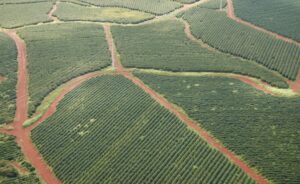 In a move that merges sustainable finance with industrial-scale environmental stewardship, Sydney-based natural capital investment manager New Forests has partnered with Japan’s Oji Holdings Corporation, one of the world’s largest pulp and paper producers, to establish the Future Forest Innovations Fund. With an initial commitment of US$300 million ( US$297 million from Oji and US$3 million from New Forests ), the fund aims to acquire and manage 70,000 hectares of plantation forests across Southeast Asia, North and Latin America, and Africa… The partnership signals an alignment between traditional manufacturing and ecological impact investing. Oji Holdings, which already manages 635,000 hectares of plantation forests worldwide, is leveraging this initiative to meet its 2030 net sequestration goal of 1.5 million tonnes of carbon dioxide equivalent per year, integrating climate action into its global forest footprint.
 BEIJING — UBS analysts became the latest to raise expectations that China’s struggling real estate market is close to stabilizing. “After four or five years of a downward cycle, we have begun to see some relatively positive signals,” John Lam at UBS Investment Bank. …“Of course these signals aren’t nationwide, and may be local,” Lam said. One indicator is improving sales in China’s largest cities. Existing home sales in five major Chinese cities have climbed by more than 30% from a year ago on a weekly basis as of Wednesday. The category is typically called “secondary home sales” in China, in contrast to the primary market, which has typically consisted of newly built apartment homes. UBS now predicts China’s home prices can stabilize in early 2026, earlier than the mid-2026 timeframe previously forecast. They expect secondary transactions could reach half of the total by 2026.
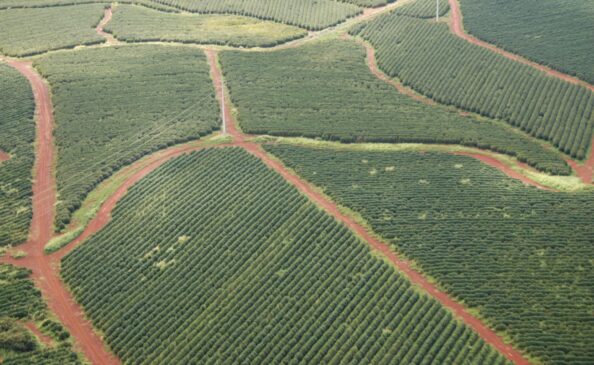
 Indonesia is one of the active exporters of logs and sawn wood, so the waste generated is very large. One of the applicable technologies developed for the utilization of wood saw waste is to process it into liquid smoke through the pyrolysis process. The application of liquid smoke to plants can affect plant’s growth and production processes due to the presence of acetic acid and methanol. The purpose of this research was to find out about the properties of Surian sawn waste liquid smoke and how it could be used as a biofertilizer an Arabica coffee seeds. …The effectiveness of liquid smoke from sawn wood waste for the increase in height, stem diameter, and the highest number of leaves of coffee seeds was obtained at a concentration of 2.5%.
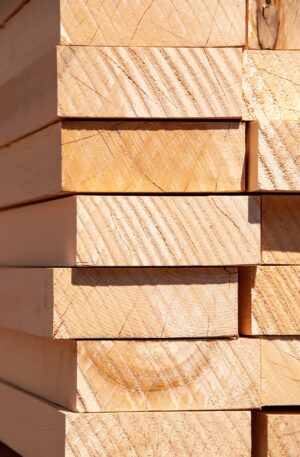 Wood, a traditional and sustainable structural material, has long been used in construction and furniture due to its availability and mechanical properties. However, natural wood’s strength is often insufficient for advanced engineering applications. Now,
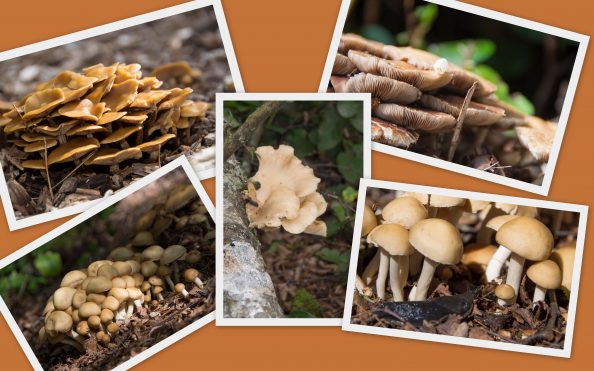 Gland, Switzerland – The number of fungi species on the IUCN Red List of Threatened Species has surpassed 1,000, confirming that deforestation, agricultural expansion and urban development are driving these species to decline worldwide. The IUCN Red List now includes 169,420 species, of which 47,187 are threatened with extinction. The addition of 482 newly assessed fungi species brings their number on the IUCN Red List to 1,300, of which at least 411 are at risk of extinction. “Fungi are the unsung heroes of life on Earth – yet they have long been overlooked. …we have taken a vital step forward: over 1,000 of the world’s 155,000 known fungal species have now been assessed for the IUCN Red List of Threatened Species, the most comprehensive source of information on extinction risk. Now, it’s time to turn this knowledge into action and safeguard the extraordinary fungal kingdom,” said Dr Grethel Aguilar, IUCN Director General.
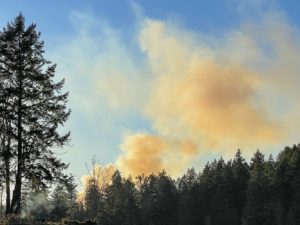 Last year was Ukraine’s worst year for wildfires in more than three decades of record-keeping, as shelling along front lines in the war with Russia triggered an unprecedented number of blazes, scientists said. Forest fires in Ukraine in 2024 burnt more than twice the area destroyed by fire in the entire 27-country European Union in 2024. Satellite data showed nearly 9,000 fires torched a total of 965,000 hectares in Ukraine in 2024. Ukraine has around 10 million hectares, or 100,000 sq km (38,610 sq miles), of forest. Around a third of the area burned last year was farmland… Maksym Matsala, a forest researcher at Sweden’s University of Agricultural Sciences, said the main cause was artillery and falling shells igniting fires. He said the jump in fires last year was partly because of a large build-up of dead and damaged trees since Russia’s invasion in 2022, which had created plentiful fuel for fires during extremely dry weather in 2024.
 BENGALURU/JAKARTA
 The European Union is on track to miss its 2030 carbon sequestration targets for forests. A new report says forest-based carbon removal needs clearer policies and more funding. Ongoing deforestation, land degradation, and unsustainable land-use practices highlight the need for a policy shift. Data from the latest European Environment Agency (EEA) monitoring report, details 28 key indicators assessing targets across sectors, including climate change, biodiversity, pollution reduction, and sustainable resource use. Biodiversity and ecosystem conservation goals are closely tied to forest health. The EU is not on track to meet its targets for increasing forest connectivity or reversing the decline in common bird populations, which reflects broader ecosystem degradation. Despite existing legislation, pressures from agriculture, urban expansion, and resource extraction continue to impact forest ecosystems.