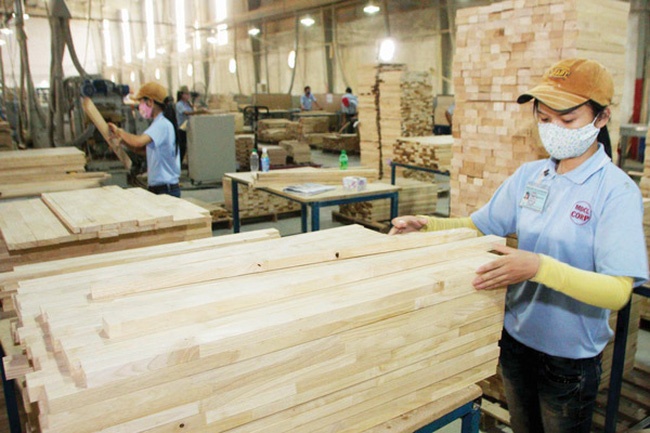
Trade is top of mind for everyone right now, and market diversification is a key part of those conversations. In this episode of Forestry Talks, host Aspen Dudzic is joined by Bruce St. John, President of Canada Wood, to dive into the decades-long efforts to diversify Canada’s forest product exports. Bruce shares fascinating insights into how countries like Japan, China, and Vietnam are integrating Canadian wood into their industries—not just for construction, but for everything from seismic-resistant buildings to high-end furniture. We also explore how Alberta plays a crucial role in securing international demand and why emerging markets are looking to Canadian forest products as part of their sustainability solutions. Join us for an in-depth discussion about why international market diversification is more important than ever, the impact of evolving trade policies, and the exciting innovations shaping the future of Canada’s forestry exports.
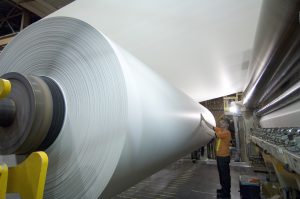 Following the US government’s imposed tariffs on steel and aluminium, Cepi has called on the European Commission to continue negotiations, citing the potential for future tariffs including pulp and paper and aiming to avoid supply chain disruptions. Cepi is currently taking part in a consultation launched by the European Commission. …The confederation asks the Commission to exclude from such EU retaliation list products that risk being in short supply in the EU. …According to Cepi, the EU imports around 900,000 tonnes of pulp per year from the US and close to 600,000 tonnes of paper and board, while the EU exports about 1600,000 tonnes of paper and board to the US and around 350,000 tonnes of pulp. It states that since a multilateral agreement of all major pulp and paper producers in January 2004, there have been no import tariffs on both sides of the Atlantic.
 WASHINGTON — A gobsmacked planet is wondering what’s next from President Donald Trump on the tariff spree he’s set in zigzag motion. In recent weeks, Trump has announced punishing tariffs against allies and adversaries alike, selectively paused and imposed them, doubled and then halved some, and warned late in the week that he’ll tax European wine and spirits a stratospheric 200% if the European Union doesn’t drop a 50% tariff on U.S. whiskey. His ultimate stated goal is clear: to revive American manufacturing and win compromises along the way. But people and nations whose fortunes rise and fall on trade are trying to divine a method to his machinations. So far, he’s spurred fears about slower growth and higher inflation that are dragging down the stock market and consumer confidence. “His tariff policy is erratic,” Robert Halver, at Germany’s Baader Bank, said. “So, there is no planning certainty at all.”
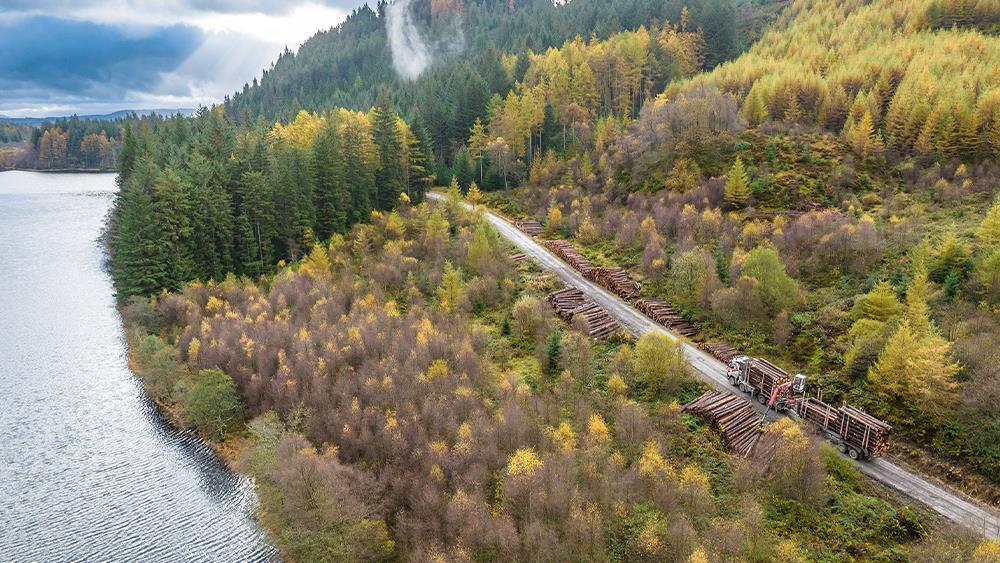
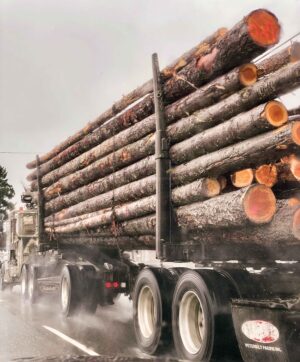 China suspended on Tuesday the soybean import licences of three U.S. firms and halted imports of U.S. logs, stepping up its retaliation for Donald Trump’s decision to impose an extra 10% duty on China. …The suspension of U.S. logs was a direct response to Trump’s move on March 1 to order a trade investigation on imported lumber. Trump had earlier told reporters that he was thinking about imposing a 25% tariff rate on lumber and forest products. “The announcement of import restrictions on U.S lumber and soybeans linked with phytosanitary issues follows a long history of similar measures by Beijing,” said Even Pay, agriculture analyst at Trivium China. …China is one of the world’s largest importers of wood products and the third-largest destination for U.S. forest products. It imported around $850 million worth of logs and other rough wood products from the U.S. in 2024, according to Chinese customs data.
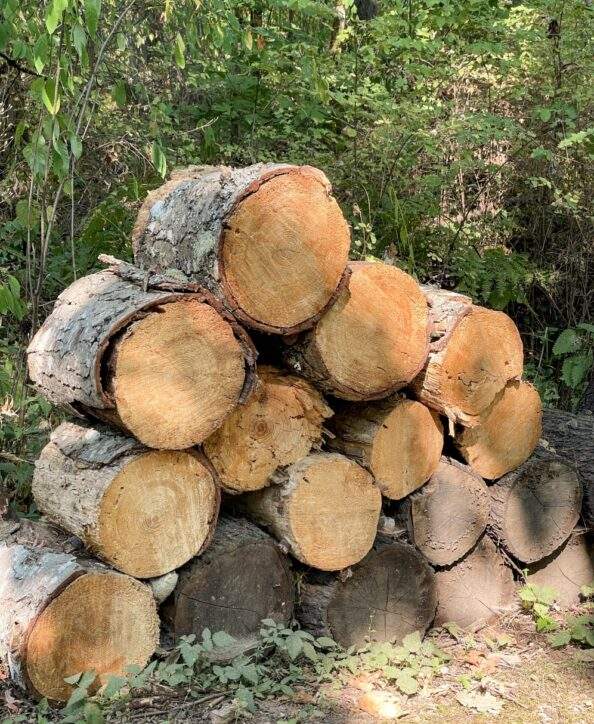 BEIJING – China suspended on Tuesday the soybean import licenses of three U.S. firms and halted imports of U.S. lumber, stepping up retaliatory action after the United States imposed additional tariffs on Chinese goods. Earlier in the day, China also imposed import levies covering $21 billion worth of U.S. agricultural and food products… Customs said it detected ergot and seed coating agent in imported U.S. soybeans while the suspension of U.S. lumber imports was due to the detection of small worms, aspergillus and other pests. …Beijing’s retaliatory measures were in response to U.S. President Donald Trump’s decision to impose an extra 10% duty on China, effective Tuesday, resulting in a cumulative 20% tariff in response to what the White House considers Chinese inaction over drug flows. …The suspension of U.S. lumber was a direct response to Trump’s move on March 1 to order a trade investigation on imported lumber.
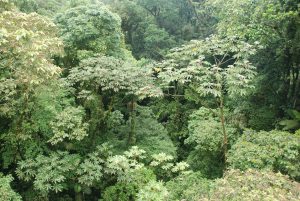 KUALA LUMPUR, Malaysia — The proposed classification of two timber species commonly found in Malaysia as unsustainable by the United States and the European Union (EU) under the Convention on International Trade in Endangered Species of Wild Fauna and Flora (CITES) will result in the cancellation of Malaysian timber exports to the US and the EU. The Timber Exporters’ Association of Malaysia (TEAM) treasurer Wong Kar Wai said that in addition to impending tariffs, the US and the EU are proposing to classify certain timber species common to Southeast Asia, including Malaysia – namely Shorea, locally known as Meranti, and Apitong, known as Keruing – under CITES despite being sustainably harvested and processed. “Keruing is a special type of timber primarily used for floorboards, with the US being its main market. A major buyer is the US military, which uses Keruing for the flooring of trucks and tanks due to its durability and strength.







 FRANKFURT – Bayer has told U.S. lawmakers it could stop selling Roundup weedkiller unless they can strengthen legal protection against product liability litigation, according to a financial analyst and a person close to the matter. Bayer has paid about $10 billion to settle disputed claims that Roundup, based on the herbicide glyphosate, causes cancer. About 67,000 further cases are pending for which the group has set aside $5.9 billion in legal provisions. The German company has said plaintiffs should not be able to take Bayer to court by invoking U.S. state rules given the federal U.S. Environmental Protection Agency has repeatedly labelled the product as safe to use, as have regulators in other parts of the world. “Without regulatory clarity (Bayer) will need to exit the business. Bayer have been clear with legislators and farmer groups on this,” analysts at brokerage Jefferies said in a note on Thursday, citing guidance Bayer’s leadership provided in a meeting.
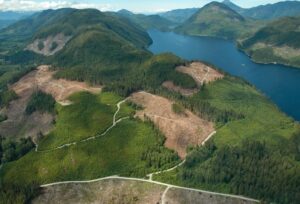 Large, undisturbed forests are better for harboring biodiversity than fragmented landscapes, according to University of Michigan research. Ecologists agree that habitat loss and the fragmentation of forests reduces biodiversity in the remaining fragments. But ecologists don’t agree whether it’s better to focus on preserving many smaller, fragmented tracts of land or larger, continuous landscapes. The
 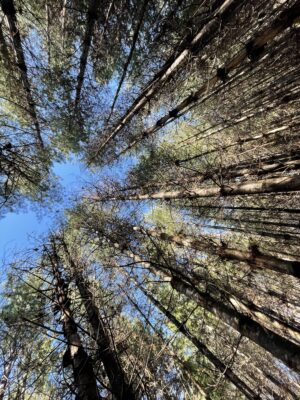 In wild Tasmania there are trees whose direct ancestors lived with dinosaurs. Many of those alive today are thousands of years old, and some have been growing for ten millennia or more. They are mostly hard to reach, hidden in forest valleys or on remote mountains, survivors of human greed and fire.
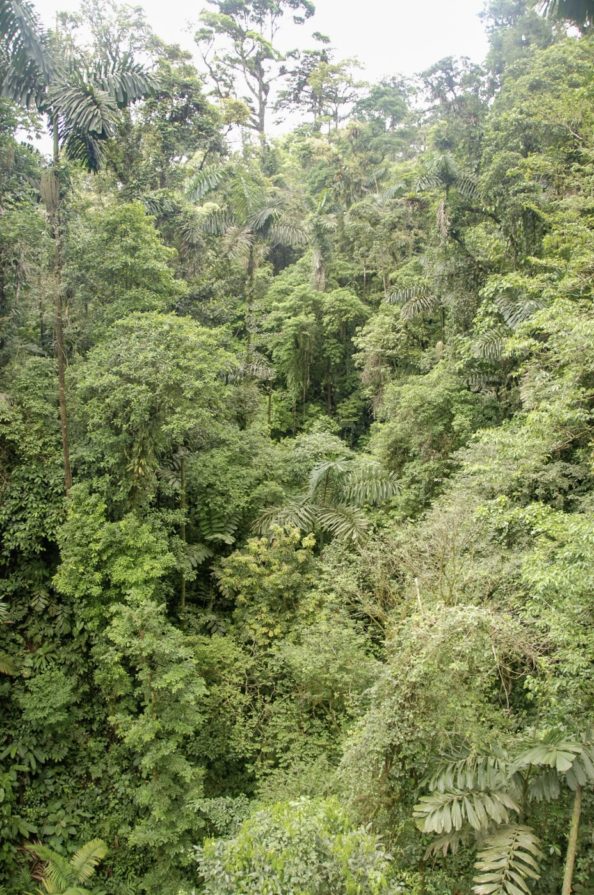 In 2006, Brazilian President Lula da Silva’s government passed the Public Forest Management Law, implementing a forest concession scheme designed to regulate and legalize logging activities in Brazil’s forest — in particular, the Amazon. Forest management consists of removing a small number of trees whose species are valued in the market. After that, the area can only be explored again in 30 to 40 years, following its regeneration cycle. Behind on its concessions targets, the current government wants to almost quadruple the current area of federal concessions by 2026. Even though it is different from deforestation, timber management has never been seen as a way to conserve the forest by traditional peoples.
 The European Union Deforestation Regulation (EUDR) aims to prevent deforestation-linked products from entering the EU market. This study assesses the potential impacts of the EUDR on global forest product markets using the FOrest Resource Outlook Model (FOROM). We simulate two scenarios: the baseline EUDR, focused on commodity-driven deforestation and urbanization, and an extended EUDR+ scenario, which includes shifting agriculture. The results indicate that high-deforestation countries, such as Brazil, Indonesia, and Malaysia, are expected to face significant reductions in roundwood production and exports, with downstream effects on sawnwood and panel prices. In contrast, low-deforestation countries like Canada and the United States may experience slight increases in production to meet EU demand, but their impact is limited by moderate deforestation rates. The study also highlights the potential for market leakage, where deforestation-linked products may shift to non-EU markets, potentially undermining global environmental goals.

 Sweden might fail to meet its and the EU’s carbon neutrality targets after recent environmental policy shifts, the Organisation for Economic Cooperation and Development (OECD) warned in a report published Wednesday. Long considered a champion in environmental protection and the fight against climate change, the Scandinavian country has set a goal of net zero emissions by 2045, five years ahead of the European Union’s target. But Sweden might not be able meet either of those goals, according to a review conducted by the OECD, a 38-member group of mostly developed nations. “Over the last decade, the country has cut its greenhouse gas emissions faster than the EU average,” the report said. “However, recent policy shifts, particularly in the transport sector, have put into question Sweden’s ability to meet EU and domestic climate targets.” …In January, the World Wildlife Fund (WWF) criticised Sweden for not adequately protecting primary and old-growth forests from logging.
 Denmark has long been praised for its transition to renewable energy, with renewable energy use rising from 6% in 1990 to 42.8% in 2022. However, behind this achievement lies an overdependence on woody biomass, which now accounts for up to 68% of its total renewable energy use. This growth has been sustained through direct and indirect subsidies, often exceeding those allocated to wind and solar energy. Denmark’s dependence on woody biomass is largely fuelled by imports from Estonia and Latvia. The country ranks among the largest, if not the largest, importer of woody biomass from the Baltic region, with 52% of its wood chips and pellets coming from these two nations. …Intensive logging is also devastating Estonian and Latvian bird populations.
  LONDON, March 12 – British energy regulator Ofgem said on Wednesday that it had not found evidence of a breach of sustainability obligations by power company Drax, in the watchdog’s review of reports prepared by auditor KPMG. Renewable power generators in Britain can receive renewable obligation (RO) certificates which can then be sold to energy suppliers who use them to sell renewable electricity products to customers. For biomass power plants to qualify for the certificates they must show at least 70% of their biomass fuel comes from sustainable sources. Green groups have long criticised the sustainability credentials of biomass power plants, which burn wood pellets to generate electricity. In 2023, regulator Ofgem opened an investigation into whether Drax was in breach of annual reporting requirements under the RO scheme. Ofgem said it reviewed over 3,000 documents and did not find evidence to support claims that sustainability obligations had been breached.
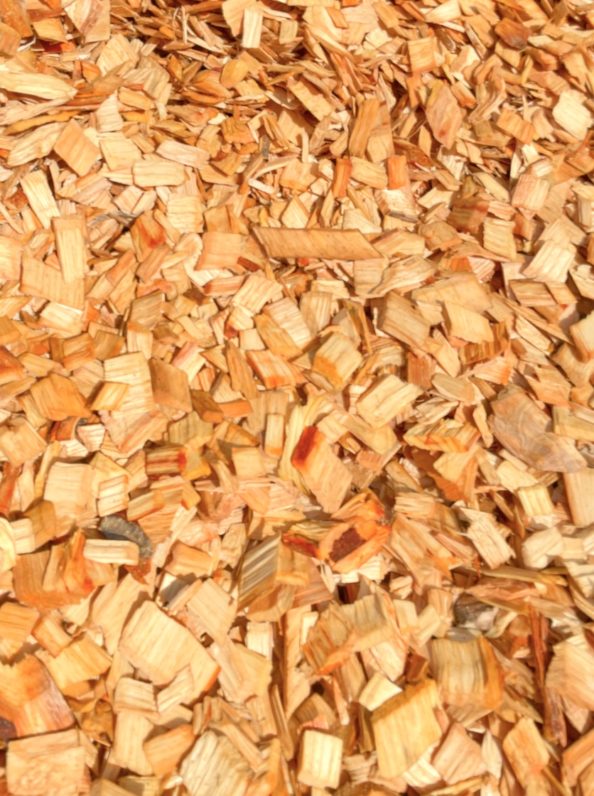 The harvesting and burning of forest biomass to produce energy continues to surge, according to a new report entitled
 Authorities in Japan have warned that the country’s biggest wildfire in decades is likely to spread, after it damaged dozens of homes and forced more than 1,000 people to flee. Fires continued to rage a week after they broke out in the city of Ofunato, on the north-east coast, with weather officials speculating that this year’s unusually dry winter and strong winds were to blame. As of Monday, the fire had spread through about 2,100 hectares of land, damaged 84 homes and forced 1,200 residents to take refuge in school gymnasiums and other shelters. A further 2,000 are staying with friends or relatives. …More than 2,000 self-defence force [SDF] troops and firefighters have struggled to control the flames as they spread through heavily forested mountainous areas bordering Ofunato, which was among communities destroyed in the March 2011 earthquake and tsunami.