 US President Trump on Saturday ordered a new trade investigation that could heap more tariffs on imported lumber, adding to existing duties on Canadian softwood lumber and 25% tariffs on all Canadian and Mexican goods due next week. Trump signed a memo ordering Commerce Secretary Howard Lutnick to initiate a national security investigation into US lumber imports under Section 232 of the Trade Expansion Act of 1962. The trade law is the one Trump also used to impose tariffs on global steel and aluminum imports. The probe covers products made from lumber that could include furniture such as kitchen cabinets. The investigation must be completed within 270 days.
Trump also ordered new steps within 90 days to increase the domestic supply of lumber by streamlining the permitting process for harvesting lumber from public lands and improving the salvage of fallen trees. …A White House official said that increasing reliance on imported lumber represents a possible national security risk partly because the US military consumes significant quantities of lumber for its construction activities and because increasing dependence on imports for a commodity with ample domestic supplies is a danger to the US economy. …The official said any tariffs resulting from the probe would be added to the existing 14.5% duties on Canadian softwood lumber. The new duties would also stack on top of Trump’s threatened 25% general tariff on all Canadian and Mexican goods that are scheduled to take effect on Tuesday unless Trump is persuaded by the two countries’ efforts to secure their borders and halt fentanyl trafficking.
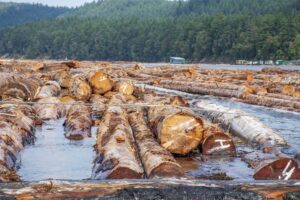 Donald Trump has ordered a probe into dumping in the US lumber market, setting the stage for the industry to join the widening basket of commodities targeted by Washington’s global trade war. The president directed the Department of Commerce to investigate whether imports of lumber and wood products were undermining domestic loggers in a way that posed a risk to US national security, days after ordering a similar review of the copper industry. …Forestry is big business for Canada. In 2022, the sector contributed C$33.4bn to real GDP, or about 1.2%. In the same year Canada’s forest product exports were valued at C$45.6bn, with the majority destined for the US. …Derek Nighbor, FPAC president, said any increase in tariffs on lumber would hurt forest sector employees on both sides of the border. …But Andrew Miller, chair of the US Lumber Coalition, said: “Canada’s unfair trade comes at the direct expense of US companies and workers.”

 WASHINGTON — U.S. President Donald Trump said again Wednesday he plans to hit Canada and Mexico with devastating duties — but a White House official confirmed on background that the tariff plans could change through negotiations. …He signed an executive order to implement “reciprocal tariffs” by raising U.S. duties to match the tax rates that other countries charge on imports starting April 2. He ordered 25% tariffs on all steel and aluminum imports into the United States on March 12. Trump also floated the idea of imposing tariffs on automobiles and forest products in April. …Trump himself seems to be having a hard time keeping track of his massive tariff agenda. …Many experts say Trump’s actions are intended to shake up Canada and Mexico ahead of a review of the continental trade pact. The Canada-U.S.-Mexico Agreement was negotiated during the first Trump administration to replace the North American Free Trade Agreement.
 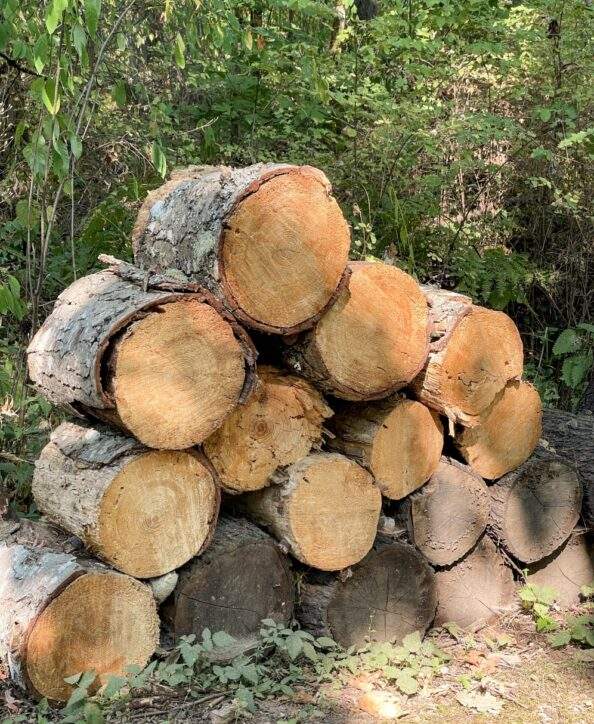 BEIJING – China suspended on Tuesday the soybean import licenses of three U.S. firms and halted imports of U.S. lumber, stepping up retaliatory action after the United States imposed additional tariffs on Chinese goods. Earlier in the day, China also imposed import levies covering $21 billion worth of U.S. agricultural and food products… Customs said it detected ergot and seed coating agent in imported U.S. soybeans while the suspension of U.S. lumber imports was due to the detection of small worms, aspergillus and other pests. …Beijing’s retaliatory measures were in response to U.S. President Donald Trump’s decision to impose an extra 10% duty on China, effective Tuesday, resulting in a cumulative 20% tariff in response to what the White House considers Chinese inaction over drug flows. …The suspension of U.S. lumber was a direct response to Trump’s move on March 1 to order a trade investigation on imported lumber.


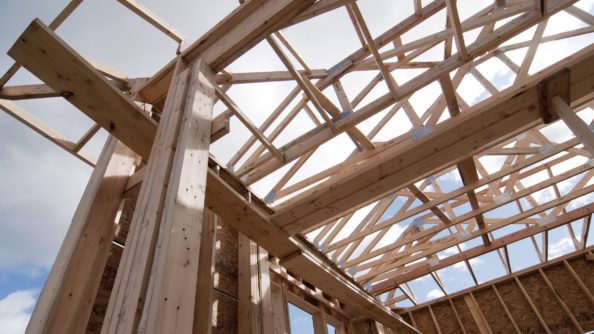 BOZEMAN, Mont. – The Trump administration’s tariffs are stirring discussions in Montana, with concerns about their impact on local economies. At Montana State University, Dr. Nicole Karwowski, an assistant professor of economics … explains that while tariffs can benefit certain business and factory owners, as well as shareholders of domestic firms, the broader impact tends to be negative. She highlights that these beneficiaries gain from the increased costs international companies face when competing in the U.S. market. The local economy in Bozeman is particularly affected, Karwowski says, due to the rising cost of construction materials. “We import a lot of our timber from Canada. And housing prices are already skyrocketing in places like Bozeman especially. So the different types of construction materials and raw materials are increasing in cost because of these tariffs. Then we’re going to see it harder to be building more in places like Bozeman,” she said.
 NEKOOSA, Wisconsin — Partnering with Omya, a producer of essential minerals, the mill built an on-site plant to ensure a reliable source of precipitated calcium carbonate, a key papermaking ingredient. The new PCC plant came online in September 2024, solving several supply challenges. …In 2020, the PCC plant that supplied multiple Wisconsin paper mills, including Domtar’s Rothschild and Nekoosa facilities, closed. …Domtar and Omya researched constructing a four-story PCC plant at the Nekoosa mill. …In July 2022, the companies agreed to build a 27,500 dry-ton-per-year Omya-designed, owned and -operated PCC plant within the Nekoosa mill’s existing footprint. …“By executing this high-ROI, three-year project with a strategic partner, Nekoosa now has an unlimited supply of PCC on-site that allows for flexibility in our papermaking schedules and effective grade development,” says Jason McCauley, Nekoosa mill general manager.
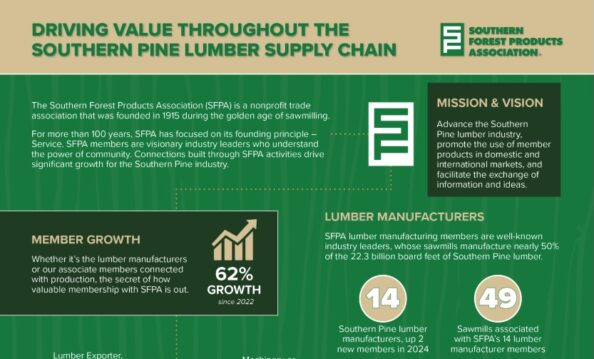 The Southern Forest Products Association believes strong partnerships are essential for sustaining growth and success. That starts with our most valuable partnership — our members. Their commitment is the driving force behind our success. The 2024 SFPA Value Report recaps the association’s: International market development and success in driving demand for Southern Pine lumber exports; A new, consolidated website; Digital promotion efforts; Membership growth; and Industry collaboration.
 The perpetually moving target of tariffs on Canadian lumber shipments to the US frustrated traders and had broad impacts on sales in many species. Despite middling demand, the threat of tariffs combined with relatively tight supplies left many prices higher for the week. The delay in announcement of preliminary AD rates by the Commerce Department injected further uncertainty. Despite inconsistent trading throughout February, the Random Lengths Framing Lumber Composite Price recorded its fourth straight increase and hit $461. That is its highest level since July 2023. Western S-P-F sales were steady but uneventful. Canadian mills weighed their responses to potential tariffs with plans ranging from adders on quoted levels to managing production and focusing sales to non-US destinations. Lumber futures were extremely volatile, swinging aggressively to every news report. The Southern Pine market was in disarray as traders processed a constant flow of mixed signals.

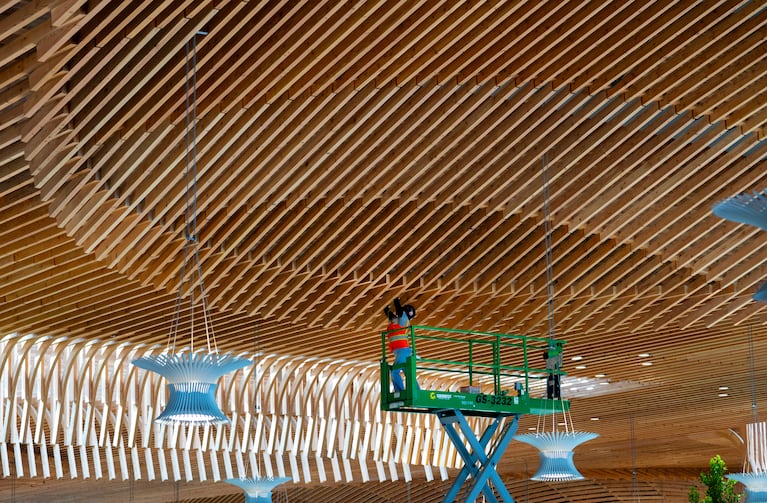
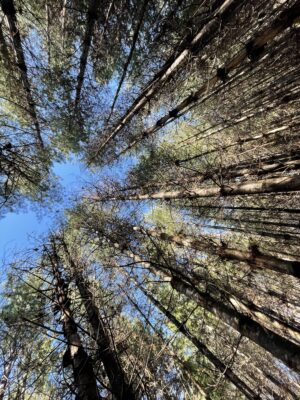 President Trump has promised to “drill, baby, drill.” Now, he also wants to log.
 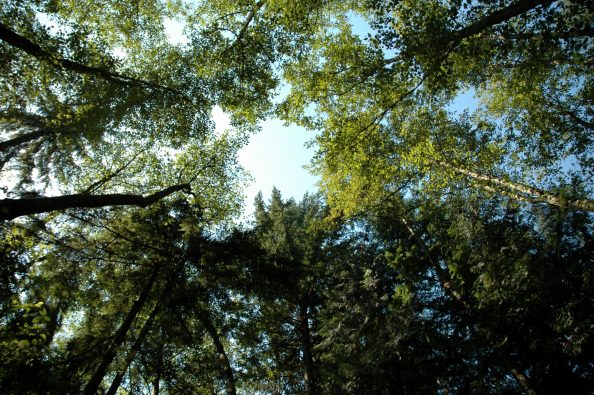 WASHINGTON – President Trump issued an executive order that seeks to ramp up logging across federal forests. …In response to the executive order, members of the Climate Forests Coalition, including Center for Biological Diversity, Sierra Club, Earthjustice, Oregon Wild, and WildEarth Guardians issued the following statement: “This executive order will decimate our federal forests. It will use tax dollars to line the pockets of corporate logging interests, undermine environmental laws, and take public forests out of public hands. This directive is part of a pattern to undermine science, gut the federal workforce, and privatize our public lands. Clearcutting our public lands for private profit will destroy mature and old-growth forests, pollute our air and water, and in bypassing the Endangered Species Act, actively drive vulnerable wildlife to extinction.” The order is being introduced just after a timber industry executive was appointed as the new Forest Service Chief.


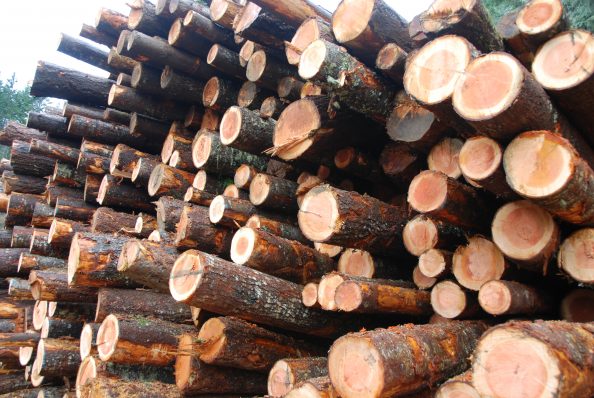 RAPID CITY, S.D. – South Dakota Gov. Larry Rhoden says during one of his several meetings with USDA Secretary Brooke Rollins last week, he and Wyoming Gov. Mark Gordon had an extensive conversation about the Black Hills and timber contracts. “Just what’s at stake for the Black Hills as far as wildland fires, dangers, the insect infestations and just our timber industry and the future of that in general,” said Rhoden. Rhoden continued on saying he was “very encouraged by the conversation we had with her, that we’re going to take steps to rectify that.” Rhoden says the current amount of timber harvested is far below what is allowed. “Not even close, and under the Biden administration we were just banging our heads against the wall. We would provide the facts and the data, and they were ignored,” the governor explained.
  For over a century, the American environmental movement has been animated by an intuitive and simple idea: Protecting trees means leaving forests alone. This stance—championed by figures like John Muir—was based on the belief that any alteration, including thinning or intentional burning, of wilderness harms it. While this ideology helped prevent widespread destruction by timber companies, it also created unintended consequences. Research now shows that overgrown forests are fueling unnaturally severe wildfires, causing irreparable ecological damage and massive economic loss… A key issue remains limited funding. Budget cuts to state and federal land management agencies have reduced the resources available for proactive fire prevention… Insurance and legal concerns further complicate matters. While the need for improved wildfire mitigation is widely recognized, legislative gridlock, environmental regulations, and partisan divisions have slowed progress.
 Each spring, the U.S. Forest Service hires dozens of seasonal biologists to venture into remote Northwest forests on federal land and set up acoustic recorders to monitor for sounds indicating the presence of northern spotted owls, a threatened species. There are only as many as 5,000 northern spotted owls left in the Northwest… The counting is crucial for preventing the owls’ extinction. But President Donald Trump ordered a hiring freeze that means the Forest Service cannot hire more than 40 seasonal scientists to count the owls, according to Taal Levi, an associate professor at Oregon State University who works on owl monitoring. The monitoring typically involves about 60 scientists working from central California to Canada, Levi said. It also means the agency will likely go without dozens more scientists needed to monitor threatened and endangered salmon, frogs and other fragile species….
 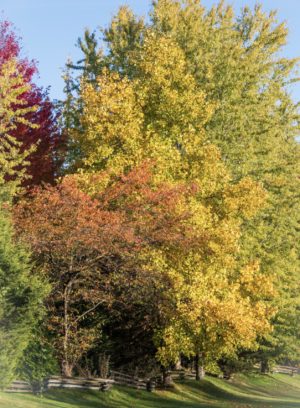 The US Department of Agriculture revoked a federal tree-planting grant to Keep Indianapolis Beautiful in a move the nonprofit’s CEO Kranowitz said may be the result of anti-DEI initiatives coming from the Trump Administration. The money would have helped KIB plant more trees throughout the city, and those plantings should not be all the same kind of tree, Kranowitz explained. The $400,000 grant for urban forestry projects was awarded to the organization in January through the Arbor Day Foundation, but was then clawed back on Tuesday. There’s growing evidence that words like “biodiversity” are being targeted by federal agencies bent on terminating Diversity, Equity and Inclusion initiatives across the country. U.S. Secretary of Agriculture Brooke Rollins recently cancelled a federal contract in Hawaii for an agency meeting on biodiversity and has identified and canceled other training programs on environmental justice claiming they run “contrary to the values of millions of American taxpayers.”
