
Kelly McCloskey
We reached out to Robert McKellar at Harmattan Risk in August 2024 for comment on the increasing pace of change in the forest sector, shaped by political forces and government intervention. Robert’s op-ed offered a thoughtful analysis of how inherent political risks—especially those linked to Canada–US trade friction—could rapidly unsettle an industry long reliant on stability. At the time, Trump’s potential political comeback was still largely speculative. Since that op-ed, the political landscape has shifted dramatically. Trump’s re-emergence is no longer a remote possibility but a concrete reality that has intensified uncertainty across the sector. With these developments in mind, we reconnected with Robert to update his analysis and explore how the risks he foresaw have become even more pronounced. [full disclosure, Robert McKellar is Tree Frog co-editor Sandy McKellar’s brother]
 Reports that Canada and Mexico are set to be slapped with U.S. tariffs next week may be premature. That’s the latest word from the Trump administration. The White House has clarified that North America-wide tariffs are not a done deal, as many news headlines suggested following remarks Monday Trump. …It wasn’t totally clear which tariffs Trump was referring to. The president has threatened multiple trade actions, for multiple reasons. For Canada, the ones paused until March 4 represent the gravest threat. …CBC News asked the White House on Tuesday for clarification. The White House reply… A plan for retaliatory tariffs on various countries is moving ahead as scheduled. …So, what about that bigger tariff, currently paused until March 4? The White House told CBC News that it’s still to be determined, “pending negotiations” with Canada and Mexico.
 Yesterday, we featured an op-ed by political risk management expert Robert McKellar on how Donald Trump’s re-election is changing the political risk landscape for the Canadian forest sector. While U.S. trade disputes are not new, the unpredictability of Trump’s approach to trade policy creates new challenges that Canadian exporters must assess and manage. McKellar presents a structured way to evaluate these risks using the devil’s advocacy approach, a method that considers both worst- and best-case scenarios to develop a balanced assessment. Trump has proposed three different types of tariffs—bi-national, product-specific, and reciprocal—which, if applied together, could significantly impact the sector. By examining multiple possibilities, McKellar provides companies with a way to better prepare for potential disruptions rather than reacting in crisis mode. And as today’s
  The U.S. Department of Commerce initiated the
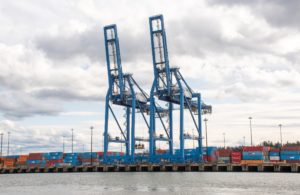 The Trump administration has opened a broad new front in its global trade conflict, proposing to affix levies reaching $1.5 million on Chinese-made ships arriving at American ports. Such fees would apply even on vessels made elsewhere — an approach that risks increasing costs on raw materials to factory goods. …It is engineered to discourage reliance on Chinese vessels in supplying Americans with products, while aiming to spur the revival of a domestic shipbuilding industry after a half-century of veritable dormancy. …The proposal would isolate China while diminishing American reliance on its industry. …The plan was the result of an investigation, started during the Biden administration, into the dominance of the Chinese shipping industry, in response to a petition filed by labor unions. Almost one-fifth of container vessels arriving at American ports are made in China. [to access the full story a NY Times subscription is required]
 TUPPER LAKE, N.Y. — Immigrations and Customs Enforcement conducted a raid Feb. 18 at Tupper Lake Pine Mill in New York state and detained nine employees. In a statement …the parent company of the mill, The Matra Group, said that the employees were authorized to work in the U.S. …“Nine employees were detained, all of whom were, to our knowledge, authorized to work in the United States, as we verify all employees through the I-9 process,” Nicholas Drouin, Matra co-president and director of manufacturing said. All U.S. employers must follow that process to verify workers’ identities and employment eligibility. …The mill — formerly known as the Tupper Lake Hardwoods Inc. — is owned by the Quebec-based Matra Group, a lumber harvesting and distribution company.
 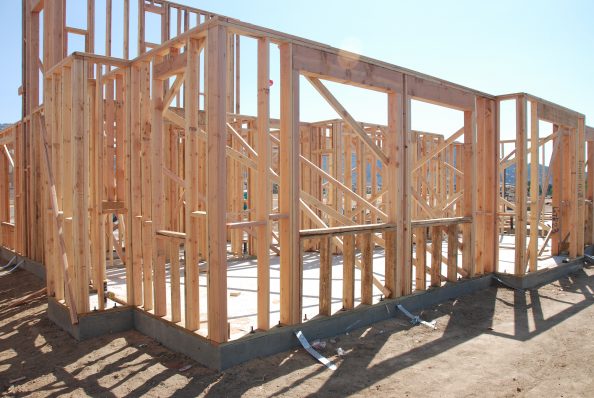 WASHINGTON —
 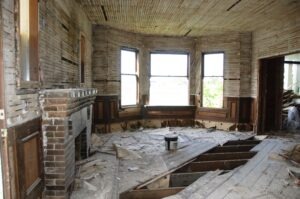 Home Depot’s CFO said people are “moving on” from today’s high mortgage rates and have started investing more in their homes. The home improvement company reported strong fourth-quarter results, although CEO Ted Decker said consumers are still reluctant to make larger investments like a kitchen remodel. Experts say people may start to view today’s mortgage rates as normal, especially when compared to historic rates. …“Housing is still frozen by mortgage rates,” Richard McPhail, said. Yet McPhail said Home Depot, which reported strong Q4 results Tuesday, has seen sales growth in nearly 80% of its U.S. geographic regions. …For Q4, 2024, Home Depot saw a 14.1% year-over-year increase in sales, which “exceeded our expectations,” Ted Decker CEO, said. …“We saw greater engagement in home improvement spend, despite ongoing pressure on large remodeling projects,” Decker said

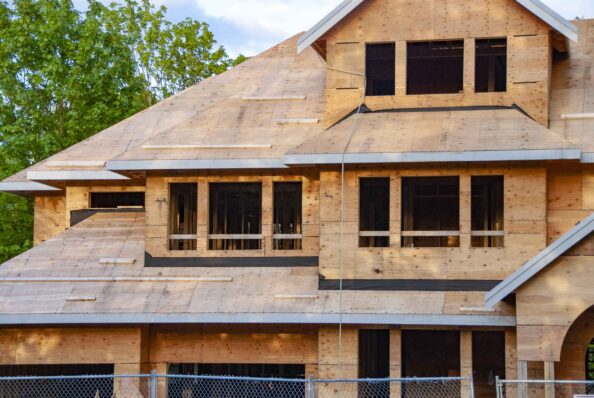 President Donald Trump “thrives on unpredictability”, said Lawrence Yun, chief economist for the National Association of REALTORS. In the last 30 days alone, multiple tariffs by Trump have been announced, imposed, called off and hotly debated. Now, the tariffs are beginning to take shape. And homebuilders are wary. …The real outcry, though, regards lumber. Roughly 30% of the lumber used in the United States last year was imported – more than 85% from Canada. …the housing industry is sharing concerns. Shortly after Trump’s inauguration, the NAHB applauded his day-one executive order that urged government agencies to take action to lower housing costs and expand supply. But NAHB chairman Carl Harris said raising tariffs will have the opposite effect. …“Tariffs on lumber and other building materials increase the cost of construction and discourage new development, and consumers end up paying for the tariffs in the form of higher home prices,” Harris said in a press release.
 For the past 25 years, the Federal Emergency Management Agency (FEMA) has helped develop building codes, the construction standards that help houses survive hurricanes, wildfires and earthquakes. Now, the Trump Administration has ordered that to stop. …FEMA is dropping out of the latest effort to improve building codes. …The recommendations FEMA submitted were filed with the International Code Council, an independent association that develops building codes used by states and local governments. The proposals FEMA is retracting its involvement from focus on helping homes survive strong winds, seismic shaking and rising floodwaters. …The ICC convenes experts and stakeholders in the building industry to review and improve building codes every three years, and is developing a new set of standards now. After they’re approved, many local and state governments across the country adopt the codes, which set the mandatory construction rules in their communities.
 After a century of wildfire suppression across the West, it’s no secret that the approach to forest management has needed to change. And change is, and has been, underway. But newly proposed changes, now in the form of legislation that would let fuel mitigation projects, including logging, in high-risk zones like the forest surrounding Durango skirt the public input process have some environmental groups up in arms. The
 …On Monday, the Ninth Circuit Court of Appeals upheld Missoula federal district judge Donald Molloy’s rulings on a few counts that will require the Kootenai National Forest to keep the Black Ram logging project on hold for a while longer. The appeals court upheld rulings on two of four claims that the U.S. Forest Service challenged, so the agency must redo parts of its project analysis. First, the justices agreed that the Forest Service failed to comply with Kootenai Forest Plan because the agency didn’t show whether or how it included unauthorized roads in its road density calculations. …Second, the justices agreed that the Forest Service didn’t take “a hard look,” as required by the National Environmental Policy Act, at unauthorized road use and its effects. The justices pointed at the agency’s unsupported claims of sporadic use of roads and prompt barrier repair as proof.
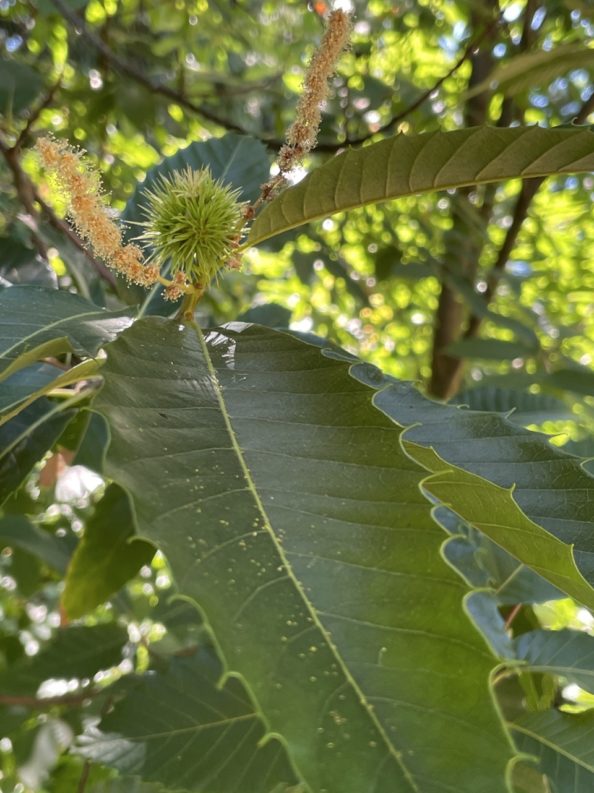 NEW YORK — Chestnut Carbon, a leading developer of nature-based carbon removal solutions, announced today that they have completed the first issuance and sale of Improved Forest Management (IFM) credits sourced from their conservation membership program branded as Forest Carbon Works. The issuance of more than 64,000 credits, or tons of carbon removal, were sold to multiple corporate buyers, including JPMorganChase. These transactions totaled $2.2 million. Chestnut’s U.S.-based IFM membership program, Forest Carbon Works, provides an opportunity for private forest owners to access income-generating carbon markets while preserving the integrity and legacy of their land. The program includes landowners in 36 states with more than 150,000 acres enrolled as of February 2025. These carbon removal credits are certified through Verra on the voluntary carbon market (VCM) and undergo rigorous third-party audits.