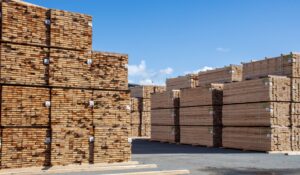
 Canadian producers of softwood lumber are bracing for a decision this week from the U.S. Department of Commerce that could mean a surge in anti-dumping duty rates, compounding the industry’s worries over President Donald Trump’s threats for sweeping tariffs on all imports from Canada. Most Canadian producers are currently paying 7.66% in anti-dumping duties, but that could jump to 20 per cent, trade experts say. The Commerce Department’s decision, slated for Thursday, will be preliminary, with an effective date in August. …Analysts are [also] predicting that there will be higher countervailing duty rates, with the Commerce Department scheduled to issue a preliminary ruling in May. Forestry analyst Russ Taylor forecast that countervailing duties could rise to about 10%. Most Canadian softwood producers are paying countervailing and anti-dumping duties that currently total 14.4 per cent. …The Commerce Department’s administrative review is based on softwood markets in 2023, when prices were low. [to access the full story, a Globe and Mail subscription is required]
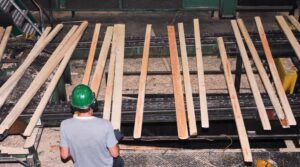 Another day, another tariff threat for markets to digest. This time it’s lumber getting whipsawed, as U.S. President Donald Trump says he is going to bring in tariffs on Canadian lumber imports to the U.S. soon. Speaking to reporters on Wednesday evening, Trump added lumber to the list of items he plans to slap tariffs on in the near future. …Canada would feel any such policy directly, but perhaps not as painfully as you might think. As is the case with oil, lumber is one front in the trade war where Canada can do a lot of collateral damage of its own. …While the U.S. theoretically has enough trees to meet its own needs, ramping things up both in terms of the logs and the capacity to process them would be next to impossible in the short term. Recall during the pandemic when Canadian lumber prices spiked by more than 300%, yet U.S. buyers kept buying.
 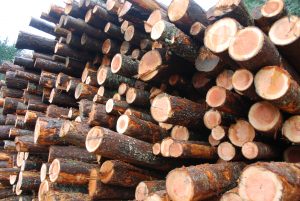 LONDON/BRUSSELS — The US paper and pulp industry is lobbying the Trump administration to ask the EU to declare the US deforestation-free, a step that could make it easier for exporters to meet the bloc’s new environmental rules. From December, the European Union’s anti-deforestation policy will ban imports of commodities linked to forest destruction. Brussels already delayed the policy’s launch by a year. …”A delay does not solve our concerns with the regulation’s complex requirements and significant technical barriers,” said Heidi Brock, CEO of the American Forest and Paper Association (AF&PA). …The law does not contain a category of countries deemed to be deforestation-free – despite EU lawmakers attempting unsuccessfully to add a new “no risk” category of countries which would face even lighter rules. Any changes to the EU law would require a legal proposal from the Commission, and approval from EU lawmakers and member states.

 If Canada is hit with 25% tariffs… the trade impacts for the forest products sector will be wide ranging. …Lumber is the most talked about commodity with respect to tariffs, largely due to the size of the market but also the fact that tariffs would be in addition to duties which are already being paid and are set to rise come August. The US can’t supply its own lumber demand and will have to continue to import Canadian lumber. Prices will rise. …The US is even more reliant on OSB from Canada. …In softwood, ~70% of demand is met by imports and in hardwood the proportion is even higher, at 89%. Canada is the largest softwood pulp supplier to the US, representing 74% of imports; a 25% tariff on Canadian goods would inevitably result in higher costs for US customers that produce paper, packaging and tissue. There are no easy near-term substitution options.
 Lumber futures have recently surged past $610 per thousand board feet, reaching a near three-month high as market conditions tighten. A combination of mill closures, reduced North American production capacity, and tariff concerns has led to increasing volatility in the lumber market. Investors and traders are closely watching these developments, as the outlook for lumber futures remains uncertain amid ongoing supply and trade disruptions. …One of the primary drivers behind the latest rally in lumber futures is the ongoing reduction in North American production capacity. …Adding to the supply concerns is the looming increase in U.S. tariffs on Canadian softwood lumber. For traders, this means increased volatility in lumber futures as market participants react to policy changes. Higher tariffs could discourage Canadian exports, forcing buyers to seek alternative sources or absorb the additional costs, further driving up lumber futures prices.
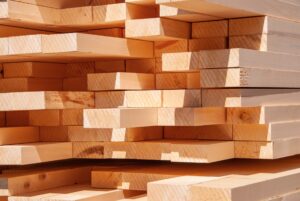 California home builders say they have very little choice but to continue buying Canadian softwood lumber from places like British Columbia, even if US President Donald Trump issues a 25% penalty on imports next month. The state is in the midst of its rebuilding efforts from the Pacific Palisades wildfires that ravaged the Los Angeles area. …Dan Dunmoyer, who is the president of the California Building Industry Association said the rebuild will become a lot more costly. …“The price of lumber is already starting to go up some even without the tariffs in place out of uncertainty, which again is a reason not to move quickly on tariffs. …“We are very desirous to rebuild as quickly as possible and at the lowest cost possible. The timing of tariffs or additional costs to softwood lumber coming from Canada is very ill-timed.”


 …More than 150 scientists and experts had collectively spent thousands of hours working on a draft report, a first-of-its-kind assessment of nature across the United States. But President Trump ended the effort, started under the Biden administration, by executive order. On Jan. 30, the project’s director, Phil Levin, sent an email telling team members that their work had been discontinued. But it wasn’t the only email he sent that day. “This work is too important to die,” Dr. Levin wrote in a separate email to the report’s authors, this one from his personal account. “The country needs what we are producing.” Now key experts who worked on the report, called the National Nature Assessment, are figuring out how to finish and publish it outside the government. …Rajat Panwar, a professor of responsible and sustainable business at Oregon State University who was leading the chapter on nature and the economy, was preparing slides to present his section when he got the news.
 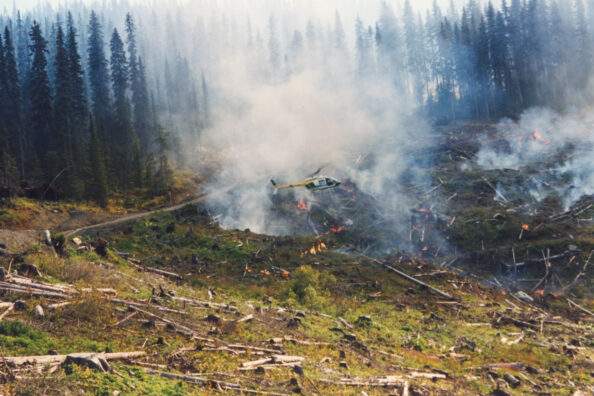 SEATTLE — The termination letters that ended the careers of thousands of U.S. Forest Service employees mean fewer people and less resources will be available to help prevent and fight wildfires, raising the specter of even more destructive blazes across the American West, fired workers and officials said. The Forest Service firings …are part of a wave of federal worker layoffs, as President Donald Trump’s cost-cutting measures reverberate nationwide. Workers who maintained trails, removed combustible debris from forests, supported firefighters and secured funds for wildfire mitigation say staffing cuts threaten public safety, especially in the West, where drier and hotter conditions linked to climate change have increased the intensity of wildfires. …U.S. Rep. Kim Schrier, a Washington state Democrat, said on the social platform X that the Forest Service layoffs are already hurting the state, “and it is only going to get worse. Fire season is coming.”
 Fewer wildfires occur in North American forests today than in past centuries, but this decline has increased the risk of more intense wildfires, according to a study published in Nature Communications. While it may seem unexpected, frequent low-intensity surface fires help maintain forest health by naturally reducing fuel buildup over large areas. Researchers from the Cooperative Institute for Research in Environmental Sciences at the University of Colorado Boulder and the U.S. Forest Service’s Rocky Mountain Research Station compared wildfire frequency across two periods: 1600 to 1880 and 1984 to 2022. Using data from 1,850 tree-ring records in historically burned areas, they assessed past fire activity and compared it with modern fire perimeter maps from Canada and the United States. The findings show modern-day fires are much less frequent than they were in past centuries, despite recent record-breaking fire years, such as 2020.
  PORTLAND, Ore. — An environmental nonprofit is sounding the alarm over the federal funding cuts and hiring freeze instituted by President Donald Trump’s administration, which it said could threaten the population of Oregon’s endangered spotted owl. The widespread layoffs and cuts instituted by the Trump administration have set off a series of protests across the country and around Portland, some of which have focused specifically on the thousands of U.S. National Parks and Forest Service workers who have been fired. The Northwest Forest Plan and the U.S. Bureau of Land Management (BLM) require the endangered owl population to be monitored, but the Center for Biological Diversity said in a news release that the federal freeze means the monitoring “either won’t occur or will be greatly reduced.”
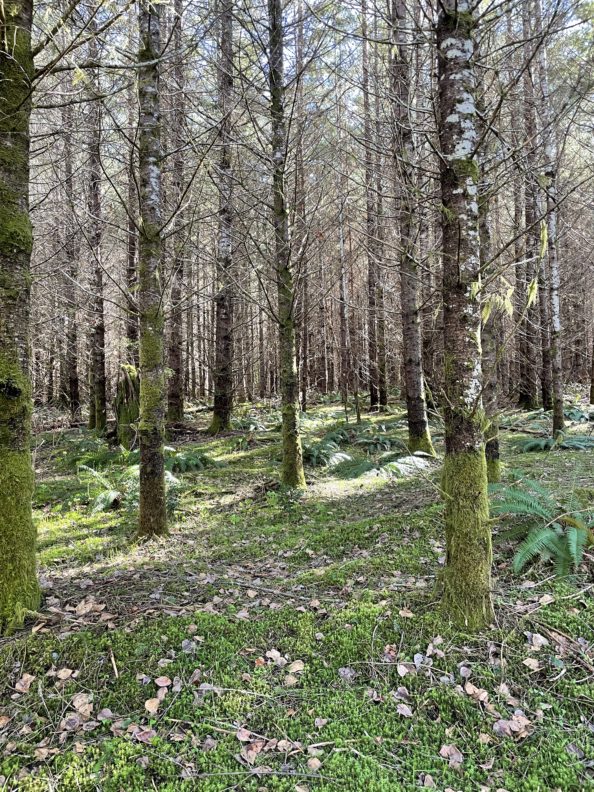 There’s no two ways about it: the U.S. Forest Service is at an impasse, seized by uncertainty like hardly ever before. In its quest for a supposedly leaner, more decentralized government, the Trump administration, led by DOGE chieftain Elon Musk, is taking an ax to the federal workforce. The Forest Service in particular is hemorrhaging manpower: it was reported on Friday that Trump had pink-slipped 3,400 workers. That is roughly one-tenth of USFS personnel. “These cuts are particularly impactful for the Northwest because we have vast expanses of national forest and public land,” says Rep. Kim Schrier. However much the PNW has to lose, this is no mere regional issue. It’s an affront to Mother Nature herself, Schrier says, because “we’re taking away people who do what we call ‘wildfire mitigation’: they do the work that thins the forests to prevent catastrophic wildfires. They do that year-round so we aren’t choking on smoke all summer.”
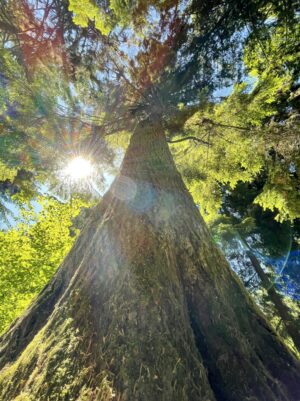 Another 29,800 acres of timberland just got conserved under easement as working forest, the third phase in Columbia Land Trust’s project of protecting about 75,000 acres, sold by SDS lumber company in 2021. Columbia Land Trust hopes to conserve almost everything except the mill itself, buying the most important 15,000 acres of habitat outright. They hope to put the other 60,000 under conservation easements. In this case, Washington’s Department of Natural Resources will hold some of the rights over the 29,800 acres of land. It can be sold, but never developed; it must always remain working forest. This is the trust’s biggest project to date… SDS Lumber was the last family-owned, vertically-integrated (meaning it owned and operated most stages of its own supply chain) timber company in this part of the Northwest.
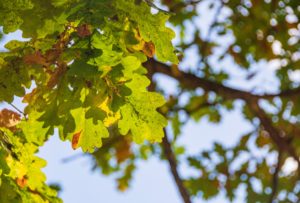 A group of scientists has been quietly working for decades on a project to improve tree genetics, with white oaks among the target species for the UT Tree Improvement Program. For those who are curious, genetics in organisms refers to the study of genes and how they are passed down from generation to generation. Genetics in trees, however, focuses on the study of genes within tree species and examines how their genetic makeup influences traits such as growth rate, wood quality, and resilience to environmental stresses. Scott Schlarbaum, a distinguished professor of forestry at UTIA, leads the UT Tree Improvement Program and is among the co-authors of the paper that describes the white oak genome and how local adaptations may have implications for the species in relation to heat and drought stress. Photo by A. Mains, courtesy UTIA.