President Donald Trump has declared an energy emergency, stating that the domestic energy supply is “precariously inadequate” and poses a threat to national security. Additionally, he announced a $500 billion private sector investment in artificial intelligence infrastructure across the United States. At the intersection of these two lies a transformational opportunity for an unsuspecting sector: America’s forests. …South Carolina’s bountiful supply of trees faces a declining market… Between January 2023 and March 2024, nearly 50 forest product mills reported they would be closing or curtailing production… leaving private landowners with few incentives to maintain their forests.
The U.S. Endowment for Forestry and Communities focuses on finding innovative solutions to sustain forest-dependent communities here in South Carolina and across the country. One such innovation lies in the growing market for biomass energy … a renewable energy solution for our growing demands for power. A simple query to ChatGPT uses roughly the same amount of energy it takes to brew three cups of coffee. Multiplied by the hundreds of millions of queries processed by AI models every day — with a million queries draining the amount of power needed to power 30 homes for an entire month — there is a huge environmental and energy drain. By integrating biomass in a diversified energy portfolio, we can build a resilient grid that can power developing industries while ensuring economic and environmental sustainability for decades to come.


 President Trump conceded Sunday that there may be “some pain” from his sweeping tariffs on Mexico and Canada, but they will eventually lead to a new “GOLDEN AGE.” Nice of him to promise a glorious future because the pain is already unfolding. …He also included a blast at these columns for leading the “Tariff Lobby” after our editorial called his 25% across-the-board tariffs on our friends and neighbors “


 “
“
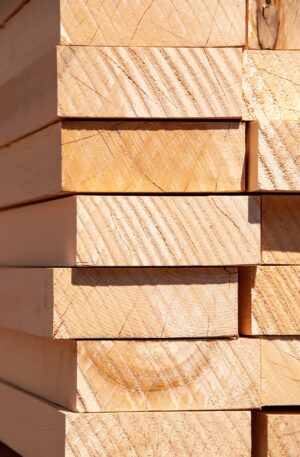 PORTLAND, Maine — Tariffs that are central to Trump’s economic policies could destabilize markets for numerous Maine products from lumber to electricity. …Tariffs on products from Canada, which is Maine’s biggest trading partner, would send powerful ripples across the state’s economy. Maine brought in $4.4 billion of goods – fuels, oil, electricity, wood pulp and more – from its neighbor in 2024. Imports from Canada far outpace those from any other trading partner. …Patrick Woodcock, CEO of the Maine State Chamber of Commerce said, “many state businesses see Canada not just as a market to buy and sell items, but a place with mills and processing plants that are “fully integrated in their business plans”. …New tariffs could complicate trade relations between the U.S. and Canada, which have been tested in disputes over lumber for decades, said Patrick Strauch, of the Maine Forest Products Council… but a universal tariff would have the biggest effect on the price of energy. [the access the full story a Portland Press Herald subscription is required]
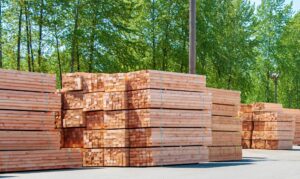 Framing lumber markets hovered in a holding pattern as traders embraced a wait-and-see approach to a potential 25% tariff on Canadian shipments. The Random Lengths Framing Lumber Composite Price finished the week $1 lower. Western S-P-F buyers moved to the sidelines in late trading, citing minimal immediate needs and uncertainty about the tariffs and near-term prospects. …Price weakness lingered in the Southern Pine market amid sluggish to stagnant sales. Buyers lacked urgency and the potential impact of tariffs on demand for SYP was a widespread topic of conversation. …Traders debated how much of a price spread between Western S-P-F and SYP would need to emerge before end users substituted species on a larger scale. …In Coast markets, Hem-Fir dimension continued to face serious downward pressure from soft Inland prices. Meanwhile, dry Douglas Fir dimension prices stabilized, assisted by a green market that has found its footing.
 Lumber futures surged to over $590 per thousand board feet, approaching the two-month high of $600 from January 6th following US President Trump’s decision to implement tariffs on Canada, a major supplier of wood to the US. The tariffs were threatened by the US President shortly after taking office, but conflicting messages from the Presidential administration raised skepticism for investors on whether trade barriers would actually be raised. According to the latest data, Canada supplied around 30% of lumber used in the US last year. The 25% tax on Canadian goods, including wood, add to the already existing anti-dumping duties of 14.5%, raising capacity pressures on domestically produced alternatives. In the meantime, the greater degree of confidence that the Fed will deliver more than one rate cut this year drove benchmark mortgage rates to ease below 7%, giving some respite to construction demand. [END]
 The stock market fell on Monday after President Donald Trump slapped tariffs on Canada, Mexico and China, eliciting threats of retaliation and setting the stage for a trade war. The Dow Jones Industrial Average slid about 550 points, or 1.25%, in early trading on Monday. The S&P 500 dropped 1.5%, and the tech-heavy Nasdaq plummeted 2%. Traders demonstrated their jitters with a selloff of U.S. auto companies, which hold deep ties to suppliers in Canada and Mexico. Shares of General Motors plummeted 6%, while Ford saw its stock price plunge 4%. The market rout extended worldwide. Japan’s Nikkei index fell 2.5% on Monday, and the pan-European STOXX 600 dropped about 1%.



 Kenneth A. Margolis, New York — Who says bipartisanship is dead? President Trump and California Gov. Gavin Newsom have found common ground. Both seem determined to cripple the rebuilding effort in Los Angeles.
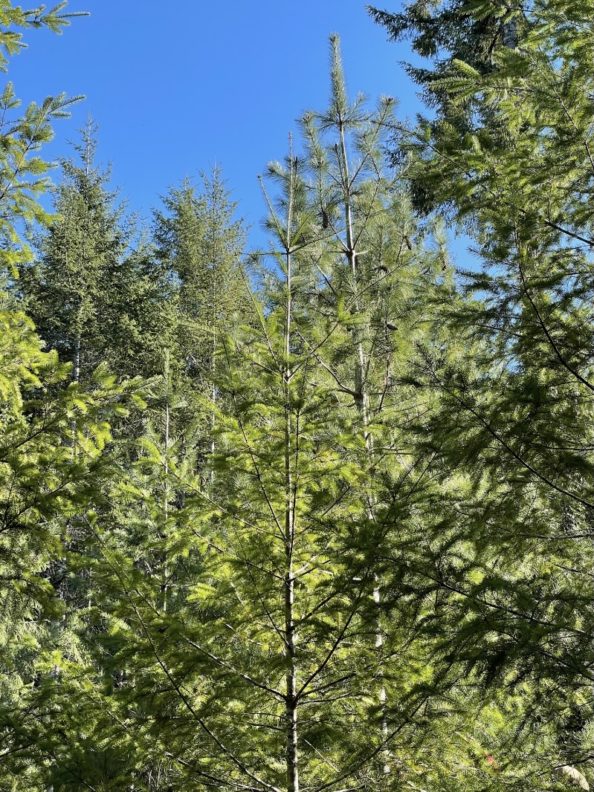 This opinion piece is by the following groups: Central Utah Water Conservancy District, Salt Lake City Department of Public Utilities, Weber Basin Water Conservancy District, Mountain Regional Water Special Service District, Metropolitan Water District of Salt Lake & Sandy, Jordan Valley Water Conservancy District, Summit County, and World Resources Institute. After another catastrophic wildfire season in the West, it is clear that Utah can no longer put off needed investments to protect our forests and critical sources of drinking water. The consequences of delaying these essential investments grow yearly and the stakes have never been higher. …These fires are a wake-up call. Infrastructure costs should not fall on water ratepayers alone. While Utah water utilities and our partners have made progress in reducing wildfire risks in key watersheds, the wildfire crisis demands even greater levels of collaboration and funding — and both are needed now from Utah’s state Legislature.
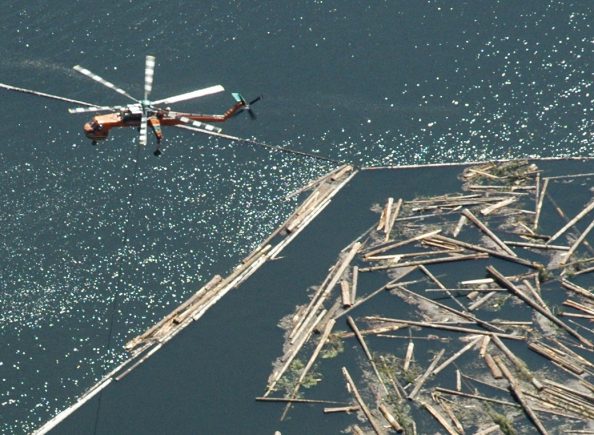
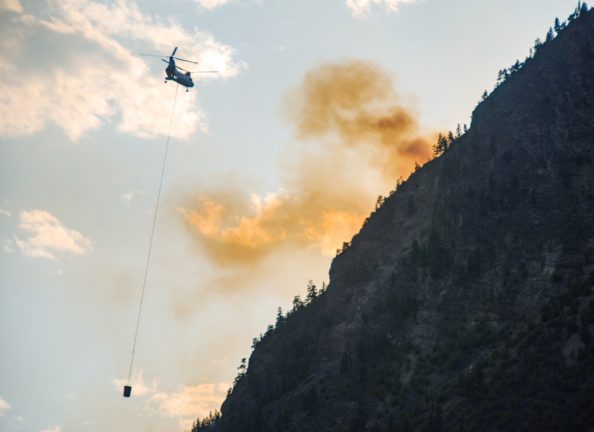 WASHINGTON – U.S. Senators Martin Heinrich (D-N.M.) and Tim Sheehy (R-Mont.) introduced the bipartisan Aerial Firefighting Enhancement Act of 2025 to strengthen the aerial wildfire suppression fleet and better combat the year-round threat of catastrophic wildfire. “I have worked to expand the operations of Very Large Air Tankers that have proven absolutely essential to firefighters battling wildfires in New Mexico, Los Angeles, and across the West,” said Heinrich. …“As a former Navy SEAL and the only aerial firefighter in the Senate, I understand government’s most solemn duty is to keep the American people safe,” said Sheehy. The bill reauthorizes the Secretary of Defense’s authority to sell excess Department of Defense aircraft and aircraft parts, acceptable for commercial sale, to persons or entities that contract with the government for the delivery of fire retardant or water by air to suppress wildfires…


 PIEDMONT TRIAD, N.C. — North Carolina has seen a rising number of wildfires recently, including two here in the Triad just last week. The North Carolina Forest Service is the agency responsible for getting those fires out, but lately it’s been difficult to do so. That’s due to the large number of vacancies across the department. “When we’re the lead agency for wildfire response, this isn’t a forest you want 100 positions consistently unfilled,” Philip Jackson, Public Information Officer for the N.C. Forest Service, said. It’s an issue the agency has been having for some time. “It’s [vacancies] pretty evenly distributed throughout all three regions across the state,” Jackson said. “You’re looking at about 30-35 unfilled positions in all three regions.”