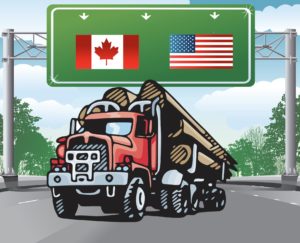
 President-elect Donald Trump has justified his threat of 25% tariffs on Canada by pointing to the US trade deficit. Top Canadian economists have a response to that: it’s all because your country wants cheap oil. The US is on track to end 2024 with the largest overall trade deficit in its history. Its imbalance with Canada is about $60 billion. …Trump has repeatedly claimed the deficit is a subsidy to the Canadian economy, and said Tuesday the US doesn’t need anything from Canada. Import and export data, however, paint a different picture. Among the US’s top partners, its trade with Canada is the most equally balanced — because Canada buys $85 million from the US for every $100 million it exports. When stripping out oil and gas, the US actually has a significant trade surplus with Canada — its biggest energy supplier and a key buyer of American products from food to machinery.
“The Americans have had the better side of the deal because for more than a decade, they’ve been running surpluses on the non-energy side,” Stéfane Marion at National Bank of Canada, said. “Your deficit is with Canada on energy, but Canada allows you to have access to energy at a discount that you refine or transform to sell at a higher price to the rest of the world.” The US has been a net total energy exporter since 2019 as increases in domestic production lowered the need for imports. Still, it imports crude oil, petroleum products, natural gas and electricity from Canada. …“For the first time, the US is actually a net beneficiary when energy prices increase because they’re a net exporter,” Marion said. “Americans need to know the reason you have that is partly because of Canada.”
 With President-elect Trump set to take over the Oval Office on January 20, the Canadian lumber industry looks to be taking action… advising customers that they will add 25% to lumber exports to the US when the tariff is announced. With Canadian mills already paying an average of 14.4% import duties on US shipments, they have no alternative but to increase prices by the 25% to cover the potential tariff. Nic Wilson, CEO of the Denver Mass Timber Group Summit reports that… “

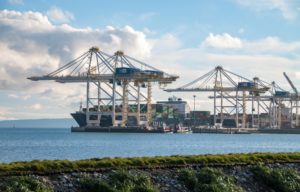 The union representing 45,000 dock workers on the U.S. East and Gulf Coasts and their employers on Wednesday said they reached a tentative deal on a new six-year contract, averting further strikes that could have snarled supply chains and taken a toll on the U.S. economy. The International Longshoremen’s Association (ILA) and the United States Maritime Alliance (USMX) employer group, called the agreement a “win-win.” The deal includes a resolution in automation, which had been the thorniest issue of on the table. …”This agreement establishes a framework for implementing technologies that will create more jobs while modernizing East and Gulf coast ports.” Terms of the deal were not disclosed. ILA and USMX have agreed to continue operating until the contract is ratified. …Employers at the ports stretching from Maine to Texas include terminal operators like APM, owned by Maersk, as well as China’s COSCO Shipping and Switzerland’s MSC.
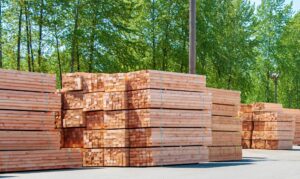 A potential hike in tariffs imposed on Canadian exports to the US as early as January will highlight developments that could define first-quarter trends in the softwood lumber market. …Many traders have expressed a perception that the US economy will prosper in 2025 with a more business friendly administration in the White House. However, if the tariffs are imposed, they could significantly alter the flow of softwood lumber and panels from Canada to the US. Some Canadian producers have already noted that they will withdraw from the US market rather than deal with the rising costs. If returns on shipments to the US plunge, many Canadian mills could funnel a larger percentage of production offshore, especially to Pacific Rim destinations. …Southern Pine traders hope the first quarter sets the stage for a rebound after a difficult year in 2024. Production outpaced demand for most of the year, sustaining steady downward pressure on prices.

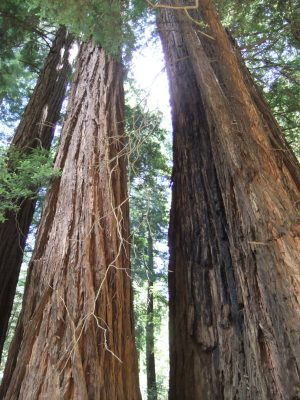 The Biden administration is dropping its efforts to issue a policy to protect old-growth forests — though the president previously touted protecting such forests as an important component of his climate agenda. Late Tuesday, Forest Service Chief Randy Moore announced that the agency did not plan to move forward with proposed protections for old trees. The Forest Service also published a letter Moore wrote to regional officials. That letter cited “place-based differences that we will need to understand in order to conserve old growth forests.” …However, with the transition to the second Trump administration looming, even some environmental advocates say halting the effort may have been a savvy move. Alex Craven, for the Sierra Club, noted that a congressional repeal could prevent future Democratic administrations from pursuing a substantially similar rule in the future. …Biden’s proposal to protect the forests had garnered pushback from Republicans and the timber industry.
 As wildfires continue to burn out of control across Los Angeles, questions have turned to why and how California authorities allowed the perfect conditions — extremely dry, uncleared forests, hillsides and brush — to proliferate during an already dangerous fire season made worse by a Santa Ana wind event that hits the area with relative frequency. Well before those dangerous conditions sparked the massive blazes… this week, the region was already a tinderbox due, in part, to a lack of prescribed fires. …The reason California hasn’t conducted more controlled burnings comes down to existing environmental laws in the U.S. that have posed bureaucratic obstacles to prescribed fires. It often takes years for proposals to go through reviews before any controlled burning can take place. …Lawmakers have introduced legislation that would allow for more controlled burning, but because no laws have been passed, environmental red tape has continued to present challenges to proactive fire management.
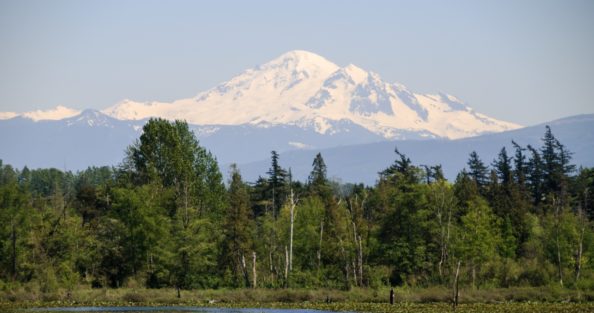 PORT ANGELES — The committee of commissioners representing five encumbered counties, including Clallam and Jefferson, have arrived at a recommendation for how timber revenue from replacement lands should be distributed between the counties. The ratio agreed upon by the committee, known as the impact share method, will distribute funds based on how many encumbered acres each county has when compared to the total number of acres encumbered between the five counties. The Washington State Association of Counties (WSAC) will vote on the recommendation at its Feb. 5 meeting, Clallam County Commissioner Mark Ozias said. Encumbered counties are those which have substantial portions of their state trust land set aside for protection of endangered species such as marbled murrelets and northern spotted owls.
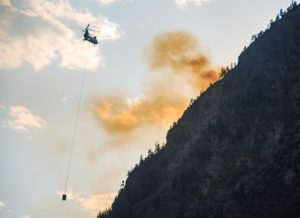 The impact of a changing climate is evident in the bigger picture for the state. California has experienced a decades-long drought that ended just two years ago. The resulting wet conditions since then have seen the rapid growth of shrubs and trees, the perfect fuel for fires. However last summer was very hot and was followed by dry autumn and winter season – downtown Los Angeles has only received 0.16 inches of rain since October, more than 4 inches below average. Researchers believe that a warming world is increasing the conditions that are conducive to wildland fire, including low relative humidity. These “fire weather” days are increasing in many parts of the world, with climate change making these conditions more severe and the fire season lasting longer in many parts of the world, scientists have shown.
 Alberta will join other Canadian provinces helping battle raging wildfires in Los Angeles, the largest in the California city’s history. The province announced Thursday it’s preparing to deploy an incident command team and additional wildfire-fighting resources to support California, including water bombers and night-vision helicopters. Thousands of firefighters have been battling roaring flames that have left neighbourhoods in ruin and burned thousands of structures, while killing at least five people. “Good neighbours are always there for each other in times of need, and we will assist our American friends in any way they need during this crisis,” Premier Danielle Smith wrote on X. …In fighting the Palisades fire, the Los Angeles water system “buckled” under the demand, as some hydrants ran dry, hindering firefighting efforts. According to the Los Angeles Times, more than 2,000 structures have burned and at least 130,000 residents are under evacuation orders due to the wildfires.