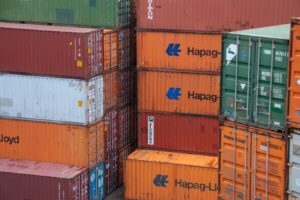
 On Nov. 25, President-elect Donald Trump announced he would impose 25% tariffs on Mexico and Canada. …Trump may once again rely on Sections 201, 301 and 232 to impose tariffs on Canada and Mexico. However, he has expressed frustration with the procedural requirements — and delay — attached to these provisions. Consequently, Trump has suggested that he will rely on other provisions… which may include the International Emergency Powers Act, Section 338 of the Tariff Act of 1930, and Section 122 of the Tariff Act of 1974. However, the legality of imposing tariffs pursuant to these provisions is unclear. …Mexico and Canada could seek a remedy via the USMCA dispute settlement mechanism… but the parties are not bound to follow these recommendations. …In the short term, companies should consider stockpiling goods at pretariff prices, prior to Trump’s inauguration on Jan. 20. In the long term, companies should look at options for diversifying their supply chains. [A subscription or free trial to Law360 may be required to access this full story]
 Donald Trump is threatening to use “economic force” to make Canada the 51st American state. While his comments may be reckless, they are in part due to Canada’s over-reliance on the US market in terms of trade. The benefits of international trade are undoubtedly positive. It’s well-established that when countries can produce a product or service more cheaply than others, giving them what’s known as a “comparative advantage,” all other nations engaged will gain from that trade. …But the key challenge Canadian policymakers face is an over-reliance on the US as Canada’s primary market, with 75% of all Canadian exports headed south. …Canada can no longer take easy access to the U.S. market for granted. …Bringing down barriers to trade across Canadian provinces would create conditions that could enable Canadian companies to be more competitive internationally, and beyond the U.S. market in particular.


 If president-elect Donald Trump… follows through with his tariff threat, it could have economic consequences for the U.S. lumber supply chain, according to Rajan Parajuli at NC State. …US. companies would likely attempt to recoup tariff-related losses by raising the price of Canadian softwood lumber, which would potentially impact the housing market by making building materials more expensive. …Parajuli highlighted the 2006 U.S.–Canada Softwood Lumber Agreement as an example of how tariffs can impact the supply chain. …Under the agreement, which was active until 2015, U.S. lumber producers gained $1.6 billion and U.S. consumers lost $2.3 billion as softwood lumber imports from Canada declined by 7.78% in the months when export taxes took effect. “U.S. consumers not only paid producers’ gains, but also the losses that resulted from the export taxes,” Parajuli said. In the long term, the U.S. would need to work with Canada to negotiate a new softwood lumber agreement, according to Parajuli. Germany, Sweden and other trade partners simply don’t have the inventory or capacity to displace Canada in lumber exports.





 There’s no quick fix for decarbonizing medium- and long-distance flights. Batteries are typically too heavy, and hydrogen fuel takes up too much space to offer a practical solution, leaving sustainable aviation fuels made from plants and other biomass, recycled carbon, or captured carbon as the primary options… That creates an opportunity for developers of second-generation sustainable aviation fuel technologies, which involve making jet fuel out of captured carbon or alternate biomass sources, such as forest waste. These methods are not yet mature enough to make a significant dent in 2030 targets… But this tech will need to be a big part of the equation in order to meet the aviation sector’s overall goal of net zero emissions by 2050, as well as the EU’s sustainable fuels mandate.