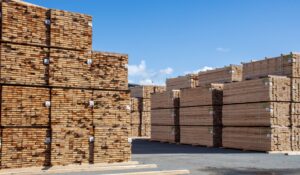
 Canadian producers of softwood lumber are bracing for a decision this week from the U.S. Department of Commerce that could mean a surge in anti-dumping duty rates, compounding the industry’s worries over President Donald Trump’s threats for sweeping tariffs on all imports from Canada. Most Canadian producers are currently paying 7.66% in anti-dumping duties, but that could jump to 20 per cent, trade experts say. The Commerce Department’s decision, slated for Thursday, will be preliminary, with an effective date in August. …Analysts are [also] predicting that there will be higher countervailing duty rates, with the Commerce Department scheduled to issue a preliminary ruling in May. Forestry analyst Russ Taylor forecast that countervailing duties could rise to about 10%. Most Canadian softwood producers are paying countervailing and anti-dumping duties that currently total 14.4 per cent. …The Commerce Department’s administrative review is based on softwood markets in 2023, when prices were low. [to access the full story, a Globe and Mail subscription is required]
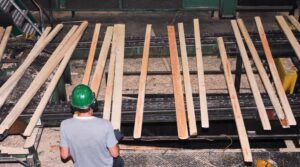 Another day, another tariff threat for markets to digest. This time it’s lumber getting whipsawed, as U.S. President Donald Trump says he is going to bring in tariffs on Canadian lumber imports to the U.S. soon. Speaking to reporters on Wednesday evening, Trump added lumber to the list of items he plans to slap tariffs on in the near future. …Canada would feel any such policy directly, but perhaps not as painfully as you might think. As is the case with oil, lumber is one front in the trade war where Canada can do a lot of collateral damage of its own. …While the U.S. theoretically has enough trees to meet its own needs, ramping things up both in terms of the logs and the capacity to process them would be next to impossible in the short term. Recall during the pandemic when Canadian lumber prices spiked by more than 300%, yet U.S. buyers kept buying.
 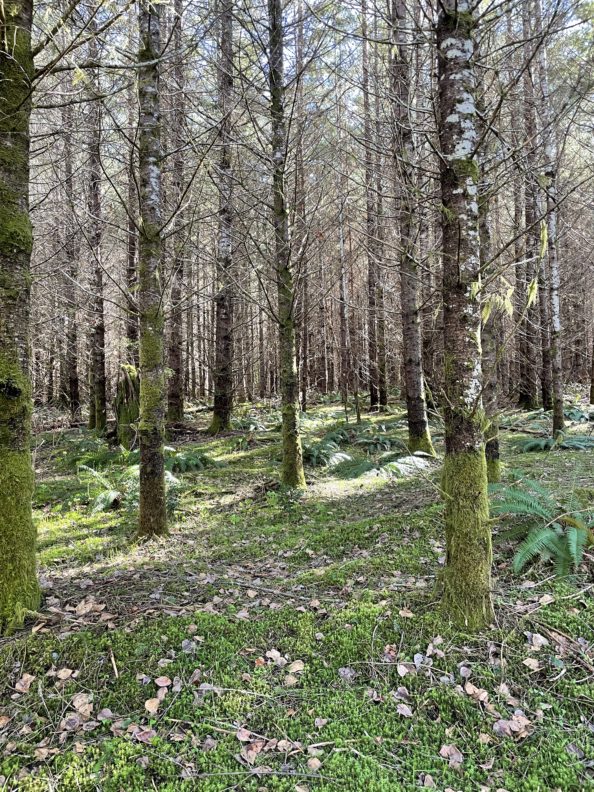 There’s no two ways about it: the U.S. Forest Service is at an impasse, seized by uncertainty like hardly ever before. In its quest for a supposedly leaner, more decentralized government, the Trump administration, led by DOGE chieftain Elon Musk, is taking an ax to the federal workforce. The Forest Service in particular is hemorrhaging manpower: it was reported on Friday that Trump had pink-slipped 3,400 workers. That is roughly one-tenth of USFS personnel. “These cuts are particularly impactful for the Northwest because we have vast expanses of national forest and public land,” says Rep. Kim Schrier. However much the PNW has to lose, this is no mere regional issue. It’s an affront to Mother Nature herself, Schrier says, because “we’re taking away people who do what we call ‘wildfire mitigation’: they do the work that thins the forests to prevent catastrophic wildfires. They do that year-round so we aren’t choking on smoke all summer.”
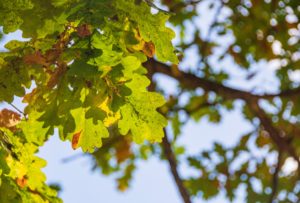 A group of scientists has been quietly working for decades on a project to improve tree genetics, with white oaks among the target species for the UT Tree Improvement Program. For those who are curious, genetics in organisms refers to the study of genes and how they are passed down from generation to generation. Genetics in trees, however, focuses on the study of genes within tree species and examines how their genetic makeup influences traits such as growth rate, wood quality, and resilience to environmental stresses. Scott Schlarbaum, a distinguished professor of forestry at UTIA, leads the UT Tree Improvement Program and is among the co-authors of the paper that describes the white oak genome and how local adaptations may have implications for the species in relation to heat and drought stress. Photo by A. Mains, courtesy UTIA.