 Henry County, Virginia — A majority of the more than five dozen people who attended the recent Community Meeting said they did so to express concern over the new company taking over operations of the lumberyard on Carver Road. The meeting was led by Horsepasture District Supervisor Debra Buchanan and included County Administrator Dale Wagoner, Sheriff Wayne Davis and Virginia Department of Transportation Residency Administrator Robin Keeler. …Louise Schoolfield said she was concerned about rats coming from the mill…. …Bonita Smith who lives next to the lumberyard said, “It’s so noisy, and they play music all night long”. Worse, Smith said she has had to remain vigilant against “rats, rodents and snakes” that she believes come from the property. …Van Drewery spoke about plans by Twain Lumber Co. to purchase and reopen the former Teal-Jones operation. …Drewery said residents recognize that the sawmill is expected to reopen but want existing laws enforced to protect the surrounding community.








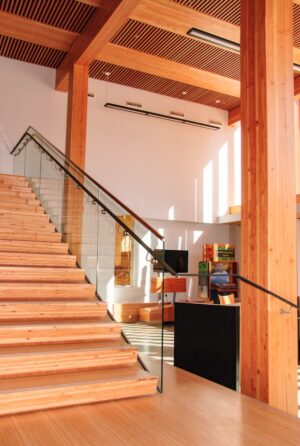 Walmart has settled its case over more than US$80 million in claims against Structurlam, the Canadian mass timber manufacturer it hired to supply its new head office. That is according to the US Bankruptcy Court for the District of Delaware, which approved the settlement with the trust representing Structurlam’s creditors in July and closed the case in August. … According to the trust, Walmart first brought forward deadlines for one building in July 2022, then redesigned six of the eight main buildings a month later. The trust said Walmart also stopped paying for accepted timber and refused further deliveries over a glulam fault … The retailer ended the contract in January 2023, saying Structurlam had failed to deliver fully and on time and had not fixed the problems within the time allowed. … No objections to the settlement were lodged before the court approved it.


 Washington, D.C. — A steep decline in hardwood exports, the growing popularity of man-made wood alternatives and surging fuel prices have been battering the American hardwood lumber industry. In Kentucky, 78 wood industry facilities, mostly sawmills, have closed in the last four years, according to the University of Kentucky Department of Forestry and Natural Resources. The U.S. relationship with China has been a major source of the industry’s problems and a focus of proposals to address them. China once bought about half of U.S. hardwood exports, according to the Hardwood Federation. Then, eight years ago, President Donald Trump slapped tariffs on imports from China, and China retaliated with tariffs on hardwood and other American imports. The reciprocal tariffs were eventually rolled back, but China’s purchases of American hardwood never returned to their previous levels. …advocates are pushing for lawmakers to pass legislation for $12 billion in agriculture relief, including $200 million for the hardwood industry.
 The United States and the state of North Carolina have filed a

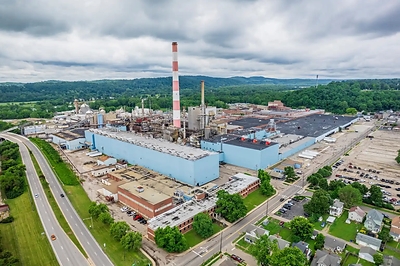
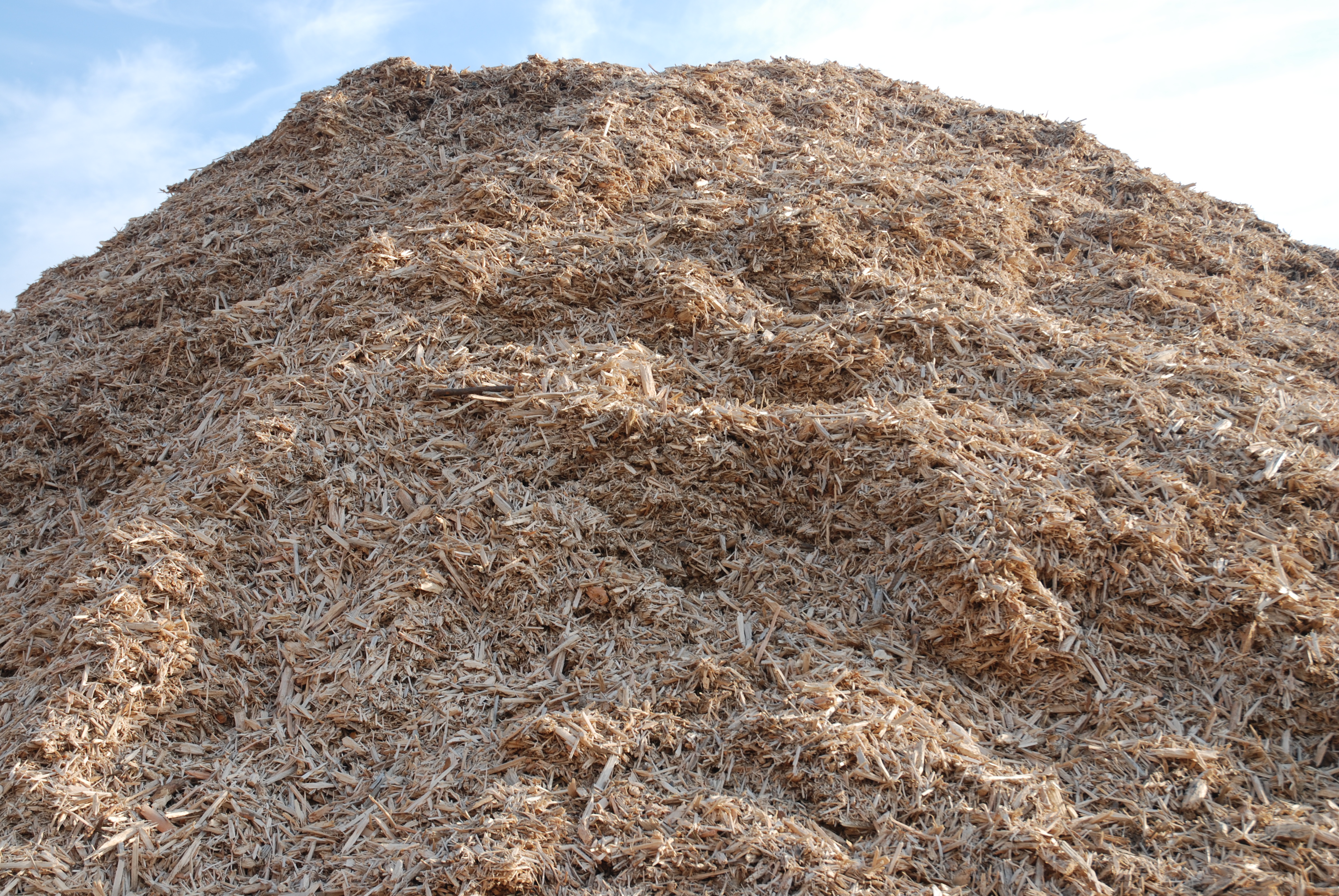 Regulators in Vermont have issued a waiver to permit biomass plants Ryegate Power and the McNeil Generating Station in Burlington to purchase low-grade wood that had been destined for a Glens Falls mill, Finch Paper, before it suddenly discontinued its pulpwood operation in July. Typically, per a condition in its permitting, Ryegate’s wood comes from harvests that are initially reviewed by Vermont Department of Fish and Wildlife biologists. “A temporary waiver of [Ryegate’s] harvesting policy requirements would allow wood that was intended for Finch to be sold to the Ryegate Power Station without otherwise required Department of Fish and Wildlife review and approval,” the Vermont Public Utilities Commission (PUC) order stated. According to testimony provided to the PUC, Finch purchased approximately 2,000 tons per week of softwood and hardwood from Vermont. It was the primary market for about 40% of the state’s pulp and nearly all its hemlock pulpwood.
 There has been significant recent conversation about Canadian tariffs on many products, more specifically timber. This matters to Mississippi because timber is one of our state’s most important agricultural and economic commodities. Over 80% of the timber in Mississippi is privately owned. In 2003, Senator Thad Cochran warned: “Canada subsidizes its lumber mills by subsidizing the cost of stumpage price for pine timber, and those mills are dumping lumber in our domestic market.” The issue remains the same today. Most of the timber in Canada is owned by their government. The various provinces set the price at the stump. Most are significantly lower than the price paid here to private landowners. …This issue continues today to be challenged in various courts. …That is why Senator Cochran was right. And we need to support a final resolution by President Trump which provides us a fair ability to compete with this valuable Mississippi commodity.






 CONCORD, New Hampshire — The State of New Hampshire has enacted legislation requiring state-funded building projects to give preference to lumber harvested in the United States.
 COLUMBUS, Ohio — The tallest mass timber student housing structure in the U.S. in Columbus, Ohio, recently topped out. The 13-story, 186-unit off-campus development, located near the Ohio State University, stands at 158 feet.
 Lexington, Ky.— Wood has been used to build homes and other structures for thousands of years. Now, new technology is allowing builders to use it in ways that would have been difficult to imagine just a few decades ago. Chad Niman, forest products Extension specialist in the University of Kentucky Department of Forestry and Natural Resources says cross-laminated timber (CLT) is changing the way that structures are built around the U.S. and world, making it important to keep up with the development of this construction method to improve the health of our forests and buildings. The UK Martin-Gatton College of Agriculture, Food and Environment will bring together experts from across the nation for the 2026 Regional Cross-Laminated Timber Conference, Oct. 12-14 at The Campbell House in Lexington. The three-day conference will focus on CLT and other types of mass timber.
  SOUTH BEND, Indiana — A massive fire early this morning in downtown South Bend, bringing in a ton of resources. The flames engulfing what had already been built at Stadium Flats apartments, hours before a groundbreaking ceremony was set to take place. …Assistant fire chief Derek Erquhart said the amount of wood at the construction site helped feed the flames. “It was type 5 wood frame construction, so a lot of lumber. The heat was very intense, is what the firefighters were dealing with when they arrived, and considering the conditions on arrival… that building that was under construction essentially a loss, and our priority was protecting the structures around there,” said SBFD Assistant Chief Derek Erquhart. …Stadium Flats is owned by Real America. …The company’s president telling ABC57 he’s grateful for the first responders, and also that the building process wasn’t further along.





 Tropical Storm Isaias has formed in the Gulf and is expected to approach the U.S. northern Gulf Coast on Friday after becoming a hurricane, according to the National Hurricane Center. Isaias would be the Atlantic Basin’s first hurricane of the season and is its ninth named storm. El Niño continues to bring a more active season in the Pacific. The storm formed with less than two months remaining in the 2026 hurricane season, which ends Nov. 30. Tropical Storm Isaias, which grew from Tropical Depression Nine on Wednesday,” is expected to pass to the north of Mexico’s Yucatan Peninsula on Thursday before approaching the U.S. Gulf Coast the following day, according to forecasters. It is expected to rapidly strengthen. …The hurricane center warned of “an increasing risk of dangerous wind and storm surge impacts” along parts of the northern Gulf Coast and urged people living in Louisiana, Alabama, Mississippi and northern Florida.

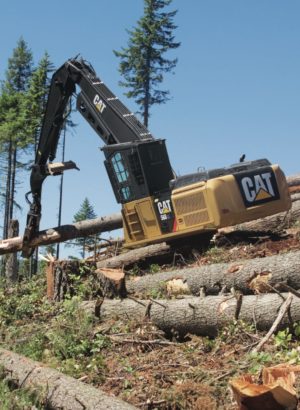 LITTLE ROCK, Arkansas— The timber industry has been vital in Arkansas, contributing more than $7 billion to the state’s GDP. But today, that industry is struggling. …It all has to do with gas prices. …Jeremy Erwin, a 3rd-generation logger running Erwin Resources Services in Fordyce, says “a typical company probably burns a million dollars a year in fuel, and this year, it’s going to hit 2 (million dollars).” …”Our rates probably went up 14-15% on the logging side. …These lifelong loggers are urging Arkansas policy-makers to do something to help stop the bleeding. And as of last week, some relief could be ahead. On September 29th, Arkansas Governor Sarah Huckabee-Sanders signed an executive order that would allow loggers and farmers to use dyed diesel fuel on public highways. This fuel is tax-free and could offer some much-needed assistance.
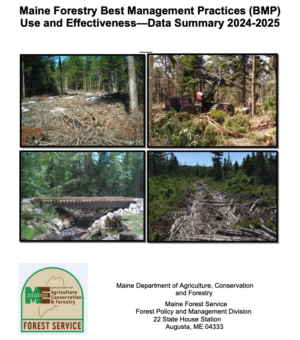 AUGUSTA, Maine — A new Department of Agriculture, Conservation and Forestry Maine Forest Service (MFS) report underscores the effectiveness of environmentally friendly practices during timber harvesting. Released Oct. 1, the “
 In this months newsletter, you’ll find these stories and more:
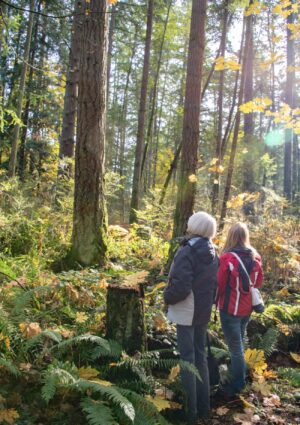 NORTH CAROLINA — A few weeks ago, the U.S. Department of Agriculture released the draft environmental impact statement for its plan to open the remaining pristine roadless areas of our national forests to mining, logging and road building. Pushed by anti-public lands corporate and industry interests, this raid on the lands that belong to all Americans raises the alarm about the ability to pass an irreplaceable resource down to future generations. …The release of the draft environmental impact statement opened a 30-day public comment period with a now-past deadline of midnight Sept. 21 – less than half the traditional 60- to 90-day comment period traditionally provided for proposed actions of this magnitude. Conservation organizations and others are formally requesting an extension, but past behavior shows the current administration is not interested in what you or I think. That’s why it is vital to raise your voice in support of the Roadless Rule before Oct. 6.
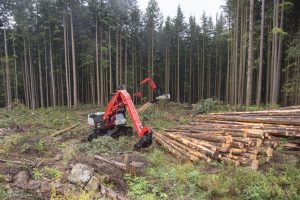 LOUISIANA — Governor Jeff Landry issued an
 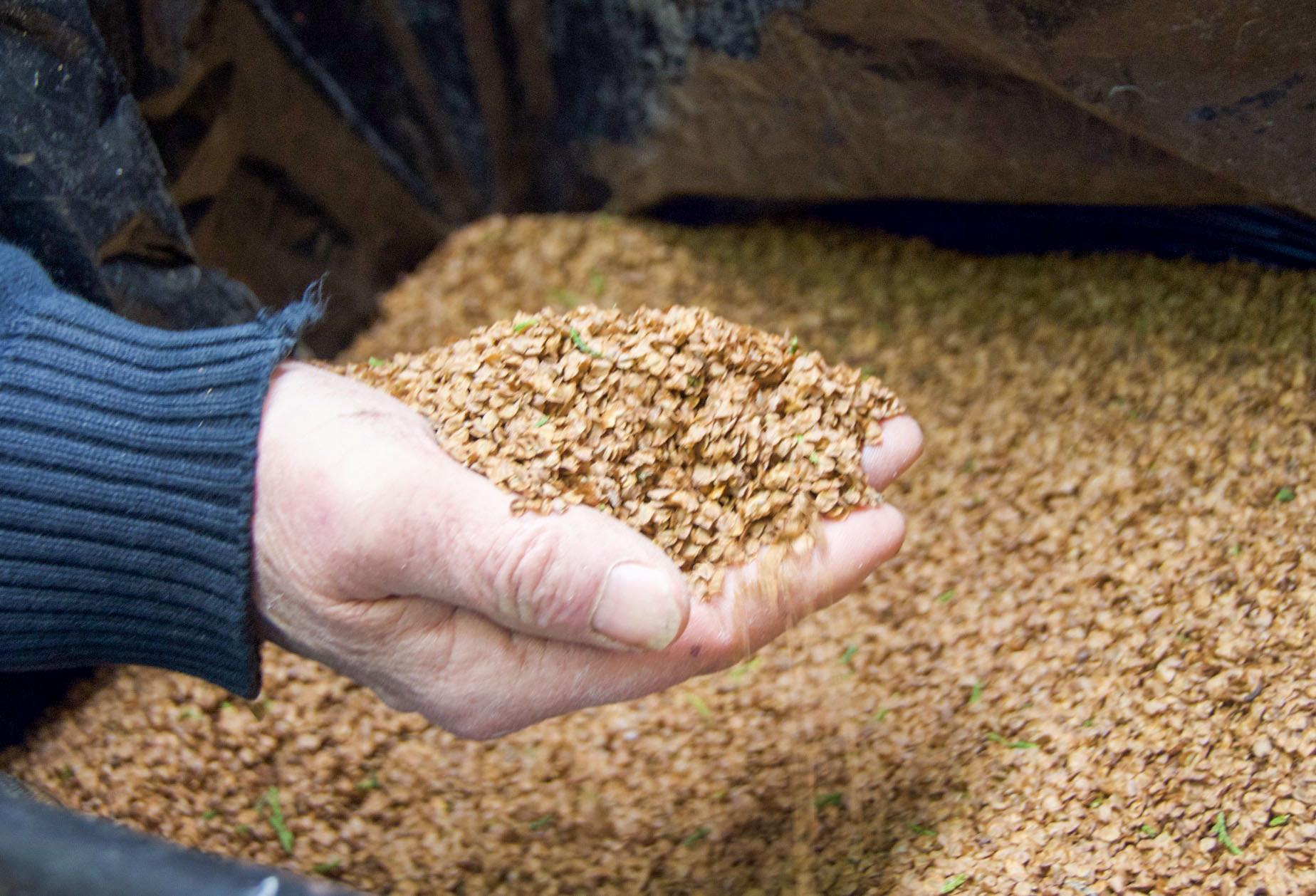 The Minnesota Department of Natural Resources has completed aerial seeding via helicopter to disperse jack pine, white pine, tamarack and black spruce seeds on
 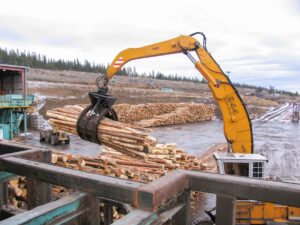 MINNESOTA — At the North Star Logging Expo in Grand Rapids, Minn., I got a quick lesson in operating heavy equipment and a more sobering one about the pressures facing the people who make their living with it. Loggers are struggling with something out of their control: the price of diesel fuel. That matters to the whole state because the timber industry doesn’t just cut trees. It’s a key steward of rural Minnesota’s economy and environmental health. If you spent any time worrying about wildfire smoke, climate change or jobs in the past year, you’re invested in figuring this out. …Brady Hasbargen, a fourth-generation logger from Birchdale, Minn., along the Canadian border, said he uses about 100,000 gallons of diesel every year. Last year, he spent about $300,000 on fuel. With diesel now priced above $6 per gallon, that cost will double and could go even higher. That’s well beyond his profit margin.
 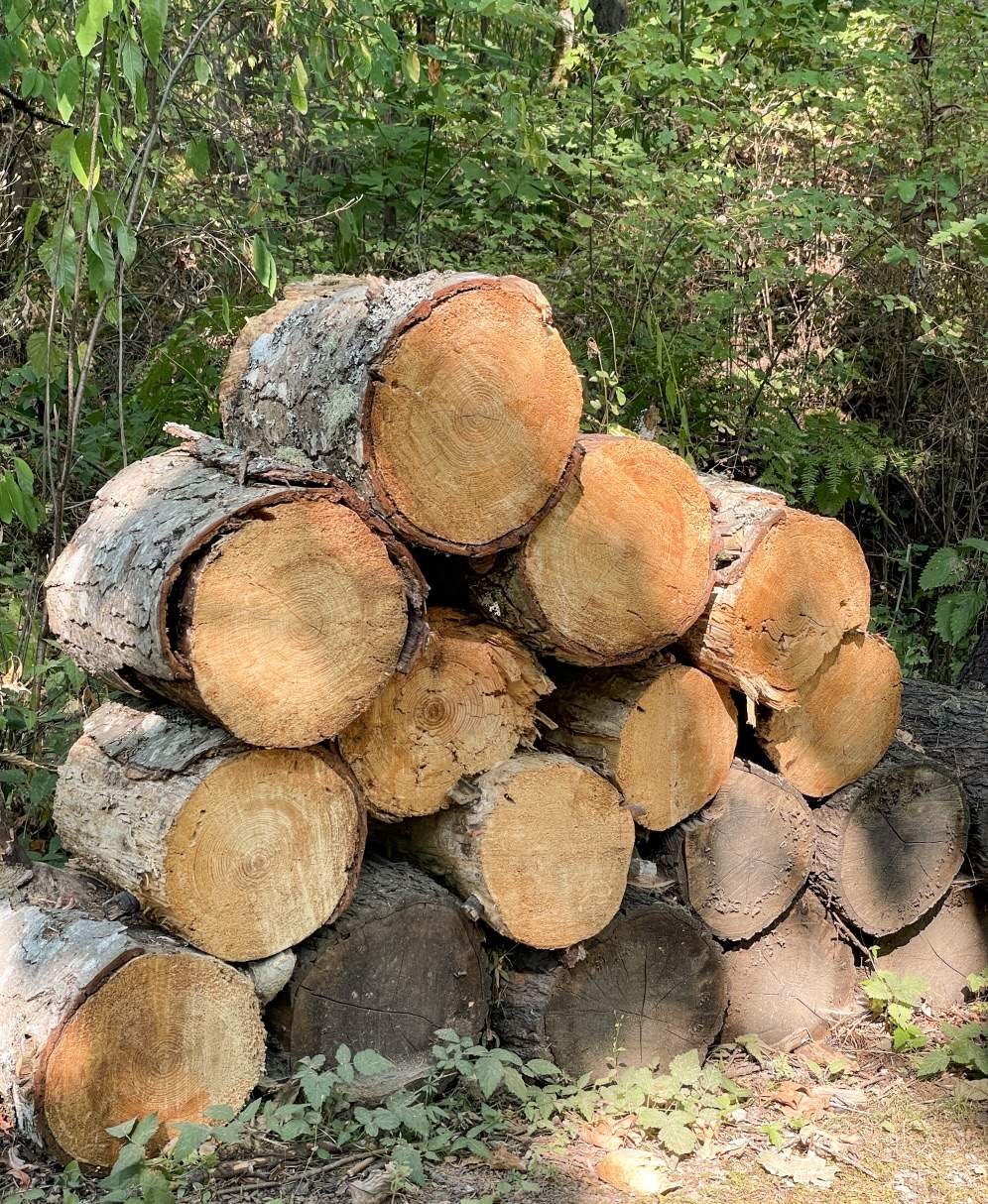 Vermont utility regulators are temporarily softening environmental rules at Vermont’s two wood-burning power plants to help stabilize the logging industry. State officials say the $2.3 billion wood products industry is in a perilous situation after one of the region’s largest paper mills announced in July it will no longer purchase local wood scraps to make its paper. The rule change, announced earlier this month, will allow McNeil Generating Station in Burlington and Ryegate Power Station in the Northeast Kingdom to buy wood that had been destined for that paper mill, even if it comes from timber harvests that have not been inspected by fish and wildlife officials for impacts to wetlands and habitat for endangered species. The Finch Paper Mill in Glens Falls, New York, used to buy some 2,000 tons of “pulpwood” scraps from Vermont loggers and mills each week before its July announcement.
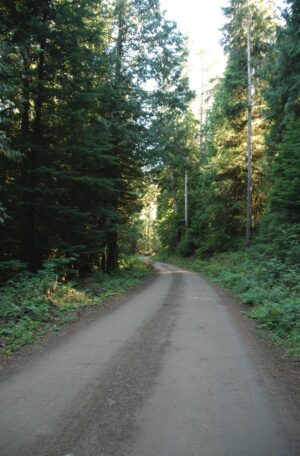 WISCONSIN — On August 18, the US Secretary of Agriculture announced the US Forest service officially filed an official proposal to repeal the Roadless Rule. …The policy currently protects roughly 69,000 acres in Wisconsin, and with the potential repeal of the environmental policy, experts want to be clear about the relationship between roads and wildfires. Most wildfires in the US are caused by people. According to the
 The U.S. Endowment for Forestry and Communities (the Endowment) today announced five awards totaling $5.5 million through its Accelerating Wood Fiber Markets initiative. The five-year effort will help connect underutilized wood fiber with new buyers and support the long-term economic viability of working forests and the communities that rely on them. The Endowment committed $5 million to the initiative, with an additional $500,000 provided by the Northern Border Regional Commission through its Forest Economy Initiative to support work in Maine, New Hampshire, New York and Vermont. The funding opportunity drew significant interest from across the country. The Endowment received 76 proposals requesting approximately $86 million, underscoring both the scale of the market challenges facing forest-reliant communities and the demand for practical, locally driven solutions. “These organizations bring deep regional knowledge and practical strategies for creating durable markets,” said Matt Krumenauer, Vice President of Markets at the U.S. Endowment for Forestry and Communities.





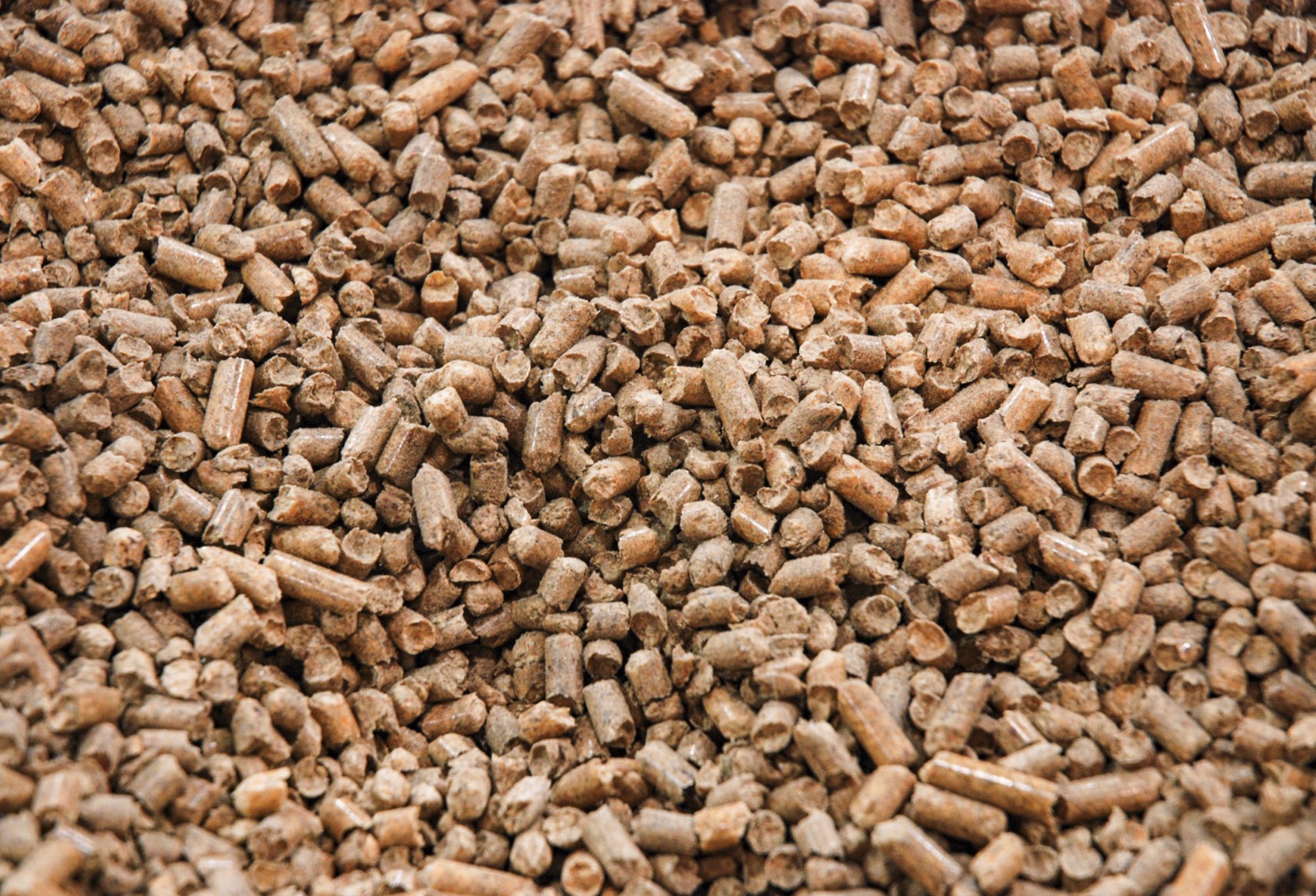






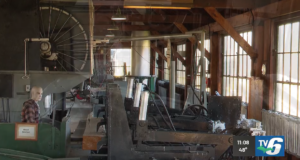 L’ANSE, Michigan – The Alberta sawmill, designed by Henry Ford, is being restored by Michigan Tech and the Baraga County Historical Society to allow the public to experience the building. The sawmill opened on Sept. 1, 1936, and closed on June 30, 1954. Michigan Tech operated it for research until the 1980’s, and it was closed for public viewing in the early 2000’s for safety concerns. “This is a really important piece of history for the forest sector, the Keweenaw and this region has done a really good job I think with preserving our history and our knowledge of the mining era and our mining history but in terms of our forestry history, this is one of the few locations that really preserves it, highlights it,” said Mark Rudnicki, Ford Center and Forest director. Restoration work has been underway for years, with new siding donated by Louisiana-Pacific and a new roof recently installed.