Alison Hoagland
Portland, Ore. — The Green Building Initiative (GBI) is pleased to announce the election of Alison Hoagland, principal at Mackenzie, as chair of its board of directors. New and returning officers, as well as three new directors, were also elected effective December 2024. “Sustainability has been a root passion throughout my career, and I’m honored to be named Chair of the Board of Directors of this preeminent and distinguished organization,” stated Alison Hoagland. “As a GBI board member since 2021, I am genuinely excited to create meaningful positive change through my new role, leveraging our collective technical expertise and business acumen.” …Hoagland becomes the first woman architect to serve as GBI Board Chair and the organization’s second woman chair. …Hoagland follows GBI’s prior chair, Tim Thiel, who is an active leader in circularity and building material decarbonization and who oversaw efforts through GBI’s twentieth year.
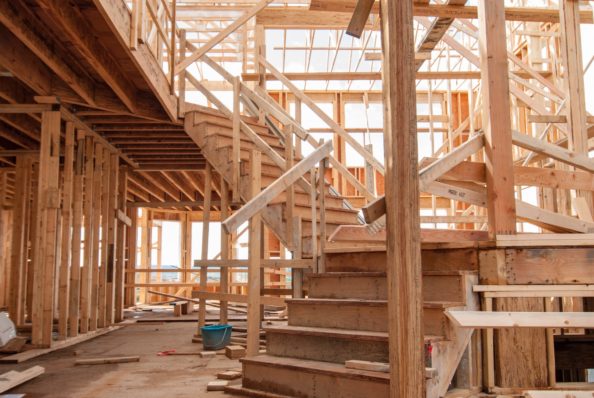 It may take months, if not years, to rebuild after the wildfires in Southern California, raising the likelihood of a spike in demand for lumber in the months and years ahead. The rebuilding process after events such as these “typically drives a significant demand for building materials, particularly lumber, given its foundational role in construction,” said Michael Goodman, of building-materials wholesaler Sherwood Lumber. The California wildfires could slow the economy and boost inflation – and that’s not even the worst of it, economists say. …Looking at the bigger picture for the lumber market, Kuta said, “if one believes that interest rates will gradually moderate lower, we as a nation [would still be] woefully underbuilt and in need of new residential housing.” Among the companies to consider are lumber providers Canfor Corp. and West Fraser Timber Co. and timberland company Weyerhaeuser Co., well as building-material suppliers Builders FirstSource Inc. and Boise Cascade Co.
  The massive fire that began in Pacific Palisades on January 7 has kept the city on edge ever since, with multiple other outbreaks flaring up around L.A. in the following days. While many have been contained or extinguished, the devastation left in the fire’s wake is astonishing, with homes reduced to ashes. In light of this reality, one question remains: why is wood the primary choice for construction in an area so prone to wildfires? The U.S. is rich in forests making wood a readily available material. [Wood is] more affordable, with lower prices than other materials like steel or concrete. …The tradition of building with wood in the United States dates back to the arrival of European settlers… Wood allows for faster construction, making it an attractive choice for building homes. …However, the increasing frequency and intensity of wildfires may serve as a wake-up call, prompting a shift to fireproof materials like concrete.

 President Donald Trump signed executive order aimed at boosting oil and gas drilling, mining and logging in Alaska. While state political leaders cheer, environmental groups see it as worrying. …”It means a timber industry in the Tongass National Forest can once again take place. It means Alaska can begin the process [of] finally getting its remain[ing] acreage of land from the federal government”, Republican Gov. Mike Dunleavy said on X about the executive orders. …It also aims to reverse restrictions on logging and road-building in a temperate rainforest. …Cooper Freeman, Alaska director at the Center for Biological Diversity, told The Associated Press that the president “just can’t wave a magic wand and make these things happen. Environmental laws and rules must be followed… We’re ready and looking forward to the fight of our lives to keep Alaska great, wild and abundant”.
 For the second time this decade, Weyerhaeuser Co.’s Longview lumber mill has been hit with a serious state fine for violating state stormwater control regulations. On Monday, the state Department of Ecology announced it has fined the company $145,000 for 36 stormwater discharge violations, 15 monitoring requirements violations, and 16 reporting requirement violations, all of which occurred between July 2022 and May 2024… “We believe strongly in permit compliance and invest significant time and resources to ensure we are meeting all environmental standards,” Weyerhaeuser Co. spokeswoman Mary Catherine McAleer said in an e-mailed statement Thursday. The latest penalty follows another related to stormwater that Ecology issued to Weyerhaeuser‘s Longview lumber mill in 2022, when the agency fined the facility $40,000 for repeated water quality violations.
 The
The 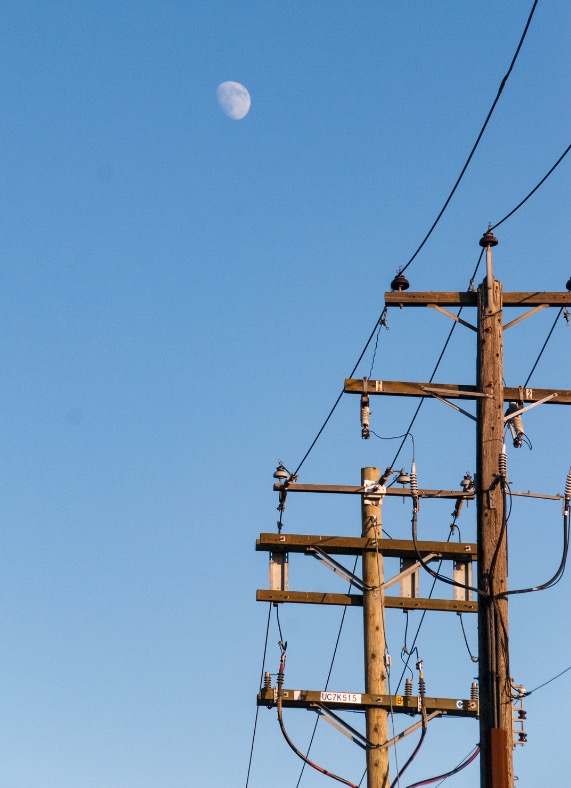 As California residents grapple for answers in the wake of a massive firestorm event in which two major blazes ravaged parts of Los Angeles — the Palisades Fire and the Eaton Fire —power lines are once again at the center of debate. It’s no wonder. Failed electric equipment and poor maintenance have caused horrific blazes in recent years, sometimes sparked by the smallest of parts, according to government investigators. …The 2023 fire in Maui that killed 102 people was caused by “reenergization” of broken power lines during high winds that showered sparks into dense, dry vegetation. …One key but often unpopular tool for preventing deadly wildfires is shutting off power when high winds of certain velocities are forecast. …Undergrounding power lines is the single best method to avoid dangerous arcing of overhead wires, or having dry palm frond hit one that can spark or spread fires. It’s also by far the most costly
