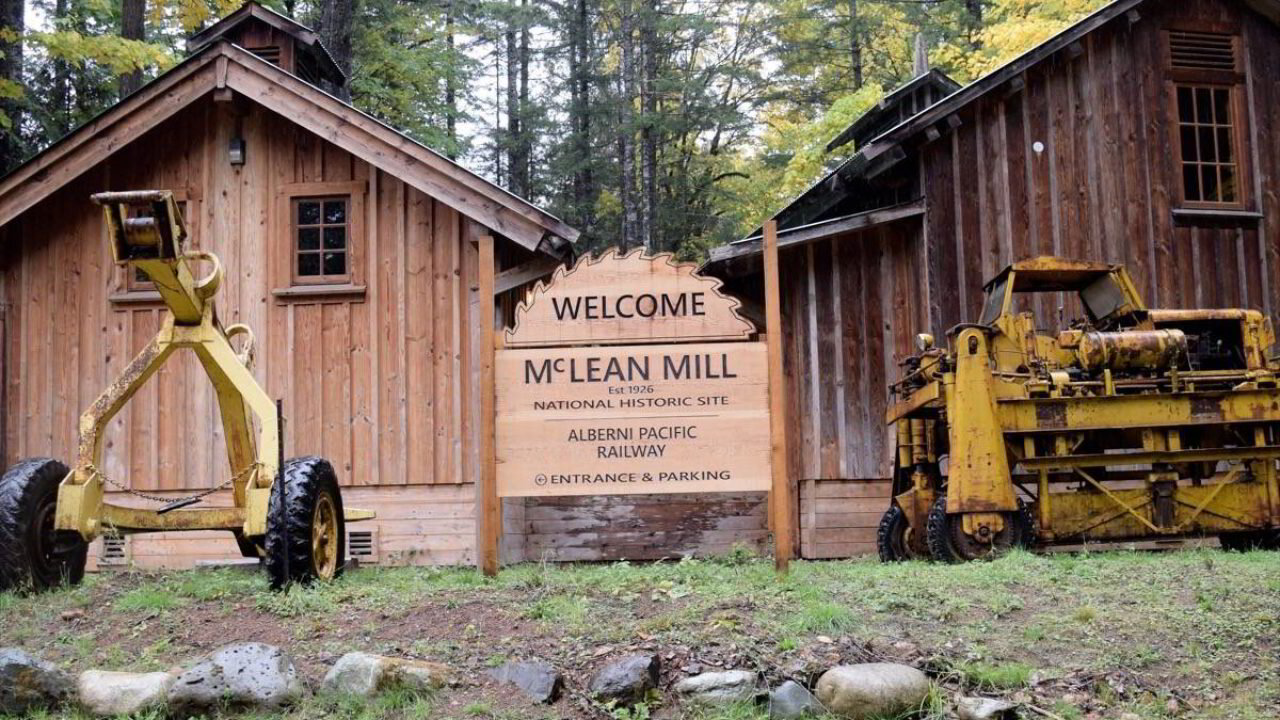
The United States has increased countervailing duties on Canadian softwood lumber [from 6.74% to 14.63%], bringing the total duties on lumber to 35.19%. The decision was announced on Friday by the US Department of Commerce. Although the escalating fees were anticipated, they still drew swift condemnation and words of alarm from industry and political leaders in BC and Ontario, who say it is yet the latest example of unfair treatment of the industry from their largest and most important international partner. “Two words describe Donald Trump’s latest move to increase countervailing duties on Canadian softwood lumber: absurd and reckless,” B.C.’s Forests Minister Ravi Parmar said. “Adding these additional softwood duties … will only worsen an affordability crisis on both sides of the border.”
In response to the increase in countervailing duties:
- Kim Haakstad, Council of Forest Industries: COFI condemns doubling of duties. Urges action to improve business environment for forestry in BC
- Government of Ontario Ministers: Ontario renews calls for removal of duties on softwood lumber exports
- Kurt Niquidet, BC Lumber Trade Council: Urges Canada and the US governments to make resolving the dispute a top economic priority
- Northern Ontario Municipalities: Softwood lumber tariffs ‘deal a serious blow’ to northern forestry sector

 The US and Canada are fighting about lumber once again. The neighbors have feuded over softwood lumber since the 1980s. The US has periodically put in place duties to counteract what it claims are unfair subsidies and sales of lumber priced below market value. …Canada has long resisted changing its trade practices on lumber. But as the Trump administration has become more bellicose about its trade relationship with Canada, the country’s stance may be softening. On July 16, BC Premier Eby said that Canadian officials are now open to putting a quota on the amount of lumber exported to the US. The increased fees will benefit foresters in the US South… but the US would struggle to offset the lumber it gets from Canada in the short-term, potentially driving up housing prices. Here’s what to know about the commodity that has long dominated US-Canada trade tensions. [to access the full story a Bloomberg subscription is required]
 Since Feb. 1, 2025, Canada has been plunged into a major trade war, triggered by U.S. President Donald Trump. …These measures threaten thousands of jobs and destabilize the deeply integrated supply chains between the two countries. This is not the first time Canada has faced such a threat. In 2018, similar tariffs were imposed by the same president but lifted in 2019 with the conclusion of the CUSMA. The difference today is the far greater scale and scope of the trade war. …The USW calls for a robust industrial strategy to reduce Canada’s dependence on U.S. trade. Priority must be given to steel, aluminum, wood and materials manufactured in Canada in all government-funded projects. Public money must be used to support Canadian jobs. The union is also calling for a tax credit to encourage the procurement of Canadian-manufactured goods, as well as the creation of strategic reserves of critical minerals to stabilize demand and secure supply chains.
 The US lumber industry says new financial support pledged by Canada to domestic forestry companies risks deepening the neighbors’ long-running trade dispute, and may result in yet more import taxes. Last week Prime Minister Mark Carney promised as much as C$1.2 billion in loan guarantees, grants and contributions for Canadian sawmills to pursue product development and market diversification — in response to what he said were unjustified US import taxes. Three days later, US Department of Commerce separately confirmed it would more than double combined anti-dumping and countervailing duties on Canadian softwood lumber. …“We will absolutely be asking Commerce to look at whether companies received a distortive benefit from this package,” said Whitney Rolig, who acts as lead attorney for the US Lumber Coalition. …The Quebec Forest Industry Council said that “even the Department of Commerce has long since ceased to consider loan guarantees as subsidies,” and the aid package also aims to boost domestic demand.


 It will take time to fully understand the implications of a landmark court ruling that appears to place Aboriginal title in British Columbia above standard private property rights. But already, there’s a fierce political debate. The BC Supreme Court ruled that the Cowichan Tribes holds title over federal, city and private land in Richmond that it historically used as a fishing village. This title sits higher in the legal hierarchy than fee simple land rights of other current owners. The ruling could set a precedent that fundamentally changes the security of standard private property in B.C. …Eby’s comments hit at the core of the fallout — that with most of British Columbia identified by First Nations as traditional territory, the court ruling could scare away not only the general public but businesses considering investing in the province. …But Justice Young appeared to set a new precedent by calling Aboriginal title the “senior interest in land vis-a-vis the fee simple titles.”
 For one local lumber mill, the federal government’s announcement of support for the Canadian softwood lumber industry is a step in the right direction. Nick Arkle, CEO at Gorman Brothers Lumber, said in his 50 years of working in the forestry industry, he hasn’t sensed a government that has been this supportive at a federal level. “Both federally and provincially, I’m seeing some major shifts,” Arkle said after Prime Minister Mark Carney visited the Gorman Brothers Lumber mill in West Kelowna to announce the federal government’s strategy to bolster Canada’s softwood lumber industry. …Arkle said Canada also has to figure out how to get along with its neighbours. Gorman Brothers has strong relationships with many customers in the U.S., said Arkle, and those customers can’t figure out why they’ve got this trade action going on because they want Gorman Brothers’ lumber.


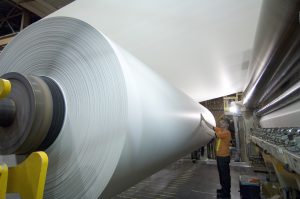 As of mid-2025, the global tariff environment has grown increasingly unpredictable. The United States has reinforced its protectionist stance with new and expanded duties aimed at key trade partners. Most notably, a 50% tariff on imports from Brazil was enacted, targeting a wide range of products. Wood pulp and certain industrial inputs were explicitly exempted, though lingering confusion around the policy’s scope has led companies to reassess sourcing strategies. …Many of the early US tariffs implemented—such as those targeting Canadian softwood lumber, Chinese finished goods, and EU paperboard products—remain in place. …In response to this complex tariff environment, companies are increasingly focusing on supplier diversification, regional trade agreements, and nearshoring strategies to reduce risk. While some nations—like Mexico and Chile—have emerged as viable alternatives for sourcing pulp, packaging, and paper products, the reshuffling of trade lanes is still underway.
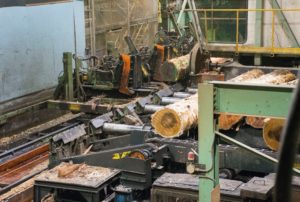 The pieces might be falling into place for Wyoming’s timber industry to make a strong comeback, legislators and land management officials said. The volume of timber being cut in Wyoming might outpace the state’s few remaining sawmills to meet the demand. The increase in demand coincides with tariffs being placed on Canadian lumber. …Long-term success of expanding the Wyoming timber industry hinges on building back the “local timber industry,” instead of trucking logs to mills in other states, Bighorn National Forest Supervisor Andrew Johnson said. Wyoming timber products could include “finger-jointed two-by-four” boards, as well as wooden posts and poles, he said. Johnson made his remarks before the Wyoming Legislature’s Select Federal Natural Resources Committee. He and other land management officials gave optimistic reports as they informed the committee about the outlook for logging and lumber milling in Wyoming, due to recent state and federal policy changes.

 Lumber futures have dropped about 12% since hitting a three-year high two weeks ago, a sign that wood buyers stocked up before duties on Canadian two-by-fours more than doubled this month and that traders are worried about the U.S. housing market. Futures for September delivery fell to around $610 per thousand board feet late Friday and have declined in nine of the past 10 trading sessions. On-the-spot prices are also down, according to Random Lengths. …Jordan Rizzuto, chief investment officer at GammaRoad Capital Partners… said that besides indicating that lumber was piled high in U.S. lumberyards before the higher duties took effect, the whipsaw in wood prices is a warning sign for other asset classes. “Lumber’s price behavior over the past several weeks relative to countercyclical and defensive assets suggests potential weakening of new construction and cyclical sectors of the economy,” he said. [to access the full story a WSJ subscription is required]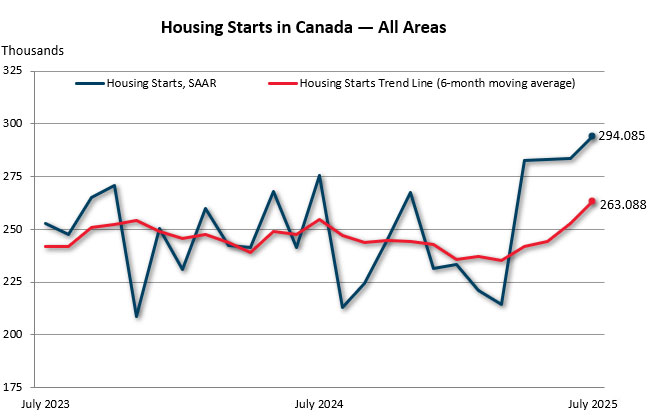
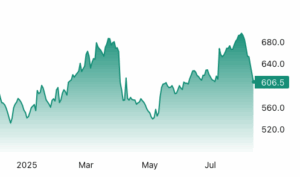 Lumber futures fell toward $610 per thousand board feet, retreating from the May-2022 high of $695.5 seen August 1st as weakening demand, recovering supply and tariff-driven trade distortions jointly sapped pricing power. Demand has cooled sharply with US single-family starts slipping to an 11-month low and building permits plunging, a direct consequence of elevated mortgage rates that curbs the core market for lumber. On the supply side, sawmills remain under-utilized but production has stabilized and Canadian mills are ramping output off a curtailment-heavy base, Statistics Canada shows production and shipments recovering into mid-2025, keeping physical availability ample. Tariffs meant to restrict Canadian flows are, in this oversupplied environment, simply redirecting trade and encouraging inventory build rather than creating scarcity, so inventories remain high and limit upside even as duties rise.


 VANCOUVER, BC — Conifex Timber reported results for the first quarter ended March 31, 2025. EBITDA was negative $3.2 million for the quarter compared to EBITDA of $4.9 million in the first quarter of 2025 and negative $7.1 million in the second quarter of 2024. Net loss was $8.3 million for the quarter versus net income of $0.6 million in the previous quarter and net loss of $9.7 million in the second quarter of 2024. …Lumber production in the second quarter of 2025 totalled approximately 35.3 million board feet, representing operating rates of approximately 59% of annualized capacity. Second quarter production was negatively impacted by operating the sawmill on a four-day configuration, necessitated by reduced log availability.
 OTTAWA — Canada’s housing crisis may get worse before it starts to show much relief, as new projections say that the number of housing starts will actually decrease this year and next. These new estimates, from both public and private sector housing forecasts, contradict political promises from all levels of government to boost supply of homes across the country. The Canada Mortgage and Housing Corporation (CMHC) forecasts that the total number of housing starts in Canada this year will be about 237,800, down from 245,367 in 2024. CMHC, a Crown corporation that acts as Canada’s national housing agency, also forecasts a drop to no more than 227,734 next year and 220,016 in 2027. Those forecasts are all below the 267,000 annual output for housing starts from 2021-22 and less than half the 480,000 that the CMHC says Canada needs to add each year over the next decade.
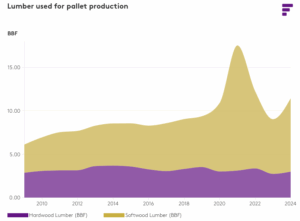 Economic uncertainty has clouded the pallet market outlook, as July’s job report revealed weaker-than-expected job growth. The elimination of the de minimis tariff exemption for low-value shipments is expected to improve pallet demand. Anticipated interest rate cuts will have a knock-on effect on housing affordability, stimulating the construction sector which in turn impacts lumber prices. …As pallet usage has grown, softwood has become the dominant material used in pallet manufacturing due to its abundance and cost-effectiveness. Hardwood mills were hit hard, and many saw closures, after the Chinese property market collapsed as that was its biggest end-use market. This Canadian softwood lumber supply shock does certainly leave the door open for the hardwood pallet to regain some market share. Supply and demand indicators are pointing to higher prices towards the end of 2025 and into 2026.

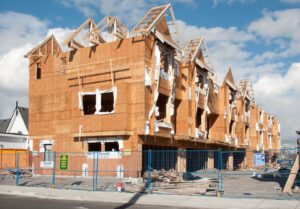 Boosted by a surge in the multifamily sector, US housing starts saw a sizeable jump in July, posting the highest total of starts since February. Housing completions were also up in July, while building permits were down. According to the numbers released by the US Census Bureau on Tuesday, overall housing starts totaled 1.428 million in July, up 5.2% from June and 12.9% above July 2024. It was the highest number of overall starts since February’s 1.490 million. The sector was paced by buildings with five or more units, which had 470,000 starts in July, up from 421,000 in June. This is the highest total of multifamily starts in more than a year. Single-family housing starts were also up, coming in at 939,000 for July. This reflects a 2.8% increase month over month; however, totals are still low compared to most months over the last year. …Odeta Kushi, at First American, said the single-family housing starts numbers are concerning.



 Box demand touches nearly every industry, from flat-screen TVs to packaged food, all of which see sales fluctuate based on how flush shoppers feel. …Sales of corrugated cardboard used to make boxes are slumping, signaling that retail demand across industries may be due for a correction. US box shipments fell to the lowest second-quarter reading since 2015, with companies like International Paper Co. and Smurfit Westrock Plc reporting drops in box shipments. The drop in packaging demand appears to be tied to President Donald Trump’s mixed messaging on tariffs, with companies not stocking up on packaging while they wait to find out how the levies will affect costs and demand. [to access the full story a Bloomberg subscription is required]
 US mills consumed more recycled paper in 2024 compared to 2023 while exports decrease. The American Forest & Paper Association (AF&PA) recently announced its annual paper recycling rates, with 60%-64% of paper and 69%-74% of cardboard available for recovery being recycled in the United States in 2024. Paper continues to be one of the highest recycled materials in America, supported by successful recycling systems throughout the country. In 2024 alone, 46 million tons of paper was recycled in the U.S., which equates to 125,000 tons of recycled paper being turned into new, essential products like cardboard boxes, paper packaging, and toilet paper every day. …US mills used 1.29 million more tons of recycled paper to make new products in 2024 – that’s 32.7 million tons compared to 31.3 million tons in 2023.
 Technological advances are also primary drivers of construction material innovations. …Also, there are new
  The European Federation of Wooden Pallet and Packaging Manufacturers (FEFPEB) has advised that the EU Deforestation Regulation (EUDR) will not have significant implications for customers using wood pallets and packaging for transport. The organization
 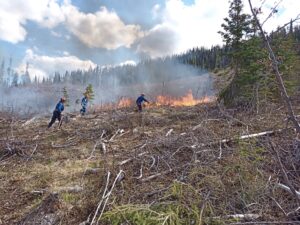 OTTAWA — Corey Hogan, Parliamentary Secretary to the Honourable Tim Hodgson, Minister of Energy and Natural Resources, announced an investment of $540,300 for two projects through the Government of Canada’s Fighting and Managing Wildfires in a Changing Climate Program (FMWCC) – Training Fund. The funding includes: $335,000 to Yorkton Tribal Council in Yorkton, Saskatchewan… [and] $204,800 to the Rural Municipality of Piney, Manitoba. Through this investment, community members in Manitoba and Saskatchewan — two provinces that have faced severe wildfire conditions this year — will receive wildland firefighting training to enhance their communities’ capacity to prepare and respond to wildfires. …The addition of these 95 trainees has us on track to train over 2,800 wildland firefighters in
  As wildfires scorch Canada amid its second-worst wildfire season on record, Indigenous leaders and experts say the country’s approach remains reactive — leaving Indigenous communities disproportionately vulnerable. At a Monday press conference, federal officials reported that 707 wildfires are currently active nationwide. The extreme fire activity has strained firefighting resources, prompting Canada to deploy over 560 international firefighters from six countries alongside Canadian personnel. This situation is particularly dire for Indigenous communities. Jen Baron, a postdoctoral researcher and incoming assistant professor at the University of BC’s Centre for Wildfire Coexistence, said… Many First Nations communities are “overexposed and underserved.” Remote, fly-in communities with minimal access routes face significant risks in evacuation and recovery. The infrastructure gaps make an already dangerous situation much worse, Baron said. Some federal investments have targeted these gaps. This week, officials announced a $540,000 commitment to two wildfire training programs.
 Western provinces and the East Coast should remain on alert for the possibility of more wildfire activity throughout the rest of summer, based on the latest federal government update. Wide swaths of B.C. and the prairie provinces are expected to be drier and hotter than normal. Federal government forecasters also see above-average seasonal temperatures for most of the country over the next three months. Typically in the more northern regions, fire activity starts to wind down around September as cooler weather sets in and the days grow shorter. Not this year. Federal bureaucrats said there’s a high likelihood that the large fires currently burning will continue well into the fall amid the higher temperatures. …Emergency Management Minister Eleanor Olszewski said “it’s been a really hot and dry summer and this has of course contributed to above-normal fire activity in BC, Manitoba, Saskatchewan and Newfoundland. New Brunswick and Nova Scotia.”
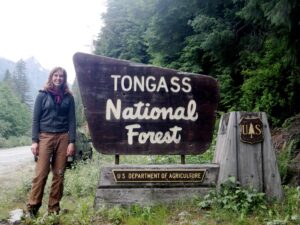 KLAWOCK, Alaska — Steinway pianos have a particular sound. …The secret to the sound isn’t merely Steinway’s skilled craftsmen—who’ve been using the same methods since 1853—but the specialized wood they use for the soundboards. It comes from the Tongass National Forest in Alaska. Unfortunately, a broken promise from the federal government will soon stop the music. …In 2016 the U.S. Department of Agriculture created a management plan that promised the availability of old-growth timber from the Tongass annually on a fixed schedule. …Not only has the Forest Service never met the timber-sale goals outlined in their management plan, in the past four years it offered less than 10% of the annual needs for the industry. …An executive order from President Trump… and a lawsuit we filed against the USDA earlier this year haven’t been enough to get the Forest Service to stop starving the industry. [to access the full story a WSJ subscription is required]
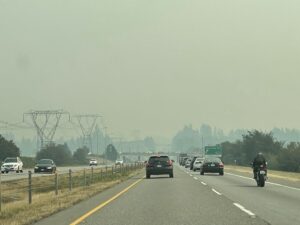 Road closures, evacuations, travel chaos and stern warnings from officials have become fixtures of Canada’s wildfire season. But as the country goes through its second-worst burn on record, the blazes come with a twist: few are coming from the western provinces. Instead, the worst of the fires have been concentrated in the prairie provinces and the Atlantic region, with bone-dry conditions upending how Canada responds to a threat that is only likely to grow as the climate warms. Experts say the shift serves as a stark reminder that the risk of disaster is present across the thickly forested nation. …“We had fire everywhere,” said Paul Kovacs, at the Institute for Catastrophic Loss Reduction at Western University. “And so for the first time, we had a different thought about wildfires as a country. …This is a national issue. This can show up anywhere.”
 CALGARY, Alberta — Wildfire season is in full effect across much of Canada, and Canadians are facing significant impacts. …Corey Hogan, Parliamentary Secretary to the Honourable Tim Hodgson, announced $45.7 million in funding for 30 projects across Canada through Natural Resources Canada’s Build and Mobilize Foundational Wildland Fire Knowledge program. These projects are driving research focused on protecting Canadians from the growing threat of wildfires, strengthening wildfire risk assessments and improving mitigation and adaptive forestry practices. We are also helping Indigenous communities access the tools needed to lead on wildfire readiness in their communities and backing Indigenous-led projects that support fire stewardship.
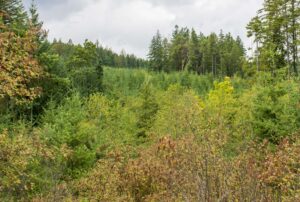 LAKE HURON, Ontario — Jenifer Brousseau often picks berries and traditional medicines in the bush around her community in northeastern Ontario. But in recent years, Brousseau and many others from Serpent River have been concerned about the forestry industry’s use of herbicides that contain the chemical glyphosate. …Environmental groups — including Friends of the Earth Canada, the David Suzuki Foundation, Safe Food Matters and Environmental Defence Canada — have launched a court challenge of Health Canada’s conclusions on glyphosate. …Some small municipalities in northern Ontario have also started to petition the province in their effort to get the ban. …Fred Pinto, an adjunct professor of forestry at the University of Toronto said herbicides are just one tool used by forestry companies to manage vegetation. Pinto said herbicide spraying is often done using aircraft in areas that have little to no road access.
 PENNSYLVANIA — The Allegheny National Forest is set to ramp up logging by more than 10% this year as part of a push from President Donald Trump to boost domestic lumber supplies. The move has sparked fierce debate between environmentalists and pro-logging groups who disagree on cutting trees to reduce wildfire risks or improve forest health. In the coming fiscal year, the state’s only national forest is set to sell 45 million board feet, an over 12% increase from this fiscal year, said Alisen Downs, for the Allegheny National Forest. …Allegheny National Forest has proposed a five-year plan starting next fiscal year, Downs said.“I think a slow and steady progress toward that increase is probably the best approach,” said Julia McCray, of the Allegheny Forest Alliance, which includes local officials and people from the timber industry. …While next year’s logging will be an increase… it’s not a historic high.
 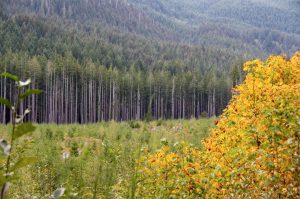 The Trump administration wants to scrap a rule that protects tens of millions of acres of national forest from road-building and large-scale logging—but its zeal to log will face a reality check from government downsizing, possible litigation, and even a soft timber market. The US Forest Service is grappling with budget cuts and staffing shortages. At the same time, environmental groups are already gearing up for legal battles, arguing the so-called Roadless Rule safeguards endangered species, clean water, and biodiversity. “The administration can sprint and rescind the Roadless Rule, but then what?” said Murray Feldman, at Holland & Hart LLP in Boise. “It seems like a moonshot to try to reverse decades of national forest management plans by revoking one specific set of rules. But we’ll see.” …The Forest Service hasn’t taken any official steps to rescind the Roadless Rule since Rollins’ announcement in June.
 A budget crisis a century in the making is coming to a head as Oregon’s rural counties. The crisis originates with a compromise from the era of President Teddy Roosevelt and was prolonged by piecemeal solutions made during the Timber Wars of the 1990s. Now the president’s signature One Big Beautiful Bill removes a key funding source for Oregon’s timber counties. If nothing is done, rural counties could find themselves with no money to pay for sheriff’s departments or other essential needs. …Many rural Oregon counties once relied on a portion of revenue from trees logged on federal lands to cover the costs of essential services. That federal land doesn’t generate local property taxes… So the federal government started sharing a portion of its logging revenues with those counties. When those declined, federal lawmakers came up with the Secure Rural Schools program. …But Congress needs to regularly re-authorize the program.
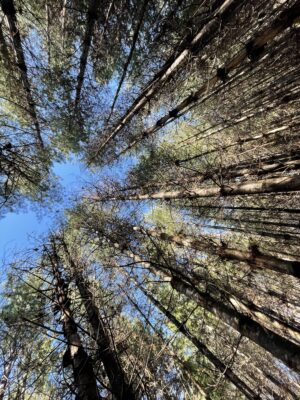 The US Forest Service kicked off timber sales in the Hoosier National Forest this week despite resistance from advocacy groups and Gov. Mike Braun, who called the federal project “misguided.” The timber auction is part of a controversial forest management plan called the Houston South Project — an initiative the USFS says will promote tree growth, reduce disease and move the landscape toward “desirable conditions.” Local environmental advocates have been suing the agency to halt operations since 2020, saying the project could jeopardize the quality of drinking water 130,000 Hoosiers rely on in Lake Monroe. But the project is plowing ahead, despite local outcry and direct pleas from Braun to halt the project. The Forest Service declined to immediately comment to IndyStar’s request, instead asking for one to two weeks to respond. …The project includes prescribed burns on 13,500 acres of forest and permitting timber harvests on another 4,300 acres across the next 10-15 years.
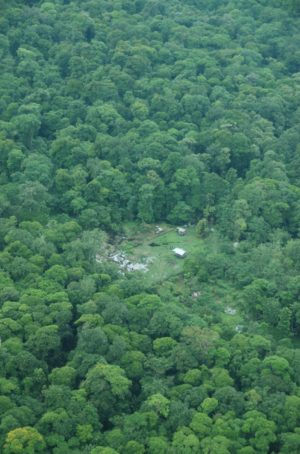 JAKARTA, Indonesia — The recreational vehicle industry is now the biggest consumer of tropical wood in the United States, UK-based NGO Earthsight and Indonesian NGO Auriga Nusantara said. They said evidence showed sheets of tropical “lauan” plywood found in Indonesia were likely being used in the floors, walls and ceilings of RVs produced by major brands like Jayco, Winnebago and Forest River. “Nature-loving RV owners will be horrified,” said Earthsight director Sam Lawson. …Indonesia has one of the world’s highest rates of deforestation linked to mining, farming and logging, and is accused of allowing firms to operate in Borneo with little oversight. …PT Kayu Lapis Asli Murni, sourced timber mostly from rainforest in areas the NGOs visited, half of which was then exported to US firms MJB Wood and Tumac Lumber in 2024, they said.
 AUSTRALIA — The Victorian Government has

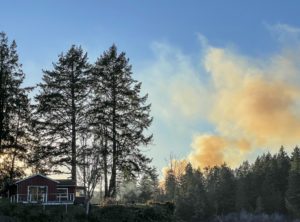 Officials in Nova Scotia say a wildfire in the western part of the province has grown and could force people out of their homes, while cooler temperatures and low winds have helped firefighters in Newfoundland and Labrador. The Long Lake wildfire is expected to grow, said Scott Tingley, manager of forest protection with Nova Scotia’s Natural Resources Department. On Sunday evening, the Nova Scotia Department of Natural Resources said the fire had almost doubled in size, growing from 11 square kilometres in the morning to nearly 20 square kilometres. It had spread past Godfrey Lake to the intersection of Fairns and West Dalhousie roads on one side and the south side of Spectacle Lakes on the other, it added. “These are not favourable firefighting conditions,” Tingley told reporters Sunday morning. “It’s very, very dry.” Two contracted helicopters were helping local firefighters along with crews from Prince Edward Island and Ontario, he said.
 NOVA SCOTIA –More than one hundred homes have been evacuated as an out of control wildfire near West Dalhousie in Annapolis County continues to burn Friday morning. The fire broke out Wednesday on the north side of Long Lake, about 20 kilometres east of Annapolis Royal, Nova Scotia. The provincial Department of Natural Resources has said a lightning strike caused the fire. …The national weather forecaster has issued an air quality statement for Annapolis County and parts of Halifax County, saying smoke from the wildfires is reducing air quality in the area, and that people who are more likely to be impacted by smoke — including pregnant people, infants and young children, people with chronic health conditions and people who work outdoors — should avoid strenuous outdoor activities.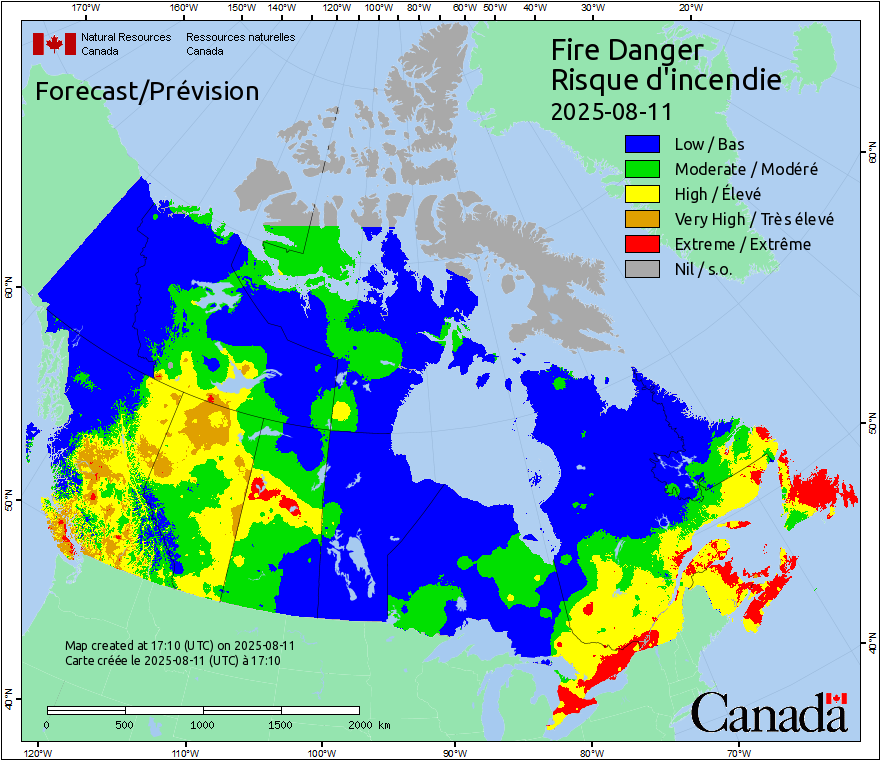
 GORMAN, California —
  ATHENS — Wildfires intensified across southern Europe on Wednesday with a round-the-clock battle to protect the perimeter of Greece’s third-largest city and at least three deaths reported in Spain, Turkey and Albania. Outside the Greek port city of Patras, firefighters struggled to protect homes and agricultural facilities as flames tore through pine forests and olive groves. Tall columns of flames rose behind apartment blocks on the outskirts of the city. …Spanish Prime Minister Pedro Sánchez expressed condolences after the death of a firefighting volunteer in the hard-hit Castile and León region north of the capital, Madrid, where thousands have been displaced by evacuations. In Turkey, a forestry worker was killed Wednesday while responding to a wildfire in a southern region, officials said. The Forestry Ministry said the worker died in an accident involving a fire truck that left four others injured.
 At least three people have died in a scorching heatwave that is fuelling dozens of wildfires across parts of southern Europe, forcing thousands of people from their homes. Red heat alerts have been issued in parts of Italy, France, Spain, Portugal and the Balkans, warning of significant risks to health as temperatures push above 40C (104F). Spain’s weather service Aemet said temperatures could reach 44C (111.2F) in Seville and Cordoba, while southern Portugal could also hit 44C. In Spain, an equestrian centre employee died after suffering severe burns in Tres Cantos, near Madrid, where winds over 70km/h (43mph) drove flames near homes, forcing hundreds to flee. In Spain’s north-western region of Castile and Leon, almost 4,000 people were evacuated and more than 30 blazes were reported. Another 2,000 people were evacuated from hotels and homes near the tourist hotspot of Tarifa. …In neighbouring Portugal, firefighters battled three large wildfires.