
Jason Krips
The wildfires that swept through Jasper National Park in 2024 were devastating — but they weren’t unpredictable. They were the foreseeable result of years of policy choices: the decision to leave forests untouched, to restrict active management, and to allow risk to build in the name of preservation. Alberta’s forests are disturbance-driven — they rely on natural events like wildfire to renew, diversify, and maintain ecological balance. But over the past century, we’ve suppressed these disturbances to protect communities, infrastructure and wildlife. Without fire, forests don’t regenerate naturally. And without policy tools that allow for active interventions like harvesting, we’re left with dense, aging stands vulnerable to fire and pests. Now, in 2025, we face an urgent question: will we continue down the same path, or will we modernize our approach to forest management — even in places long considered off-limits, like national parks?
…Our members don’t operate inside the park, but they do operate next to it, and what happens within the park’s boundaries doesn’t stay there. …In 2017, we warned that aging forests, pine beetles, and hot, dry summers were creating a perfect storm. In 2024, that danger became reality. …We need a national parks policy to reflect this reality. It should encourage science-based, ecologically sensitive management tools like thinning, selective harvesting, and prescribed fire across the entire park — tools that reduce fuel loads and restore healthier forest structures. Beyond parks, we also need to revisit legislation like the Species at Risk Act. In Alberta, this law currently prevents management in large areas of older forest, ironically putting caribou and other species at greater risk when those forests inevitably burn. …Canada’s forests, inside and outside of parks, are among our greatest national assets. But if we want to protect them, we need to manage them.
Additional coverage in the Rocky Mountain Outlook, by Glen Grossmith: LETTER: In support of rethinking forest management “It’s encouraging to see attention drawn to the real, actionable strategies that can make a difference in the face of escalating wildfires.”

 President Donald Trump said the US will put a 35% tariff on some imports from Canada, escalating the tensions between two countries that have impaired one of the world’s largest trading relationships. The new rate represents an increase from the 25% tariffs Trump imposed in early March under an emergency law. …But the US administration kept in place an exemption for goods traded under the rules of the US-Mexico-Canada trade agreement. US automakers and other companies with integrated North American supply chains had pushed for that carve-out, which has allowed US importers to continue bringing in the bulk of Mexican and Canadian products without duties. Because of the USMCA exemption, the effective tariff rate on US imports of Canadian goods was around 5%. …Trump signaled that he would be open to further talks with Carney. …Hours before raising Canada’s tariffs, Trump agreed to extend current tariffs on Mexico for 90 days.




 A panel of appeals court judges on Thursday voiced deep skepticism with the Trump administration’s attempt to justify sweeping tariffs based on a national emergency. The US Court of Appeals for the Federal Circuit is hearing arguments Thursday over whether Trump’s sweeping tariffs are lawful. A group of small businesses and a coalition of states are asking the appeals court to invalidate the bulk of Trump’s tariffs, arguing that Trump overstepped his power when he invoked the rarely used International Emergency Economic Powers Act (IEEPA). At the start of Thursday’s hearing, judges on the appeals court panel questioned why Trump is relying on a law that has never been used to justify tariffs, saying that the law itself never mentions the word “tariffs” and voicing concern that the president justifying the unilateral action based on an emergency could amount to “the death knell of the Constitution.”
 NEW YORK, NY -‑ Mercer International reported second quarter 2025. In the second quarter of 2025, net loss was $86.1 million compared to $67.6 million in the same quarter of 2024 and $22.3 million in the first quarter of 2025. Mr. Juan Carlos Bueno, Chief Executive Officer, stated: “Our operating results for the second quarter of 2025 reflect the impacts of ongoing uncertainties in the global trade environment coupled with the resulting weaker dollar. This challenging backdrop contributed to weaker demand for pulp in China during the quarter. …Our lumber sales realizations in both the U.S. and Europe increased in the second quarter of 2025 as a result of lower supply and steady demand.
 VANCOUVER, BC —
  The Bank of Canada today maintained its target for the overnight rate at 2.75%, with the Bank Rate at 3% and the deposit rate at 2.70%. While some elements of US trade policy have started to become more concrete in recent weeks, trade negotiations are fluid, threats of new sectoral tariffs continue, and US trade actions remain unpredictable. …The current tariff scenario has global growth slowing modestly to around 2½% by the end of 2025 before returning to around 3% over 2026 and 2027. CPI inflation was 1.9% in June, up slightly from the previous month. …Based on a range of indicators, underlying inflation is assessed to be around 2½%.
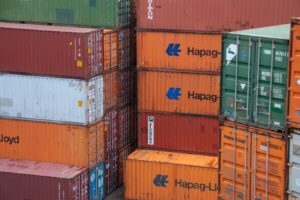 Canada’s pension funds have more than $1tn invested in the United States, and that figure could grow by $100bn or more annually, said Dominic LeBlanc, the federal minister responsible for US trade, during a visit to Washington. …Financial Post reported that LeBlanc made the comments in response to questions about whether US President Donald Trump might request specific commitments on Canadian investment as part of trade talks. The US has offered increased foreign investment as a possible pathway to improved trade terms. …Despite the potential growth in US exposure, LeBlanc said the federal government would not direct pension managers to increase their holdings or participate in specific American projects as a condition for reduced tariffs. Canada’s pension funds are already deeply integrated into US markets.
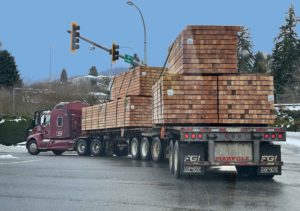 I am surprised at how President Trump is gradually succeeding in his goal. …Canada, along with China, is the only country standing up to the US, but it is inevitable that if no agreement is reached, the chances of a recession will increase. …Canada needs the US to avoid the worst, but the point of the article is different: how much does the US need Canada? My impression is that this issue is often underestimated. …We don’t need their lumber. But is that really the case? …Why Canadian lumber is essential. …The first and probably most important reason is that US forests are mainly privately owned (by companies or families). …Becoming less dependent on Canada is extremely complicated for the US due to the usual logistical challenges. …This industry has been in gradual decline for decades, and wanting to save it in order to be less dependent on Canada is a waste of resources.



 Japan’s housing starts fell 15.6% year-on-year in June 2025, slightly better than market expectations of a 15.8% drop and easing from May’s sharp 34.4% plunge—the steepest since September 2009. This marked the third consecutive monthly decline but the mildest in the sequence, as contractions slowed across key categories: owned (-16.4% vs -30.9%), rented (-14.0% vs -30.5%), built-for-sale (-17.9% vs -43.8%), and two-by-four homes (-5.7% vs -26.4%). On the other hand, prefabricated housing starts declined slightly more (-9.6% vs -9.3%), while growth in issued units moderated sharply to 10.2% from 76.7% in May.
 If some banks or financial institutions have long been poised to abandon paper records, a representative to Congress is saying “Not so fast. US Rep. Mike Turner, R-Dayton, said he reintroduced his “Protecting Against Paperless and Electronic Requirement (PAPER) Act” recently. This legislation would prohibit financial institutions from abandoning paper records to use electronic bank statements. For many years, banks would print and mail monthly bank statements to all customers. For a while now, though, paper bank statements have been replaced by electronic statements. …The PAPER Act would bar financial institutions from restricting services based on a customer’s preference for paper statements, making certain that all Americans can participate in our banking system in a way that works best for them.” …In March, President Trump signed an executive order mandating that the federal government shift from paper-based payments to electronic payments.
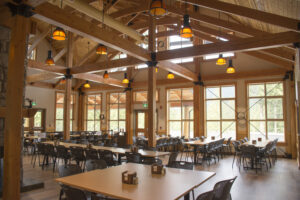 Decarbonizing the economy requires a large-scale transition from fossil carbon-containing feedstocks to minerals and biomass, notably wood in buildings. Increasing harvesting is under discussion to meet the supply of wood for ‘timber cities’, with potentially negative impacts on forests and biodiversity. Here we investigate pathways to timber cities, including their impacts on land use, energy use and greenhouse gas emissions by quantifying global and regional wood cycles using Bayesian material flow analysis. We show that shifting wood fuel to industrial use and maximizing circular use of wood can make timber cities possible with the current harvest volume. Our results reveal that these pathways have better environmental performance than increased harvesting, reducing total CO2 equivalent emissions by 2100 by 40.8 Gt compared to business as usual. To achieve the wood transition, regional and cross-sectoral governance and planning are needed, addressing national-level pathways and inter-regional wood transport.
  WASHINGTON, DC – U.S. Secretary of Agriculture Brooke Rollins announced the US Forest Service is investing $106 million to support state and landowner efforts to conserve private working forestlands across the country. Funded through the Forest Legacy Program, these projects will protect forests vital to the economic and social fabric of local communities – ensuring they remain productive, working forests for Americans and tourists to use and enjoy. …In total, the Forest Service will fund 10 projects across 177,000 acres of state- and privately owned forestlands in Arkansas, Hawaii, Iowa, Michigan, Mississippi, New York, Oregon and South Carolina. The investments advance President Trump’s Executive Order on
 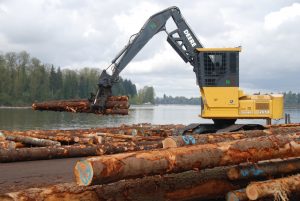 The Trump administration’s tumultuous relationship with China is proving to be a major issue for some companies in Alaska’s forest products industry. That includes in Haines, where a timber sale that was supposed to kick off this spring has stalled amid China’s ban on US log imports. China announced the ban in March, citing concerns over pests like bark and longhorn beetles in US shipments. The move came the same day that China imposed retaliatory tariffs on certain US agricultural products amid President Donald Trump’s global trade war. The decision has had sweeping effects on companies that harvest logs in Alaska and ship them overseas. …The trade disputes have also hit Canadian lumber company Transpac Group. The company in March largely shut down its site on Afognak Island, just north of Kodiak, citing the ban and failed efforts to divert its product to other markets.
 The Washington Forest Practices Board is proposing new legislation pushed by the Washington Department of Ecology that will affect all of us financially. The Washington Forest Practices Board (FPB) is supposedly an “independent” state agency responsible for establishing rules that govern forest practices in Washington state. It’s chaired by the Commissioner of Public Lands Dave Upthegrove. …The FPB is proposing streams that are perennial with no fish should have the existing no-harvest buffers changed from 50 feet each side of the stream to 75 feet (or more). The proposal affects not only the stream buffer width, but the length of stream buffer and volume of restricted trees. Why does it affect you? All timber harvests are taxed by the state of Washington — 4% of the net log value goes back to the county the trees were harvested in. …You are affected by this proposed change in law that does nothing for fish.
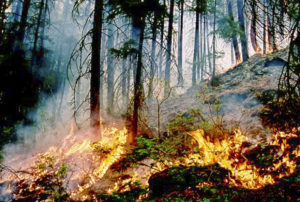 Wildfires are getting more catastrophic and expensive. For the last decade, Oregon policymakers haven’t been able to agree on how to pay for them. And while lawmakers emerged from this year’s legislative session with a plan to fund wildfire prevention, there’s still no dedicated funding to fight large fires like the Cram Fire, which has burned nearly 100,000 acres in Central Oregon. The total wildfire budget for the next two years is less than the state spent last year alone. And in some cases, costs that used to be borne by insurance plans and private landowners are now the responsibility of all Oregonians. A similar phrase cropped up during multiple interviews with policymakers: The consensus lawmakers reached this year is a good “first step.” What’s less clear is if it’s enough. ….“Oregonians writ large, are going to be the ones to pay for it,” said Casey Kulla, with Oregon Wild.
 There are obvious benefits to logging, grazing, prescribed burns, and mechanical thinning of California’s forests. When you suppress wildfires for what is now over a century, then overregulate and suppress any other means to thin the forest, you get overcrowded and unhealthy forests. California’s trees now have 5 to 10 times more than a historically normal density. They’re competing for an insufficient share of light, water and nutrients, leading to disease, infestations, dehydration and death. Up through the 1980s, California harvested 6 billion board feet per year of timber; the annual harvest is now 25% of that. We have turned our forests into tinderboxes. …For the sake of California’s water supply, its energy security, the safety of people living in the forests, and the health of our trees and wildlife, Californian needs to revive its logging industry. …It will also enable something counterintuitive: precious and endangered wildlife can thrive in a responsibly managed forest.
 Throughout her two decades working on forestry issues, Jasmine Minbashian has often found herself at odds with the US Forest Service and the timber industry. Her environmental activism started during the second wave of Pacific Northwest “Timber Wars”. …She joined the North Central Washington Forest Health Collaborative in 2019. …The group is one of 19 forest collaboratives focused on public lands in Washington and Oregon that emerged in the wake of the “Timber Wars” in an attempt to find agreement around contentious forestry issues. …These forest collaboratives, touted as a model of consensus-driven conservation, have quietly become influential engines for federal forest management decisions across the West. But critics worry the groups are too aligned with timber interests that prioritize commercial logging, and that they helped pave the way for the Trump administration’s latest effort to expand logging on public lands throughout the country by skirting environmental protection laws.
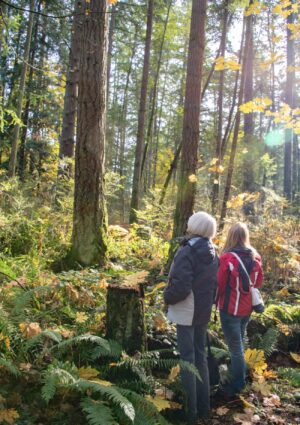 The forest products industry is an important part of the European economy and a crucial pillar for the transition to a low-carbon economy in the future. At the same time, this sector is not immune to trade uncertainty and geopolitical risks. As Europe looks to rely more on its own resources, there is an opportunity to better utilise the continent’s forests through investment and active management. …Although the EU has just 5% of the world’s forests, it produces approximately 20% of the world’s roundwood each year. Over the past decade, the EU has gone from being a net importer of roundwood and fuelwood to a net exporter – with the EU’s net trade surplus reaching 15.4m sqm in 2023. …Despite unpredictable trade flows… Research indicates that total demand for wood fibre in the EU will grow by 25% between now and 2050.
 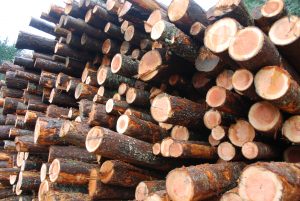 Proposed changes to the EU deforestation law supported by a majority of member states will boost the potential for illegal trade of Russian and Belarusian timber, according to an NGO. In May 18 EU member states sent a letter to the European Commission proposing to simplify the EU Deforestation Regulation, the bloc’s legislation that aims to reduce the EU’s impact on global deforestation. …The European Commission decided to postpone its implementation to 30 December 2025. …The regulation boosts controls over illegal imports of timber by introducing more mandatory border checks and compulsory geolocation of timber. …“For so-called ‘no-risk’ countries, they would be exempt from geolocation requirements, and there would also be no obligation for authorities to carry out a minimum number of checks on those countries,” Ganesh said. …“NGOs have shown that wood, not just from Russia, but also from other high-risk tropical countries and deforestation hotspots, is regularly laundered through countries like China.
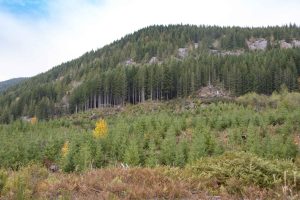 The climate crisis is forcing society to rethink existing technological and ecological systems. At the nexus of this challenge is how the US values and manages forests. Over the past 16 years, start-up carbon credit companies have been buying up hundreds of thousands of acres of American forestland to capture and store CO2. …So far, carbon storage policies or programs are underway in at least half of US states. …In 2021 the industry was worth $2 billion; by 2030 it’s projected to balloon up to $35 billion. …Some experts worry that forest carbon programs will someday threaten US wood supply, with the percentage of forests available for timber shrinking while the amount preserved as a climate mitigation tool increases. …And as the volume of harvested timber shrinks regionally, so do local economies in rural localities. …Analysts, like Russell, say “The world is wide enough for timber industry and natural capital markets to coexist”.
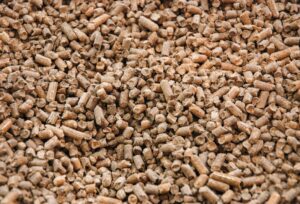 FREMONT, Nebraska — The remains of two girls and a relative who were killed in a massive explosion at a Nebraska biofuel plant were recovered Wednesday after crews battled smoldering wreckage and an unstable building for more than 24 hours. Fremont Mayor Joey Spellerberg said earlier at a news conference that the children were at the Horizon Biofuels plant ahead of a doctor’s appointment. …The plant makes animal bedding and wood pellets for heating and smoking food, using tons of wood waste. Spellerberg said authorities believe Tuesday’s blast was likely a wood dust explosion in the tall elevator tower. …The company has 10 employees, according to the Nebraska Manufacturing Extension Partnership.