The US Department of Commerce today announced the final anti-dumping duty rate of 20.56% in the sixth annual antidumping review of unfairly traded Canadian softwood lumber imports into the United States. The review covers lumber imported in calendar year 2023. If the Department’s forthcoming determination in the countervailing duty review is consistent with the preliminary results, the combined rate will be well over 30%.
Council of Forest Industries (COFI):
COFI strongly condemns today’s decision by the US Department of Commerce to once again increase anti-dumping duties on Canadian softwood lumber. These unjustified and punitive trade actions continue to harm workers, families, and communities across British Columbia and Canada—and have gone unresolved for far too long. We call on the Government of Canada to make resolution of the softwood lumber dispute a top national priority. But this latest escalation also underscores a hard truth: we cannot wait for the US to act. To keep forestry workers employed and communities strong, BC must urgently strengthen the conditions to succeed here at home. That starts with treating forestry as a major project to reach a target harvest of 45 million cubic metres and taking immediate action to restore wood flow, protect jobs, and stabilize the sector—while laying the groundwork for long-term competitiveness.
US Lumber Coalition:
The US Lumber Coalition applauds Trump Administration’s strong enforcement of the US trade Laws against egregious levels of unfair trade by Canada in softwood lumber. “20.56% – that is the enormous extent to which Canadian producers dumped their lumber in the US market. …Andrew Miller, Chairman of the Coalition said., “The Commerce Department has once again proven the severity of market disruption caused by Canada’s unfair trading. Time has come for Canada to reconcile the size of its industry with market realities. The United States will no longer absorb Canada’s massive excess capacity in lumber at the expense of US mills and communities.” …US lumber industry and workers letter to President Trump. Enforcing U.S. trade laws helps increase the U.S. supply of lumber to build American homes, all without impacting the cost of a new home, as demonstrated by data from the NAHB and Fastmarkets Random Lengths.
BC Lumber Trade Council (BCLTC):
The BCLTC is deeply disappointed by today’s final determination by the US Department of Commerce to raise anti-dumping duties on Canadian softwood lumber to 20.56%. This decision represents yet another example of ongoing US protectionism at a time when cross-border cooperation should be a shared priority. “These duties are both unjustified and harmful,” said Kurt Niquidet, President of the BC Lumber Trade Council. “They unfairly penalize forestry workers and families across British Columbia, while further increasing costs for American homebuilders and consumers. Niquidet emphasized the need for a lasting resolution: “Rather than prolonging this decades-old dispute through costly litigation, we urge both governments to pursue a fair and durable agreement that delivers long-term certainty in the softwood lumber trade.”
 As trade talks intensify between the US and Canada, those in the forest industry await what will happen with that long-term irritant of a trade file – softwood lumber. The US Lumber Coalition’s (USLC) July 2, 2025 press release, “
 BURNABY, BC – The United Steelworkers union (USW) District 3 and the USW Wood Council are calling on the federal government to take urgent action in response to the latest escalation in the softwood lumber trade dispute. …“This latest increase, along with other threatened tariffs, is yet another blow to workers, communities and the long-term sustainability of our industry,” said Scott Lunny, USW Western Canada Director. “We represent thousands of loggers and mill workers… and their families, are at risk – governments need to act now.” …“It’s a constant attack on our industry and our workforce from the US administration. ….In addition to calling for a deal on softwood lumber to be a priority for Canada in trade talks with the US. …“These duties are unfair and will only drive up housing costs for U.S. consumers, while putting thousands of Canadian jobs at risk,” said Jeff Bromley, USW Wood Council Chair.
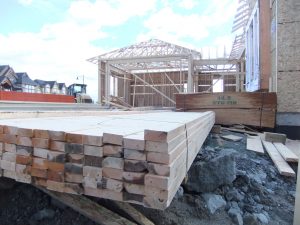 BC’s independent wood product makers say hundreds of small- and medium-sized manufacturers may be forced to shut down in light of the latest decision from the US to raise anti-dumping duties on Canadian softwood… [which] includes a requirement for Canadian companies to retroactively remit duties for products shipped to the US since Jan.1, 2023. Association chair Andy Rielly says that requirement could not only force small BC producers to shut down, but may also threaten operators’ personal assets as they may have to risk using their homes as collateral to secure bonds to pay. …Association executive director Brian Menzies describes independent wood product producers as “collateral damage” in the trade war.” …“We acquire logs and lumber at ‘arm’s length’ from various suppliers on the open market, just like claims made by members of the US Lumber Coalition, and yet our Canadian companies along with U.S. consumers must pay these unfair and costly duties.”
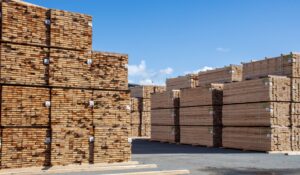 BC’s forestry sector would have been brought to its knees Friday by new American duties on Canadian softwood lumber, if it wasn’t already flat on its back from being hammered by years of provincial government policies. …But even before the new duties, B.C.’s forestry sector was in a crisis. Annual harvest volumes are down by tens of millions of cubic metres, lumber production and exports have shrunk dramatically, export revenues have fallen, thousands of jobs have been lost, and dozens of mills have been curtailed or shuttered. The industry has blamed various BC NDP policies, including new old-growth logging deferrals… and extraordinarily long permitting delays. …If New Democrats are serious about saving the industry from ruin, now would seem to be the time to shelve the never-ending reviews and actually do something. The government could spin a pivot to pro-forestry policies not as a retreat, but as a made-in-BC response to American trade aggression.
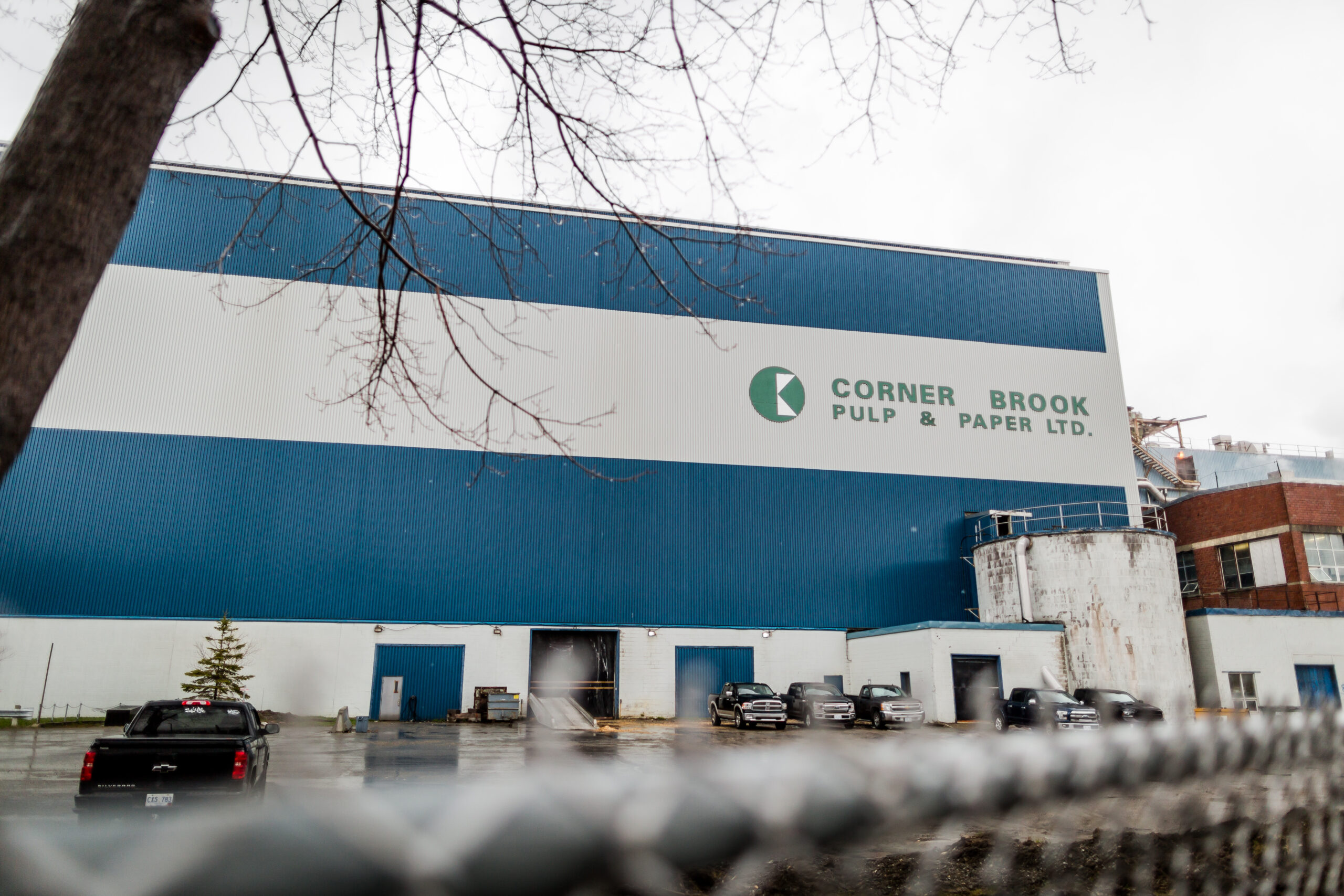

 Northern Pulp is abandoning its plans in Nova Scotia, but the province is still counting on the company to decommission its old mill and clean up the site in Pictou County that was used for heavy industrial activity for more than half a century. Environment Minister Tim Halman says his department is waiting for the company to file a reclamation plan. …Northern Pulp had been pursuing a new mill in Liverpool, and had said it would maintain the old mill for “potential logistics operations.” But the plan for a new mill was abandoned earlier this month. In a settlement agreement, Northern Pulp agreed to pay up to $15 million to the province for the mill’s closure and any necessary cleanup. …(However), it must first pay off hundreds of millions of dollars owed to its creditors as part of an insolvency process being handled in a BC court.

 SPRINGFIELD, Illinois — The US Department of Agriculture will move thousands of employees out of the nation’s capital in a reorganization the agency says will put them closer to customers while saving money, Agriculture Secretary Brooke Rollins said Thursday. Around 2,600 workers — more than half the Washington, D.C. workforce — will be moved to five hubs stretching from North Carolina to Utah, Rollins said. The union representing federal workers immediately criticized the plan as a ploy to cut federal jobs, pointing out that some 95% of the department’s employees already work outside Washington. The move is part of President Donald Trump’s effort to make the federal government slimmer and more efficient, which received a Supreme Court boost this month. Sen. Amy Klobuchar demanded that department officials appear before the Senate to explain their thinking.” …In the Washington region, the department will vacate three buildings and examine the best use of three others.
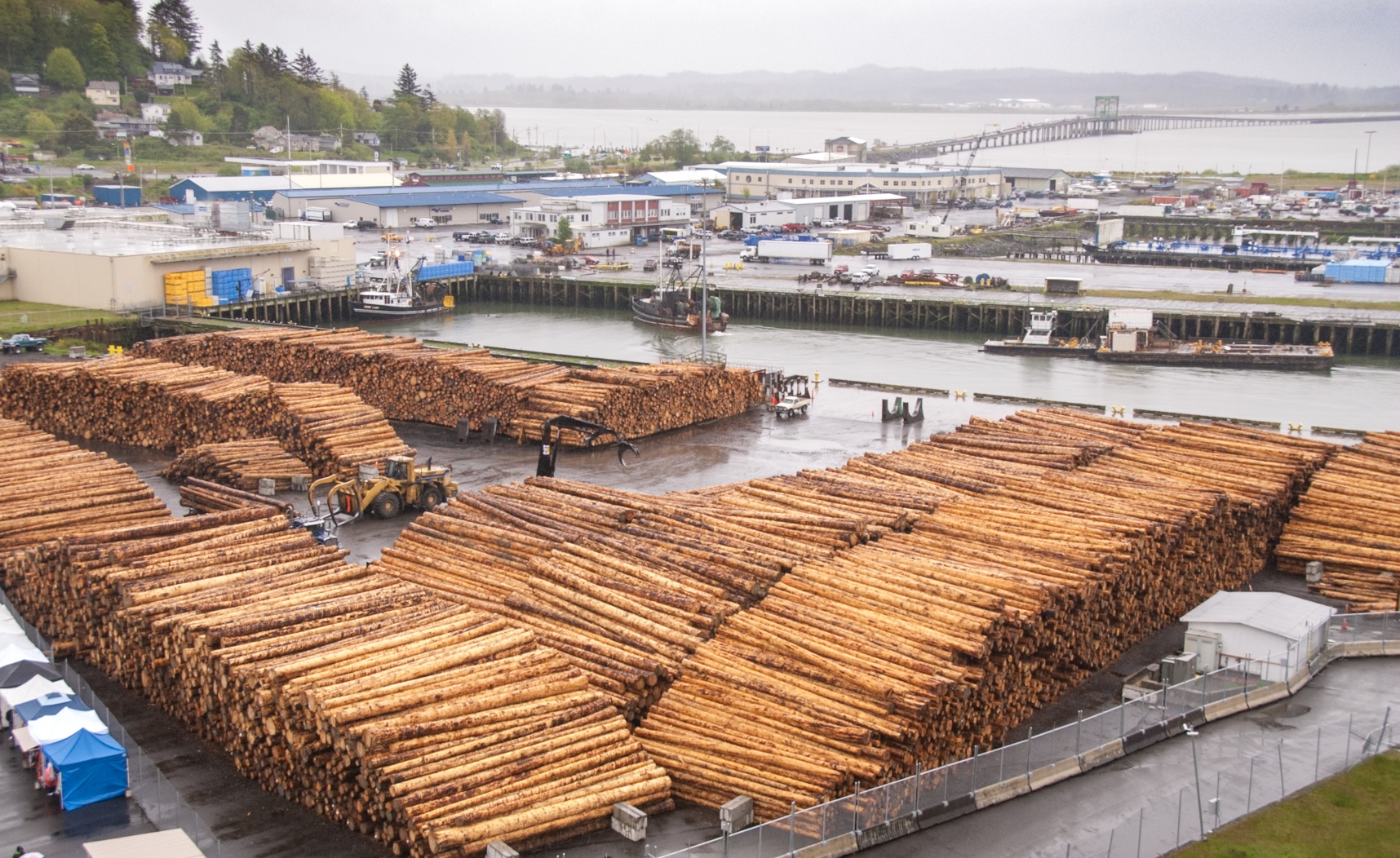 SKAMANIA COUNTY, Washington — Sawmills have been closing across the Pacific Northwest over the past 30 years. There is just one left in Skamania County, down from six during its logging heyday. Limited log supply from the region’s national forests has cut off their raw material, while cheap lumber from Canada has taken market share for their finished product. Owners of the remaining mills have high hopes that President Trump will deliver relief by increasing logging in national forests and raising trade protections against Canadian exports. Although the latter can be achieved with a stroke of the president’s pen, meaningfully boosting the federal timber harvest could take years and be impeded by litigation and red tape. …US sawyers have argued successfully in trade cases that their Canadian competitors are supplied with subsidized government logs, and that they offer two-by-fours over the border for less than they sell them at home. [to access the full story a WSJ subscription is required]

 OTTAWA—Home buyers and builders in Canada are in retreat, adding to the woes of an economy struggling under the weight of President Trump’s tariffs. Housing helped spur growth in Canada just prior to, and after the worst of, the Covid-19 pandemic. …Data this month indicated existing-home sales climbed modestly for three straight months as of June. But economists and real estate agents are far from convinced it signals recovery after a tariff-fueled slowdown. They note the sales rebound was the result of sellers cutting their listing price. Housing affordability remains stretched in Canada, according to the Bank of Canada data. …For builders, prices for new homes are failing to cover higher costs for labor, loans and taxes and fees set at the municipal level. The Canadian Home Builders’ Association said its own confidence index is at historically pessimistic levels. [to access the full story a WSJ subscription is required]
 The US Lumber Coalition (USLC) has aggressively promoted strong enforcement of US trade laws and railed against “unfair Canadian trade practices.” …The USLC’s arguments have been challenged by a pair of Canadian independent consultants — Russ Taylor Global and Spar Tree Group:
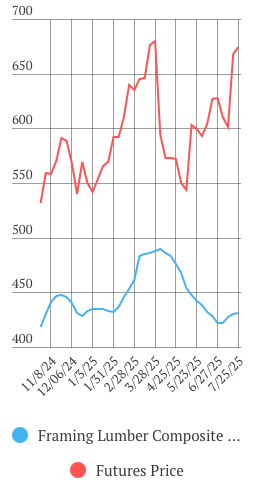 The U.S. Commerce Department has announced it is nearly tripling its anti-dumping duties on Canadian lumber imports from 7.66% to 20.56% following its annual review of existing tariffs. The anti-dumping duties are in addition to current countervailing duties set at 6.74%, which would bring the total lumber duties above 27%. However, the countervailing duty rate is expected to move higher on Aug. 8. Commerce issued a preliminary determination on countervailing duties earlier this year that would raise the countervailing duty rate to 14.38%. Moreover, President Trump’s Section 232 [investigation] could result in higher lumber tariffs. …For years, NAHB has been leading the fight against lumber tariffs because of their detrimental effect on housing affordability. In effect, the lumber tariffs act as a tax on American builders, home buyers and consumers. …We are also urging the administration to move immediately to enter into negotiations with Canada on a new softwood lumber agreement that will… eliminate tariffs altogether.
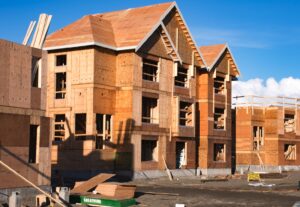 As a tariff storm blew in from south of the border earlier this year, many industries in Canada, including the home building sector, feared the unknown ahead of them. With stakeholders already keenly aware of the need to rapidly scale up housing supply and improve Canada’s housing affordability gap, blanket tariffs and more targeted material-specific levies meant additional unwelcome obstacles to overcome. That included a potential need to slow down the pace of construction as supply chains shifted and key construction parts became more expensive. …About six months after US President Trump’s return to the White House, many in the home construction sector say unpredictability persists around the cost and timing of obtaining the materials they need. For Geranium Homes, a residential developer in southern Ontario, that’s meant having to pivot on the fly when it comes to the supply chains it’s long relied on.


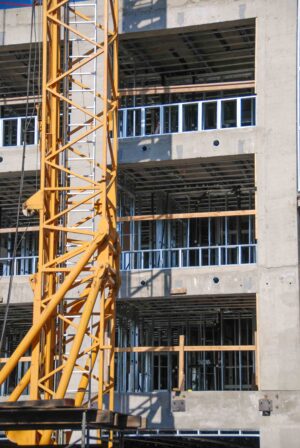 Canada’s first commercial carbon capture cement facility is now under construction in Mississauga Ont., backed by $10 million in federal funding. The project is part of the country’s effort to reduce industrial emissions. The project, led by Calgary-based startup Carbon Upcycling in partnership with Ash Grove Cement, aims to capture carbon dioxide from cement production and turn it into a low-carbon material that can replace part of traditional cement. Minister Evan Solomon, … said “These collaborative projects supporting our climate goals and enhancing our global competitiveness”. The facility will use Carbon Upcycling’s technology to mix captured CO2 with steel byproducts like slag to create a powder similar to cement used in construction. Carbon Upcycling CEO Apoorv Sinha said the system could reduce emissions from cement by up to 40%. …Sinha said the new facility will store up to 150 kilograms of carbon dioxide in every tonne of low-carbon cement it produces.
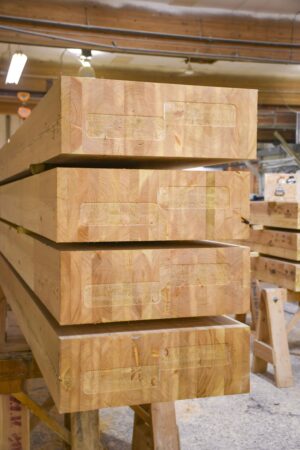 CHICAGO — …Milwaukee, our neighbor to the north has become a hotbed for the development of timber towers — tall buildings that use relatively new mass timber technologies that can replace the steel and concrete traditionally used to support such structures. Since 2022, Milwaukee has been home to the tallest timber tower in the world — the 25-story Ascent MKE at 284 feet in height. That’s no Sears Tower, but when you consider that most wood-framed buildings are one to four stories tall, it’s quite an achievement. …For all the stunning achievements that Chicago architects and engineers have accomplished over the last century and a half, there’s still a deeply conservative streak that runs through the city’s building culture. Fire, through several key historical events, is at fault. …So, perhaps it’s not surprising that we now lag many places in the development of new construction with mass timber.
 Canada is home to nearly 347 million hectares of forest, which account for about 9% of the world’s forests. As I travel this week across the northern boreal to visit mill and woodlands employees and local community leaders, I’m reminded of the vastness of our forests, the 200,000 direct jobs and families that rely upon them, and how the resilience of those workers is part of both an ever-evolving story and my sense of self as a Canadian. Our connection to our forests has also informed our role in the world beyond commerce, and beyond symbols. …As we endure another devastating wildfire season across Canada, there is more discussion at the community level about turning to more active forest management as a solution. …In a world in which Canada’s exportable natural assets are being besieged by avoidable uncertainty, Canada’s forests are our most sustainable, renewable resource. …To me, being Canadian means having a privileged relationship with nature, especially with our trees and forests.


 VANCOUVER, BC — West Fraser Timber and the Lake Babine Nation Forestry Limited Partnership (LBN Forestry) welcomed the
  America’s public forests are under assault. We have already seen the massive timber harvests called for by President Trump’s executive order, the elimination of the Roadless Rule, and the gutting of wildlife protection efforts. Those are the broad stokes, but there are also finer maneuvers underway, such as abandoning the traditional practice whereby forest personnel paint-mark the trees selected for cutting, handing those decisions over instead to the timber companies themselves. Or the various subsections that keep popping up in the “Big Beautiful Bill” — for example, giving timber companies an option to pay for hastened environmental review and defunding endangered species recovery efforts. It also arbitrarily requires the Forest Service to increase harvests by 250 million acres annually for nine years. This is the context within which we must now view the Fix Our Forests Act, a logging-in-the-name-of-fire-prevention bill, stuffed with provisions that significantly override scientific and citizen review.
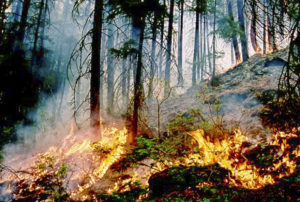 REDDING, California — In firefighting, drones get used to see hot spots in the dark, map the size of fires and look for damage. But the recent Green Fire also proves the flying robots also are effective in starting backfires on terrain firefighters cannot safely get to in the Shasta-Trinity National Forest. “If the mission is dull, dumb or dangerous, send the drone,” said John Schuler, a firefighter and US Forest Service spokesperson on the Green Fire. Drones can go where no firefighter can: Into remote areas that are difficult to impossible for crews to reach, and where manned aircraft have trouble flying due to smoke or other safety concerns. Firefighters like those on the Green Fire in the Shasta-Trinity National Forest are using drones to check fire size and directions wildfires are moving. They do the latter by dropping ping pong balls full of chemicals, said Schuler.
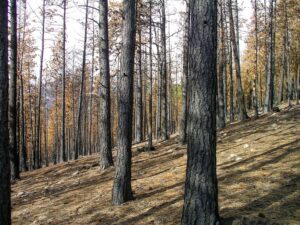 The state’s top public lands official is urging lawmakers to restore the spending to previous levels after they cut it by about half this year. If state funding for forest health and wildfire prevention isn’t ramped back up in the next legislative session, it could hinder efforts to prevent severe fires in the coming years, Washington’s top public lands official and others warned this week. The state Legislature approved House Bill 1168 in 2021, which committed $500 million over eight years to the state Department of Natural Resources for wildfire preparedness and response. State spending had largely kept up with that target until this year, with the department receiving $115 million in the last two-year budget and $130 million in the one before that. Then this year, as lawmakers confronted a budget shortfall, they slashed the wildfire preparedness funding to just $60 million for the next two years.
 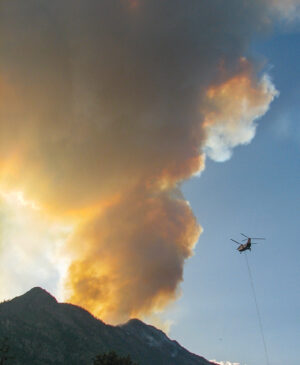 A deadly wildfire in Seyitgazi, Türkiye that killed 10 forestry workers was the result of a lack of training and institutional expertise, a senior union leader has claimed. The accusation was made by Yusuf Kurt, president of the Agriculture and Forestry Workers Union, who said unqualified personnel were deployed to the scene, while experienced staff had been reassigned due to internal rotation policies. Kurt criticized the practice of assigning staff who had never responded to wildfires before, simply as part of internal rotation policies. “Fire has no school, but the institution used to train its own staff through in-house training centers,” he said. “Now those centers are being shut down. Sending untrained personnel into active fires leads to fatal consequences.” Emphasizing the complexity of fire management, Kurt warned that theoretical knowledge is not enough. “Fire has a language. If you cannot read it, you cannot control it,” he said.
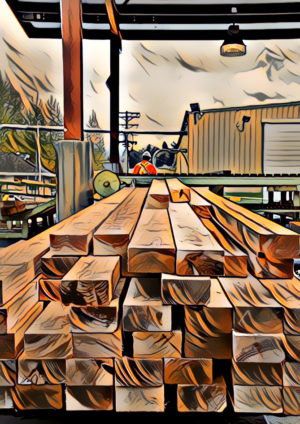 100 MILE HOUSE, BC — West Fraser Mills (WFM) had just cause to fire a worker who violated a safety policy on May 13, 2024, and tried to minimize the risk involved,
  Greece continued to battle major wildfires across the country amid a severe heatwave, but firefighters have brought many outbreaks under control. Extreme heat persisted, with temperatures reaching 42.4C (108.32F) in central Greece on Sunday. Firefighters were working on five major fire fronts late on Sunday in the Peloponnese area west of Athens, as well as on the islands of Evia, Kythira and Crete. Meanwhile, neighbouring Turkey has recorded its highest ever temperature as fires raged in several regions. Turkey’s forestry minister, Ibrahim Yumakli, said on Sunday that areas affected by fires were “going through risky times” and that he thought it would be several days before they were fully contained. On Saturday, Turkey’s environment ministry said meteorologists had recorded a reading of 50.5C in the south-eastern city of Silopi, surpassing the previous heat record of 49.5C.