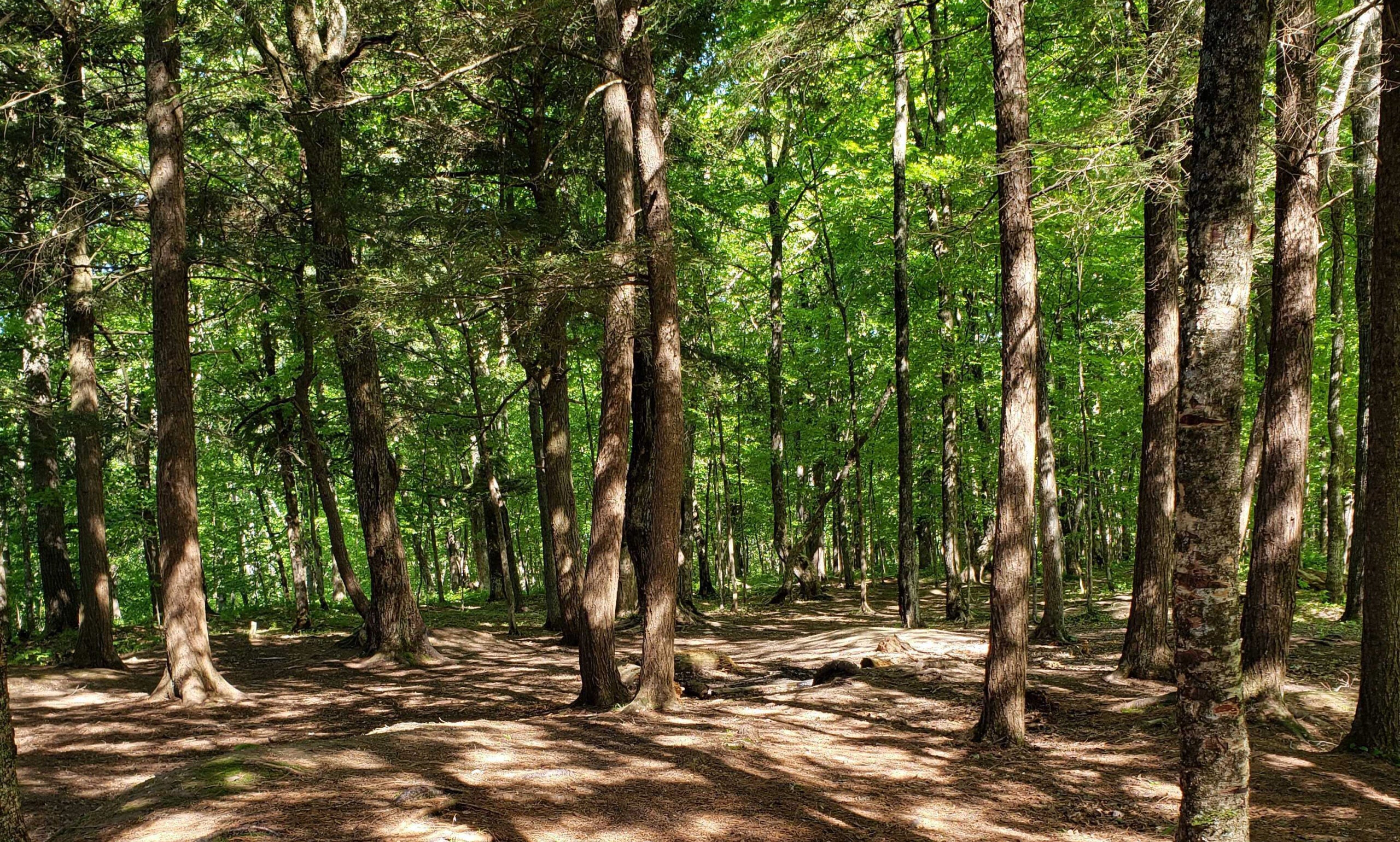
In a move that NAHB has encouraged, President Trump signed an executive order that calls for a 25% increase in timber production from federal lands. NAHB has taken a leading role in urging the administration and Congress to increase the domestic supply of timber from federally owned lands in an environmentally responsible manner. …This new development will help the nation move in the direction of self-sufficiency. However, due to logistical issues and the long time to ramp up sawmill production, it is projected to take months, if not years, before the market feels any impact from this action. …Offsetting the good news to expand domestic timber output is the fact that tariffs on Canadian lumber shipments into the US are expected to more than double by September.
These duties are completely separate from the global reciprocal tariffs announced by President Trump last week. When the president made his announcement, NAHB scored an important win when Trump chose to continue current exemptions for Canadian and Mexican products, including a specific exemption for lumber from any new tariffs at this time. It’s clear we are not out of the woods yet on the possibility that Canadian lumber tariffs could run even higher than 34.5% later this year. The White House issued an executive order in March commanding the Commerce Department to investigate the national security impacts of imports of timber and lumber. NAHB has argued that housing is a critical component of national security and that no further lumber tariffs should be imposed. …For now, Canadian lumber tariffs stand at 14.5%, but members should be forewarned to expect higher tariffs later this year and plan accordingly.


 A coalition representing part of the US lumber industry is firing a shot at BC’s Forests Minister, who has suggested the State-side industry is not willing to engage. “
 BURNABY, BC – The United Steelworkers union (USW) District 3 and the USW Wood Council locals in BC applaud the approach of Premier Eby in fighting for workers and federal government supports in light of the announcement by the US Department of Commerce that will increase the current tariff and countervailing duty average to 34.45% from 14%. “The continual application of tariffs and duties by the US on our USW membership in Canada is wrong and unwarranted,” said USW District 3 Director Scott Lunny. “Premier’s Eby’s approach in pressing the federal government in Ottawa for worker supports is key.” …“The Trump administration and the U.S. Department of Commerce continue to be subjected to the influence of the US Softwood Lumber Coalition, wrongfully claiming the Canadian industry is subsidized,” said Jeff Bromley, USW Wood Council Chair. …“It’s protectionism, pure and simple,” added Bromley.
 Premier David Eby cautioned last week that BC should not make too much of the appearance that the country “dodged a bullet” in the latest round of tariff fire from the US. …Eby’s fears were borne out, when the US announced a plan to more than double the duty against Canadian softwood. …Eby told the legislature that Forests Ministry staff are “working on a proposal to defer stumpage.” The tariff threat likely means a setback for the ambitious goal that Eby set for the forest minister, Ravi Parmar. He directed Parmar to “work toward…a harvest of 45 million cubic metres per year”. The increase would be 50 per cent greater than last year’s 30 million cubic metres harvest, but still well short of the almost 60 million harvested the year the New Democrats took office. …Though the industry welcomed the premier’s target for increasing the harvest, it remains privately skeptical that the NDP can make the necessary changes in regulation and permitting to bring about the increase.



 Lumber futures fell toward $580 per thousand board feet, sliding further from a two-and-a-half-year high of $685 on March 24th, reflecting a steep decline in construction demand amid disruptive trade policies. The US decision to raise duties on Canadian softwood lumber to roughly 34% has sparked significant uncertainty and raised homebuilding costs, prompting builders to delay projects. Concurrently, Canadian production has been restricted by widespread sawmill closures, diminished timber stocks due to the mountain pine beetle, and tightening forestry policies in key regions like British Columbia, resulting in a surplus that further drives down prices. While there is a gradual shift toward lower-cost Southern Yellow Pine from the US South, logistical and technical hurdles limit its ability to fully offset the reduced Canadian supply. Market participants are adjusting to lower demand expectations amid ongoing trade tensions and a slowing construction sector.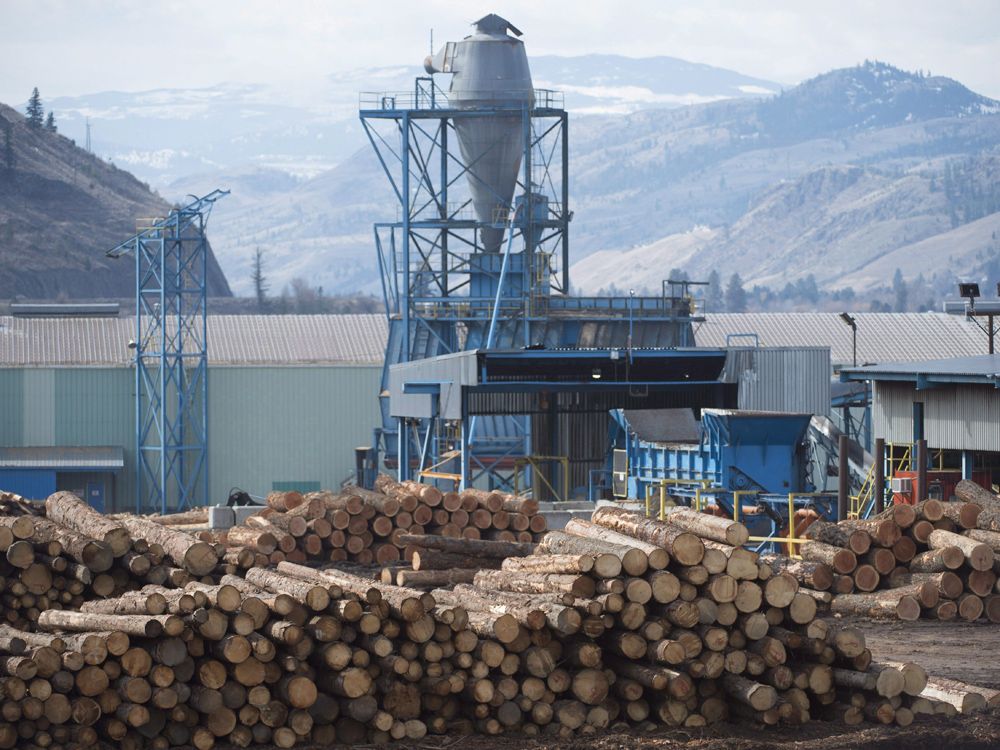

 Canada’s economy was already stumbling a few months ago. Now, it is on the brink of recession because of President Trump’s tariffs. Canada’s economy is starting to shed jobs after months of tariff-fueled anxiety, while the outlook among businesses and consumers has become increasingly dour as one of the US’s largest trading partners braces for more pain to come. …Last week, Canada’s statistical agency reported that 33,000 Canadians lost their jobs in March, the worst jobs report in more than three years. On Monday, the Bank of Canada reported that businesses and households expect inflation to climb, and company executives warned they expect to pass on higher, tariff-fueled costs to customers regardless of the hit to consumer demand. …Canada’s fiscal and monetary outlook has also been complicated by the government’s decision to retaliate against the US. [to access the full story a WSJ subscription is required]
 Homebuilder stocks plunged Monday following reports that the US is preparing to sharply increase tariffs on Canadian lumber, independent of President Donald Trump’s new “reciprocal” tariffs. …After reports of the new lumber duties emerged over the weekend, however, shares of homebuilders plunged swiftly Monday. …”Tariffs are the clear culprit for the stock market pullback and fears of recession,” says Realtor.com® Senior Economist Joel Berner. “Recession risk is especially poignant for builders.” …The latest round of tariffs, however, will likely increase materials costs for all homebuilders, to some extent, with a recent survey of builders finding that they expect an average cost increase of $9,200 per home as a result of tariffs. …Over the weekend, Moody’s Analytics Chief Economist Mark Zandi raised his outlook for the odds of a recession this year to 60%, up from just 15% a few months ago.
 The European pulp and paper industry is struggling to assess the possible impact of tariffs. …Europe has a marginally negative trade balance with the US for pulp and paper. In 2024, it imported 2.6 million tonnes of P&P from the US. In the same year, it exported 2.3 million tonnes of P&P to the country. The largest trade deficits appear to be around pulp (-975,000 tonnes) and containerboard (-310,000 tonnes, mostly kraftliner). On the other hand, Europe has a surplus in graphic paper and cartonboard sales. …“The only certainty we have is that there will be negative consequences for businesses on both sides of the Atlantic. Trade wars are always detrimental for consumers, but we are a ‘made in Europe’ industry, with local capacities to meet the European demand,” he added. …Most market participants believe the stuttering trade war initiated by Trump will further hurt the already stagnating European economy.

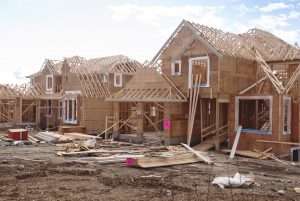 While the current tariff war is justifiably on the minds of many Americans, another type of import tax may be coming later this summer that could have a big impact on new home construction. …The US is preparing to raise duties on Canadian softwood lumber from 14.5% to 34.45%. …A final review of the levies will be published in August or September, with the rate increase taking effect then, according to the National Association of Home Builders. The NAHB has previously estimated that Trump’s tariffs could increase the cost of building a new home by $9,200. ….The proposal to more than double the tax would be a blow to Canadians, but it would also mean “driving up housing costs for Americans,” BC Premier David Eby said. …Some have praised the proposal, suggesting that it will give domestic lumber companies an opportunity to increase production, even if that means higher costs.

 Marie Fallon, the general manager of AR Chambers Supply in Lawrenceville, is nervous about the future of her business. The threat of tariffs has prices fluctuating and she’s worried her supply sources are at risk. …As President Donald Trump’s international trade war rages on, Pennsylvania homebuilding and construction businesses are weathering the dizzying pace of cost increases and then abrupt pauses in tariffs as they try to ensure that long-term projects are completed. Pennsylvania is highly dependent on foreign countries for construction materials, with 63% of the state’s wood imports, 66% of its iron and steel, and 68% of its aluminum coming from Canada and Brazil. …Despite the whiplash changes, some in the industry see the new tariffs as good for the long-term outlook. Hodgkiss Lumber owner Jon Hodgkiss sees Trump’s tariffs as simply a temporary negotiating tactic that will give the US better trade deals.


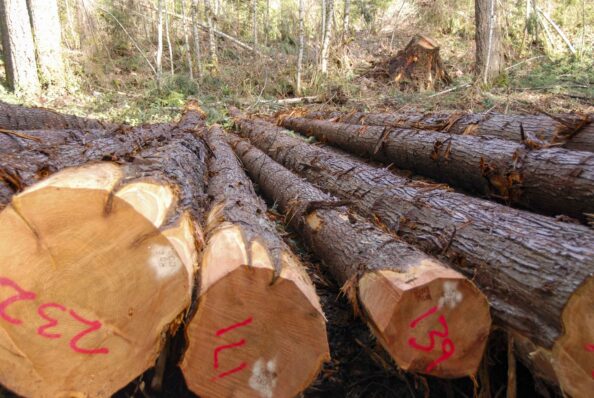 CALIFORNIA — State experts said they’re dubious about President Donald Trump’s claims that his directive opening up well over half of the country’s forests to logging will reduce wildfire risk and “save American lives.” Some, such as University of California Agriculture and Natural Resources climate-change scientist Daniel Swain, flatly called the administration’s rhetoric disingenuous and misleading. “It’s BS, frankly,” Swain told The Examiner. “Are we going to try and justify logging forests commercially under the guise of wildfire-risk reduction? …The Trump administration says the benefits of these actions are largely twofold: It will reinvigorate the economy by boosting a stagnant timber industry and significantly mitigate wildfires tearing through the West. …UC Berkeley wildfire researcher Scott Stephens said that logging can be a viable way to mitigate fire risk, as long as it’s done sustainably and arborists are strategic about what trees they’re chopping down.
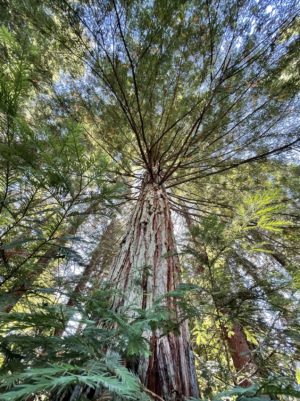 A federal order to increase US timber production by 25% will touch all 18 of the Golden’s State’s national forests, officials said. The USDA said it does not yet have information about how many acres in each forest will be affected. California’s national forests are on the chopping block — literally — in the wake of the Trump administration’s April 5 order to immediately expand timber production. Last week, US Secretary of Agriculture Brooke Rollins issued an emergency declaration that ordered the US Forest Service to open up some 112.5 million acres of national forestland to logging. The announcement included a grainy map of affected forests, which did not specify forest names or the amount of impacted acreage in each. However, USDA officials have confirmed that the order will touch all 18 of the Golden State’s national forests, which collectively span more than 20 million acres. [to access the full story a Los Angeles Times subscription is required]