 Well, 2025 will prove to be an interesting year ahead. …Provincially there are some glimmers of hope for some directional changes to the current trajectory of BC’s forest sector through the appointment of an energized and determined Minister of Forests. At the recent TLA convention, there also seemed to be acknowledgment that the need for change was recognized with the Premier and Minister. …The government’s forestry mandate appears to be granted for firm actions, even more so with our obvious need for more self-reliance as a country. But muddying the background is the reality that anything that needs to be accomplished must be done within the spectre of massive provincial deficits and a hiring freeze. Where to start?
There needs to be a review of all the current policies, legislation, and regulations to ensure they mesh with the overall vision and contribute towards its successful implementation. It is fair to say the cumulative array of constraints over the last decades encircling the forest sector have been decidedly negative. …Albeit a complex and onerous task, the hope is the creation of renewed investment certainty for all those making their decisions towards the future of the sector. …There must be a meaningful transition plan and set of actions in place to ensure the components of the sector survive while these changes are being contemplated and implemented. …An effective transition plan requires government to work hand-in-hand with the industry towards ensuring a level of harvest is agreed upon and delivered to at least minimally sustain all concerned over these next few years. And it means giving decision-makers of permitting and delivery programs the authority and support to make those tough interim decisions. It also means that the short-term harvest level to sustain our sector is not the plus or minus 32 million m3 currently happening.
 OTTAWA — Canada’s exemption from Donald Trump’s global tariffs was “like dodging a bullet into the path of a tank”, say business leaders as other levies are poised to hit key industries that drive the country’s economy. …Canada was noticeably absent, alongside trade ally Mexico. Prime minister Mark Carney said 25% tariffs on Canadian steel and aluminum, as well as on automobiles, will come into effect within hours. Canada would “fight these measures with countermeasures” he said. Already, Canada had put a 25% tax on C$30bn worth of US goods in response to Trump’s tariffs. …Carney warned that while Trump had preserved key elements of the bilateral relationship, the global tariffs “fundamentally change the international trading system”. …On Wednesday, a bipartisan group of senators passed a resolution to end the national fentanyl emergency the president invoked to justify the 25% tax on Canadian imports. …House speaker Mike Johnson is unlikely to bring the measure to a vote.
 Sweeping new tariffs announced by Donald Trump provoked dismay, threats of countermeasures and urgent calls for talks to find ways to rescind the stiff new import taxes imposed on goods from countries around the globe. …Trump maintains they will draw factories and jobs back to the United States. …European Commission President Ursula von der Leyen said it was a “major blow to the world economy.” …British Prime Minister Kier Starmer said he hopes to get the tariffs lifted with a trade deal. …Financial markets were jolted. …China’s Commerce Ministry said Beijing would “resolutely take countermeasures to safeguard its own rights and interests,” without saying exactly what it might do. …Mexican President Claudia Sheinbaum said she would wait to see how Trump’s announcement will affect Mexico, which like Canada was spared for goods already qualified under their free trade agreement with the United States, though previously announced 25% tariffs on auto imports took effect Thursday.
 The United States is scheduled to unveil reciprocal tariffs on a wide array of trading partners, including Canada. Dubbed “Liberation Day” by Donald Trump, the measures are meant to even things out with those who, in Trump’s eyes, have unfairly taken advantage of the US with tariffs and other non-tariff barriers. …Aside from steel, aluminum and autos, which are already facing separate tariffs, here are the issues the U.S. has singled out as problematic in their trade with Canada that could factor in to the Liberation Day announcement, and what economists and trade officials have to say about them. What Trump says: He has lumped his anger about dairy and lumber tariffs together, threatening to act immediately on unfair treatment by Canada. He also said the U.S. does not need any Canadian lumber. Reality Check: There is far from enough lumber produced in the U.S. to meet building demand.
 White House aides have drafted a proposal that would levy tariffs of roughly 20% on most imports, the Washington Post reported. The report cited three people familiar with the matter. It also said White House advisers cautioned that several options are still on the table, meaning the 20% tariffs may not come to pass. Another plan being considered is the country-by-country “reciprocal” approach, according to the Washington Post. The report comes a day before April 2, when President Donald Trump is set to announce his larger plans for global trade. The date has loomed over Wall Street, where stocks have been struggling in part due to uncertainty around rapidly changing global trade policy. Unlike the tariffs already announced by the Trump administration, the new plan is expected to be more widespread and permanent as opposed to targeting specific countries or industries.




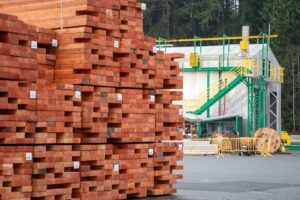 NEW ZEALAND — The temporary exemption of tariffs on timber and lumber imported into the US provides some relief to New Zealand exporters. Though this exemption could be short lived based on the outcome of the Section 232 investigation aimed at determining the effects imports of timber, lumber and their derivative products have on the US supply chain. Exports of radiata pine products from New Zealand to the US were estimated at $358 million, making the US our third largest export market behind China and Australia. …The exemption comes about through internal US lobbying, by the likes of the American Building Materials Alliance and National Association of Home Builders. …The administration has recognised that raising costs on timber and lumber would hurt housing affordability and weaken an important supply chain. …We thank our kindred Associations in the US for making this happen. We now wait for completion of the s. 232 investigation.


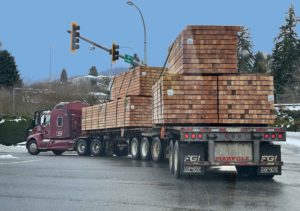 The ongoing trade spat between the U.S. and Canada is impacting BC’s construction sector in ways that could bring short-term gain and long-term pain. At first, there could be an oversupply of lumber if Canadian softwood is taken out of the U.S. equation, resulting in lower costs for B.C. builders and developers, said Padraic Kelly, Vancouver-based director with BTY Group. But costs would later rise significantly, he said. “The medium- and long-term pain would be that if the American market is choked out, mills would close, supply would be constrained and costs would ultimately go up,” Kelly said. The total levy on Canadian softwood lumber going into the U.S. could total between 45% and 55%, taking into account anti-dumping measures introduced by the Biden administration and scheduled to increase this August. Other big-ticket impacts to B.C. construction could be the mechanical and electrical divisions within construction budgets, he said.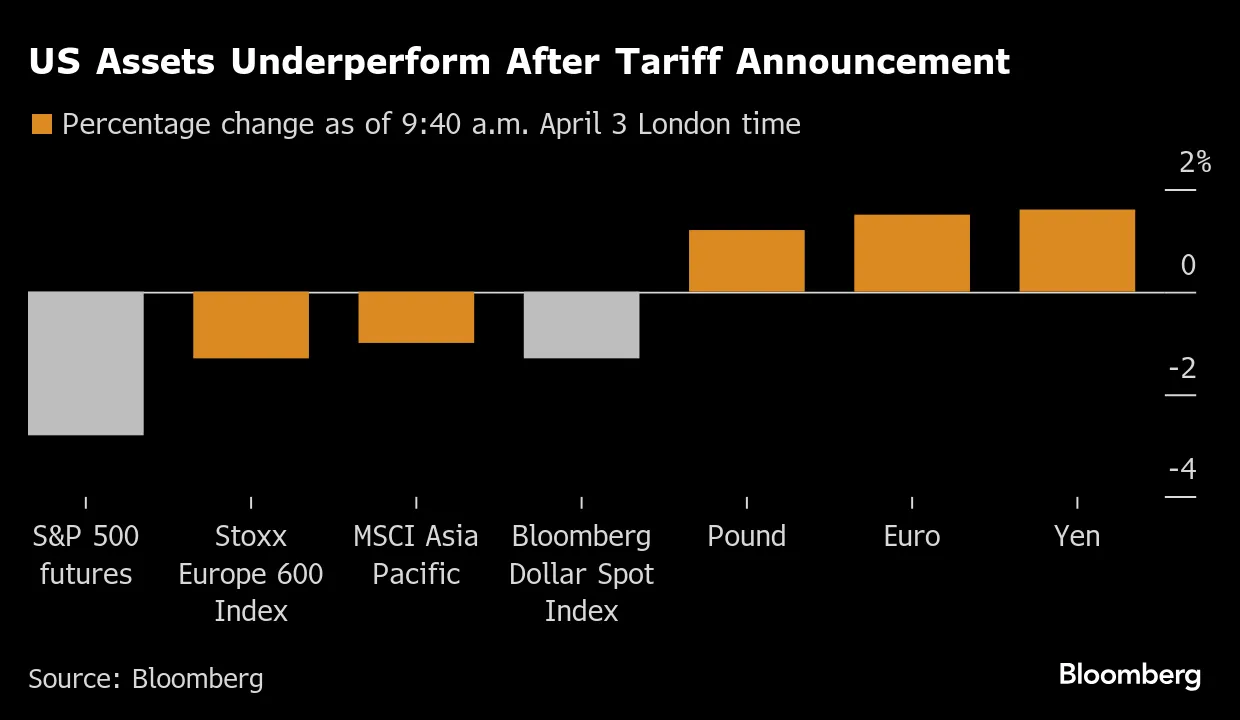
 Manufactured homes play a measurable role in the U.S. housing market by providing an affordable supply option for millions of households. According to the American Housing Survey, there are 7.2 million occupied manufactured homes in the U.S., representing 5.4% of total occupied housing and a source of affordable housing, in particular, for rural and lower income households. Often thought of as synonymous to “mobile homes” or “trailers”, manufactured homes are a specific type of factory-built housing that adheres to the U.S. Department of Housing and Urban Development’s Manufactured Home Construction and Safety Standards code. …The East South Central division (Alabama, Kentucky, Mississippi and Tennessee) have the highest concentration of manufactured homes, representing 9.3% of total occupied housing. The Mountain region follows with 8.5%, while the South Atlantic region holds 7.7%.
 Donald Trump’s trade war is alarming the global markets, sending shares sliding in their worst month in over two years. Stock markets across the Asia-Pacific region are in retreat this morning, as investors fear Trump will announce swingeing new tariffs on Wednesday, which has been dubbed “Liberation Day” by the US president. Japan’s Nikkei has lost 3.9%, down 1,457 points at 35,662 points today, while South Korea’s KOSPI is down 3%, Australia’s S&P/ASX 200 has fallen 1.7%. In China, which has already been hit by Trump tariffs this year. the CSI 300 is 0.9% lower. …Today’s selloff comes after Donald Trump told reporters that the reciprocal tariffs he is set to announce this week will include all nations. …On Friday, core inflation rose by more than expected, while consumer sentiment weakened to its lowest level since 2022.
  VANCOUVER, BC – Canfor Corporation and Canfor Pulp Products released their joint 2024 Sustainability Report today. The report describes the companies’ approach to managing environmental, social and governance activities, and reports on established targets. Canfor CEO Susan Yurkovich said, “Sustainability is at the forefront of our business and we continually strive to be better at all that we do.” 2024 performance highlights include: Maintaining certifications for sustainable forest management and fibre procurement activities, with 100% of Canfor-managed forests certified to SFI® or FSC® Forest Management Standards, 100% of sourced fibre in North American operations managed to the SFI Fibre Sourcing Standard and 100% of Swedish forestry operations certified to the PEFC Forest Management Standard. …Advancements in safety, health and wellness initiatives. …Investing in communities, with more than $2 million donated. …Continuing to pursue our goal to be net zero by 2050.
 The Province of Ontario says it’s prepared for the fast-approaching 2025 wildland fire season. The new season starts on April 1, and preparations have included filling more than 100 new, permanent positions to help support forest fire fighting operations, said Chris Marchand, fire information officer with Aviation, Forest Fire and Emergency Services (AFFES). …Exactly how busy this season will be remains unknown, Marchand said, as it’s very difficult to predict how intense a fire season will be. …Marchand said the previous winter saw “somewhat normal” snowfall patterns across Ontario. …Marchand noted, however, that the 2024 fire season was slower than usual — 480 fires were reported, down from the 10-year, seasonal average of 700 fires. The Province of Ontario said it partnered with the federal government last year to invest $64 million in the provincial wil
 The world is running out of time to halt deforestation. Yet instead of stepping up, the US is dismantling forest protections and undermining global progress – highlighting the dangers of global forest policy that fails to hold the wealthiest, most powerful countries accountable. …But the latest actions by the US highlight just how dangerous and unbalanced this paradigm is. …Under the pretense of national security, Trump’s orders aim to gut environmental safeguards and fast-track industrial clearcutting in some of the US’s most precious and climate-critical forests. …Meanwhile, as Europe strengthens forest accountability, US state officials are pushing to exempt the country from new deforestation protections.. These officials, echoing industry talking points, are urging the EU to exclude US wood products from a law requiring due diligence to prevent imports or exports tied to deforestation or forest degradation. Their argument? That the US doesn’t need oversight.