
Kelly McCloskey

Robert McKellar
When we first reached out to political risk expert Robert McKellar in mid-2024, our goal was to spark a conversation the forest sector wasn’t yet having—about political risk and its growing influence on everything from trade policy to investment decisions. Robert’s op-ed in August, 2024 made the case that political risk is not just something that happens in volatile regions—it is the exposure of businesses to political forces, whether through government policies, trade dynamics, or geopolitical shifts. He identified major political forces impacting the Canadian forest sector—including the growing China-West rivalry and Canada-US trade friction—to help companies assess the relevance of political risk for themselves. In hindsight, his foresights were well placed.
After the election of President Trump and given how quickly the trade situation evolved, we reached out to Robert a few weeks ago to re-examine these dynamics. And given the complexities, we decided on a two-part approach. In Part I, in February 2025, Robert set the stage by looking at Trump’s leadership style and his approach to business, he outlined how forest product companies can assess and manage political risk, and then he focused on the most pressing risk to the sector—tariffs. The other risks—lumber duties, interference in Canadian-owned US-based industries, and the impact of US-China trade tensions on lumber sales—were left for Part II. In that this is a long read, in the “READ MORE document” are the following hyperlinked-titles—should you wish to proceed directly to a given section:
- Recap of Part I
- Is Trump toying with Canada or is there a plan?
- The latest on duties and tariffs
- Are Canadian US-subsidiaries at risk?
- US-China friction and lumber sales
- How to plan and manage for political risk
This isn’t a typical industry commentary. It’s not about what government should do, or where markets might go next. It’s about what companies can do now to better anticipate, adapt to, and, at times, even leverage political disruption. [full disclosure, Robert McKellar is Tree Frog co-editor Sandy McKellar’s brother]
 US tariffs on industrial sectors are now not expected April 2, but reciprocal levies on nations with trade imbalances are. In related news: Part II of a Tree Frog Special on Trump’s Re-emergence and Political Risk in the Canadian Forest Sector; Alberta council urges province to support its forest industry; and a US columnist says Canada stands accused of… subsiding Americans. Meanwhile: US remodelling soars but struggles to find labor; and Gene Wengert, the infamous Wood Doctor, has died at 82.
 Yesterday, we featured Part II of our in-depth Q&A with political risk expert Robert McKellar, a follow-up to an August
 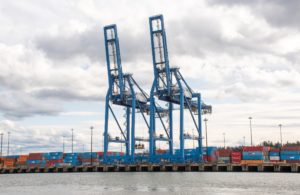 US President Donald Trump’s coming wave of tariffs is poised to be more targeted than the barrage he has threatened, aides and allies said. …The White House is narrowing its approach to take effect on April 2, likely omitting a set of industry-specific tariffs while applying reciprocal levies on a targeted set of nations that account for the bulk of foreign trade with the US. …The White House is still planning to unveil the reciprocal -tariff action on that day, though. …The fate of the sectoral tariffs, as well as tariffs on Canada and Mexico that Trump said were justified by fentanyl, remains uncertain. …The administration is now focusing on applying tariffs to about 15% of nations with persistent trade imbalances with the US… such as Australia, Brazil, Canada, China, the European Union, India, Japan, South Korea, Mexico, Russia, and Vietnam.
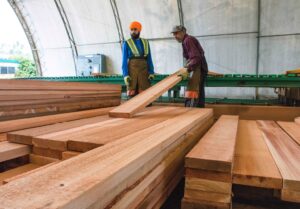 US builders pay a premium for the spruce, pine and fir (SPF) lumber that BC produces and could soon face additional tariffs after Trump’s proclamation that America doesn’t need the province’s wood. They like it, particularly for framing walls because SPF is lighter, stronger and tighter-grained than the more abundant southern yellow pine lumber that has a reputation for warping. …“There’s just this gap between what the U.S. can supply and what their demand is,” said Kurt Niquidet, president of the B.C. Lumber Trade Council. ..“There’s no way American supply, in the short-term, can do anything but rely on Canadian lumber,” Russ Taylor said. “Tariffs are just going to push the price up and create shortages,” Taylor said. “It’s just going to be market chaos, as it will be with OSB panels as it will be with pulp and newsprint.”
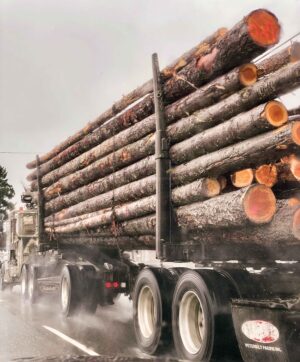 The two BC regions that include resource-reliant communities like Smithers, Vanderhoof and Terrace stand to lose the most from tariffs, according to new research from the Institute for Research on Public Policy. …While BC stands to be the least affected province, tariffs are likely to cause the greatest disruptions in regions of Bulkley-Nechako and the Kitimat-Stikine. The first region depends heavily on forestry, while the second includes Rio Tinto’s aluminum smelter in Terrace. Counting existing countervailing duties, BC forest products could face tariffs exceeding 50 per cent, if not higher. …Almost three-in-10 workers in Bulkley-Nechako hold jobs in export-oriented industries with about 5.6% of the total work exposed to US tariffs. …Rounding out of the Top 5 are the Peace River and Cariboo (both 5.5%) and Kootenay-Boundary (5.4%). Regions potentially least affected by the tariffs include the Capital Region (1.5%), Squamish-Lillooet (1.4%) and the Central Coast (1.2%). Greater Vancouver’s exposure is 2.8% and the fast-growing Fraser Valley is 4%.
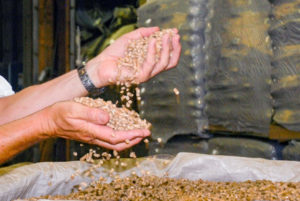 The federal government is providing funding to support BC’s forestry sector. …In what could mark a turning point for the Fort Nelson economy, a long-awaited pellet mill project is poised for significant progress with a $250,000 funding injection. The Fort Nelson First Nation is set to receive the funding, which will bolster its partnership with Peak Renewables. Together, they aim to convert an idle former Canfor sawmill into a large-scale wood pellet plant. …The region, historically reliant on its resource sector, has faced a number of challenges in bringing the project to fruition. In November 2020, the Fort Nelson First Nation extended a $1 million interest-free loan to Peak Renewables to advance the project. Originally, the pellet mill was slated to begin operations in early 2022. Since then, no new timeline has been provided as to when the mill may become operational.
 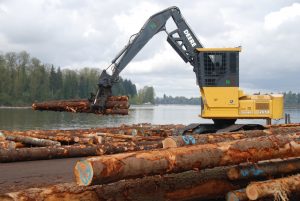 The federal government is providing about $20 million in funding to support BC’s forestry sector. Energy Minister Jonathan Wilkinson says it’s more important than ever to support the sector, which is subject to American duties on softwood lumber and now faces the additional threat of steep tariffs. NRCan says the funding will support 67 projects. …About $11.3 million will flow through the Investments in Forest Industry Transformation program for six projects that are adopting new technologies. More than $7 million will go through the Indigenous Forestry Initiative to 50 projects advancing economic development opportunities. Another $1.6 million will go to nine projects promoting the commercialization of wood-based products in the construction sector, while $600,000 will go to projects aimed at strengthening international partnerships and decreasing market barriers. …Ottawa has also announced $5 million in funding for four projects in B.C. and one in Yukon aimed at helping laid-off workers from the forestry and mining sectors.
 In seeking to justify his imbecilic trade war against Canada, Donald Trump
 CNN’s Vanessa Yurkevich explains how much US home prices could increase due to President Donald Trump’s tariffs. [Video report only, 2 .5 minutes]
 If there is a prolonged trade war between the US and Canada, expect insurance rates… to rise in price. The industry notes there’s a lot of uncertainty about tariffs right now. But one outcome the industry can likely count on is increases to home and auto rates, says Steven Harris. …Although home insurance premiums haven’t increased as high as auto rates — in 2024 Q4, for example, personal property premium rates increased 7.3% from the previous year — consumers are likely to see any impacts from the tariffs appear on their home insurance policy renewal much sooner, says Harris. “And if building materials like software lumber are tariffed, and thereby more expensive to import, they’ll cost more to insure. …“Tariffs on building materials directly inflate rebuilding expenses, necessitating higher replacement cost coverage for homeowners.”
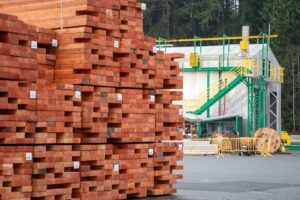 There is a 20% tariff on products from China and 25% on many goods from Canada and Mexico. What is sure is that they will increase the cost of DIY projects and home renovations, says Pelin Pekgun, at Wake Forest University School of Business. …“While prices will not rise immediately, higher material costs, potential shortages and supply delays could result in tighter renovation budgets in the coming months.” …One of the most significant products the tariffs will impact is lumber. More than 25% of cement and concrete are imported from Canada and Mexico, so the cost of pouring foundations and flatwork, such as driveways and walkways, will likely increase. …Many other building materials will likely get more expensive, including flooring, cabinets, countertops and lighting. Though not a direct consequence of tariffs, labor costs are also a growing concern in the construction industry, says roofer Michael Green.
 BEIJING — UBS analysts became the latest to raise expectations that China’s struggling real estate market is close to stabilizing. “After four or five years of a downward cycle, we have begun to see some relatively positive signals,” John Lam at UBS Investment Bank. …“Of course these signals aren’t nationwide, and may be local,” Lam said. One indicator is improving sales in China’s largest cities. Existing home sales in five major Chinese cities have climbed by more than 30% from a year ago on a weekly basis as of Wednesday. The category is typically called “secondary home sales” in China, in contrast to the primary market, which has typically consisted of newly built apartment homes. UBS now predicts China’s home prices can stabilize in early 2026, earlier than the mid-2026 timeframe previously forecast. They expect secondary transactions could reach half of the total by 2026.
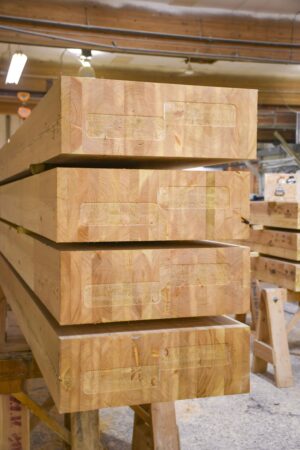 EAST HANTS, Nova Scotia — The Honourable Kody Blois, Minister of Agriculture and Agri-Food, announced federal funding for MTC Mass Timber Company (MTC) to support its move to technology-driven manufacturing that will create high-value mass timber products in Nova Scotia. Through an investment of $500,000, MTC will advance the detailed design of Canada’s first large-scale, clear-span mass timber manufacturing structure that would house a new industrial plant. Once constructed, MTC will be Canada’s first vertically integrated mass timber manufacturer in Atlantic Canada, allowing further growth of the region’s offsite building construction sector and improving access to housing for Nova Scotians. MTC was also conditionally approved for $10 million in federal support, subject to the required due diligence measures, and the negotiation of a final agreement.
 Last week, consumers in four states filed a proposed class action against Amazon, accusing the company of greenwashing by misleading consumers about the sustainability of the company’s Amazon Basics line of paper products. Here are some of the key allegations: Amazon uses a Sustainability Leaf and a Climate Pledge Friendly logo to suggest that Amazon’s supply chain for Amazon Basics paper products uses sustainable forestry practices. …However, because Amazon sources its Amazon Basics paper products from suppliers who clearcut and burn centuries-old forests, Amazon is exaggerating any environmental benefits. …The Forest Stewardship Council (or “FSC”) requires companies to use different FSC logos to depict different levels of commitment to responsible forest management. Despite this, Amazon uses an unqualified Forest Stewardship Council logo. …This Complaint challenges an arguably very sustainably-minded company. We learned this week that Amazon announced the launch of a new carbon credit investment service.
 OTTAWA — The Honourable Jonathan Wilkinson announced a $16.3 million investment over the next three years, starting in 2024–25, to support 25 projects through the Government of Canada’s Fighting and Managing Wildfires in a Changing Climate Program (FMWCC) – Training Fund. Through this investment, over 2,800 youth and community members in remote, rural and Indigenous communities across Canada will receive wildland firefighting training to enhance community capacity for responding to and managing wildfires. …Some of the projects funded through the FMWCC Training Fund include: $329,109 to the Keewaytinook Okimakanak’s project in Thunder Bay, Ontario… $499,330 to the Metis Settlements General Council’s project in Edmonton, Alberta… $946,330 to Prince Albert Development Corporation Management Co. Ltd.’s project in Prince Albert, Saskatchewan… and $1,999,999 to the Independent First Nations Alliance’s (IFNA) project in Sioux Lookout, Ontario.
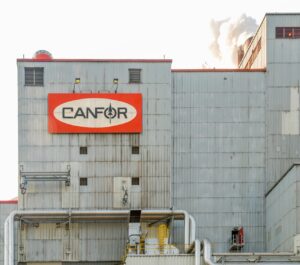 A Canfor operation in Prince George and three area First Nations have received federal funding to boost innovation in forestry. The $293,500 in local funding is part of more than $20 million the Canadian government is investing in 67 projects province-wide. The funds are part of a broader effort to enhance the competitiveness and resiliency of Canada’s forest industry, which has faced increasing trade barriers, particularly from the US. Among the recipients is Canadian Forest Products, or Canfor, which will receive up to $121,500 for a project aimed at producing innovative, formaldehyde-free and isocyanate-free wood adhesives. The company will explore extracting kraft lignin from black liquor at its Northwood mill in Prince George, converting it into a new, sustainable bioproduct. The project aims to determine the commercial viability of this process, which could open up new revenue streams and reduce reliance on harmful chemicals.
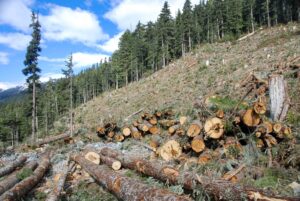 President Donald Trump’s March 1 executive order calling for “immediate expansion of American timber production” generated lots of enthusiasm in the Northwest wood products world. But analysts added equal amounts of concern that Trump’s Department of Government Efficiency-driven federal cuts might keep the woods quiet. “It’s going to be a good thing in terms of helping stimulate activity on national forests,” the University of Montana’s Todd Morgan said… but also recognizes the uncertainty spiraling around Washington, D.C. “A lot is going to depend on who’s left in federal agencies at the end of the day, the week, the next four years,” he said. “All this funding- and budget-cutting is going to interfere with the stated goals.” …Trump’s order also calls for timber production targets. That’s something that has been missing from federal land management for a long time, according to Montana Wood Products Association Director Julia Altemus.
 NEW YORK — A jury in Georgia has ordered Monsanto parent Bayer to pay nearly $2.1 billion in damages to a man who says the company’s Roundup weed killer caused his cancer. The verdict marks the latest in a long-running series of court battles Monsanto has faced over its Roundup herbicide. The agrochemical giant says it will appeal the verdict. The penalties awarded include $65 million in compensatory damages and $2 billion in punitive damages. That marks one of the largest legal settlements reached in a Roundup-related case to date. …Germany-based Bayer, which acquired Monsanto in 2018, has continued to dispute claims that Roundup causes cancer. But the company has been hit with more than 177,000 lawsuits involving the weedkiller and set aside $16 billion to settle cases. Monsanto said Friday’s verdict “conflicts with the overwhelming weight of scientific evidence and the consensus of regulatory bodies and their scientific assessments worldwide.”
 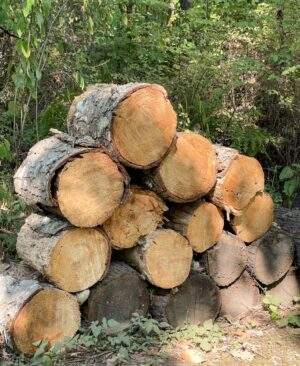 Virginia loggers hope steps taken by President Donald Trump will breathe new life into parts of the Commonwealth they feel have long been abandoned. …Canada is the largest exporter of lumber into the US. The lumber industry in the United State has a long history and has been financially rocky in recent decades. Unregulated cutting up to the 1980s damaged land and water systems. Regulations followed. Then international trade agreements saw production shipped overseas, further denting an industry that literally built America. But loggers in Virginia have stuck with it. Among them is Vance Wright. …Trump’s shortest-term impact on logging may be with tariffs. But logging and timber have long been subject to different international trade deals. And while those international markets arguably killed Virginia’s manufacturing, think Martinsville’s now-shuttered furniture factories, it also opened doors to new opportunities.
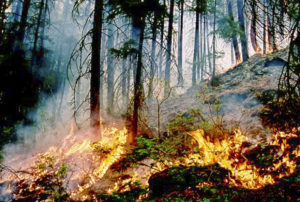 Wildfires forced a mandatory evacuation Sunday in a North Carolina county still recovering from Hurricane Helene, and South Carolina’s governor declared an emergency in response to a growing wildfire in that state. Hundreds of miles north, the New Jersey Forest Fire Service was battling a blaze in the Wharton State Forest. The North Carolina Department of Public Safety announced a mandatory evacuation starting at 8:20 p.m. Saturday for parts of Polk County in western North Carolina about 80 miles west of Charlotte. A shelter had been established in Columbus, North Carolina. …Also this weekend, the New Jersey Forest Fire Service has been battling a wildfire that broke out in the Wharton State Forest on Saturday. The fire had consumed about 2.7 square miles as of early Sunday morning and was about 50% contained, according to an 8 a.m. update.