 NANAIMO, BC — BC First Nations building their forest economies are facing foreign and domestic challenges that must be met for the resource to provide wealth and employment in the coming decades. During a keynote address and panel discussion Friday, June 20, at the Indigenous Resource Opportunities Conference in Nanaimo, Ravi Parmar, BC minister of forests, discussed those challenges with John Jack, chief councillor of the Huu-ay-aht First Nations, Kim Haakstad, president and CEO of the B.C. Council of Forest Industries, and panel moderator Dallas Smith, council president of the Nanwakolas First Nation. …The forests minister acknowledged “dark days ahead” for the industry, but also a time of “opportunity to move us away from the boom and bust, towards stability.” …Haakstad said collaboration with First Nations is important for the industry’s long-term success, but among the biggest problems hindering the industry is getting cut permits.

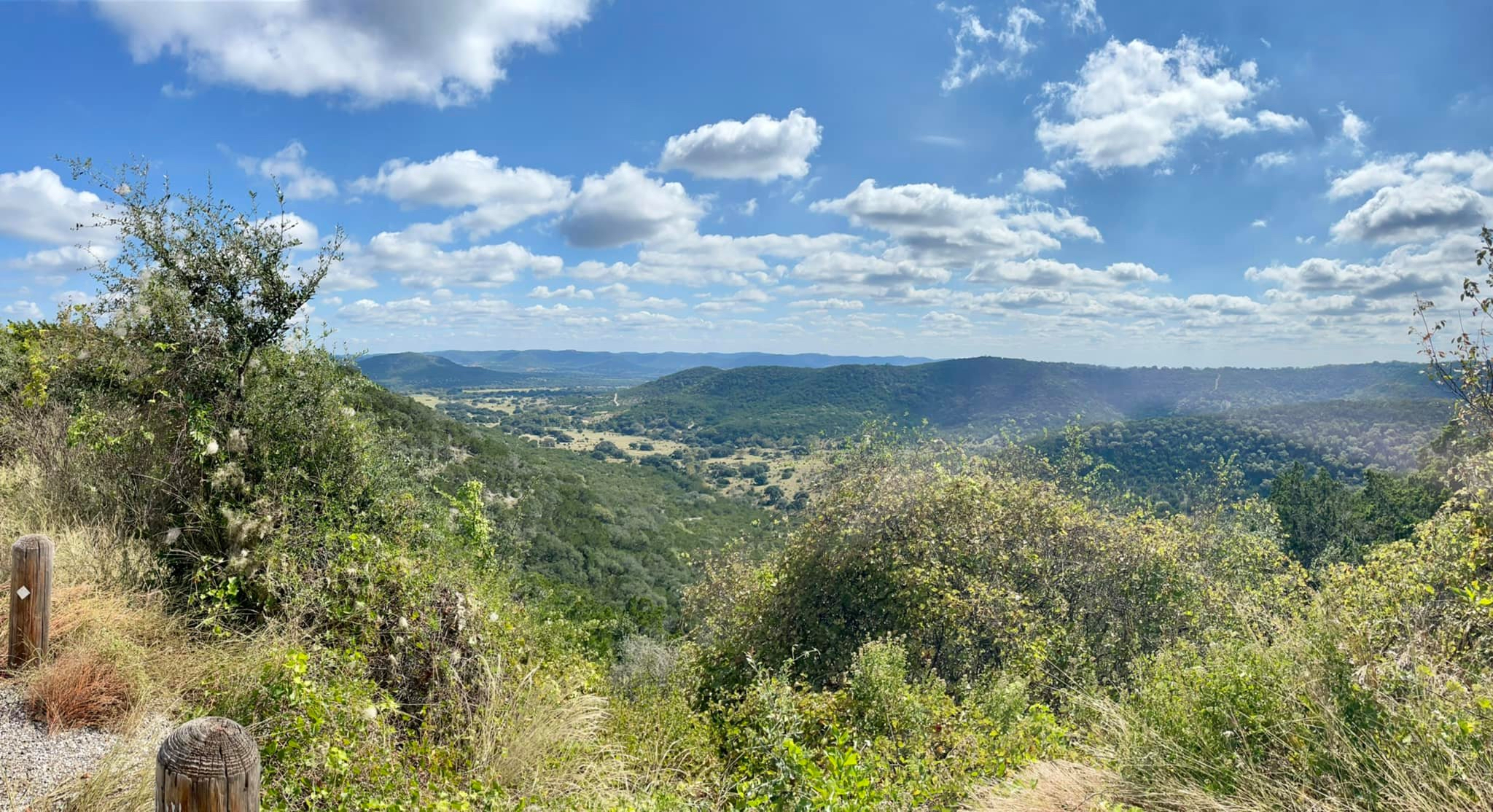 The Trump administration will rescind protections that prevent logging on nearly a third of national forest lands, including the largest old growth forest in the country, the agriculture secretary, Brooke Rollins, announced on Monday. …Republican lawmakers from western states celebrated the announcement while environmental groups expressed dismay. On social media, the Republican representative for Alaska, Nick Begich, said: “…the ‘Roadless Rule’ has long stifled responsible forest management, blocked access to critical resources, and halted economic opportunity.” Meanwhile, the Sierra Club’s Alex Craven, said: “Once again, the Trump administration is ignoring the voices of millions of Americans to pursue a corporate giveaway for his billionaire buddies. Stripping our national forests of roadless rule protections will put close to 60m acres of wildlands across the country on the chopping block.”



 ONTARIO — A northern Ontario forestry company says a train crossing Highway 560 collided Wednesday morning with logs that were spilled by an overturned contractor’s trailer. It happened at the railroad crossing near Interfor’s Gogama Division and resulted in the road being closed between highways 144 and 560A. “There are no injuries or derailment,” Ontario Provincial Police said in a social media post at 8:40 a.m. “A train stop order is in place.” Interfor also confirmed this. …“At Interfor, the safety of our people and the communities where we operate is our highest priority. We are focused on supporting those affected and are actively monitoring the situation.” There is no estimated time of reopening, said OPP Const. Michelle Simard. “The officers are still investigating,” Simard said.
 SOUTH PITTSBURG, Tennessee – Recent missile attacks put global trade on alert as the Baltic and International Maritime Council warned the Strait of Hormuz and the Persian Gulf could face disruption. …Mike Cardin, Cardin Forest Products Chief Manager, said the conflict could hurt the American lumber industry as well. Cardin’s hardwood sawmill reported fewer orders coming out of the Middle East. Uncertainties about President Trump’s future tariff policies forced Cardin to change how his sawmill operates. Before Trump took office, Cardin said his sawmill shipped wood products across the globe. He said foreign buyers proactively stopped buying American wood because they expect Trump to slap new tariffs on timber imports by the end of the year. Most of Cardin’s sales now come from Mexico and within the U.S. …”Right now, no one knows what’s going to happen,” Jarrod Cardin, Cardin’s Controlling Member, said.
 A new Canada-US trade deal will likely carry forward the Canada-United States-Mexico Agreement tariff exemptions shielding most Canadian exports from American tariffs, says Deloitte Canada chief economist Dawn Desjardins. …US President Donald Trump has set July 9 as the deadline for countries to ink a trade deal in order to avoid his “Liberation Day” tariffs. For Canada, Prime Minister Mark Carney and Trump agreed on the sidelines of the recent G7 meeting in Alberta to strike a deal by July 21. “Our baseline view assumes that at a minimum, we continue to operate with our CUSMA carve-outs. “The sounds we’re hearing seem to be moving in the right direction. Obviously, I have no inside information. It’s just an assumption that we will not be severely hit by 25 per cent tariffs across the board.” …Deloitte Canada’s latest economic forecast, published on Wednesday, calls for a “modest recession” in the second and third quarters of the year.

 Lumber futures traded below $610 per thousand board feet, easing from two-month highs of $626 seen June 13th, driven by improving supply while demand slowed. This pullback reflects a temporary surge in supply as sawmills and wholesalers restocked early-season safety stocks, while builders delayed purchases after earlier buying . The decline also stems from softer demand: high mortgage rates continue to suppress new house builds and remodeling activity, with treaters and end-users scaling back orders. Although longer-term forecasts expect a pickup in Q3, driven by renewed tariff pressure and projected housing recovery, the current correction is supply-led, driven by modest restocking, seasonal slowdown, and rate-constrained construction spending. [END]›
 The annual pace of inflation held steady at 1.7% in May as cooling shelter costs helped tame price pressures, Statistics Canada said. Shelter costs rose three per cent in May, StatCan said, marking a slowdown from 3.4% in April. The agency singled out Ontario as the major source of rent relief in the country. …Mortgage interest costs meanwhile decelerated for the 21st consecutive month amid lower interest rates from the Bank of Canada. Economists had broadly expected inflation would remain unchanged heading into Tuesday. The removal of the consumer carbon price continues to drive down gasoline costs annually, StatCan said. …Inflation excluding tax changes – stripping out influences from the carbon price removal – was also steady at 2.3 per cent last month. …The central bank’s closely watched core inflation metrics meanwhile ticked down a tenth of a percentage point to three per cent in May.


 April 2025 Southern Pine lumber exports (treated and untreated) were up 22.7% over the same month in 2024 at 57.4 MMBF and up 34.8% over March 2025, according to April 2025 data from the USDA’s Foreign Agriculture Services’ Global Agricultural Trade System. Year-to-date exports, however, are running 4% behind the same period in 2024 at 179.7 MMBF. When looking at the report by dollar value, Southern Pine exports were up 27% to $22.6 million in April – a 12-month high – compared to the same month in 2024 and up 26% over March 2025. Mexico leads the way YTD 2025 at $20.7 million, followed by the Dominican Republic at $15.8 million, and Canada at $5 million. Treated lumber exports, meanwhile, were up 47% compared to April 2025 at $15 million and up 53% over March 2025. …Softwood lumber imports were down 5% in April to 1.2 MMBF over the year and down 13.7% over March 2025.
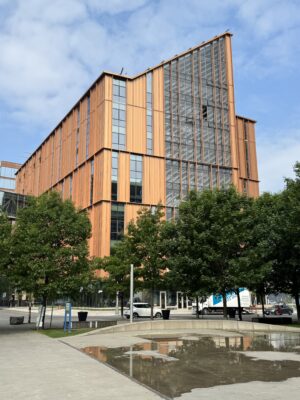 TORONTO — A mass timber showcase on Toronto’s George Brown campus is also a study in collaboration and innovation. George Brown College’s Nerys Rau, Moriyama Teshima Architects partner Philip Silverstein and PCL’s Mike Love all explained the process behind building Limberlost Place at a session titled Exploring Limberlost Place: at the Canada Green Building Council’s Building Lasting Change conference held recently in downtown Vancouver. Limberlost Place is a 10-storey mass-timber net-zero building that achieved occupancy in January. …Silverstein said the building is rated at Tier 4 of the Toronto Green Standard, adding no other building in the city has reached that metric. “It’s like LEED Platinum on steroids,” Silverstein said. Love said the number one question was “what if the wood gets wet?” “It’s OK for wood to get wet. Just remove any ponding water and let it dry. It wants to breathe,” he said.
 Ash and chemicals from some of BC’s largest wildfires are winding up in the Fraser River, which could eventually lead to low oxygen levels and harm marine life, say UBC researchers. In a peer-reviewed study, published in the journal Science of The Total Environment, scientists linked increases in the concentrations of compounds like arsenic and lead, and nutrients such as nitrogen and phosphorus, to wildfires that had burned near the 1,375 kilometre long river. These are all compounds that are found naturally in the water. However, researchers tracked a significant increase in compounds as wildfires were happening near the river. The researchers studied fires within 500 metres, 1,000 metres and 1,500 metres. Fires burning close to major waterways had immediate influence on water quality, said Emily Brown, a research scientist at UBC’s institute for the oceans and fisheries. The more distant wildfires had delayed influence on water quality.
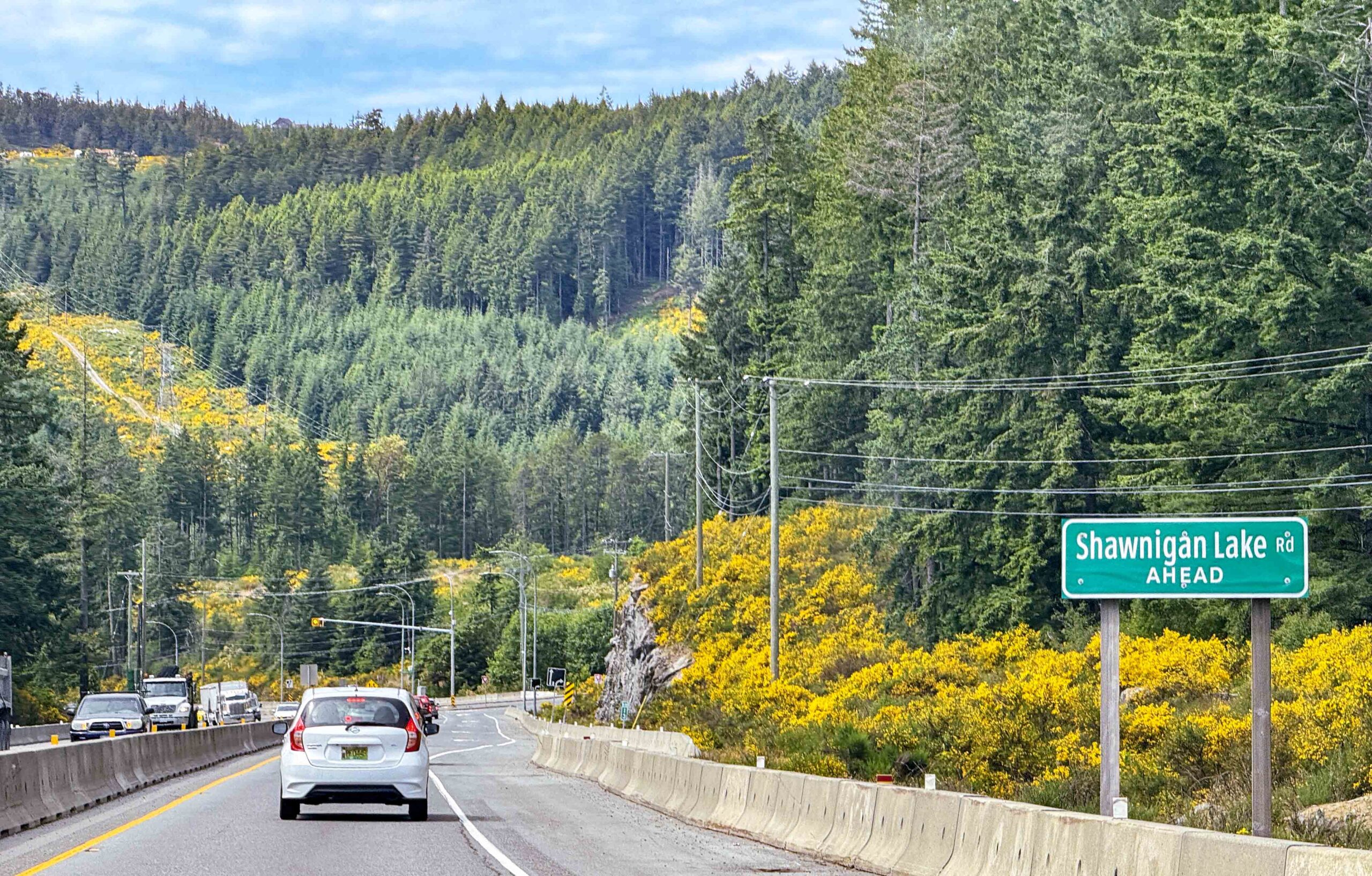 QUALICUM BEACH, BC — Alien invasive species like Scotch broom do not move into a void. They displace something that was originally present. Broom displaces grasses and native plants – but while grass is food, broom is toxic to grazing animals, wild and domestic. Broom provides flowers for bees in May – but wipes out the native flowers that bees rely on for the rest of the season. Farmers call broom the Scourge of Pastureland – and it affects our food security. Broom competing with young trees on forest land creates millions of dollars in losses to forest companies – and the loss to the future of our forests is beyond measure. Biodiversity? Researchers designate Scotch broom as THE invasive species doing the greatest harm to species at risk in all of B.C. Broom is the top offender of biodiversity. Wildfire? Broom’s high oil content, naturally occurring dry branches, and dense growth patterns make broom extremely flammable. FireSmart classifies broom in the highest risk category.
 An insolvent BC forestry company’s attempt to sell off a forest licence to pay back creditors has triggered a dispute with several First Nations, who allege the company is attempting an “end run” around their rights. This spring, three Indigenous groups challenged the Teal-Jones Group before a BC Supreme Court judge for attempting to complete an interim transfer of forest licence A19201 to Western Canadian Timber Products (WCTP). The move came before the B.C. Minister of Forests could consult with 39 First Nations who have territory in the area. …The legal dispute hinged on whether the proposed interim agreement triggered a duty to consult with First Nations. But Fitzpatrick ruled Teal Jones’ agreement with WCTP remained “the highest and best offer presently available for consideration and approval after all that time.” The judge concluded that the sales process had been conducted in a “fair and reasonable manner”.

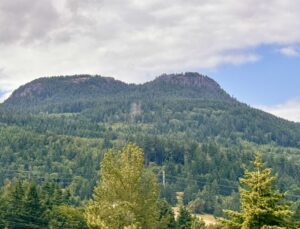 A plan to sell more than 2 million acres of federal land in Oregon, Washington and 9 other Western states has been ruled out of Republicans’ big tax and spending cut bill after the Senate parliamentarian determined the proposal by Senate Energy Chairman Mike Lee would violate the chamber’s rules. Lee, an Utah Republican, has proposed selling public lands to states or other entities for use as housing or infrastructure. The plan would revive a longtime ambition of Western conservatives to cede lands to local control after a similar proposal failed in the House earlier this year.The proposal received a mixed reception Monday from the governors of Western states. New Mexico Gov. Michelle Lujan Grisham, a Democrat, called it problematic in her state because of the close relationship residents have with public lands. …Lee said he would keep trying. …Environmental advocates celebrated the ruling late Monday, but cautioned that Lee’s proposal was far from dead.
 A new analysis quantifies
  It has only been in the past few years that wildfire smoke from Canada has become a persistent risk to the air we all breathe. Why is this? …A vast swath across northern Canada has a subarctic climate. The types of vegetation best adapted to these conditions are conifer forests dominated by black and white spruce with some pine, balsam fir, larch, aspen and birch. Fire has always been an element of this biome. Historically, about 7.3 million acres have burned annually but in 2023, an astonishing 67 million acres burned. This year’s acreage is on pace to meet or exceed the record-breaking year of 2023. …The fire season is changing in Canada because the climate of Canada is changing. …What this means is that large, long-duration wildfires in Canada’s boreal forest and the smoke plumes they produce are likely to be a new and persistent phenomenon going forward.
  As a forester and now in my role at Grown in Britain, I regularly encounter a range of misconceptions about home-grown timber. …First, let’s address the elephant in the room. The UK imports a significant amount of timber, and these figures are often cited to suggest something isn’t working as it should be. However, increasing timber use in construction is a positive development, as it replaces more carbon-intensive materials. One of the key reasons Grown in Britain was set up – is we import substantial amounts of timber whilst neglecting our own forests and woodlands. Over 10 years ago, when GiB started, the government considered over 60% of our woods were not managed. Our initiative, alongside the efforts of many, has reduced this to nearer 40% today. …With global and UK timber demand increasing, it seems inappropriate to import so much when we’re not fully utilising our resources.
 Judges across the world are proving sceptical of companies’ attempts to offset their greenhouse gas emissions by buying carbon credits,
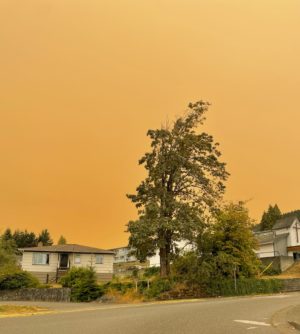 Wildfire smoke and extreme heat are combining to create a lethal cocktail of environmental conditions that multiply the risk of death in Metro Vancouver, a