 While the market tries to process what’s to come on the trade front, it’s abundantly clear that the new administration is paying special attention to lumber and likely other wood products. Trump and his surrogates have emphasized the point of view that the US has the underlying resources to produce all its own lumber and wood product needs. In response, there have been a number of news articles highlighting the statements and questioning the idea of whether or not America can quickly and completely wean itself off Canadian wood products. …Canada currently supplies about 12.0 BBF of softwood lumber to the US market. After accounting for the 1.3 BBF of exports the US has shipped in recent years, the US is still short just over 3.2 BBF of operable capacity to quickly fill Canadian lumber supply and still meet current demand levels. In other words, at current demand levels, the US softwood lumber market does not clear without Canadian supply.
…US sawmills could add second and/or third shifts to existing operations to eke out more production if prices and profitability warranted. …It’s plausible that the US could increase supply this way, but as basic economics teaches, there’s only so much upside to raising production by adding labor to the existing capital stock. What about building new sawmill capacity? …Even in favorable conditions, we are talking three to four years to build out the 3-4 BBF of sawmill capacity needed to replace Canadian supply. Even assuming modest demand growth over the remainder of the decade, the US would probably require closer to 10 years to completely and sustainably wean itself off external lumber supply. …Under the right policy conditions and given enough time, US “independence” from Canadian wood products supply and imports more broadly is a plausible scenario, but clearly comes with distinct trade-offs. The brunt of the pain over the near term will be carried by consumers as they absorb these higher prices, especially at a critical point when housing affordability in the US is also under a microscope.
 WASHINGTON — Canadian officials are set to meet with the U.S. commerce secretary in Washington today — days after a dust-up with U.S. President Donald Trump that ended with Ontario pausing its surcharge on electricity exports to the United States. Finance Minister Dominic LeBlanc, Ambassador to the U.S. Kirsten Hillman and Ontario Premier Doug Ford are meeting with Howard Lutnick, and Ford says his goal for the meeting is to get a coherent sense of the Trump administration’s plans for tariffs. …Elsewhere in the American capital, Trump’s choice for the next U.S ambassador to Canada is set to take questions today as the relationship between the two countries is strained by tariffs and threats of annexation. Pete Hoekstra, a former Michigan congressman, is scheduled to appear before the Senate Foreign Relations Committee for a nomination hearing.
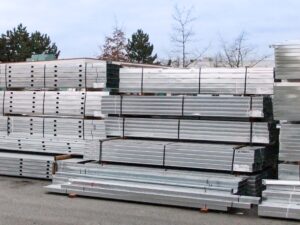 US Commerce Secretary Howard Lutnick signaled he doesn’t expect a reprieve on 25% tariffs for steel and aluminum imports scheduled to take effect on Wednesday. The levies, ordered by U.S. President Donald Trump in February, include imports from Canada and Mexico — which are among the top foreign suppliers — and apply to finished metal products, too. U.S. steelmakers have urged Trump to resist exemptions to the tariffs, which risk hitting US companies that use aluminum and steel. Administration officials have said the policy is aimed at cracking down on efforts by countries including Russia and China to bypass existing duties. Last week, Trump imposed sweeping tariffs on imports from Canada and Mexico but later walked back some of the changes — offering a one-month reprieve to automakers and then expanding that pause to all imported goods covered by the free-trade agreement between the US, Canada and Mexico.

 Legislation has been introduced to strengthen BC’s ability to respond quickly to threats of tariffs imposed on Canada by the US, to grow a more self-reliant economy, and to defend workers and businesses. …If passed, the act will enable the BC government to be nimble in its response, giving government time to develop more long-term responses. A focus on expanding interprovincial trade and moving procurement away from American vendors will help encourage greater reliance on goods and services made in Canada. …The act will automatically be repealed by 2027 at the latest. …The legislation allows government to: 1. Temporarily modify the application or effect of BC laws and regulations to defend BC from challenges brought on by the continued tariff and sovereignty threats. …2. Reduce or eliminate barriers to interprovincial trade. …3. Impose tolls/fees on specified vehicles using provincial public infrastructure such as highways …4. Provide procurement directives to public bodies.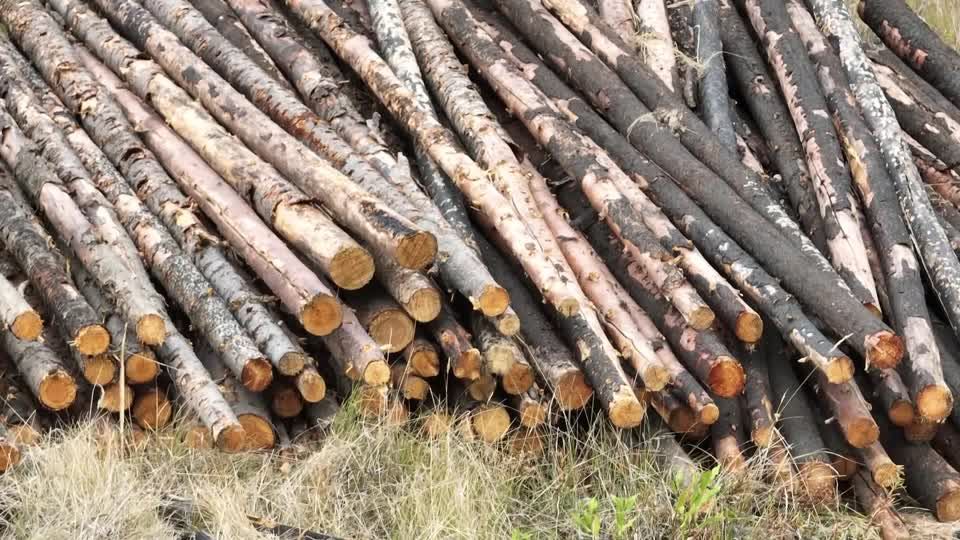


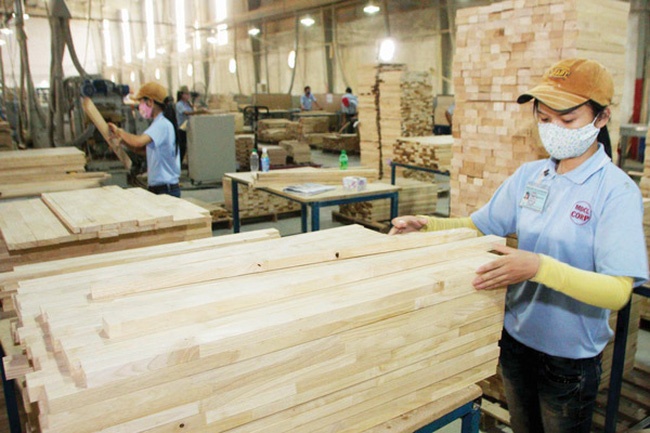


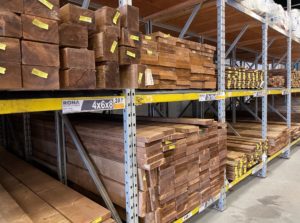 As we enter what are typically the most profitable months for US builders, widespread uncertainty regarding pricing is casting a pall over the industry. Northeastern Retail Lumber Association (NRLA) crystallizes these concerns, noting that: “Despite repeated delays of tariffs on imports from Mexico and Canada, prices continue to fluctuate unpredictably, leading to hoarding by customers, delayed orders for restocking, and customers abandoning purchases due to sudden cost increases.” The NRLA says the current situation recalls the tumult of pandemic-era supply chain shortages. “Now, dealers are reporting the same patterns: unpredictable cost increases, uncertainty in securing supply, and customers unable to move forward with purchases due to rapidly shifting prices.” …NRLA writes that daily price changes are making it impossible for retailers to provide accurate quotes, which constricts pricing guarantees. …NRLA dealers are reporting that even U.S.-made manufactured materials are seeing price increases.
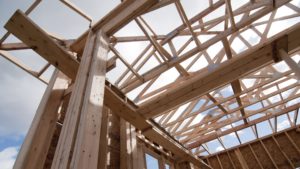 When President Trump threatened new tariffs on Mexico, Canada and China at the beginning of February, Steve Martinez flew into action. The Idaho-based general contractor spent hundreds of thousands of dollars on materials like lumber, windows, cabinetry and steel to stockpile them before the tariffs hit. …Since his lenders wouldn’t finance these purchases, he is paying out of pocket and using cash. Then after the president abruptly walked them back, Martinez was left with an upended business plan, less cash and feeling confused about what to do next. “I can’t keep ping ponging back and forth,” Martinez said. …Builders have been doing what they can to insulate themselves from higher import costs, from stockpiling materials and appliances to shrinking the size of the homes they will build. But if tariffs take effect long term, they will only be able to absorb so much cost. [to access the full story a WSJ subscription is required]
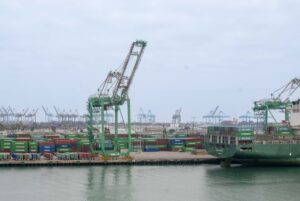 Thousands of US companies opened for business on Friday with no idea whether they had to pay tariffs. …In imposing the tariffs, Mr. Trump misused the 1977 International Emergency Economic Powers Act. Congress passed IEEPA to give presidents tools to respond quickly to emergencies like wars or terrorist attacks. …IEEPA has never been used for tariffs, and courts should rule that it can’t be. …US trade laws require the president to identify and investigate specific trade practices that harm the U.S. and then propose remedies, such as tariffs or negotiations. A president may impose tariffs on specific goods if fact-finding determines that imports threaten US national security. Mr. Trump’s reasons for imposing tariffs on Canada don’t appear to satisfy these standards. …Faced with Mr. Trump’s tariff threats, Canadian, Mexican and European officials have indicated that they are open to collective action against China, the world’s biggest exporter and a major source of US trade deficits. [to access the full story, a WSJ subscription is required]
 The Bank of Canada has cut its overnight lending rate by 25 basis points to 2.75 per cent, it announced on Wednesday. In a note explaining the decision, the bank said the economy started the year strong, with solid GDP growth and inflation within its two per cent target. But tariff uncertainty caused by the on-again, off-again trade war between Canada and the U.S. has weighed on business spending and hiring, and shaken consumer confidence, the decision said. It’s “against this backdrop” that the central bank decided to cut the rate by a quarter point, Bank of Canada governor Tiff Macklem wrote in his remarks. …Macklem has noted in the past that the bank cannot shield the Canadian economy from the financial impact of tariffs, but that it can instead use interest rates to manage a potential surge in inflation.
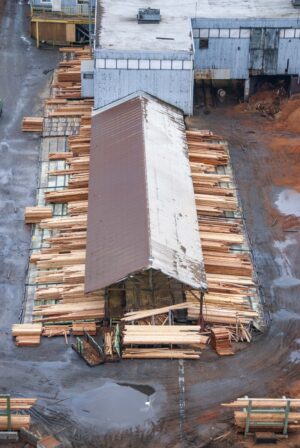 I have received several questions from owners and contractors regarding what to expect with lumber prices given the tariffs (or the potential of tariffs, depending on the day). The short answer is prices will go up. The long answer is much more complicated and hinges on a number of factors and considerations. 1. Almost 30 percent of the lumber used in the U.S. each year comes from Canada. …2. Any tariffs or potential for tariffs creates opportunistic price increases. …3. Demand, however, doesn’t seem to be particularly strong for new construction at this time. …4. Tariffs do help to onshore manufacturing (a long-term positive), but the trees aren’t all in America. …In the short-term, tariffs create more uncertainty and increased pricing, which only further adds to the inflation story. In the long-term, tariffs on lumber won’t achieve the level of onshoring that can happen in other industries.
  Lumber futures rebounded to around $650 per thousand board feet, nearing the two-and-a-half-year high of $658 touched earlier this month as escalating U.S. tariff threats on steel, aluminum, and dairy—along with the prospect of sharply higher auto tariffs—stoked fears of further trade restrictions, reversing the recent plunge. The renewed trade war tensions have heightened concerns that lumber could be the next target, prompting traders to reassess supply risks. Earlier, prices had dropped to around $600 after President Trump delayed a 25% tariff on Canadian softwood for the second time, temporarily easing supply concerns. The proposed levy, which would raise total duties to as much as 52%, could significantly strain North American production and push construction costs higher. However, the latest escalation in the trade war has reversed sentiment, with traders wary that lumber could still face new restrictions, driving speculative buying. [END]
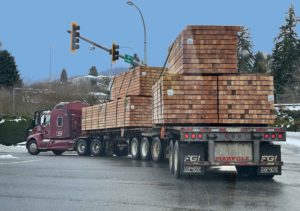 Now that a 25% tariff on lumber from Canada is looming, will this cause crazy wood pricing to return? To some extent, that is very probable, and here’s why. In 2024, our country got about 72% of its lumber from its own forests. The rest was imported from various countries, especially Canada, from which we purchased 28.1 million cubic meters last year. Canada accounts for 84.3% of all softwood lumber imports. …While it might be possible to switch to importing more lumber from other countries, none has Canada’s large production capacity. Also, supply chains — especially for lumber — are complex and costly to change, says Frederik Laleicke, at NC State University. …As long as demand for lumber doesn’t drop, a 25% tariff on Canada will likely make lumber—and therefore new houses and renovations—more expensive since US companies will raise the price of Canadian-sourced lumber to compensate for the tariffs.
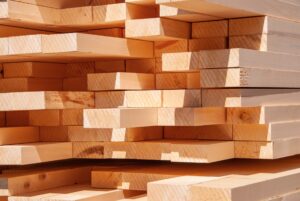 US lumber futures have fallen from their all-time highs after president Trump’s delay to tariffs on Canada this week halted a surge in prices. Contracts tracking a truckload of lumber hit the highest point in their 30-month history this week. …Trump initially planned to impose 25% tariffs on critical Canadian imports, boosting prices, but Thursday’s pause for a month pushed prices for delivery in May down more than 6% over two days, to $651 per MBF. Even so, prices remain elevated as Trump also ordered a federal investigation into Canadian companies potentially dumping excess supplies into the US market. …Together with potential tariffs, the total duty on Canadian imports could rise from 14.5 per cent to 52 per cent. “This is going to be devastating for Canadian producers,” said Dustin Jalbert, senior economist for wood products at price reporting agency Fastmarkets. “No Canadian producer is making the margin to be able to absorb that.”
 VANCOUVER — Conifex Timber reported results for the fourth quarter and year ended December 31, 2024. EBITDA from continuing operations was negative $2.1 million for the quarter and negative $13.6 million for the year, compared to EBITDA of negative $3.5 million in the fourth quarter of 2023 and negative $25.8 million for the year. Net loss was $29.8 million for the quarter while it was $11.8 million for the full year. …While there are signs that the macro-environment for the lumber industry is starting to improve, Conifex continues to review its options to improve liquidity. …Since January 6, 2025, we have been operating our sawmill complex on a two-shift basis and capturing the dual benefits of higher shipments and lower unit costs that a two-shift operation provides over a single-shift configuration.


 Lumber producers have migrated from Canada to the US South. Now lumber-futures trading is heading to the Southern pineries as well. The exchange operator CME Group said it would launch trading in Southern yellow pine futures on March 31, a response to rising export taxes on Canadian lumber. The futures contracts—ticker: SYP—will give the South’s loblolly planters, loggers, sawmills, pressure treaters and builders a mechanism to manage their exposure to price swings that is more in line with the local market than existing futures. …Traders and the exchange have for years discussed Southern yellow pine futures as the region’s production grew. Now that Northern lumber is a lot more expensive, they are saying the time is right. …Southern yellow pine doesn’t always work as a substitute for the Northern species favored by home builders. But executives said the growing price difference is prompting pockets of buyers to swap.
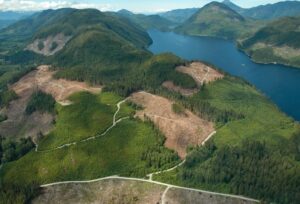 Are clear-cuts in forestry bad? I would say no. Nature demands that there is a mosaic of age classes to support conservation of biodiversity. …Wildfire “clearcuts” following insect invasion, disease, wind or old old trees aging out in many forests. …Logging and tree planting have proven logged clear-cuts are a gentler treatment for refreshing forests when compared to traumatic wildfires. On top of the biodiversity and conservation benefits, we get socioeconomic benefits of forest products and employment and resulting government services and infrastructure. …In certain areas where trees are shade tolerant, such as in Interior Douglas Fir areas, various types of selection may be prescribed to fit the ecology of the site. Biodiversity provides for all species in a mosiac of different types across the landscape. Look outside, it is not one continuous environment.
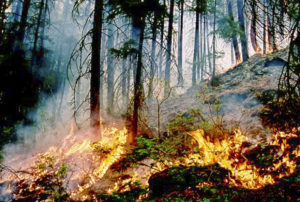 With $2.6 billion in hurricane-recovery money on its way to the national forests of North Carolina, Jenifer Bunty, a US Forest Service disaster-recovery specialist, spent much of the week of February 10th working on a plan to start spending the money. Four months after Hurricane Helene, this meant deciding which bridges urgently needed to be rebuilt, which road repairs prioritized. …“The days of rule by unelected bureaucrats are over,” Donald Trump declared in his speech to Congress last week. For the White House, the firing of tens of thousands of federal workers like Bunty is evidence of “promises made, promises kept.” But for the Forest Service the loss of at least two thousand workers will make it harder to fight ever-worsening wildfires and storms across the country. …After the Trump cuts, a spokesperson for the USDA said that they didn’t include “operational firefighters,” a term Bunty had never heard.
 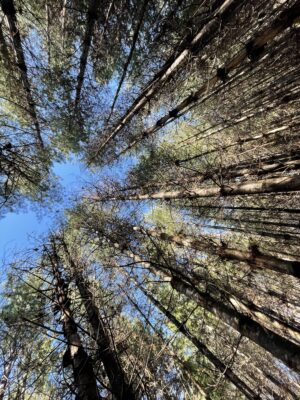 Federal officials are preparing to disband an advisory committee tasked with guiding policies for millions of acres of national forests in the Pacific Northwest. …The 21 members of the Northwest Forest Plan federal advisory committee… have been meeting since summer 2023, hashing out how to tackle wildfires, pests and diseases across nearly 25 million acres of national forests in Oregon, Washington and Northern California. On Thursday, officials with the US Forest Service told committee members the agency was likely to dissolve the group in the coming weeks. Some members said they had been expecting this news. …The Forest Service pulled the committee together to help amend the decades-old Northwest Forest Plan, a set of policies that came out of the timber wars of the 1980s and ’90s. …The committee delivered its recommendations to the Forest Service last year.
 The European Union Deforestation Regulation (EUDR) aims to prevent deforestation-linked products from entering the EU market. This study assesses the potential impacts of the EUDR on global forest product markets using the FOrest Resource Outlook Model (FOROM). We simulate two scenarios: the baseline EUDR, focused on commodity-driven deforestation and urbanization, and an extended EUDR+ scenario, which includes shifting agriculture. The results indicate that high-deforestation countries, such as Brazil, Indonesia, and Malaysia, are expected to face significant reductions in roundwood production and exports, with downstream effects on sawnwood and panel prices. In contrast, low-deforestation countries like Canada and the United States may experience slight increases in production to meet EU demand, but their impact is limited by moderate deforestation rates. The study also highlights the potential for market leakage, where deforestation-linked products may shift to non-EU markets, potentially undermining global environmental goals.
 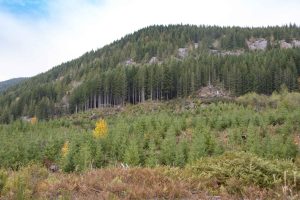 Eastwood Forests has deployed slightly more than half of its debut fund through deals that have included acquisitions in Costa Rica, Panama and Canada. North Carolina-headquartered Eastwood announced its acquisition of 14,500 ha of northern Vancouver Island timberland from Western Forest Products for $69.2 million in February. …Eastwood VP for transactions Prab Dahal said “Western has done a good job in managing the forests but our philosophies are slightly different in that we probably would not have as much openings and as much clear-cuts as Western did in the past,” said Dahal. …“It has more versatility than the typical natural forest that we look for elsewhere,” said Dahal. “We can manage this purely for carbon and still do good, or manage purely as a plantation and continuously manage with a harvesting level that is sustainable and can do good, financially, for our investors.” …Eastwood was established in 2022.