The situation surrounding tariffs remains fluid, with a flurry of activity in Washington this week. …On March 6, Trump announced a one-month tariff delay until April 2 on all products from Mexico and Canada that are covered by the United States-Mexico-Canada Agreement (USMCA). While there is no specific language in the USMCA addressing Canadian softwood lumber, NAHB worked with the White House to ensure it was covered under the latest pause on tariff implementation. Two essential materials used in new home construction, softwood lumber and gypsum (used for drywall), are largely sourced from Canada and Mexico, respectively. …If the new tariffs on Mexico and Canada go into effect next month, they are projected to raise the cost of imported construction materials by more than $3 billion. NAHB has received anecdotal reports from members that they are planning for tariffs to increase material costs between $7,500 and $10,000 on the average new single-family home.
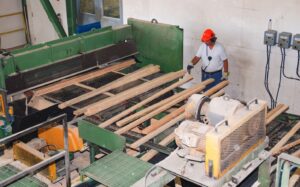 The U.S. Commerce Department today announced new preliminary anti-dumping duties on Canadian softwood lumber imports of 20%. …The duties won’t become final until August, when final determinations are expected to be made. …The new preliminary duties is just the first shot across the bow in what is expected to be a nasty trade war, with additional tariffs that may be layered on top of duties. …Anti-dumping and countervailing duties have been in place on Canadian softwood lumber at varying levels since 2017, following the expiration of the last softwood lumber agreement in 2015. The duties on Canadian softwood lumber have been effective in shrinking Canada’s market share… from about 35% in 2016, to about 24% as of the end of 2024.
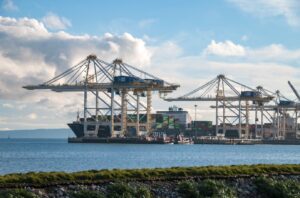 President Donald Trump on Thursday signed executive actions that delay for nearly one month tariffs on all products from Mexico and Canada that are covered by the USMCA free trade treaty, a significant walkback of the administration’s signature economic plan that has rattled markets, businesses and consumers. The executive actions follow a discussion Trump held Thursday with Mexican President Claudia Sheinbaum and negotiations between Canadian and Trump administration officials. …Energy from Canada, however, is not included in the USMCA, the White House official said. So that lower 10% tariff is expected to remain in place… but the Trump reduced the tariff on Canadian potash to 10%. …Canada will now pause their planned second round of tariffs on over 4,000 US goods until April 2, Canadian Minister of Finance Dominic LeBlanc said.
 OTTAWA — Steve Verheul used to get under the American trade negotiator’s skin. …Eventually, the Americans forged a deal with the Mexicans and Canadians, and in 2018 signed the U.S.-Mexico-Canada Agreement. …Now, as Trump slams Canada and Mexico with new tariffs, Verheul and a pair of trade veterans want to save the USMCA. …Verheul is co-launching the Coalition for North American Trade, a three-nation business group advocating for the long-term benefits of free trade. The CNAT is the brainchild of Kevin Brady, the Republican former chair of the House Ways and Means Committee. …Earlier this year, the trio launched their coalition and today, they’re bringing their pitch to Washington. …But until tariffs disappear, Verheul sees no prospect for productive talks. “I think the only hope is that the impact on the US economy, and the stock market, and various companies is extreme enough to create pushback within the US,” he says.
 GENEVA — Canada has requested consultations with the United States on “unjustified tariffs” at the

 WASHINGTON — A day into Donald Trump’s North American trade war, the U.S. president remained adamant that tariffs would benefit America even as a key member of his team has floated that a compromise could materialize Wednesday. Trump addressed a joint session of Congress Tuesday night by making a case for his massive tariff agenda. …Ottawa introduced immediate 25% retaliatory tariffs. …Following a second day of sharp decline, U.S. Secretary of Commerce Howard Lutnick said… the government was looking to “work something out” in a deal that could be announced on Wednesday. …Lutnick tied the deal to the Canada-U.S.-Mexico agreement, which was negotiated under the first Trump administration to replace the North American Free Trade Agreement. …Trump also ordered 25% tariffs on all steel and aluminum imports into the United States on March 12… m[and he] signed an executive order to implement “reciprocal tariffs” starting April 2. Other tariff targets include automobiles, copper, lumber and agricultural products.
 Overnight, Jake Power went from reflecting on one of the best months that his Agassiz-based custom sawmill has ever had to staring into a potential recession sparked by U.S. President Donald Trump’s tariffs. Power, along with every other British Columbian, woke up to the reality of a trade war. …“Our business was growing, our customers were doing well,” said Power, CEO of Power Wood. “Now, I think we all expect a North American recession if this continues.” …Premier David Eby declared that “all bets are off” in terms of his response to standing up for the province. …Trade economist Werner Antweiler said he worries the most about B.C.’s forest industry, which was “already struggling (at) the edge of profitability.” …There is another looming danger in a trade war if it results in continuing depreciation of the Canadian dollar versus the U.S. currency, according to economist Bryan Yu.
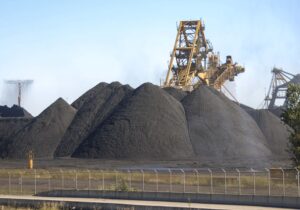 KAMLOOPS — The U.S. Department of Commerce has announced plans to almost triple the anti-dumping duties on Canadian softwood lumber. …“It’s going to be devastating for our industry if we can’t come up with some cost saving methods to be able to not only be more competitive but also trading with our largest partner when it comes to our softwood lumber agreement. …Kamloops-North Thompson MLA and Forest Critic Ward Stamer believes B.C. needs to place a carbon tax on coal as a response. “Our party proposed a carbon tax on U.S. thermal coal through our ports last Monday, and really what we should be doing — whatever they are charging us in duties, we should be charging them back with a carbon tax. …The BC Conservatives asked for an update on their carbon tax proposal during Monday’s question period.


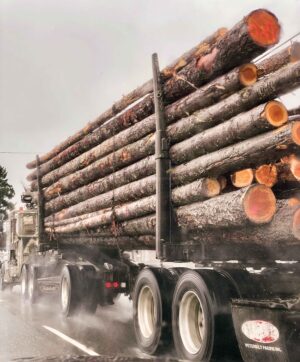 China suspended on Tuesday the soybean import licences of three U.S. firms and halted imports of U.S. logs, stepping up its retaliation for Donald Trump’s decision to impose an extra 10% duty on China. …The suspension of U.S. logs was a direct response to Trump’s move on March 1 to order a trade investigation on imported lumber. Trump had earlier told reporters that he was thinking about imposing a 25% tariff rate on lumber and forest products. “The announcement of import restrictions on U.S lumber and soybeans linked with phytosanitary issues follows a long history of similar measures by Beijing,” said Even Pay, agriculture analyst at Trivium China. …China is one of the world’s largest importers of wood products and the third-largest destination for U.S. forest products. It imported around $850 million worth of logs and other rough wood products from the U.S. in 2024, according to Chinese customs data.


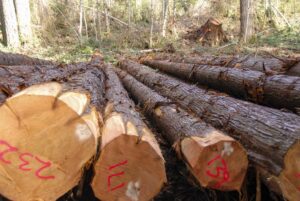 AUGUSTA, Maine — Tariffs on Canadian imports and Ottawa’s retaliation on American goods could sever—or at least strain—the close ties between the forest product industries of Maine and eastern Canada. The state exported $775 million in forest products to Canada in 2023. …Much of the wood Maine sends across the border is in the form of raw logs, according to Dana Doran of Professional Logging Contractors of the Northeast. The timber goes to Canada for processing… and the finished wood products are then frequently re-imported and sold in Maine. …Doran has doubts that these tariff efforts will achieve their intended effect of boosting domestic production. “Most of those Canadian manufacturers have already invested in the United States,” Doran said. …However, others acknowledge that—even if foreign companies benefit—shifting the processing of wood back into the U.S. aligns with the White House’s protectionist aims.
 VANCOUVER, BC — Canfor Corporation reported its fourth quarter of 2024 results. Highlights include: Q4 2024 operating loss of $46 million; shareholder net loss of $63 million; Supply-driven uptick in North American lumber markets and pricing through the fourth quarter led to improved results from the Company’s Western Canadian and US South operations; another quarter of solid earnings from Europe; Improved
 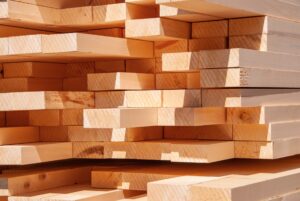 Lumber prices have risen to their highest level in more than two years on news that U.S. President Donald Trump has ordered an investigation into softwood imports from Canada. The lumber probe is the latest salvo in an escalating trade war between the neighbouring countries. Analysts say that the investigation lays the groundwork for potential new %Tariffs on Canadian lumber, notably softwood imports. …Consequently, lumber futures on the Chicago Mercantile Exchange have risen 3.5% over the past day to trade at $657 U.S. per 1,000 board feet, the highest level since mid-2022. However, while lumber prices are marching higher on the threat of U.S. tariffs, the stocks of Canadian lumber companies are tanking. Shares of Interfor fell 9% while the stock of %Canfor declined 6% in Toronto trading on March 4, the day that the 25% tariffs went into effect.



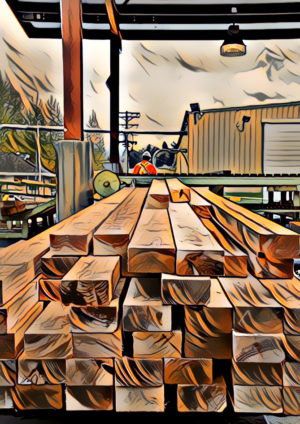 President Trump’s push for tariffs on Canada – and his subsequent delays and exemptions – are frustrating efforts to import lumber from the country and putting the building supply market on edge. The back-and-forth over whether tariffs will be imposed or not has businesses unable to trust price stability, and risks backing up the supply chain for US homebuilders. The reluctance to pay a tariff, which could be changed or cancelled any day, “freezes these markets up,” according to Don Magruder, who runs a building material company based in Florida. …Andy Rielly, president of Rielly Lumber in British Columbia, said he’s been in talks with long-term customers on how to divvy up the extra costs, but not everyone has been able to strike deals. …The US’s National Association of Home Builders chairman Buddy Hughes said tariffs risk worsening housing affordability. …The US Lumber Coalition said that lumber prices are only a fraction of homebuilding costs.
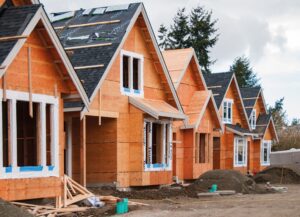 The Trump administration is moving at a record pace on a varied list of priorities, but insiders hope a focus on housing will remain at the top of the agenda in 2025. With housing affordability a central focus, bills addressing zoning, permitting, workforce development, and taxes are taking shape. …Despite all these areas of concern, one concern looms largest – tariffs. Approximately 22% of the products used in the average home are imported from China, 70% of lumber used in construction is sourced from Canada, and Mexico is the largest provider of gypsum. …The NAHB has advocated for an exemption for building materials, and the association continues to engage in conversations with lawmakers about the harmful effects these tariffs could have on housing affordability. NAHB’s Karl Eckhart says “These Canadian and Mexican tariffs are going to have a direct and painful impact on the price to build a house.”
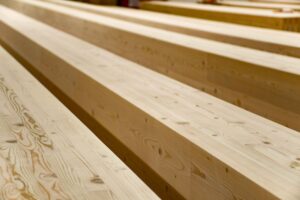 Planning, design and construction must adapt to this new world of tariffs and trade barriers. Canada has already imposed its own tariffs on products made in the US… but it is not just about materials and products; we must change what we build and where we build it. Some ideas for a Patriotic Canadian Built Environment: 1) More Mass Timber. Nordic, Element 5, Structurecraft and others have made major investments in mass timber, much of which is exported south. If the industry is to survive, we need a massive pivot to mass timber construction in Canada. …2) Make Canadian Wood Fibre Insulation. TimberHP in Maine has shown how a pulp and paper-based timber economy can pivot to insulation. …3) Electrify everything. Canada is an electricity powerhouse. Make every building Passivhaus to reduce demand and increase resilience. …4) Restructure from north-south to east-west. …5) More renovation and retrofit. …6) Design for a Sufficiency Economy. …7) Ban Sprawl.
 The full scope of the new investigation is not yet certain. The
  President Trump is promising to unleash the US timber industry by allowing companies to raze swaths of federally protected national forests. …His order — which calls for the ramping up of the domestic timber production to avoid reliance on “foreign producers” — was followed by sweeping 25% tariffs on Canadian products, including lumber. …However, it’s more complex than simply swapping out Canadian imports for homegrown timber, said industry experts. …Meanwhile, environmental groups say clearcutting national forests will pollute the air and water and exacerbate climate change. Anna Kelly, White House deputy press secretary, referred to multiple organizations that have released statements of support about opening up federal land for logging, including the American Loggers Council, the American Forest Resource Council and the Forest Landowners Association. Increasing logging on federal lands would increase the supply of logs for US industry, said FEA’s Rocky Goodnow… but it won’t replace Canadian imports in the near term.