 WASHINGTON — Canadians are waking up to a new and uncertain reality after U.S. President Donald Trump’s deadline for economy-wide tariffs passed with no relent overnight, triggering a continental trade war. The president’s executive order hitting Canada and Mexico with 25 per cent across-the-board tariffs, with a lower 10 per cent levy on Canadian energy, took effect at 12:01 a.m. ET. …Prime Minister Justin Trudeau is set to hold a press conference in Ottawa Tuesday morning with Finance Minister Dominic LeBlanc, Foreign Affairs Minister Mélanie Joly and Public Safety Minister David McGuinty. Canada’s response is to start with tariffs on $30 billion worth of goods immediately and tariffs on the remaining $125 billion worth of American products 21 days later. The S&P 500 dropped two per cent in Monday afternoon trading. The Dow Jones Industrial Average dropped 1.5 per cent and the Nasdaq composite slumped 2.6 per cent. Ontario Premier Doug Ford warned Americans that Canada would have a strong response and suggested he could shut down the movement of critical minerals and energy into the United States. He said Trump needs to pull back for the sake of Americans and Canadians.
In related coverage:
- The Whitehouse: Trump Proceeds With Tariffs On Canada and Mexico
- Forbes: Trump’s Tariffs Start Today—Here’s How They Could Impact Prices
- NY Times: China and Canada retaliate with Mexico to counter on Sunday
- 11News Colorado: Experts weigh in as Colorado and the country prepare for tariffs



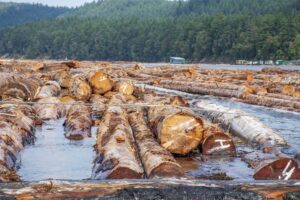 Donald Trump has ordered a probe into dumping in the US lumber market, setting the stage for the industry to join the widening basket of commodities targeted by Washington’s global trade war. The president directed the Department of Commerce to investigate whether imports of lumber and wood products were undermining domestic loggers in a way that posed a risk to US national security, days after ordering a similar review of the copper industry. …Forestry is big business for Canada. In 2022, the sector contributed C$33.4bn to real GDP, or about 1.2%. In the same year Canada’s forest product exports were valued at C$45.6bn, with the majority destined for the US. …Derek Nighbor, FPAC president, said any increase in tariffs on lumber would hurt forest sector employees on both sides of the border. …But Andrew Miller, chair of the US Lumber Coalition, said: “Canada’s unfair trade comes at the direct expense of US companies and workers.”
 US President Trump on Saturday


 NEKOOSA, Wisconsin — Partnering with Omya, a producer of essential minerals, the mill built an on-site plant to ensure a reliable source of precipitated calcium carbonate, a key papermaking ingredient. The new PCC plant came online in September 2024, solving several supply challenges. …In 2020, the PCC plant that supplied multiple Wisconsin paper mills, including Domtar’s Rothschild and Nekoosa facilities, closed. …Domtar and Omya researched constructing a four-story PCC plant at the Nekoosa mill. …In July 2022, the companies agreed to build a 27,500 dry-ton-per-year Omya-designed, owned and -operated PCC plant within the Nekoosa mill’s existing footprint. …“By executing this high-ROI, three-year project with a strategic partner, Nekoosa now has an unlimited supply of PCC on-site that allows for flexibility in our papermaking schedules and effective grade development,” says Jason McCauley, Nekoosa mill general manager.
 The perpetually moving target of tariffs on Canadian lumber shipments to the US frustrated traders and had broad impacts on sales in many species. Despite middling demand, the threat of tariffs combined with relatively tight supplies left many prices higher for the week. The delay in announcement of preliminary AD rates by the Commerce Department injected further uncertainty. Despite inconsistent trading throughout February, the Random Lengths Framing Lumber Composite Price recorded its fourth straight increase and hit $461. That is its highest level since July 2023. Western S-P-F sales were steady but uneventful. Canadian mills weighed their responses to potential tariffs with plans ranging from adders on quoted levels to managing production and focusing sales to non-US destinations. Lumber futures were extremely volatile, swinging aggressively to every news report. The Southern Pine market was in disarray as traders processed a constant flow of mixed signals.
 MONTREAL — Stella-Jones announced financial results for its fourth quarter and year ended December 31, 2024. Sales for the fourth quarter of 2024 amounted to $730 million, up 6% from sales of $688 million for the same period in 2023. …Net income for the period amounted to $52 million compared with $56 million in the corresponding period of 2023. …Sales for the year ended December 31, 2024 reached $3,469 million, up 5%, versus sales of $3,319 million in 2023. Net income in 2024 was $319 million, compared to net income of $326 million in 2023. Despite the lower net income, earnings per share in 2024 was higher at $5.66 versus $5.62 in 2023 due to the continued repurchase of shares. …Eric Vachon, CEO of Stella-Jones, “We achieved solid results in our infrastructure product categories, even in the face of softer market demand. We acquired new customers, maintained our expanded EBITDA margin of over 18%, and delivered strong operating cashflows.”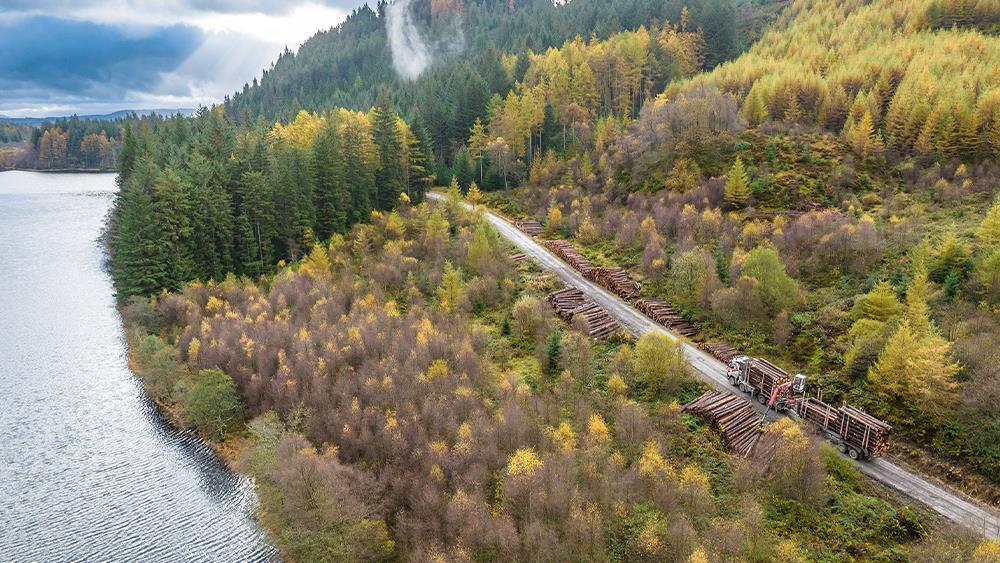




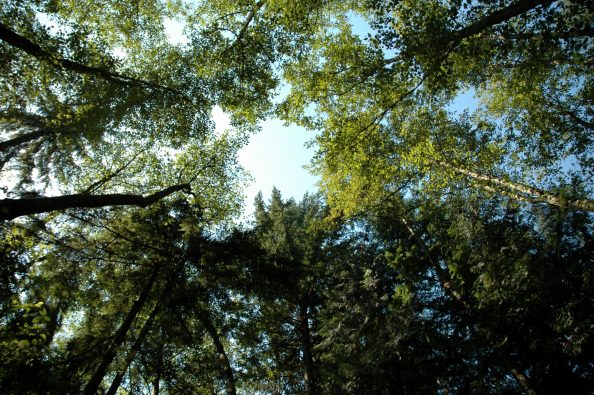 WASHINGTON – President Trump issued an executive order that seeks to ramp up logging across federal forests. …In response to the executive order, members of the Climate Forests Coalition, including Center for Biological Diversity, Sierra Club, Earthjustice, Oregon Wild, and WildEarth Guardians issued the following statement: “This executive order will decimate our federal forests. It will use tax dollars to line the pockets of corporate logging interests, undermine environmental laws, and take public forests out of public hands. This directive is part of a pattern to undermine science, gut the federal workforce, and privatize our public lands. Clearcutting our public lands for private profit will destroy mature and old-growth forests, pollute our air and water, and in bypassing the Endangered Species Act, actively drive vulnerable wildlife to extinction.” The order is being introduced just after a timber industry executive was appointed as the new Forest Service Chief.
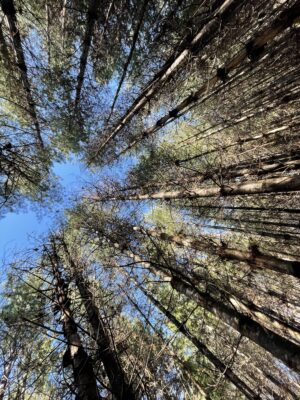 President Trump has promised to “drill, baby, drill.” Now, he also wants to log.
 Polarization is gripping the country and the centre isn’t holding, Environment and Climate Change Canada found when setting the country’s latest emissions reduction target. The department solicited feedback… to determine what Canada’s internationally binding 2035 pollution reduction obligations should be. …The results found that overcoming polarization is a major hurdle to implementing aggressive emissions reductions that climate scientists say is required to avoid catastrophic warming. About two-thirds of Canadians who participated support stronger measures to address climate change. “There was little middle ground, and very few people were satisfied with the status quo,” according to the findings. …When asked if the federal government is doing enough to fight climate change, 47% believe Canada needs to do more, compared to 36% that feel existing measures go too far. …Polarization is gripping the country and the centre isn’t holding, Environment and Climate Change Canada found when setting the country’s latest emissions reduction target.


