
Kelly McCloskey
We reached out to Robert McKellar at Harmattan Risk in August 2024 for comment on the increasing pace of change in the forest sector, shaped by political forces and government intervention. Robert’s op-ed offered a thoughtful analysis of how inherent political risks—especially those linked to Canada–US trade friction—could rapidly unsettle an industry long reliant on stability. At the time, Trump’s potential political comeback was still largely speculative. Since that op-ed, the political landscape has shifted dramatically. Trump’s re-emergence is no longer a remote possibility but a concrete reality that has intensified uncertainty across the sector. With these developments in mind, we reconnected with Robert to update his analysis and explore how the risks he foresaw have become even more pronounced. [full disclosure, Robert McKellar is Tree Frog co-editor Sandy McKellar’s brother]

 Yesterday, we featured an op-ed by political risk management expert Robert McKellar on how Donald Trump’s re-election is changing the political risk landscape for the Canadian forest sector. While U.S. trade disputes are not new, the unpredictability of Trump’s approach to trade policy creates new challenges that Canadian exporters must assess and manage. McKellar presents a structured way to evaluate these risks using the devil’s advocacy approach, a method that considers both worst- and best-case scenarios to develop a balanced assessment. Trump has proposed three different types of tariffs—bi-national, product-specific, and reciprocal—which, if applied together, could significantly impact the sector. By examining multiple possibilities, McKellar provides companies with a way to better prepare for potential disruptions rather than reacting in crisis mode. And as today’s
  Reports that Canada and Mexico are set to be slapped with U.S. tariffs next week may be premature. That’s the latest word from the Trump administration. The White House has clarified that North America-wide tariffs are not a done deal, as many news headlines suggested following remarks Monday Trump. …It wasn’t totally clear which tariffs Trump was referring to. The president has threatened multiple trade actions, for multiple reasons. For Canada, the ones paused until March 4 represent the gravest threat. …CBC News asked the White House on Tuesday for clarification. The White House reply… A plan for retaliatory tariffs on various countries is moving ahead as scheduled. …So, what about that bigger tariff, currently paused until March 4? The White House told CBC News that it’s still to be determined, “pending negotiations” with Canada and Mexico.
 The U.S. Department of Commerce initiated the
 Another day, another tariff threat for markets to digest. This time it’s lumber getting whipsawed, as U.S. President Donald Trump says he is going to bring in tariffs on Canadian lumber imports to the U.S. soon. Speaking to reporters on Wednesday evening, Trump added lumber to the list of items he plans to slap tariffs on in the near future. …Canada would feel any such policy directly, but perhaps not as painfully as you might think. As is the case with oil, lumber is one front in the trade war where Canada can do a lot of collateral damage of its own. …While the U.S. theoretically has enough trees to meet its own needs, ramping things up both in terms of the logs and the capacity to process them would be next to impossible in the short term. Recall during the pandemic when Canadian lumber prices spiked by more than 300%, yet U.S. buyers kept buying.
 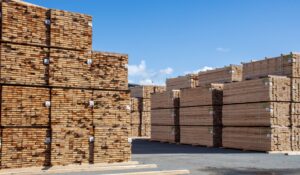 Canadian producers of softwood lumber are bracing for a decision this week from the U.S. Department of Commerce that could mean a surge in anti-dumping duty rates, compounding the industry’s worries over President Donald Trump’s threats for sweeping tariffs on all imports from Canada. Most Canadian producers are currently paying 7.66% in anti-dumping duties, but that could jump to 20 per cent, trade experts say. The Commerce Department’s decision, slated for Thursday, will be preliminary, with an effective date in August. …Analysts are [also] predicting that there will be higher countervailing duty rates, with the Commerce Department scheduled to issue a preliminary ruling in May. Forestry analyst Russ Taylor forecast that countervailing duties could rise to about 10%. Most Canadian softwood producers are paying countervailing and anti-dumping duties that currently total 14.4 per cent. …The Commerce Department’s administrative review is based on softwood markets in 2023, when prices were low. [to access the full story, a Globe and Mail subscription is required]
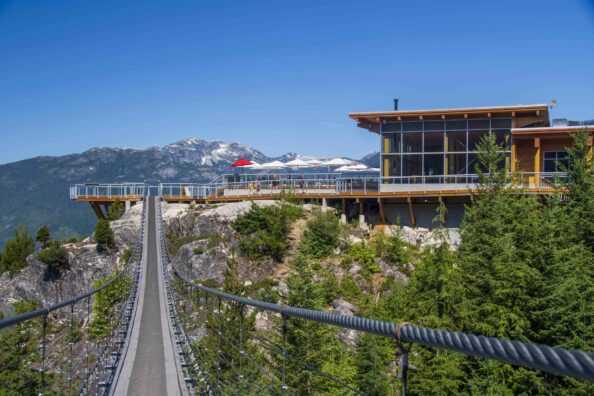 SQUAMISH, BC — Peter Dickson has owned FraserWood Industries, a Squamish-based timber manufacturer, since 1998. He has grown his business, earning contracts near and far, including the Sea to Sky Gondola service building and log cabins at Walt Disney World. One third of his business is exported to the US. …“The biggest problem is our American customers will be reluctant to sign moving forward with the uncertainty.” …David Girard sits on the government relations committee for the Sea to Sky Canadian Home Builders Association, and he said the tariffs would have an outsized impact on consumers and demand for Canadian products, and cause reduced employment. According to a recent survey by KPMG, 48% of Canadian companies contacted said they would invest or produce in the U.S. to retain American customers and reduce costs. But for FraserWood, that’s not an option.
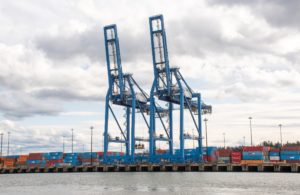 The Trump administration has opened a broad new front in its global trade conflict, proposing to affix levies reaching $1.5 million on Chinese-made ships arriving at American ports. Such fees would apply even on vessels made elsewhere — an approach that risks increasing costs on raw materials to factory goods. …It is engineered to discourage reliance on Chinese vessels in supplying Americans with products, while aiming to spur the revival of a domestic shipbuilding industry after a half-century of veritable dormancy. …The proposal would isolate China while diminishing American reliance on its industry. …The plan was the result of an investigation, started during the Biden administration, into the dominance of the Chinese shipping industry, in response to a petition filed by labor unions. Almost one-fifth of container vessels arriving at American ports are made in China. [to access the full story a NY Times subscription is required]
 If Canada is hit with 25% tariffs… the trade impacts for the forest products sector will be wide ranging. …Lumber is the most talked about commodity with respect to tariffs, largely due to the size of the market but also the fact that tariffs would be in addition to duties which are already being paid and are set to rise come August. The US can’t supply its own lumber demand and will have to continue to import Canadian lumber. Prices will rise. …The US is even more reliant on OSB from Canada. …In softwood, ~70% of demand is met by imports and in hardwood the proportion is even higher, at 89%. Canada is the largest softwood pulp supplier to the US, representing 74% of imports; a 25% tariff on Canadian goods would inevitably result in higher costs for US customers that produce paper, packaging and tissue. There are no easy near-term substitution options.
 NEW YORK — Mercer International reported fourth quarter 2024 net income of $16.7 million compared to a net loss of $87.2 million in the fourth quarter of 2023 and a net loss of $17.6 million in the third quarter of 2024. Q4 revenues were $488 million, down from $502 million in Q3, 2024 but up from $470 million in Q4, 2023. Mr. Juan Carlos Bueno, CEO, stated: “In the fourth quarter of 2024, softwood pulp prices remained strong, decreasing slightly from recent record prices.” …Hardwood pulp prices in China and North America decreased in the fourth quarter of 2024 as the market absorbed capacity increases from earlier in the year. …Lumber sales realizations increased, driven by modestly higher prices in the U.S. market, while in Europe, prices remained stable.
  Lumber futures have recently surged past $610 per thousand board feet, reaching a near three-month high as market conditions tighten. A combination of mill closures, reduced North American production capacity, and tariff concerns has led to increasing volatility in the lumber market. Investors and traders are closely watching these developments, as the outlook for lumber futures remains uncertain amid ongoing supply and trade disruptions. …One of the primary drivers behind the latest rally in lumber futures is the ongoing reduction in North American production capacity. …Adding to the supply concerns is the looming increase in U.S. tariffs on Canadian softwood lumber. For traders, this means increased volatility in lumber futures as market participants react to policy changes. Higher tariffs could discourage Canadian exports, forcing buyers to seek alternative sources or absorb the additional costs, further driving up lumber futures prices.

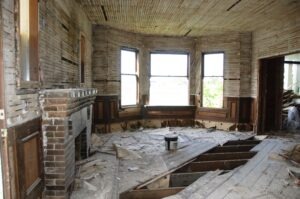 Home Depot’s CFO said people are “moving on” from today’s high mortgage rates and have started investing more in their homes. The home improvement company reported strong fourth-quarter results, although CEO Ted Decker said consumers are still reluctant to make larger investments like a kitchen remodel. Experts say people may start to view today’s mortgage rates as normal, especially when compared to historic rates. …“Housing is still frozen by mortgage rates,” Richard McPhail, said. Yet McPhail said Home Depot, which reported strong Q4 results Tuesday, has seen sales growth in nearly 80% of its U.S. geographic regions. …For Q4, 2024, Home Depot saw a 14.1% year-over-year increase in sales, which “exceeded our expectations,” Ted Decker CEO, said. …“We saw greater engagement in home improvement spend, despite ongoing pressure on large remodeling projects,” Decker said

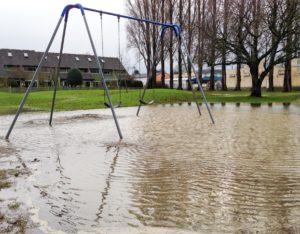 For the past 25 years, the Federal Emergency Management Agency (FEMA) has helped develop building codes, the construction standards that help houses survive hurricanes, wildfires and earthquakes. Now, the Trump Administration has ordered that to stop. …FEMA is dropping out of the latest effort to improve building codes. …The recommendations FEMA submitted were filed with the International Code Council, an independent association that develops building codes used by states and local governments. The proposals FEMA is retracting its involvement from focus on helping homes survive strong winds, seismic shaking and rising floodwaters. …The ICC convenes experts and stakeholders in the building industry to review and improve building codes every three years, and is developing a new set of standards now. After they’re approved, many local and state governments across the country adopt the codes, which set the mandatory construction rules in their communities.
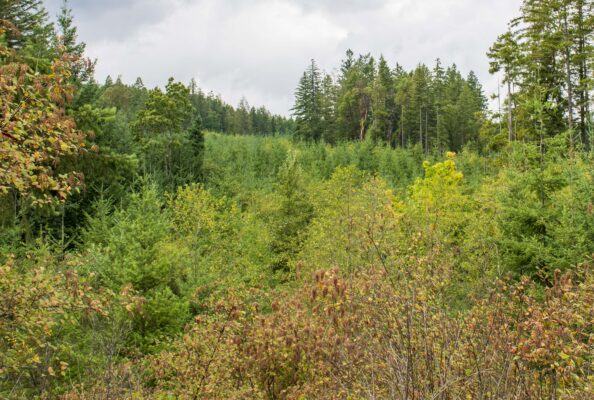 OTTAWA — The federal government has been ordered to reassess its 2022 approval of a popular weed-killer after a Federal Court judge ruled this week the original approval was unreasonable. Justice Russell Zinn gave Health Canada six months to reassess the health risks of glyphosate after the agency failed to show it considered new scientific evidence identifying new or elevated risks associated with the herbicide when it renewed the registration for a product containing it. …Monsanto, has faced multiple lawsuits in the US with multi-million-dollar awards to the plaintiffs, while others have been overturned. …The US Environmental Protection Agency reported in 2020 there were no risks to human health from current uses of the herbicide, but its assessment was overturned. …While the Federal Court’s ruling didn’t speak to the health risks of glyphosate, Zinn said Health Canada failed to show any evidence that it evaluated the new studies.
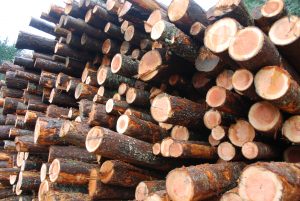 BC-based Interfor reaped an estimated $1.8 million in net profit from logging in old-growth areas that were meant to be preserved, a decision by the province’s Forest Appeals Commission says. The commission upheld the finding that Interfor committed eight contraventions of the Forest and Range Practices Act with the logging between 2012 and 2016 in the Arrow Lakes area of southeastern BC. …Interfor’s forest stewardship plan for the area stipulated that logging should not take place in old-growth management areas except in certain circumstances. It said Interfor’s site plans didn’t meet those requirements. Instead, it said the configuration of the cut blocks “indicates that the harvesting of (old-growth management areas) was a goal for Interfor, rather than confining such harvesting to exceptional circumstances,” as required by the stewardship plan. …Interfor acknowledged that its operations had involved logging old-growth management areas. But the company claimed it had complied with its forest stewardship plan.