 WASHINGTON — President Trump is taking a blowtorch to the rules that have governed world trade for decades. The “reciprocal’’ tariffs that he announced Thursday are likely to create chaos for global businesses and conflict with America’s allies and adversaries alike. Since the 1960s, tariffs — or import taxes — have emerged from negotiations between dozens of countries. Trump wants to seize the process. “Obviously, it disrupts the way that things have been done for a very long time,’’ said Richard Mojica, a trade attorney at Miller & Chevalier. “Trump is throwing that out the window … Clearly this is ripping up trade. There are going to have to be adjustments all over the place.’’ Pointing to America’s massive and persistent trade deficits – not since 1975 has the U.S. sold the rest of the world more than it’s bought — Trump charges that the playing field is tilted against U.S. companies. …Economists don’t share Trump’s enthusiasm for tariffs.
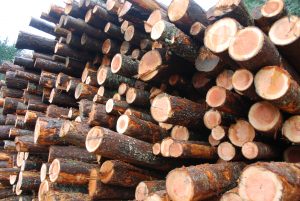 LONDON/BRUSSELS — The US paper and pulp industry is lobbying the Trump administration to ask the EU to declare the US deforestation-free, a step that could make it easier for exporters to meet the bloc’s new environmental rules. From December, the European Union’s anti-deforestation policy will ban imports of commodities linked to forest destruction. Brussels already delayed the policy’s launch by a year. …”A delay does not solve our concerns with the regulation’s complex requirements and significant technical barriers,” said Heidi Brock, CEO of the American Forest and Paper Association (AF&PA). …The law does not contain a category of countries deemed to be deforestation-free – despite EU lawmakers attempting unsuccessfully to add a new “no risk” category of countries which would face even lighter rules. Any changes to the EU law would require a legal proposal from the Commission, and approval from EU lawmakers and member states.
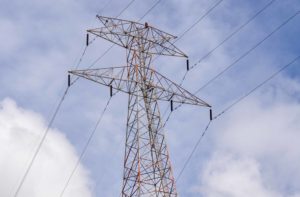 WILLIAMS LAKE, BC — The City of Williams Lake has cancelled a lobbying junket to Victoria on the news Adrian Dix, minister of Energy, plans to meet with BC Hydro to discuss the imminent shut-down of the Atlantic Power station. The plant, which generates electricity through the burning of wood waste, is Williams Lake’s biggest industrial taxpayer. The company that owns it plans to shut down soon, unless the province can assure it better power rates and reliable fibre supply. The city has been lobbying the provincial government to prevent the power plant from shutting down, and had planned to converge on the BC Legislature tomorrow for the first day of the new BC legislative session. …The Atlantic Power plant is an independent power producers with a power purchase agreement with BC Hydro. The plant is owned by I Squared Capital, an American private equity investment firm.

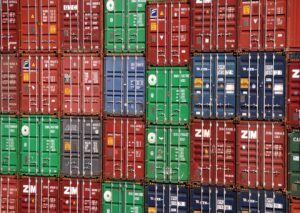 Reciprocal tariffs are straightforward in theory: The U.S. would pose the same levies on imported goods from a given country that the other country imposes on their U.S. imports. But it gets far murkier in practice, as countries often charge different tariffs on different classes of goods. Goldman Sachs economists outlined three approaches Trump could take. “Country-level reciprocity” is the “simplest” strategy which would have the U.S. impose the same average tariffs. “Product-level reciprocity by country” would have the U.S. place marching tariffs on a good-by-good basis by trading partner.” Reciprocity including non-tariff barriers” is the “most difficult” approach as it would encompass a complicated web of inputs including inspection fees and value-added taxes. …4.8% is the U.S.’ weighted average tariff rate if Trump implemented the country-level strategy. …Goods from the 20 countries the U.S. has free trade agreements with, including Australia, Canada, Mexico and Panama, won’t be affected – though Trump has targeted several of those countries in recent weeks.
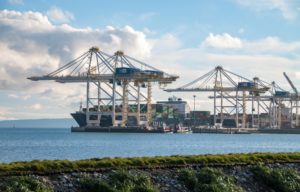 U.S. President Donald Trump in an all-caps post on Truth Social Thursday teased a new round of sweeping reciprocal tariffs, matching the higher rates other nations charge to import American goods. …Reciprocal tariffs were one of Trump’s core campaign pledges — his method for evening the score with foreign nations that place taxes on American goods and to solve what he has said are unfair trade practices. …He is set to share more details on the tariffs ahead of his visit with Indian Prime Minister Narendra Modi, White House press secretary Karoline Leavitt told reporters on Wednesday. …The tariffs are likely to hit developing countries hardest, especially India, Brazil, Vietnam and other Southeast Asian and African countries, given that they have some of the widest differences in tariff rates charged on U.S. goods brought into their countries compared to what the U.S. charges them.


 VANCOUVER, BC — Western Forest Products announced improved fourth quarter and fiscal 2024 results compared to the same period last year. Adjusted EBITDA was $14.4 million in the fourth quarter of 2024, as compared to negative $1.2 million in the fourth quarter of 2023, and negative EBITDA of $10.7 million in the third quarter of 2024. Adjusted EBITDA was $8.9 million for fiscal 2024, as compared to negative $29.9 million in fiscal 2023. Net loss was $1.2 million in the fourth quarter of 2024, as compared to a net loss of $14.3 million in the fourth quarter of 2023, and a net loss of $19.6 million in the third quarter of 2024. …“Despite challenging markets, we were successful in returning our business to positive EBITDA in 2024,” said Steven Hofer, CEO. …“The planned incremental US tariff will unfairly target and harm Canadian exporters like us, [and] will also hurt American consumers through higher lumber prices.” …We have informed customers of our intention to pass on the incremental US tariff.
 BURNABY, BC — Interfor recorded a net loss in Q4, 2024 of $49.9 million compared to a Net loss of $105.7 million in Q3, 2024 and a net loss of $169.0 million. Adjusted EBITDA was $80.4 million on sales of $746.5 million in Q4, 2024. …For the full year, Interfor reported a net loss of $304 million in 2024, a 14% increase from the $267 million net loss in 2023. Total sales fell 9% to $3 billion, down from $3.3 billion in the previous year. …Near-term volatility could be further impacted by a potential tariff on Canadian lumber exports… however, the Company is well positioned with a diversified product mix in Canada and the U.S., with approximately 60% of its total lumber produced and sold within the U.S. …Despite challenges, the company remains positioned to adjust production and capital spending in response to market conditions. …The company plans to invest $85 million in 2025, including the continued rebuild of the Thomaston, Georgia sawmill.
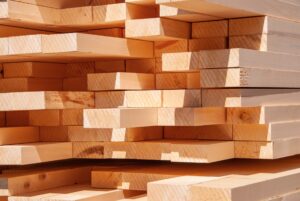 California home builders say they have very little choice but to continue buying Canadian softwood lumber from places like British Columbia, even if US President Donald Trump issues a 25% penalty on imports next month. The state is in the midst of its rebuilding efforts from the Pacific Palisades wildfires that ravaged the Los Angeles area. …Dan Dunmoyer, who is the president of the California Building Industry Association said the rebuild will become a lot more costly. …“The price of lumber is already starting to go up some even without the tariffs in place out of uncertainty, which again is a reason not to move quickly on tariffs. …“We are very desirous to rebuild as quickly as possible and at the lowest cost possible. The timing of tariffs or additional costs to softwood lumber coming from Canada is very ill-timed.”


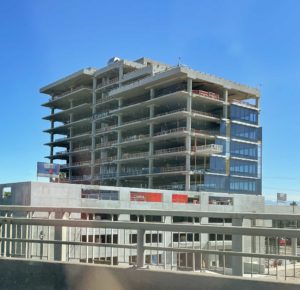 The cement industry is at a crossroads as decarbonization is expected to take its toll, resulting in a significant decline in demand, according to a paper by the World Cement Association (WCA). “The cement industry is undergoing an unprecedented transformation,” explains WCA CEO Ian Riley. “As we move towards a decarbonized future, understanding the true demand for cement is critical to ensuring that policies, technologies and investments align with reality.” The white paper examines disruptive factors such as alternative materials. …The report challenges prevailing forecasts and projects demand for cement and clinker will dip, mainly due to the rise of timber, greater use of admixtures, the move towards decarbonization of the industry as well as design practices that will reduce the concrete used. ..According to the paper, timber has replaced concrete and steel in many highrise buildings but limitations on the supply of timber are expected to curb its growth.
 MONCTON, New Brunswick –