Robert Dietz
The Trump 2.0 administration is underway and disruption is the word of the day in Washington, D.C. The new Trump team hit the ground running, with policy action expected in the areas of regulatory reform, a smaller and more efficient federal workforce, extension of the 2017 tax cuts, tariffs as revenue generators and negotiation tools, and more to come on immigration actions and a more secure border. The sheer breadth of policy actions is a lot for the economy to digest. These policies will offer home builders and remodelers both positive and negative risks in the months ahead. This dual set of risks has been reflected in financial markets, with stocks valuing the focus on growth and efficiency but the bond market reflecting inflation and budget deficit concerns. As a result, investors have pushed long-term interest rates higher since last fall, with the 10-year Treasury rate in the 4.5% to 4.6% range. Mortgage rates remain elevated near 7%.
NAHB projects more economic growth in the quarters ahead, albeit with some disruption in the presidential transition. There is a solid base to build on, with fourth quarter GDP growth coming in at a better-than-expected 2.3% annualized rate. Housing’s share of GDP registered at 16.2% at the end of 2024. The Federal Reserve is undecided on future risks to both inflation and unemployment and will likely hold the federal funds rate at the current top target of 4.5% until at least the third quarter. …However, home sales and building conditions will depend greatly on which policies are for negotiation (such as a proposed 25% tariff on Canadian and Mexican imports) and which policies are intended to be long-term changes to the economy (regulatory reform, for example).Tariffs on Canadian lumber are a near-term concern, with the existing duty rate speculated to increase from a current 14.5% rate to near 30% later this summer.





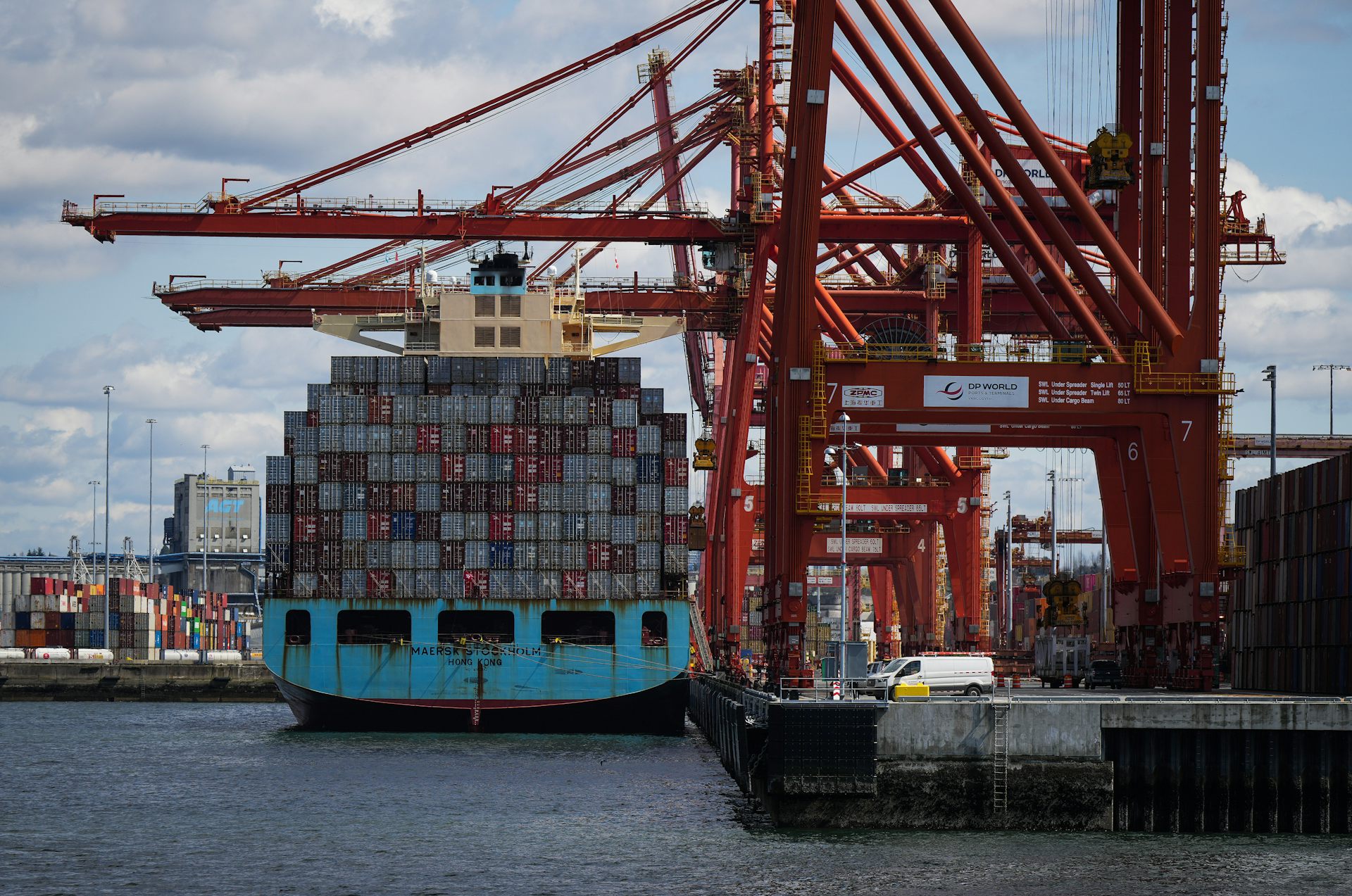
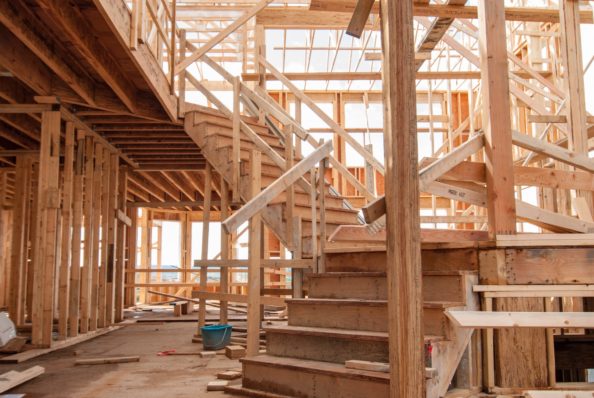 As President Donald Trump ushers in a slew of new policy changes, the proposed 25 percent tariffs on imports from Canada and Mexico—if implemented after the recently introduced 30-day pause—could significantly escalate the cost of lumber, further complicating the already strained U.S. housing market. Some experts predict a near-tripling of costs that could undermine home affordability at a time when the nation grapples with a housing crunch. …According to Carl Harris, chairman of the National Association of Home Builders (NAHB), over 70% of softwood lumber and gypsum, which is used in drywall, originate from Canada and Mexico. …Robert Dietz, chief economist at the NAHB, outlined the risks posed by tariffs as it relates to lumber costs. …Per Dietz, not only could they nearly triple the cost of lumber, a critical component of home building, but they would also drive up prices for consumers, putting homeownership out of reach for many Americans.





 Pressing ahead with steep tariffs on Canada and Mexico risks exacerbating the US housing crisis and threatening the broader economy, dozens of congressional Democrats have warned Donald Trump. …In a letter to Trump seen by the Guardian, Democrats noted that the US imports key construction materials worth billions of dollars – from lumber to cement products – from Canada and Mexico each year. “Given the severe housing shortage, compounded by rising construction costs, persistent supply chain disruptions, and an estimated shortfall of 6m homes, these looming tariffs, while intended to protect domestic industries, risk further exacerbating the housing supply and affordability crisis while stifling the development of new housing,” they wrote. More than 40 Democrats urged the White House to consider housebuilding industry estimates that the proposed tariffs will raise the cost of imported construction materials by up to $4bn.
 The significant risk that tariffs pose to Canada’s economy casts a potentially dark shadow over the housing market. Any economic turbulence arising from tariffs would be felt by participants, whose confidence is critical to the stability of the housing market. …Therefore, assessing the outlook for Canada’s housing market at this juncture is like putting a price on a home before an earthquake—it’s hard to know what shape the structure will be in at the end of the day. Still, we highlight some of the key themes in 2025. …Lower interest rates heat up demand. …Inventory of homes for sale is rebuilding in Canada. …Strained affordability, immigration and uncertainty to keep buyers cautious. …Affordability relief from rate drop will only be partial. …Absent any major economic shock, we’d expect housing market demand and supply to stay balanced in the year ahead, yielding minimal price increases Canada-wide.
 Canada’s economy added 76,000 jobs in January as the country braced for the impact of tariffs from U.S. President Donald Trump, marking the third consecutive month of jobs growth. The unemployment rate fell by 0.1 percentage points last month, bringing Canada’s unemployment rate to 6.6 per cent, with the largest gains (33,000 jobs) coming from the manufacturing sector, Statistics Canada said in its monthly labour force survey. The latest
  Experts told us that, in theory, if the US stopped importing crude oil and lumber from Canada and Mexico, it still would be able to meet domestic demand using natural resources available in the U.S. But, in reality, they said, the transition would be costly and take some time to implement, among other complications. “Sure: we could probably meet most of our lumber needs domestically,” said Marc McDill at Penn State University. “The reasons why we don’t boil down to two things: 1) sometimes imports are cheaper than our own suppliers, and 2) we value our forests for a lot of other things.” He added that without lumber from Canada, “1) prices would go up, 2) we would harvest more of our own trees, and 3) we would import more from countries.” …Rhett Jackson at the University of Georgia, said that differences in the lumber produced in the US and Canada may be problematic. …“All lumber is not created equally.”
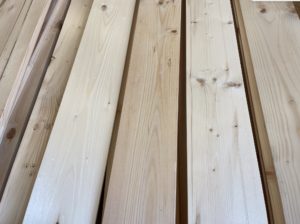 The U.S. market accounts for 5-10% of Sweden’s forest industry exports, depending on the segment, meaning the direct impact of potential new tariffs remains limited, said Christian Nielsen, market analyst for wood products at Swedish Forest Industries Federation. The U.S. relies on imports for 25% of its lumber consumption, primarily from Canada. Higher tariffs on Canadian wood could raise costs for American consumers while improving the competitive position of European suppliers. However, Nielsen noted that future tariffs directly targeting EU exports remain uncertain. In the pulp and paper sector, the U.S. could rely entirely on domestic production, reducing the need for imports. Sweden currently exports 7% of its pulp and 5% of its paper and board products to the US. In total, Sweden exports 92% of its paper and board production, and global trade flows could be affected by tariff changes. [END]
 A 30-day delay in implementation of tariffs on Canadian shipments to the US reset recent trends in framing lumber markets. Sales picked up in most regions and species, but higher quotes early in the week retreated nearer to last week’s levels. Western S-P-F sales were mixed, but several secondaries reported their strongest days of the year as buyers padded relatively thin inventories with insurance loads. Prices remained close to last week’s levels, but supplies of some items tightened in late trading. Lumber futures swung from extreme volatility Monday and Tuesday to an upward trend towards the end of the week. The threat of tariffs drove prices up, but selling commenced after the delay. The biggest gains were posted in green Fir, where a supply-side rally pushed Std/#2&Btr dimension prices $15-35 higher. The Random Lengths Framing Lumber Composite Price posted another modest adjustment, finishing $5 higher. Most Southern Pine producers throttled back quotes.
 Year-end 2024 Southern Pine lumber (treated and untreated) exports hit 565.7 Mbf, which was up 11% over the previous year, according to December 2024 data from the USDA. On a monthly basis, Southern Pine lumber exports were up 21.9% in December 2024 over the same month in 2023 but down 2.2% from November 2024. …Softwood imports, meanwhile, were down 11.5% in December 2024 compared with the same month a year ago and down 11% from November 2024. …Mexico remains the largest export market (by volume) of Southern Pine and treated lumber, up 23% over 2023 with 150.2 Mbf of imports. The Dominican Republic, the No. 2 importer of Southern Pine, ended the year 19.1% ahead of 2023 with 92.3 Mbf. India’s total of SYP imports ended 3.1% ahead of last year with 36.6 Mbf. Canada: up 30% with 27.4 Mbf in 2024. Canada ended the year as the No. 5 importer of Southern Pine lumber (treated and untreated).

 Len Apedaile, RPF, is the general manager of Tiičma Forestry, a small market logger based up in Ka:’yu:’k’t’h’/Che:k’tles7et’h’ First Nations (KCFN) territory on Vancouver Island’s north coast. He thinks, if anything, the American tariffs scenario of 25% on all Canadian imports will give businesses the opportunity to re-evaluate how they fundamentally do things. …“This doesn’t happen overnight, but I think that you’ll see that this will spur on those efforts over time,” said Apedaile. …“We really don’t understand where these tariffs are coming from because they just don’t make sense for the Americans or us. …Tiičma Forestry operates in a high-cost area of Vancouver Island. The relatively new First Nations forestry company sells west coast old and second growth logs to a Terminal Forest Products sawmill on the mainland who exports primarily to the U.S.

 U.S. Senator Jon Ossoff is introducing a bipartisan bill to help grow Georgia’s forestry industry. Sen. Ossoff and Sen. Bill Cassidy, M.D. (R-LA) introduced the bipartisan Forest Data Modernization Act, which would modernize and improve the U.S. Forest Service’s Forest Inventory and Analysis program to ensure reliable data is available to inform forest management decision making. The bipartisan bill would require the Forest Service to prepare an updated strategic plan to expand data collection and further integrate advanced remote sensing technology. According to the forestry industry, the improvements would unlock new economic opportunities for foresters and better protect the environment. The companion bipartisan bill is being introduced by Representatives Kim Schrier (D-WA-08) and Barry Moore (R-AL-01) in the U.S. House of Representatives …“The Georgia Forestry Association (GFA) commends Senators Ossoff and Cassidy for their bipartisan leadership in re-introducing the Forest Data Modernization Act.
 The UK government has agreed a new funding arrangement with the controversial wood-burning Drax power station that it says will cut subsidies in half. …The new agreement will run from 2027 to 2031 and will see the power station only used as a back-up to cheaper renewable sources of power. …The government says the company currently receives nearly a billion pounds a year in subsidies and and predicts that figure will more than halve to £470m under the new deal. …The new agreement also states that 100% of the wood pellets Drax burns must be “sustainably sourced” and that “material sourced from primary and old growth forests” will not be able to receive support payments. All the pellets Drax burns are imported, with most of them coming from the USA and Canada. BBC has previously reported that Drax held logging licences in British Columbia, and used wood, including whole trees, from primary forests for its pellets.
 The Government has announced a new support mechanism for sustainable biomass generation post-2027. From 2027, Drax and other eligible large-scale biomass generators will be supported via a lowcarbon dispatchable CfD (Contract for Difference). If approved, the plan will keep the power station running until 2031. Under this proposed agreement, Drax Power Station can step in to increase generation when there isn’t enough electricity, helping to avoid the need to use more gas or import power from Europe. When there’s too much electricity on the UK grid, Drax can reduce generation, helping to balance the system. Importantly, the mechanism will result in a net saving for consumers. …The agreement also prioritises biomass sustainability. Drax supports these developments and will continue to engage with the UK Government on the implementation of any future reporting requirements.
 As institutional interest in real asset investing grows, forestry is gaining recognition beyond its core enthusiasts for its ability to produce income and capital growth, alongside added benefits like carbon sequestration and biodiversity protection. However, trust in sustainability-focused investments remains a challenge. In EY’s 2024 Institutional Investor Survey, 85% of respondents said misleading claims about sustainability are more of a problem today than five years ago, despite regulators’ efforts to quash exaggerated ESG statements. …A persistent narrative is that established timberlands are better, safer investments than new greenfield developments. The truth is more nuanced. Greenfield projects, which involve reforesting degraded or underused land, offer an opportunity to achieve ‘additionality’ – a crucial component of effective carbon sequestration. …For forestry investors, the upshot is clear: regulatory uncertainty is currently a barrier to restoring widespread trust in carbon markets, and resolving this will take time.
 Swedes and Finns have long monetized their forests. EU climate goals — seen as a threat to both family wealth and the two national economies — are fast becoming a lightning rod for anger. …In Sweden and neighboring Finland, forestry is, to all intents and purposes, a retail asset class. In Sweden, some 300,000 people own, in total, half of the country’s forests. In Finland, 60% of forests belong to 600,000 individuals. Owners like Velander have been able to work their land with relatively light regulations, generally free to harvest trees when and as they chose. The way these small forest owners traditionally manage their land is, they contend, also good for the climate. But this approach, along with their investments, is under threat from a growing number of European Union regulations aimed at protecting biodiversity and reducing the bloc’s carbon emissions. In Sweden and Finland these measures have been interpreted as a potential ban on logging. [to access the full story a Bloomberg subscription is required]