The City of Williams Lake, B.C., is calling on the province to step in to prevent the closure of a power plant critical to local employment and the municipality’s bottom line. The Atlantic Power facility generates enough electricity to power about 50,000 homes by burning wood waste… The Atlantic Power plant gave notice last February that it was going to pull out of the community, citing an inability to remain profitable under its current contract with BC Hydro. Williams Lake City Councillor Scott Nelson said that’s because, with the closure of local sawmills and upgrades to others to improve their efficiency, easy-to-access wood fibre has become more scarce. Instead, the company now sources inputs from the surrounding Chilcotin Plateau, collecting the waste wood left by wildfires and dead wood that could become fuel for future wildfires, he said.


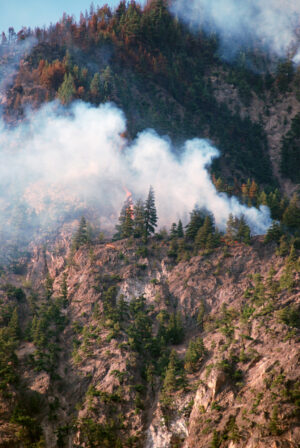
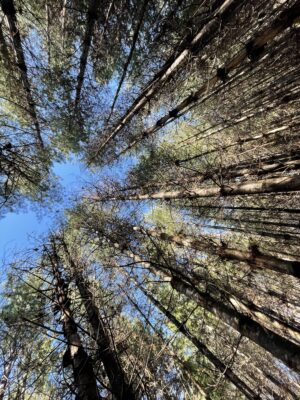 The Kaslo and District Community Forest Society (KDCFS) revisited previous board discussions about future logging plans needed to mitigate fires. During a Feb. 20 meeting, KDCFS members highlighted the demand for cedar and fir while highlighting that several blocks of hemlock trees have been damaged by past fires, rendering some unusable. The Briggs Creek fire that occurred in 2022 led to the destruction of many hemlock trees that will need to be harvested in the next two years before deteriorating. Society forester and treasurer Jeff Mattes explained that the society’s logging plans for the year 2025 will include utilizing a patch-cut system to reserve some of the trees. A patch-cut system refers to the removal of an entire stand of trees less than one hectare.
 Devices used to detect and prevent wildfires in remote forests are expensive, but the one that Northeastern University student Anson He is making will be cheaper to launch on drones over dense woodlands. He is pursuing his master’s degree in computer science at Northeastern’s Vancouver campus. In January, he started a co-op at Bayes Studio — a Vancouver company that uses robotics and machine learning to make forest fire detection tools. He is helping to produce a device that uses less expensive components than others on the market. His role is core to the small company’s success: He is in charge of prototyping the hardware and coding the software for what Bayes calls its Edge device. Other team members work on integrating artificial intelligence into the device’s functionality and connecting the device to servers.
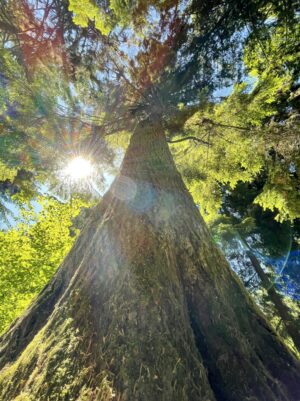 Another 29,800 acres of timberland just got conserved under easement as working forest, the third phase in Columbia Land Trust’s project of protecting about 75,000 acres, sold by SDS lumber company in 2021. Columbia Land Trust hopes to conserve almost everything except the mill itself, buying the most important 15,000 acres of habitat outright. They hope to put the other 60,000 under conservation easements. In this case, Washington’s Department of Natural Resources will hold some of the rights over the 29,800 acres of land. It can be sold, but never developed; it must always remain working forest. This is the trust’s biggest project to date… SDS Lumber was the last family-owned, vertically-integrated (meaning it owned and operated most stages of its own supply chain) timber company in this part of the Northwest.
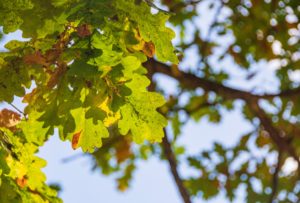 A group of scientists has been quietly working for decades on a project to improve tree genetics, with white oaks among the target species for the UT Tree Improvement Program. For those who are curious, genetics in organisms refers to the study of genes and how they are passed down from generation to generation. Genetics in trees, however, focuses on the study of genes within tree species and examines how their genetic makeup influences traits such as growth rate, wood quality, and resilience to environmental stresses. Scott Schlarbaum, a distinguished professor of forestry at UTIA, leads the UT Tree Improvement Program and is among the co-authors of the paper that describes the white oak genome and how local adaptations may have implications for the species in relation to heat and drought stress. Photo by A. Mains, courtesy UTIA.
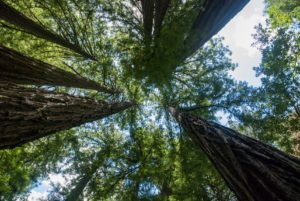 Senator Mike Rounds has re-introduced a bill that would require National Forest superintendents to submit remediation plans if their timber production falls well below the allowable amounts laid out in forest plans. The remediation plans would be required to bring timber production in the respective forests back to at least 75% of their allowable amounts. Rounds says timber production in the Black Hills has far below its allowable 181,000 units. “Three years ago, we did about 80,000, the year before last we did about 60,000, and we’re down to about 59,000 units this year, and so the bottom line is not even a third of what we should be harvesting in the Black Hills is actually being done,” Rounds said. “But it also means some of those forests that could be more properly managed, based upon their own plan are not being harvested, the plan is not being followed,” Rounds said.