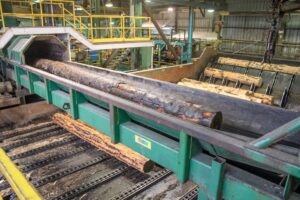
 Two industrial properties in the Alberni Valley that were shuttered when San Group declared bankruptcy last year have been sold. The Coulson Mill, located a few kilometres up the Alberni Inlet, has been purchased for an undisclosed amount by Fraserview, a Surrey company that has been producing manufactured wood products since 1994. The remanufacturing plant on Stamp Avenue has been sold to a numbered company, 037BC, which will in turn lease the premises to IGV Housing Ltd. This company, from Ucluelet, specializes in manufacturing scalable and sustainable housing using a hybrid construction system, according to court documents. The company intends to “revitalize the…plant as a central hub for prefabrication and production of affordable housing.” Again, the purchase price was not disclosed. The closing date for the reman plant purchase will be before June 30, 2025.

 As Prime Minister Mark Carney’s Liberal government plans billions in financing for builders of prefabricated homes, one expert says it’s a “significant amount of money” and “a very healthy kick-start” for the industry. The federal government’s Build Canada Homes (BCH) plan promises, among other things, more than $25 billion in financing to “innovative prefabricated home builders in Canada,” according to the Liberals’ website. Ramping up prefabrication could result in cheaper, faster and better-quality homes, said Tony Yang, professor of structural and earthquake engineering at University of British Columbia. “We are building too slowly right now,” he said. “We are lacking skilled workers on site.” The goal of prefab is to shift manufacturing from construction sites, which he called relatively inefficient, onto production lines that operate more quickly through repetition.
  The Trump administration’s nominee to oversee the Forest Service may soon be faced with navigating the agency’s environmental regulations from both sides: as an affected property owner and as the boss of the employees enforcing them. Mike Boren, the Trump administration’s pick for undersecretary for natural resources and environment, will likely have to work through the Forest Service’s environmental procedures to resolve a disagreement about a geothermal stream that one of his ranches in Idaho tapped for heating purposes, if he’s confirmed by the Senate. That’s the assessment of current and former Forest Service employees who described the rules to POLITICO’s E&E News, granted anonymity because they’re not authorized to speak with reporters or still work with the agency in other capacities.
 As Ottawa bets big on EVs and batteries, core manufacturers in sectors like lumber, metal and machinery are left fighting uphill battles at home. Among his various and sometimes conflicting economic objectives, Donald Trump has identified revitalizing manufacturing as a priority. He has railed against the decline in factory jobs — a complaint that overlooks the jump in U.S. manufacturing employment since 2015 but does reflect the fact that manufacturing today accounts for a significantly smaller share of U.S. jobs than it did 30 years ago. Canadian policymakers have also been paying more attention to manufacturing, particularly since the 2020-21 COVID shock highlighted the country’s vulnerability to supply chain disruptions. Unfortunately, Ottawa’s preferred game-plan has been to dole out vast taxpayer-funded subsidies to politically favoured segments: Electric vehicles, batteries and clean-tech products.
 The Kelowna International Airport (YLW) is proud to share a significant project milestone for Airport Terminal Building (ATB) expansion – the mass timber roof structure of the facility is now complete. The use of mass timber throughout the terminal building expansion highlights the airport’s commitment to sustainability, innovation and community reflection in this project. YLW received $500,000 from the Province’s Mass Timber Demonstration Program, which aims to grow B.C.’s mass timber and engineered wood products industry and position B.C. as a world leader in wood design, engineering and construction. An important design consideration for the ATB Expansion is to incorporate characteristics that showcase our local community. The use of mass timber plays a meaningful role in conveying our region’s natural beauty, heritage and character.
 As per a study documented in RSC Sustainability (Royal Society Of Chemistry), researchers have explored a new approach to using cellulose fibre manufacturing. The study highlighted the use of waste products from agriculture, which Sweden has in abundance. Taking a leap from commonly researched wood-based cellulose, the researchers instead focussed on products including oat husks, potato pulp, wheat straw, and sugar beet pulp to create dissolving pulp for clothes – a key ingredient in making textiles. In this regard, Diana Bernin, Assistant Professor at the Department of Chemistry and Chemical Engineering at Chalmers University of Technology and senior researcher in the study, mentioned this study, which is centered on generating textile from waste products, as a significant step in creating a circular economy. She also added that these waste products are more beneficial than using cotton.
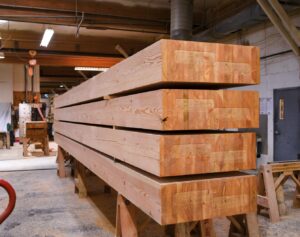 Amid the chaos of tariffs and economic uncertainty, Chris Evans is feeling deja vu with regards to the construction supply chain. Evans, the president of Swinerton-owned mass timber firm Timberlab, has helped the company through the process of building up a domestic supply chain. Evans said the company noted a lack of domestic supply, exacerbated by the COVID-19 pandemic. That led company leaders, in 2021, to work toward helping the firm become more vertically integrated, with its own fabrication facilities and domestic supply, and a sawmill coming online in 2027. Timberlab brought its first fabrication facility online in 2020 and a second in 2022, employing computer numerical control fabrication techniques to create cross-laminated timber and glulam, critical mass timber components.
 Eruptions can’t be prevented, so scientists have focused on improving early detection technologies. New work being done by NASA and the Smithsonian Institution builds upon the existing knowledge that changes in tree leaves can signify a volcanic eruption. Magma releases carbon dioxide, sulphur dioxide, and other gases as it ascends. Nearby trees absorb the carbon dioxide and become greener and more lush in response. According to the new research, these changes are detectable from space. The greener foliage can be read by NASA satellites like Landsat 8, as well as airborne instruments from the Airborne Validation Unified Experiment: Land to Ocean (AVUELO). There are roughly 1350 active volcanoes in the world, many of them in remote or hard-to-navigate terrain. Volcanic carbon dioxide is difficult to detect remotely. Scientists often have to travel to volcanoes to take direct measurements, which is a difficult and sometimes hazardous assignment.
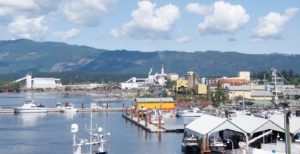 Looking over the 40-acre waterfront Somass property, Port Alberni’s Chief Administrative Officer Mike Fox sees an area that is key to shaping the city’s future. “I believe this project will be one of those defining moments where people will look back years from now and comment on how the community rallied and how we enabled the development of this key waterfront area,” he says. The land that once housed Western Forest Products Somass Division was purchased from the timber giant after the mill was shuttered in 2017 and the land sat vacant for more than a decade… While there was early discussion about trying to incorporate some of the structures used in the operation of the mill, geotechnical and structural analysis work is being done to see if any meet building standards. One of the buildings included in initial discussions burned down last summer.
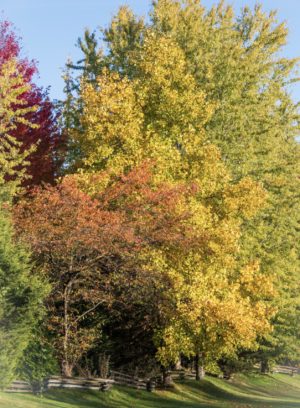 Whistler’s mayor and council advanced a pair of sweeping environmental bylaws that will introduce stricter rules for tree removal and land disturbance across the resort community. At its regular meeting, council gave first three readings to new environmental and tree protection bylaws, with 87 letters submitted in support and a wave of speakers appearing in council chambers to back the regulations. The bylaws were introduced to address long-standing gaps in how Whistler protects its natural areas, following community concern over clear-cut lots, unregulated vegetation removal and heightened wildfire risk. In addition to creating a new permit process for tree removal, the rules prohibit land clearing in sensitive areas and carry steep penalties for infractions—up to $50,000 for unauthorized tree-cutting.
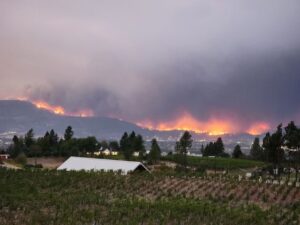 A wildfire risk reduction initiative led by the Lower Nicola Indian Band Development Corporation (LNIBDC) has significantly decreased wildfire hazards in the Steffens Estates area, just north of Merritt, while setting an example for Indigenous-led land stewardship in British Columbia. The multi-phase project, which began in 2022 and was completed in March 2024, combined strategic timber harvesting with intensive fuel mitigation efforts to create safer forest conditions near the Steffens Estates subdivision—land bordering private residences and Crown forests. With more work planned near Steffens Estates and around critical communications infrastructure on Iron Mountain, the project is part of a broader effort to proactively manage wildfire risk in British Columbia. B.C. Minister of Forests Ravi Parmar also praised the initiative: “Wildfire risk reduction is one of the most important ways we can protect people, homes, and vital infrastructure – especially as our province faces the growing impacts of climate change.”
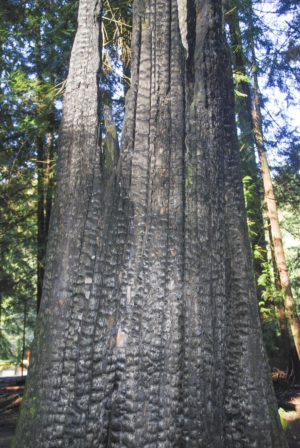 As wildfires continue to sweep across northern Saskatchewan, the toll is mounting. Not just in evacuations and lost homes, but long-term damage to the province’s forest industry. Carl Neggers, CEO of Forest Saskatchewan, says two of the largest fires, the Shoe Fire and the Ditch, have scorched 900,000 hectares of forest, an area roughly 40 times the size of Saskatoon. According to Neggers, “Saskatchewan’s forestry sector harvest around 23,000 hectares per year. That means this years wildfires have destroyed nearly 40 years of commercial timber.” “We support 12,000 jobs in this province through forestry” Neggers said in a June 9 interview on the Evan Bray Show. “If it impedes allocation or limits access to alternative timber zones, that puts our workforce and mills at risk.” The damage, he says, extends well beyond the logging industry. Forest in the commercial zone are also critical for recreation, traditional land use and Indigenous communities.
 They slither in silence, drape trees in silk and chew through lively leaves. This year, the forests of Ontario are full of a very distinctive, creepy crawler – the tent caterpillar. Eastern tent caterpillars are appearing in large numbers across the province marking what experts describe as an ‘outbreak year’ for the species. While noticeable, the current outbreak is not as severe as previous ones, according to Dan Rowlinson, forest health field coordinator with Ontario’s Ministry of Natural Resources. According to the Government of Ontario, periodic outbreaks occur roughly every 10 to 12 years and typically last three to six years in a particular areas. The tent caterpillar, often mistaken for their close relatives; the spongy moth, is known for having a similar looking larvae.
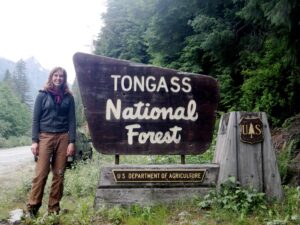 Members of the U.S. Senate last week proposed a major sale of federal land as part of the “Big, Beautiful Bill” proposed by Republicans to fund the U.S. government. If adopted, the proposed sale could be significant for Alaska, where the federal government owns and manages 61% of all land in the state… The concept would significantly increase the amount of logging required on federal land. The U.S. Forest Service would be required to significantly increase the amount of timber sold to loggers, and the Forest Service would be required to sign at least 40 long-term timber sales contracts involving national forests. Those kinds of long-term sales contracts contributed to the establishment of Southeast Alaska’s pulp mills, which relied on harvests from the Tongass National Forest. Most timber harvests from the Tongass currently are exported internationally without processing in the United States.
 The Oregon Department of Forestry and the USDA Forest Service will conduct low-level flights in June to monitor forest health. This survey, which began in the 1940s and paused only during the 2020 pandemic, is the longest continuous annual survey of its kind in the United States. Airborne researchers conduct the survey from fixed-wing aircraft, flying between 1,500 and 2,500 feet above ground level at speeds of 90 to 140 miles per hour. They follow a systematic grid pattern, four miles apart, to identify areas where trees are in distress. “Oregon has about 30 million acres of forest so flying in a grid pattern over it allows us to find problems even in remote areas hard to reach by vehicle or on foot,” said Christine Buhl, an entomologist with the Oregon Department of Forestry.
 Sitting in an old-growth spruce fir forest, Doug Smith says he can see first-hand the impact of reintroducing wolves on the larger ecosystem of Yellowstone National Park. Long before Yellowstone became the world’s first national park in 1872, wolves thrived in the U.S. Rocky Mountains. But early Yellowstone rangers killed off the last of the park’s wolves by 1926. Then, in 1995, the U.S. government reintroduced wolves to Idaho and Yellowstone using wolves captured in Canada. Smith helped bring them back to the park and was in charge of Yellowstone’s wolf project for nearly 30 years until he retired in 2022. “Yellowstone is a very different place, with and without wolves,” Smith said. “Wolves definitely have changed this landscape with the help of other predators,” he added. “It’s very different.” And one wolf, in particular, fascinated wolf watchers for longer than almost any other.
 The California Department of Forestry and Fire Protection (Cal Fire) has announced the allocation of nearly $72 million to support extensive land management projects aimed at restoring forest health and resilience across the state. Through its Forest Health Program, Cal Fire has distributed 12 grants to various local and regional partners working on projects spanning state, local, tribal, federal, and private lands. These initiatives are designed to tackle critical forest health issues, reduce wildfire risks, improve ecosystem resilience, and enhance carbon sequestration across California’s diverse landscapes. The forest health grant projects must focus on large-scale forestlands that involve multiple landowners and jurisdictions, with a minimum size of 800 acres. These projects are expected to be applied across expansive areas to achieve regional forest resilience, prioritizing initiatives that incorporate a mix of activities involving experienced partnerships.
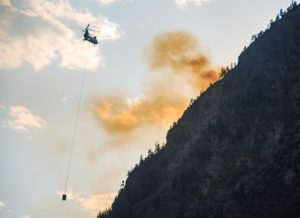 A late-in-the-session Hail Mary proposal to redirect the bulk of the state’s “kicker” tax rebate to fund statewide wildfire work would still kick some of the rebate back to most Oregonians. Under a forthcoming amendment to Senate Bill 1177 — still a placeholder bill for some mechanism to fund wildfire prevention and response work in the state — Sen. Jeff Golden, D-Ashland, proposes the Legislature move $1 billion of the expected $1.64 billion state tax rebate to an interest-bearing wildfire account. “The notion of walking into every session with $100 to $150 million waiting for us for wildfire, is really attractive, as opposed to starting from scratch every two years,” Golden said. Under his proposal, $1 billion from next year’s kicker would be put into an interest-bearing account that could, if earning 5% each year, send $100 million each biennium to the state for wildfire — covering about one-third of the total $300 million the state hopes to budget each biennium.
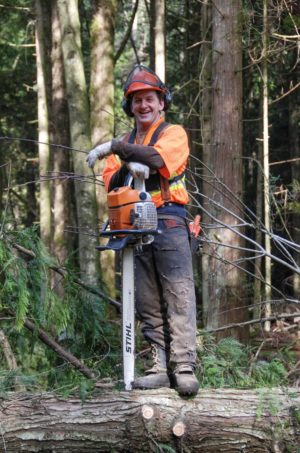 Forestry professionals are at the frontlines of California’s battle against the wildfire emergency in the West. Our forestlands play a vital role in sequestering carbon, maintaining biodiversity, and providing critical ecosystem services like clean air and water. However, they are increasingly threatened by wildfires, drought, insects and disease—all of which are exacerbated by a changing climate. To combat these threats, we need a robust and well-trained forestry workforce with the knowledge and skills necessary to manage our forests sustainably. The forestry workforce is critical in wildfire prevention and mitigation. With California experiencing record-breaking wildfire seasons in recent years, there has never been a more urgent need for skilled forestry professionals to confront this emergency. Beyond fire prevention, forestry professionals manage forest health and help create landscapes that are resilient to changing conditions.
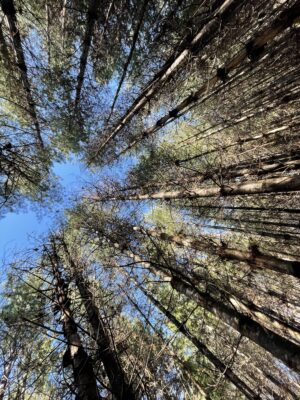 Tim Meyer’s interest in the outdoors goes back decades, beginning with hunting. In 1987, he bought 115 acres of land in Davis County in southern Iowa. It was on that land that his love of the outdoors — and his interest in developing a healthy forest — grew. Today, that property has grown to 384 acres, which includes 320 acres of forest. Last year, Meyer’s knowledge and care for trees was honored when he and his wife, Pam Goschke, were named Iowa’s Outstanding Tree Farmers by the Iowa Tree Farm Committee. The award honored Meyer’s work fostering woodlands across the state, but learning the ways of tending to woodlands wasn’t always easy. “I didn’t realize how cruel nature can be,” said Meyer, who lives in Iowa County. “If you leave a forest unmanaged, there’s really a war going on out there in the forest because, you know, bad trees outgrow good trees.”
 As Western North Carolina’s forests recover from Hurricane Helene, environmental groups say Pisgah and Nantahala face a one-two punch from the federal government, potentially setting the stage for further destruction. For as long as the country has had national forests, logging has been a part of their management, but those needs are also weighed against the need to maintain habitat, recreational opportunities, protect local water systems and defend wildlife. In the past few years, the U.S. Forest Service has opened up more land to logging and now with a recent executive order calling for increased timber production across the country, environmental nonprofits like Center for Biological Diversity, the Sierra Club, Defenders of Wildlife and Asheville-based MountainTrue are suing to prevent what they believe could severely damage habitat in a way that could take decades to recover from.
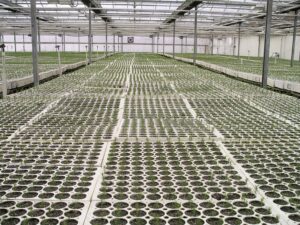 Seeds from two trees that survived the atomic bomb attack on Hiroshima at the end of World War Two are being grown at a Staffordshire university. The seeds were collected from an oriental plane tree in the grounds of the Tenma Elementary School, which was destroyed by the bombing, and a 200-year-old ginkgo tree growing in Shukkeien Garden. Both trees were situated less than a mile from the bomb site on 6 August 1945 and miraculously survived the bombing. They will now be cared for by experts at Keele University until they become tall and sturdy enough to be planted in the ground. The university says it is part of an international project to promote peace and hope. The seeds were sent to Keele through the Green Legacy Hiroshima initiative, which aims to distribute seeds and saplings from ‘survivor trees’ worldwide.
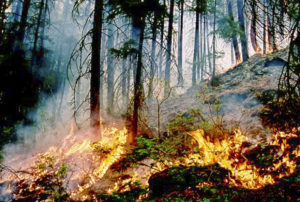 European funds to prevent forest fires have been poorly targeted and sometimes distributed in a hurry, according to a report from the EU’s spending watchdog. The number of forest fires in EU countries has increased dramatically over the last two decades as the climate crisis fuels ever bigger conflagrations. An area twice the size of Luxembourg has been consumed by flames in an average recent year, killing people, destroying homes and wildlife and sending megatonnes of planet-heating emissions into the air. The European court of auditors praised the decision to devote more money to preventing fires but said European-funded projects were not always spent where they could make the biggest difference. In Greece, authorities were using a map drawn up in 1980 to assess the risk of forest fires. In Portugal, one area selected as a priority for funds contained a zone that was underwater due to a recently built dam.
 Work on climate change has largely focused on preventing it from getting worse, but as a new RBC report points out, businesses are also starting to think more about potential spending on adaptation and preparation as the costs of disasters pile up. The report says that extreme weather and natural disaster costs already totalled US$368 billion last year, 14 per cent above the long-term average since 2000, and that this year could match or exceed the total. The trend is expected to get worse, because as the report notes there’s expected to be a 2.7 degree rise in average temperatures by 2100 based on current global policies and actions, while an optimistic scenario pegs the rise at 1.9 degrees. The costs stemming from rising temperatures are leading to more attention in boardrooms, with the report noting mentions of climate change on the rise in both U.S. and Asia.
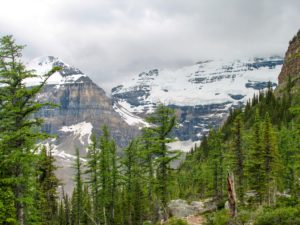 The Great Bear Rainforest on British Columbia’s North and Central Coast sequesters millions of tonnes of carbon dioxide across 6.4 million hectares of snow-capped mountains, ancient western red cedars, and Sitka spruce. It is considered one of the world’s largest carbon sinks—meaning it absorbs more carbon dioxide (CO2) than it releases. Under the Great Bear Carbon banner, a collection of coastal First Nations has entered the voluntary carbon offset market. The organization generates carbon offsets by preserving trees and ecosystems that naturally store CO2, with each carbon offset verifying the removal of one tonne of carbon from the atmosphere. Businesses, governments and individuals can purchase carbon offsets to compensate for their environmental impact. The Great Bear Carbon program helps raise revenue to support the local First Nations and their stewardship efforts.
 While biomass production and extraction in the European Union continue to grow, its long-term viability is at risk due to declining ecosystem conditions. A new
  The Phillipines sits on a goldmine of forest and carbon wealth. But an unclear and short-sighted property rights regime is choking its potential; existing rules are partially to be blamed.
 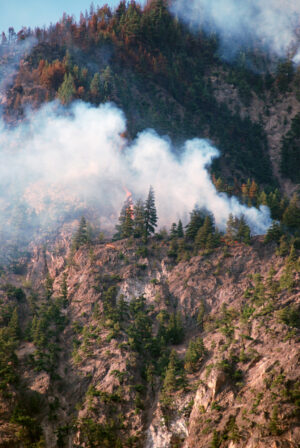 The wildfire on the northern edge of Squamish is classified as being held on Monday after a weekend of favourable weather conditions. BC Wildfire Service Fire Information Officer Sarah Budd says dozens of ground crews are working to get the Dryden Creek wildfire fully under control. “We also have three helicopters actioning this fire,” Budd told 1130 NewsRadio, adding the fire now sits at just under 60 hectares. An evacuation alert for properties near the fire, issued by the Squamish Fire Department, has been downsized. Because the Dryden Creek Fire is in difficult terrain, it could take crews another week or so to wrap things up. “This fire has been burning in sort of really difficult terrain,” explained Budd.
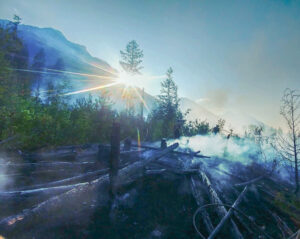 High winds fanned a wildfire threatening Squamish as some residents remained on evacuation alert and under a heavy blanket of smoke. On Wednesday evening, the B.C. Wildfire Service had mapped the Dryden Creek fire at about 54 hectares, or about a half-square kilometre, up from five hectares two days ago. The District of Squamish said daytime winds have contributed to the fire’s size, pushing it further north away from properties. “Existing containment lines on the southern flank are not currently threatened,” said the district in an update Wednesday evening. Aaron Foote, chief of Squamish Fire Rescue, said the fire is within 40 metres of some homes as debris from burning trees falls near properties, but added that the properties were not at risk. He said debris has been rolling down steep hillsides as local firefighters battle the blaze that’s looming over the community, next to the Sea to Sky Highway.
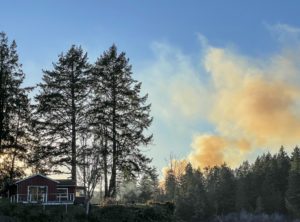 Hundreds of Manitoba First Nations are seeking refuge in Niagara Falls, hundreds of kilometres away from home, as fires continue to ravage the Prairies. Though thecentral province is expecting some precipitation across northern Manitoba, the provincial government said it will be insufficient to supress the wildfires, as the forecasted rain comes with a risk of lightning. The Canadian Red Cross registered thousands of evacuees—more than 14,300—having to flee their homes because of the active fires, a figure that includes roughly 2,400 households forced to leave First Nations lands. The Manitoba Keewainowi Okimaknak (MKO) said on May 28 that around 17,500 people across six First Nations communities were trying to get to safety. With the province declaring a national emergency, Manitoba Premier Wab Kinew announced 1,000 rooms have been made available to those who have been displaced from their homes after First Nations leaders asked for more space to be made available.