Coenen’s road to social-media success — she has close to six million followers across platforms — began during COVID-19 when she was holed up in Rossland working remotely as a video creator and editor. Coenen, who grew up in London, Ont., and moved to B.C. five years ago, sees the act of chopping wood as a sustainable passion… “Personally, I find getting outside has been my safe place,” said Coenen. “When I lived in the Interior, wood-chopping and burning with firewood was always a community thing,” said Coenen. “You’d go with your friends to where there was a tree that fell during a storm on your other friend’s property. You’d buck it up and put it in your friend’s tractor or truck, and then they would go drop it off at another friend’s house, and then you’d have a wood-chopping party.”
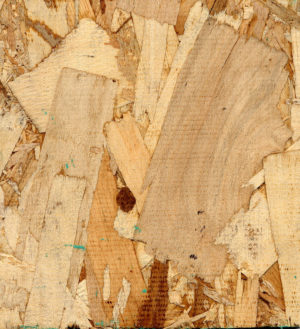 Tariffs could impact efforts to rebuild a former paper mill in Jay that was destroyed in an explosion almost five years ago. Godfrey Wood Products is looking to build a new factory on the property that would manufacture oriented strand board, a type of structural wood paneling. The company says that they have all of the permits they need, but they haven’t been able to move forward with construction because of uncertainty with tariffs. A lot of the equipment they need would come from Europe. “The stated goal of all of this tariff business is to, incentivize domestic manufacturing. Well, hell, I’m trying my level best to become a domestic manufacturer of OSB in Jay, Maine, and it seems like the public policy of the country is trying to thwart that,” said John Godfrey, owner of Godfrey Wood Products.
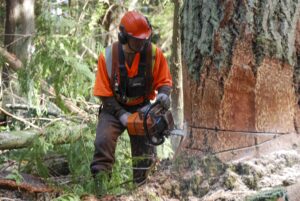 ʔakisq̓nuk First Nation is among communities that have taken a proactive approach to reducing risk ahead of B.C.’s next wildfire season, supported by Indigenous-owned resource management firm Nupqu and $365,000 from the Forest Enhancement Society of BC (FESBC). East of the Nation’s reserve and just north of Fairmont Hot Springs, work will continue through summer and into fall as the ʔakisq̓nuk community collaborates with foresters and the province to treat natural fire fuel and ensure a safer future for locals. It’s become a successful project, first proposed back in 2018. According to ʔakisq̓nuk Chief Donald Sam, fire suppression in these forests for more than a century has challenged and restricted the health of these ecosystems.
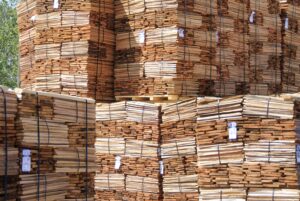 A decision by the Supreme Court of British Columbia to reject a $75-million compensation claim made by a logging company that once operated on Haida Gwaii could have reverberations across the province as the government continues its reconciliation efforts with First Nations… A prime example is the $84 million in compensation that the B.C. government agreed to pay MacMillan Bloedel in 1999 after the government created a number of new parks on Vancouver Island. In seeking $75 million in compensation for alleged losses of portions of its logging tenures on Haida Gwaii, however, Teal Cedar Products Ltd., a subsidiary of the Teal-Jones Group, tried to argue something entirely different: that changes to where it could log, how it could log and when it could log amounted to a form of expropriation for which the company should be compensated millions in taxpayer dollars.
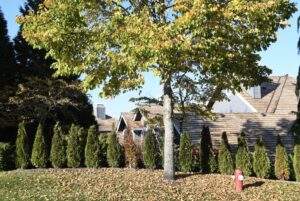 Proposed changes to Port Moody’s tree protection bylaw will adjust the requirements for developers and property owners to replace trees, afford greater protection to larger trees and establish a registry for significant landmark or legacy trees. In a report to be presented to council’s city initiatives and planning committee on Tuesday, April 15, Port Moody’s manager of policy planning, Mary De Paoli, said the new rules are consistent with council’s strategic goal to strengthen the city’s urban forest and enhance its natural assets. The revisions come more than five years after some councillors advocated for increased protection of Port Moody’s tree canopy. “It’s such and important part of our climate action plan,” said Coun. Amy Lubik. “It’s critical for keeping our community safe in these extreme climate events.”
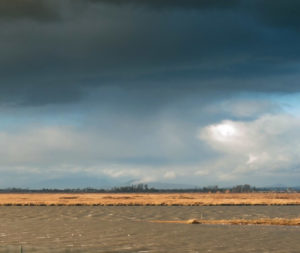 In the months after Hurricane Helene leveled thousands of acres in Pisgah National Forest, John Beaudet and other volunteers cleared downed trees from the Appalachian National Scenic Trail. Chopping them up and moving them aside was back-breaking work, but essential to ensuring safe passage for hikers. So he was dismayed to learn that a section of the trail in western North Carolina could remain closed for more than a year because the National Forest Service wants that timber left alone so logging companies can clear it… The fast-track approach to environmental review following Helene has many people concerned that the public isn’t being given any chance to inform the process. According to forest advocates who have been in communication with the Forest Service, the government reportedly plans to announce 15 salvage projects in western North Carolina. Volunteers, scientists, and hikers are asking for transparency in a process they say could prioritize profit over ecosystems.
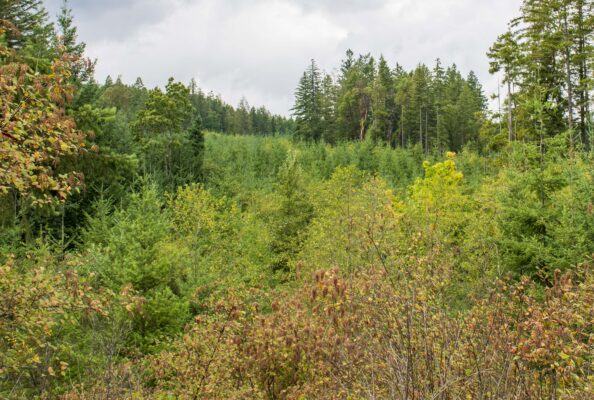 The Wisconsin Department of Natural Resources (DNR) is proud to join communities, organizations and individuals throughout the state in celebrating trees and forests during Forest Appreciation Week, which runs from April 21 to Arbor Day (April 25) and includes Earth Day (April 22). Forest Appreciation Week is a time to reflect on the importance of urban and rural forests. “Everyone has a role in ensuring that forests continue to serve a vital role in the ecological, cultural and economic health of our state, our local communities and our individual lives,” said Carmen Hardin, DNR Applied Forestry bureau director. 17 million acres of forests cover nearly half of Wisconsin and millions of urban trees provide many benefits; to maintain these many benefits, we need to be good stewards of the forest resources.
 On 10 April 2025, the Forest Stewardship Council (FSC) was notified of Svenska Cellulosa Aktiebolaget’s (SCA) intention to self-terminate its forest management certification in Sweden as of 1 June 2025, while keeping their forests in the Baltics certified and maintaining the Chain of Custody certification as well as membership in FSC Sweden. We regret this decision, but acknowledge SCA’s continued commitment to FSC, and its openness to finding a solution through engagement with FSC and other stakeholders. FSC, a membership-based organization, is founded on the belief that lasting solutions to complex problems require diverse voices at the table. Our unique three-chamber governance structure brings together environmental, social, and economic interests, ensuring that no single perspective dominates, and that consensus guides our decision making.
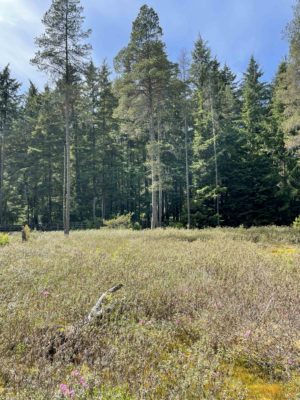 Like giant bones planted in the earth, clusters of tree trunks, stripped clean of bark, are appearing along the Chesapeake Bay on the United States’ mid-Atlantic coast. They are ghost forests: the haunting remains of what were once stands of cedar and pine. Since the late 19th century, an ever-widening swath of these trees have died along the shore. And they won’t be growing back. These arboreal graveyards are showing up in places where the land slopes gently into the ocean and where salty water increasingly encroaches. Along the United States’ east coast, in pockets of the west coast and elsewhere, saltier soils have killed hundreds of thousands of acres of trees, leaving behind woody skeletons typically surrounded by marsh.
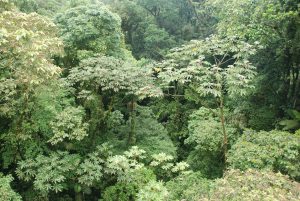 A new study led by researchers at Washington University in St. Louis and the Missouri Botanical Garden has uncovered a surprising layer of diversity in tropical forests. Not only are the forests populated by a dizzying number of tree species, but each of those species takes a different approach to chemistry, increasing the array of natural compounds that provide important functions for the plants — and potentially for humans. The research helped clarify the ecological and evolutionary forces that make tropical forests such hotbeds of biodiversity. While the team wasn’t specifically looking for compounds that could be useful for humans, their findings underscore the value of tropical forests as natural factories of plant chemicals that could have important uses in medicine and other fields, said Jonathan Myers, a professor of biology in Arts & Sciences at WashU. “Tropical plants produce a huge diversity of chemicals that have practical implications for human health.”
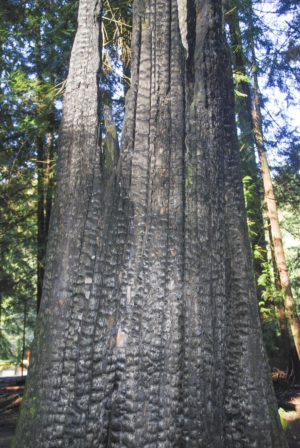 The scale of forest damage caused by recent wildfires in North Gyeongsang is nearly double the amount initially estimated by the Korea Forest Service, according to multiple local governments and authorities on Thursday. A joint investigation conducted by government agencies, including the Korea Forest Service, found that the wildfires that swept across five cities and counties in North Gyeongsang burned close to 90,000 hectares (222,395 acres) of forest. This is a significant increase from the 45,157 hectares that the Korea Forest Service previously announced as the affected area after fire suppression efforts concluded. The actual damage is twice the originally reported figure and nearly four times greater than the forest damage caused by the East Coast wildfires in 2000, which had been considered the worst in the country’s history until the recent disaster.