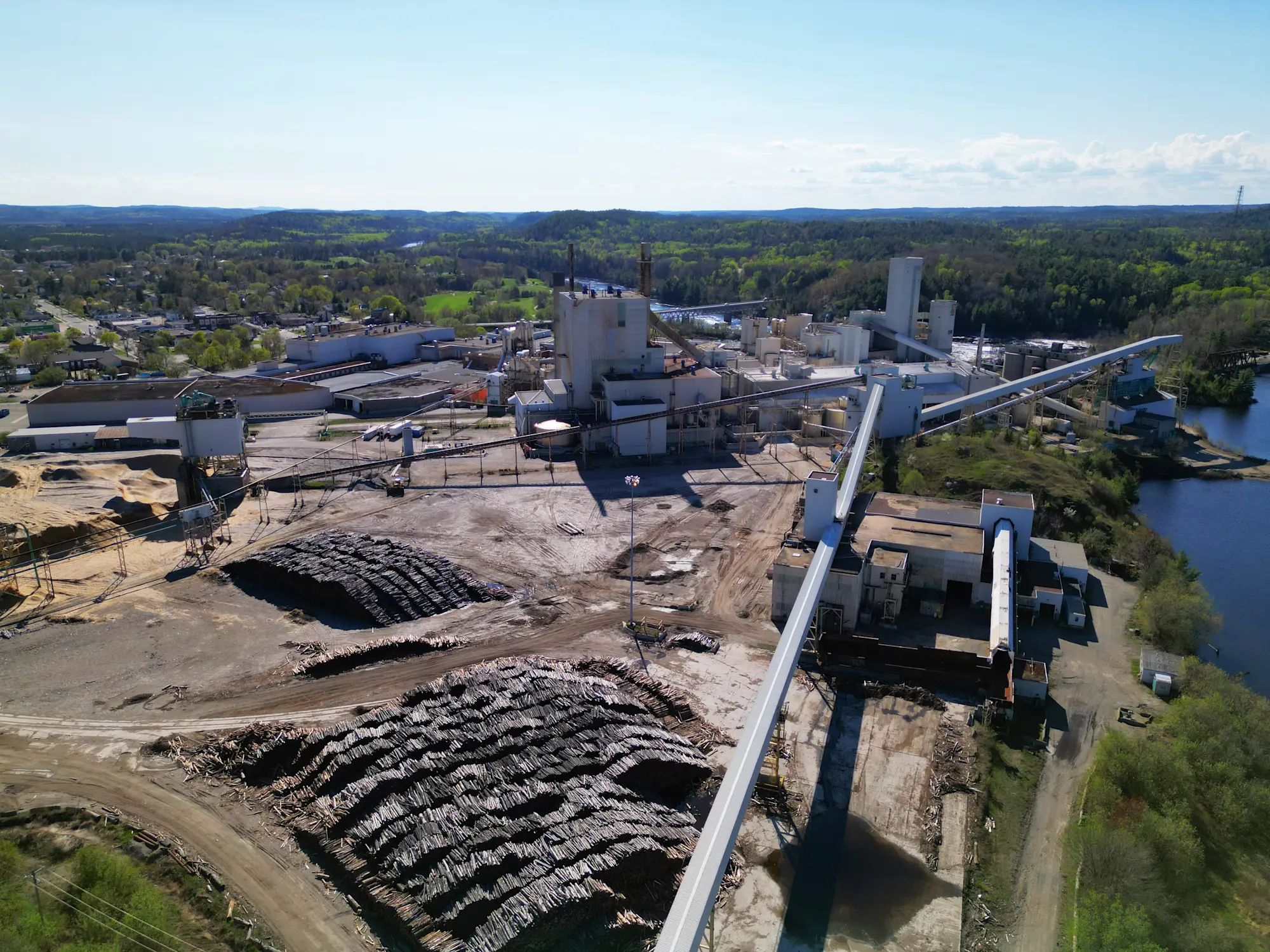
 When a community’s major employer falters, the shock waves don’t stop at the plant gate. In small towns and regions across the country, mass layoffs and closures also affect contractors and suppliers, local services, municipal budgets and housing markets. The sector and location change, but the pattern is predictable. In Cape Breton, for example, industrial decline has contributed to out-migration. …The closure of a cornerstone pulp-and-paper mill in Chandler, Que., has been linked to mental health and family distress. …In Houston, B.C., the closure of the Canfor sawmill in 2023 left the district with a $1.2-million budget shortfall this year. Canada’s support systems focus primarily on the immediate needs of directly affected workers and employers, but communities themselves also need shoring up when workforce disruption suddenly alters the landscape. …Finding better ways to support communities susceptible to workforce disruption is an increasingly pressing policy challenge.
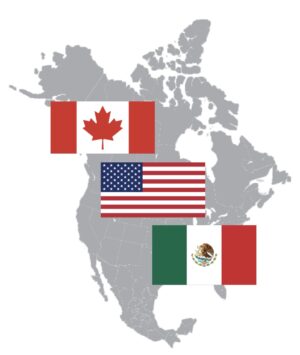 WASHINGTON — Every day more than $4 billion worth of goods cross the United States’ borders with Canada and Mexico. …Much of this bustling cross-border commerce is duty-free, thanks to the US-Mexico-Canada Agreement, or USMCA, that President Trump negotiated with America’s northern and southern neighbors during his first term. But the future of the USMCA , which took effect July 1, 2020, is cloudy as the three countries begin what could be a tempestuous attempt to renew the pact this year. The United States is demanding changes to the treaty. …Trump also suggested last fall that the United States could negotiate separate deals with Canada and Mexico, ending the three-country North American bloc that previous administrations saw as crucial to competing economically with China and the European Union. The talks kick off Monday between US and Mexican trade officials. …At stake is $1.6 trillion worth of annual trade in goods.
 Richard Eaton, senior judge on the US Court of International Trade, has extended the US administration’s deadline for refunding about US$166 billion in tariffs. Eaton had orginally ordered US Customs and Border Protection to begin the refunding process at the start of the month after the US Supreme Court struck down global tariffs set by president Trump. …The administration has been inundated with lawsuits from companies like Costco, FedEx, and Pandora Jewelry – all looking to get their money back since Eaton’s order meant that everyone who had paid tariffs was entitled to a refund. Barnes, Richardson & Colburn partner Larry Friedman said that the order was one he had hoped for, “but never expected to see.” A US Customs and Border Protection official indicated in a legal filing that its system could not handle the volume of work.
Related coverage:
- WoodWorking Network: Court provides hope for speedy recovery of tariff refund
- The National Law Review: What every company should know about the ITC order
- By Thomson Hine LLP: CIT Suspends Earlier Order Directing IEEPA Tariff Refunds
 The Honourable Patty Hajdu, Minister of Jobs and Families and Minister responsible for the Federal Economic Development Agency for Northern Ontario announced an investment of up to $94.5 million over five years through the Sectoral Workforce Solutions Program (SWSP). This investment will produce consistent, foundational labour market information (LMI) across key sectors, providing the information needed to help better coordinate the supply and demand of skilled labour while supporting a stronger economy. Through this initiative, 14 organizations will develop a range of informational products and employer toolkits to help workers and businesses adapt to current labour market challenges. The investment will support organizations in key sectors, including construction, trucking, advanced manufacturing, aerospace, tourism, forestry, agriculture, mining, energy, information and communications technology, the environment, and the bio-economy.

 Northern BC communities know better than most how closely their fortunes are tied to major industry. Mills, mines and power generation facilities are more than workplaces — they’re economic anchors… When an industrial business shuts down, it stops paying most of its share of property taxes. This means …the rest of their community must now share more of the tax burden. That’s why a push to revise or eliminate the closure allowance in the BC Assessment Act deserves strong backing from municipalities across northern BC —
  Alberta — Are you passionate about forestry education and inspiring the next generation? Looking for work that’s anything but a desk job — flexible, dynamic, and always evolving. You just found your next opportunity. Work Wild, a program within the Alberta Forest Products Association, reaches out to people who are making one of the most important choices in their lives — finding a career they love! We are looking for an engaging, people-orientated individual to join our Work Wild team in the role of Southern Alberta Forestry Educator. Reporting to the Program Manager, the Forestry Educator implements Work Wild program objectives, which include educating Albertans on forest sector practices as well as career opportunities in Alberta’s forest industry. The Forestry Educator will spend much of their time traveling to communities throughout southern Alberta engaging middle and high school students, educators, and job seekers about the variety of rewarding opportunities in Alberta’s forest sector.
 NANAIMO, BC — Snuneymuxw First Nation is calling for a temporary closure and environmental investigation of a hazardous waste services company following a January oil spill on Duke Point near Nanaimo, BC. City of Nanaimo staff were informed of oily residue near a storm drain close to the Duke Point Ferry Terminal on Jan. 5. Staff said the spill originated from a business in the nearby industrial park, and a BC Ministry of Environment spokesperson said there was an estimated 350 to 1,600 litres of oil sheen on the water between Duke Point and Mudge Island. …The First Nation, along with a Feb. 19 statement from the Ministry of Environment, said the industrial park business Environmental 360 Solutions was responsible for the spill. …Snuneymuxw Chief Michael Wyse Feb. 6 urged governments to take action to address polluting activities in their territory.b…Western Forest Products said the company has implemented multiple measures to manage “wood and wood particle water discharge.”
.png)
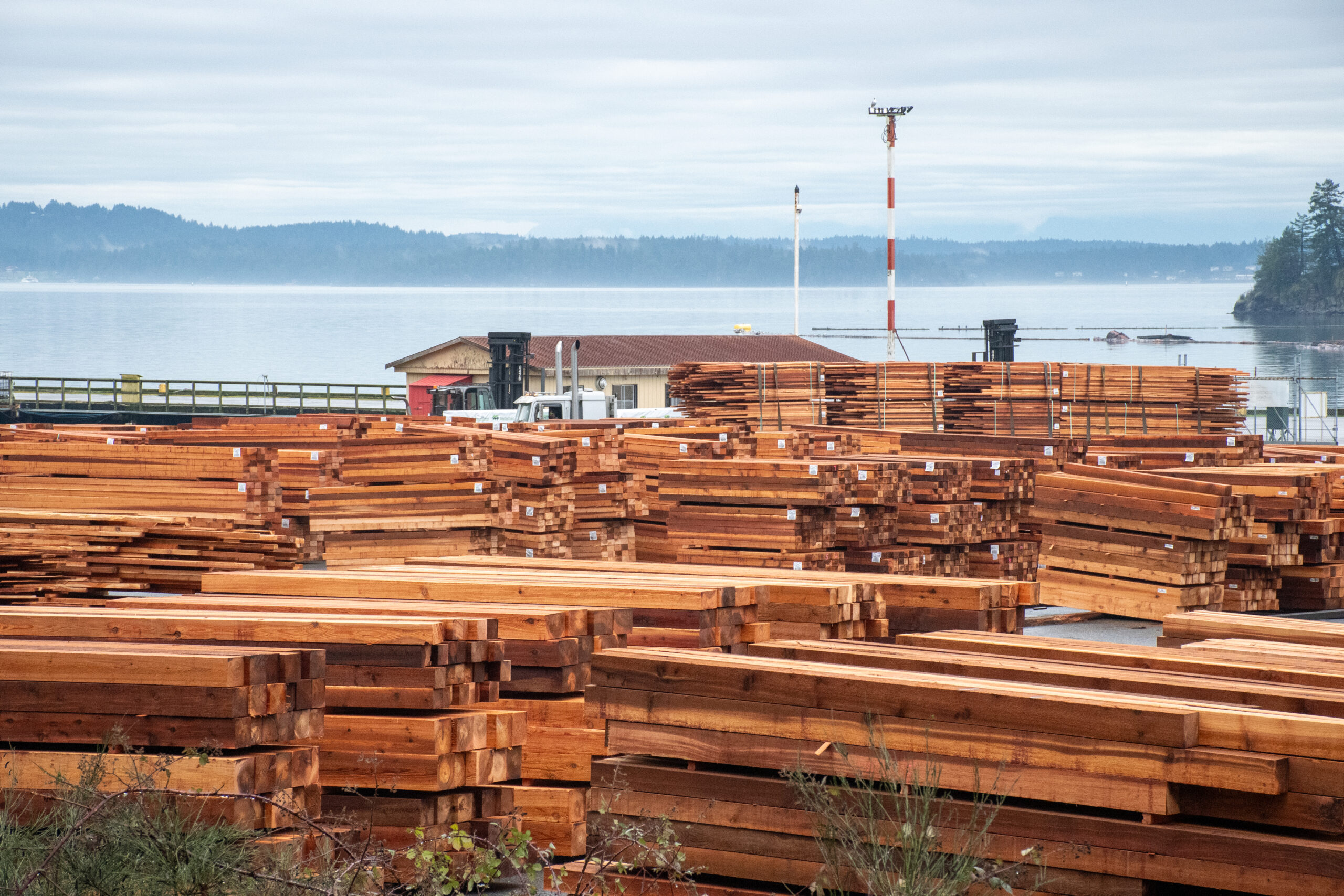 Federal help is being called on to assist laid-off workers at the curtailed Chemainus sawmill to access Employment Insurance benefits. Brian Butler, president of United Steelworkers Local 1-1937, which represents workers at the mill, Jennifer Foster, senior vice president of human resources at Western Forest Products, which owns the mill, and North Cowichan Mayor Rob Douglas recently sent a letter to Minister of Jobs and Families Patty Hajdu on the issue. “We write to you as representatives of labour, industry, and local government to request urgent federal intervention to address barriers that prevent Chemainus sawmill workers from accessing the full range of Employment Insurance supports available to them,” the letter said. …They pointed said that the workers are not facing a short-term layoff. “They have been formally advised that there will be no return to work this year, yet many are now being told their Employment Insurance benefits will soon expire,” their letter said.

 STURGEON COUNTY, AB — Corey Hogan, Parliamentary Secretary to the Minister of Energy and Natural Resources, announced a federal investment of over $4.4 million for ten projects that will strengthen the forest sector in Alberta, Manitoba and Saskatchewan. These projects will advance manufacturing and processing, diversify Canada’s forest products and their export markets and support First Nation and Métis groups and forestry businesses. Among the projects funded, Western Archrib Enterprises Ltd. is receiving $2.3 million through the Investments in Forest Industry Transformation program to commission a 160,000-square-foot mass timber plant in Sturgeon County, Alberta. The facility represents a total capital investment of over $80 million and will transform Western Archrib’s operations to a fully automated manufacturing line, increasing production capacity from 12 million to 30–35 million board feet annually. This investment will strengthen Alberta’s supply chain for advanced wood-based building material, such as mass timber panels, which directly support the construction industry and housing supply.


 OTTAWA — The federal government is being accused of creating an uneven playing field in Canada’s shipping industry, and critics claim the Prime Minister’s Office is unwilling to rectify it. Later this spring, Ottawa is expected to launch a federal subsidy program to help reduce the cost of shipping lumber and steel between provinces by 50%. But the subsidies — promised by Carney back in November — will only go to rail companies. “We support this initiative to give a boost to those Canadian industries. But what we were asking was for parity because many destinations and commodities, only maritime transport can handle that,” said Etienne Duchesne, business development project manager at Desgagnés, a maritime shipping company based in Quebec. …In the House of Commons last week, Bloc Québécois MP Claude DeBellefeuille said the government was creating “unfair competition between rail transportation and marine transportation,” putting jobs and supply chains at risk.
 If you want to understand why the American starter home seems to have gone extinct, don’t look at greedy developers, rapacious investors or discriminating banks. Look at the government policies that make building these homes all but impossible. New research puts hard numbers on one part of the problem — and they’re staggering. …Federal, state and local governments have accelerated this decline by increasing construction costs through several channels. …In some cities, such as Los Angeles, the time it takes to get building permits amounts to almost half the construction time. …Land in many localities is made artificially expensive by regulations that dictate home sizes, yard sizes, building setbacks, parking and more. …Federal policies pile on more costs. …Canadian lumber, for example, is roughly 80% of all US imports and is currently subject to “trade remedy” taxes of more than 25%. Similar duties cover a wide range of products that US homebuilders use every day.

 WASHINGTON — The Senate passed a bill Thursday aimed at boosting the supply of housing and bringing down prices, marking a rare bipartisan breakthrough on a major issue. The 21st Century ROAD to Housing Act, written by Sens. Tim Scott, R-S.C., and Elizabeth Warren, D-Mass., won 89 votes. Ten senators voted against it. Scott is the chairman of the Banking, Housing, and Urban Affairs Committee, and Warren is the ranking member. The
  After the President’s defeat in the Supreme Court, more tariffs, with different legal foundations, are underway. …Here is a primer: …Under

 Portland based Hampton Lumber, one of the nation’s largest lumber manufacturers, confirmed on Thursday that it has parted ways with CEO Randy Schillinger. Steve Zika, vice chair of the Hampton board and its chief executive for 20 years before Schillinger was named to the position in June 2023 has served in an interim capacity since early December, the company said in an emailed statement. [A Portland Business Journal subscription is required to access this full story]
 Ukraine’s state forestry sector has reported its strongest financial performance to date. Despite operating during wartime conditions, the industry delivered a significant increase in profitability last year. The results were announced during the annual public report presented by Viktor Smal, head of the State Forest Resources Agency of Ukraine. According to the report, the state enterprise Forests of Ukraine generated net profits of UAH 6.9 billion, equivalent to approximately US$167 million. The result represents a 2.76-fold increase compared with 2024. The achievement is considered a milestone for the country’s forestry management system. Industry leaders attribute the growth largely to procurement reforms introduced after 2020. These reforms were designed to improve transparency and reduce financial leakage within the sector. …Profitability within the forestry industry also improved considerably. The sector recorded an overall profitability rate of 22.8%. This figure increased by 12.3% points compared with earlier results.
 The outsized impact that oil prices have on the global economy means higher fuel and energy prices are all but guaranteed for many countries, not just those in the conflict region. …In the forest products sector, softwood lumber trade is one of the most directly exposed segments. Europe accounts for about one-third of the global softwood supply. Sweden and Finland are among Europe’s top exporters, along with Germany and Austria. …Lumber shipments out of Europe rely heavily on shipping routes through the Mediterranean, the Suez Canal, and the Gulf. Shipping costs are expected to escalate as fuel prices and risk premiums rise. Spikes in freight and insurance, along with rising energy costs in production and transport, could quickly start to make Nordic lumber less competitive while tightening margins. …Prolonged disruption in that region could force Nordic lumber producers to redirect volumes to Europe, North Africa, and Asia, causing price pressures in those markets.