 WASHINGTON — A binational NAFTA panel has again confirmed what the U.S. industry has known for decades: the Canadian softwood lumber industry receives numerous unfair subsidies from the Canadian government, and duties to offset those subsidies are appropriate under U.S. law. “The Coalition appreciates the significant work over nearly a decade by the Department of Commerce and the NAFTA Panel to render thoughtful, detailed decisions regarding all of the ways that Canada provides unfair financial support to its lumber industry,” stated Zoltan van Heyningen of the U.S. Lumber Coalition. …”As the Canadian government continues to double down on unfair subsidies to the Canadian industry, the Coalition will double down on its efforts to hold that industry accountable so that U.S. lumber producers, their workers, and their communities can continue to invest in making more American lumber to build more American homes,” added van Heyningen.
Editor’s Note: Global Affairs Canada confirms that the panel upheld Commerce’s revised countervailing duty determination. However, the panel’s role was to assess whether U.S. trade law was properly applied, not to independently determine whether Canadian lumber is unfairly subsidized.

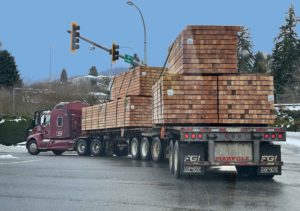 CALGARY — Canada’s lumber and steel industries are warning that expanding overseas sales cannot make up for losing access to the American market as tariffs threaten mills, jobs and manufacturing output. Industry representatives told the Senate national finance committee that Canada faces significant limits in shifting exports to other countries, Blacklock’s Reporter reported. Derek Nighbor, CEO of the Forest Products Association of Canada, said Canadian lumber and wood products sales to the US total about $14 billion annually. “It’s not a matter of just putting sticks on a boat and sending them somewhere else,” Nighbor testified. While producers see potential in Japan, China, South Korea and the European Union, Nighbor cautioned those markets cannot absorb enough Canadian products to replace American demand. … Further growth requires work on building codes, relationships with governments and local businesses, and training builders to use Canadian wood products.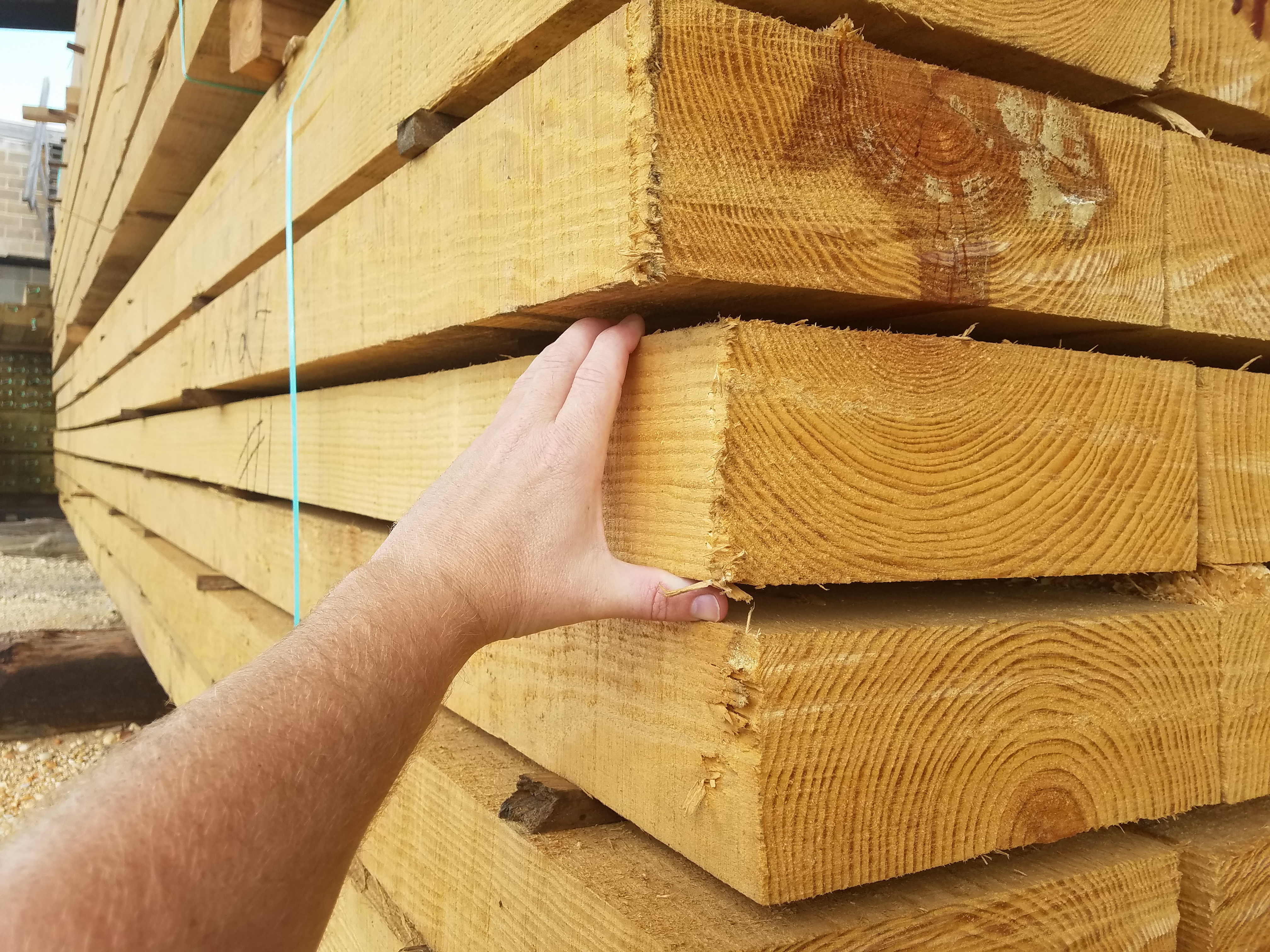
 BRUSSELS — The EU and Canada will use a landmark summit next month to announce an expansive new partnership, ranging from breaking down digital trade barriers to joint support for Ukraine and investing in fighting wildfires. “The world is rapidly changing with unprecedented geopolitical challenges as well as challenges across trade, energy, technology, climate, and resources,” reads a joint statement. …The EU and Canada have been seeking to shore up their strategic ties as they grapple with the fallout from U.S. President Donald Trump’s trade war. …The two sides plan to say at their summit in Montreal that they want to speed up investment in critical mineral projects, strengthen supply chains, and improve supply security, including by stockpiling critical resources to mitigate “market fluctuations and geopolitical impacts.” …Ottawa and Brussels will also announce the joint purchase of 50 De Havilland water bombers, to be ready for use in Canada and Europe in 2030 to fight wildfires.
 Plaintiffs led by the Canadian government will appeal the Court of International Trade’s July 27 ruling that upheld the Commerce Department’s use of a differential pricing analysis to detect masked dumping in a case challenging the 2021 administrative review of the antidumping duty order on Canadian softwood lumber, according to a Sept. 23
  President Trump’s ban on nearly $1 billion worth of Canadian goods went into effect Tuesday, marking the latest salvo in a trade war between the U.S. and its longtime ally to the north. The restrictions include Canadian dairy products, motor vehicles and many alcoholic beverages. Trump, in signing the executive orders to ban the goods, cited Canadian “discrimination” against the American equivalents. Jacob Jensen, as the American Action Forum, said the limits cover $967 million worth of Canadian imports, based on 2025 data. The president last month slapped 50 percent tariffs on $27.6 billion worth of Canadian products, levies that Canadian Prime Minister Mark Carney’s government matched “dollar for dollar. …Carney, meanwhile, has used the trade dispute with Trump to shift his country’s cooperative focus elsewhere.


 In an early loss for the Carney government, a federal court refused to strike down a climate lawsuit brought by Canadian youth. Justice Patrick Gleeson sided with the young people and the environmental advocates who are asking the court to hear what could be a landmark case on the federal government’s climate accountability legislation. The ruling means the environmentalists will likely get their day in court where both they and the government will get an opportunity to argue whether the Carney government must update its climate plan, formally known as the Canadian Net-Zero Emissions Accountability Act. Back in June, three young people and two environmental groups launched a lawsuit asking the Federal Court to order Ottawa to amend its climate plan. Since the plan was first launched in 2022, the Liberal government under Prime Minister Mark Carney has eliminated key measures needed for Canada to achieve the 2030 target.
 WAHSINGTON — I read a poll earlier this month showing that 41% of Canadians see the US as “an enemy country.” The poll was conducted right after President Trump slapped 50% tariffs on $27.6 billion of Canadian exports to the US. …I have no illusions that U.S.-Canada relations were idyllic before Trump took office. …But the recent turn in US-Canada relations feels different. Canada’s willingness to antagonize its far larger trading partner signals how much Canadians now fear that their economic integration with the United States was a major strategic mistake. Can the economic relationship between the two countries be repaired? …A conversation with Rohinton Medhora at McGill University… left me with three take aways. 1. Canadians are feeling frustration, anger, and trepidation. …2. Carney sees no political or strategic alternative to retaliating against the Trump tariffs. …3. Washington and Ottawa may find an off-ramp, but Canada will continue to reduce its vulnerability to US economic pressure.
 The Supreme Court of Canada is set to hear an appeal involving CN Rail and Alberta Pacific Forest Industries that could clarify the courts’ authority to review decisions of the Canadian Transportation Agency. The case centres on whether factual findings by the agency can be challenged through judicial review, despite statutory limits on appeals.
 The announcement that BC’s Howe Sound pulp and paper operation will remain open after securing government support has reignited questions about whether a similar intervention could have been pursued for Canfor’s Northwood pulp mill in Prince George. Domtar’s future has changed dramatically following discussions involving government officials, the company and union representatives. According to Unifor’s Gavin McGarrigle, government assistance played a critical role. …For critics of the provincial government’s response to the Northwood closure, the contrasting outcomes raise difficult questions. …McGarrigle argues the key difference lies in the willingness of the parties involved to engage. …Canfor disputes the notion that support for Northwood was not pursued. …“Canfor has been advocating for years to address the critical shortfall of economic fibre needed to sustain our manufacturing facilities. …With respect to our pulp operations in the region, we are intensely focused on ensuring a strong future for Intercon and Specialty Paper operations in Prince George.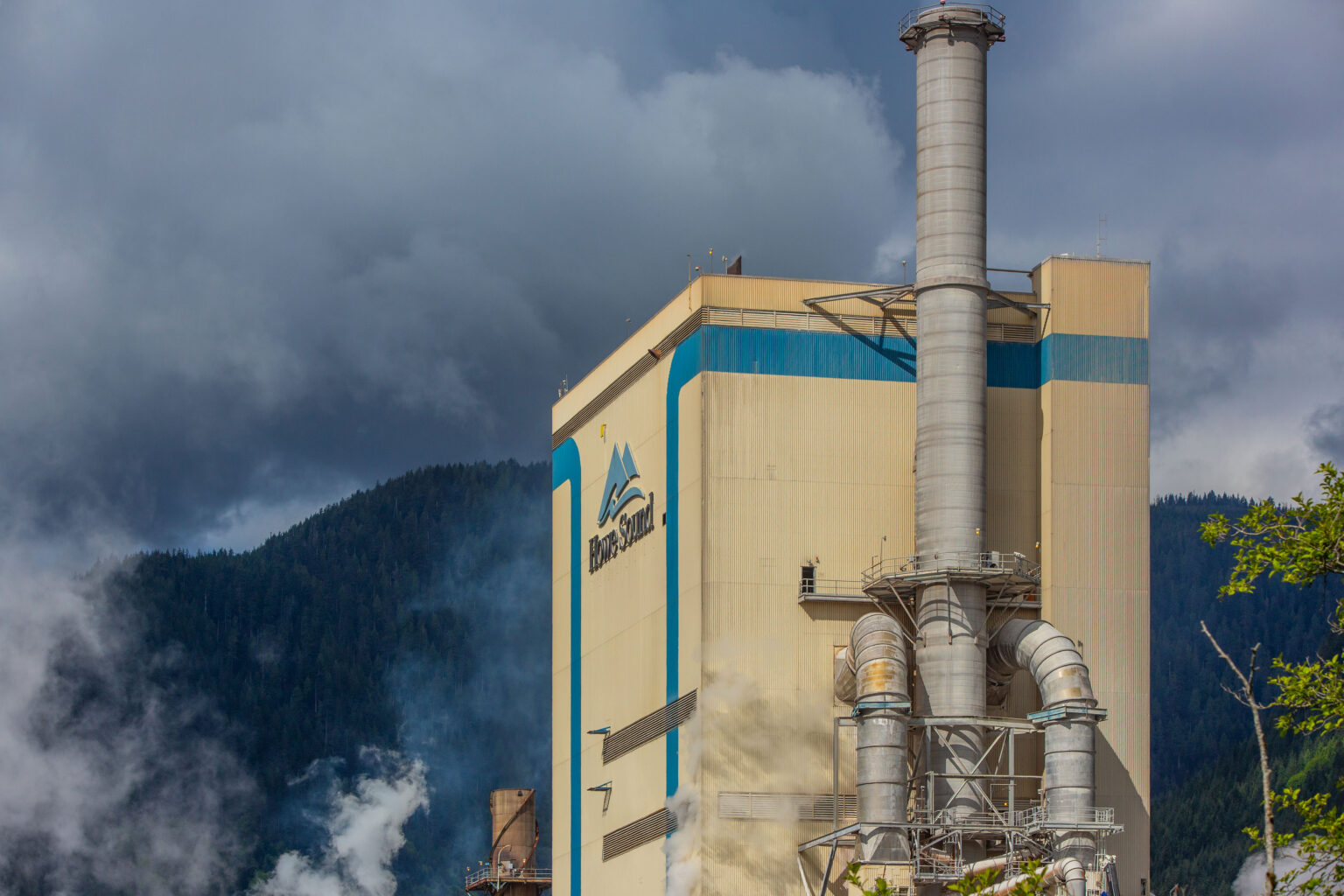



 The British Columbia Supreme Court has refused to approve a proposed reverse vesting transaction (RVO) for Teal-Jones Group that would have wiped out long-standing fibre supply agreements tied to TFL 46, finding that TimberWest and Domtar held proprietary interests that should not be extinguished. The Monitor argued that the sale of the Surrey Mill and TFL 46 to Gillfor Manufacturing was the best available transaction and that removing the agreements was necessary to preserve the business, but the Court found no sufficient evidence that the agreements were uneconomic or would prevent Gillfor from operating the assets. With the agreements priced at fair market value and their termination expected to cause significant prejudice to TimberWest and Domtar, the Court declined to approve the transaction unless they remained in place. …The prejudice to Domtar if the supply agreements were extinguished would be significant.


 In the face of ongoing trade disputes, including those around softwood lumber, the Government of Canada is taking decisive action to support the forest sector. We are committed to protecting workers and jobs, and giving Canadian companies the stability they need to weather short-term shocks and retool for a stronger, more diversified future. In support of that commitment, the Honourable François-Philippe Champagne, Minister of Finance and National Revenue, today highlighted a $30-million loan to Conifex Timber Inc. through the Large Enterprise Tariff Loan (LETL) facility. The funding provided through LETL will help the company adapt to current conditions, support its workers, and build a more secure future for the community of Mackenzie, British Columbia. This support comes as the Government of Canada enhances the LETL facility to better meet the needs of Canadian employers facing continued trade uncertainty.
 A comprehensive support package will fill the gap and help BC businesses affected by US tariffs produce and sell more of their products locally as well as overseas. … “President Trump’s unfair trade war is an attack on BC workers, businesses and communities – especially in our forest sector,” said Premier David Eby. “BThat’s why we’re enhancing proven programs to help BC businesses find new customers, create jobs and build a stronger, more resilient and self-reliant economy.” The support package provides new funding to existing programs:
 CLINTON, Ontario


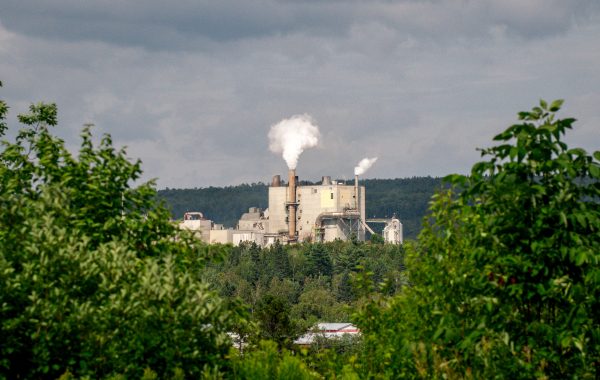


 THUNDER BAY — The Ontario government is investing more than $2.5 million to advance major upgrades at Thunder Bay Pulp and Paper, as well as two additional projects in Northwestern Ontario that will increase the industry’s use of mill by-products and underused forest biomass. The upgrades will help increase the forest sector’s production and capacity, protecting over 700 direct jobs and more than 3,350 indirect jobs. This Forest Biomass Program funding is part of the government’s plan to protect Ontario forestry workers. …Ontario is investing more than $2.4 million to plan boiler and chemical plant upgrades at Thunder Bay Pulp and Paper, a critical anchor mill in Northwestern Ontario’s forest economy. …AUX Energy is receiving $92,500 to develop plans for a biomass-powered generator project that will increase energy security in Fort Frances. …Weyerhaeuser is receiving $32,650 for a study of production line upgrades to reduce costs while improving efficiency and product quality.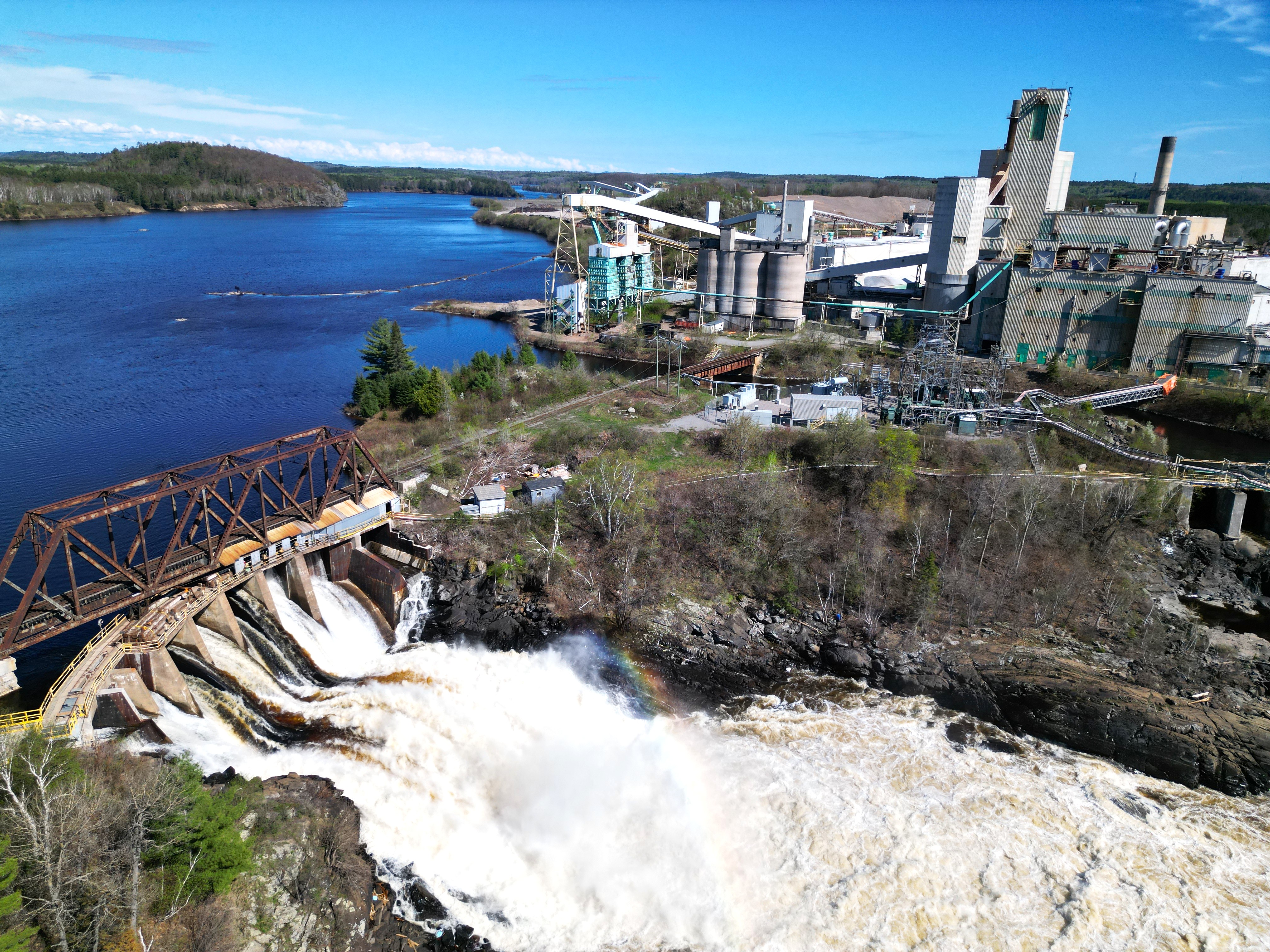
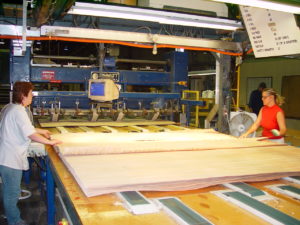 The US hardwood industry is still working through a deep capacity contraction. At the 2026 National Hardwood Lumber Association convention, Hardwood Review said it had identified 151 publicly announced sawmill and yard closures since the start of 2023, while other presentations highlighted a larger role for log exports and NHLA’s longer-term efforts to develop new structural and value-added markets for hardwoods. Highlights include:

 President Trump’s near-global tariff policy is being challenged in federal court — again. A panel of three judges at the US Court of International Trade heard arguments from a group of small businesses and Democratic-led states who say Trump’s sweeping “Section 301” tariffs overstep the law. It’s the third time in less than two years that the courts have been asked to intervene against the president’s attempt to impose sweeping tariffs on the vast majority of U.S. imports. The latest tariffs put 10% or 12.5% rates on goods from 86 countries, covering 99.4% of US imports. The Trump administration said they were imposed in response to the targeted countries failing to effectively enforce bans on the trade of goods produced using forced labor practices. But an attorney for the challengers said at the start of Wednesday’s hearing that a “constellation of factors” show the government’s justification was a “pretext” in pursuit of reviving Trump’s worldwide tariff regime.
 Imported hardwood timber and lumber could be the next wood products to face a US national security tariff, with the Commerce Department’s one-year deadline to report back to the White House on those imports running out at the end of today in Washington. That is according to the proclamation President Donald Trump signed a year ago this week, which requested the update so he could decide whether the phased import duty that Commerce recommended in July last year is warranted. “By October 1, 2026, the Secretary shall provide the President with an update on imports of hardwood timber and lumber, their markets, and the domestic industry,” the proclamation instructs.” …Trump put off the planned increases to 30 and 50 per cent by a year at the end of last year, with the amended proclamation citing “productive negotiations of agreements with multiple countries” on wood products.
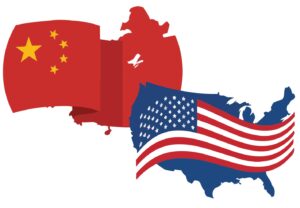 The US and China reached new trade and investment arrangements during President Xi Jinping’s September 2026 state visit to Washington, including the relaxation of tariffs affecting lumber and other wood products exported from the US to China. …According to a September 25, 2026


 The USDA Agricultural Marketing Service published a final rule in the
  US Customs and Border Protection agents spent four days investigating Auckland timber processor Hermpac after a complaint from the US Lumber Coalition. The finding was uncomfortable. A wholesaler on America’s east coast had been routing Canadian-origin wood through New Zealand for processing before shipping it into the US. …The purpose, according to the investigation, was to dodge the punishing duties the US imposes on Canadian softwood lumber. This is the first confirmed case of a New Zealand processor being directly investigated by US Customs in connection with the Trump-era tariff regime. …The fight is no longer just about headline rates. It is now about who inspects your paperwork, and whether the value you add in New Zealand counts. …The practical takeaway is unglamorous but urgent. Review and document your origin classifications now, before a competitor files a complaint, not after Customs agents turn up.





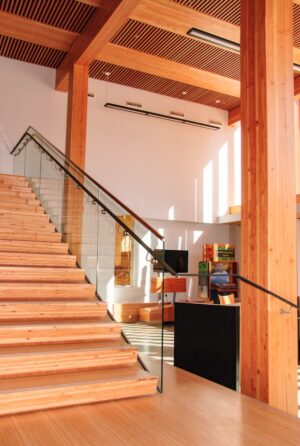 Walmart has settled its case over more than US$80 million in claims against Structurlam, the Canadian mass timber manufacturer it hired to supply its new head office. That is according to the US Bankruptcy Court for the District of Delaware, which approved the settlement with the trust representing Structurlam’s creditors in July and closed the case in August. … According to the trust, Walmart first brought forward deadlines for one building in July 2022, then redesigned six of the eight main buildings a month later. The trust said Walmart also stopped paying for accepted timber and refused further deliveries over a glulam fault … The retailer ended the contract in January 2023, saying Structurlam had failed to deliver fully and on time and had not fixed the problems within the time allowed. … No objections to the settlement were lodged before the court approved it.


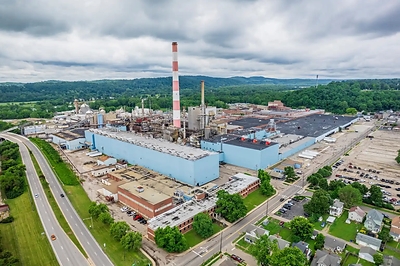
 Washington, D.C. — A steep decline in hardwood exports, the growing popularity of man-made wood alternatives and surging fuel prices have been battering the American hardwood lumber industry. In Kentucky, 78 wood industry facilities, mostly sawmills, have closed in the last four years, according to the University of Kentucky Department of Forestry and Natural Resources. The U.S. relationship with China has been a major source of the industry’s problems and a focus of proposals to address them. China once bought about half of U.S. hardwood exports, according to the Hardwood Federation. Then, eight years ago, President Donald Trump slapped tariffs on imports from China, and China retaliated with tariffs on hardwood and other American imports. The reciprocal tariffs were eventually rolled back, but China’s purchases of American hardwood never returned to their previous levels. …advocates are pushing for lawmakers to pass legislation for $12 billion in agriculture relief, including $200 million for the hardwood industry.
 The United States and the state of North Carolina have filed a




 Timber, furniture, and textile workers will have a new weapon against wood products shut out of the United States and Canada, after Federal Parliament passed laws handing a renamed Anti-Dumping Commission the job of investigating import surges. That is according to the Timber, Furnishing and Textiles Union, which said on Thursday that the vote caps a campaign of more than a decade. “When the US, Canada, the EU, China and other major economies shut products out of their markets, those goods don’t disappear,” said Leo Skourdoumbis, the union’s acting national secretary. …Canada placed a provisional 25% safeguard surtax on certain imported wood cabinets and vanities from 31 July, the example the union holds up for Australia. …The Albanese Government will rename the Anti-Dumping Commission the Australian Trade Remedies Commission under the Customs Amendment Bill 2026. Dumping, subsidy, and safeguard cases will go before that one body, which reports through Industry Minister Tim Ayres.