Canadian political leaders say “nothing is off the table” when it comes to responding to potential 25% tariffs from the US, days before they could come into force. But strains are showing in “Team Canada” when it comes to whether energy supply should be a tool in a possible tariff war with the US. President-elect Donald Trump has threatened to immediately impose levies on Canadian goods. …The prime minister also said there would “absolutely” be support for sectors affected should the tariffs materialise. …While there has been a push for a unified approach to the threat, cracks in the coalition were apparent on Wednesday. Alberta Premier Danielle Smith did not sign the joint statement released after the meeting. On social media, she said the oil-rich province will not agree to export tariffs on energy. …”I see energy as Canada’s queen in this game of chess,” said Newfoundland and Labrador Premier Andrew Furey.
In related coverage in CTV News: New Brunswick premier says Canada will ‘hit them where it hurts’ if Trump imposes tariffs
 The Prime Minister, Justin Trudeau announced that he will hold a Cabinet retreat in the Outaouais region, Quebec, from January 20 to 21, 2025. With the threats of tariffs from the incoming United States administration, Cabinet will protect and defend Canadian interests, strengthen Canada’s relationship with the U.S., and make unequivocally clear the mutually beneficial trade and security relationship the two countries share. Cabinet will build on Canada’s strong relationship with its closest ally to advance shared priorities. This includes bolstering cross-border trade, reinforcing our supply chains, and creating jobs on both sides of the border. Canada’s recent $1.3 billion border security plan is a testament to our commitment to the shared security and prosperity of Canadians and Americans alike.
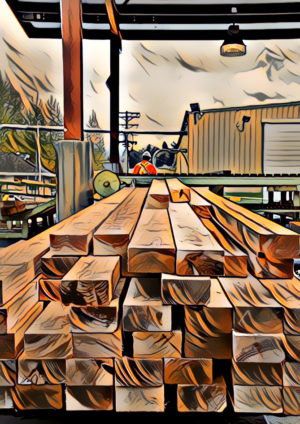 Nicolas Schmitt, an economics professor at SFU, highlighted that the province’s economy has shifted from a goods-based to a service-driven model. He said this transition has made the economy more diversified and resilient. With key regions like Vancouver and the Okanagan Valley showing strong growth in service sectors, B.C. is well-positioned to withstand global economic uncertainties and to continue thriving. “This war might affect more interior B.C. than urban B.C. That is a potential problem for the interior. Where those lumber mines and all those goods are being exported. So that creates an urban rural divide.” In a statement provided by Kurt Niquidet president of the B.C. Lumber Trade Council, he said federal parties must collaborate to tackle the ongoing softwood lumber duties and the potential imposition of further tariffs. …While B.C.’s diversified economy offers resilience, the potential impacts on industries like lumber, especially in rural areas, require attention.

 Donald Trump is threatening to use “economic force” to make Canada the 51st American state. While his comments may be reckless, they are in part due to Canada’s over-reliance on the US market in terms of trade. The benefits of international trade are undoubtedly positive. It’s well-established that when countries can produce a product or service more cheaply than others, giving them what’s known as a “comparative advantage,” all other nations engaged will gain from that trade. …But the key challenge Canadian policymakers face is an over-reliance on the US as Canada’s primary market, with 75% of all Canadian exports headed south. …Canada can no longer take easy access to the U.S. market for granted. …Bringing down barriers to trade across Canadian provinces would create conditions that could enable Canadian companies to be more competitive internationally, and beyond the U.S. market in particular.
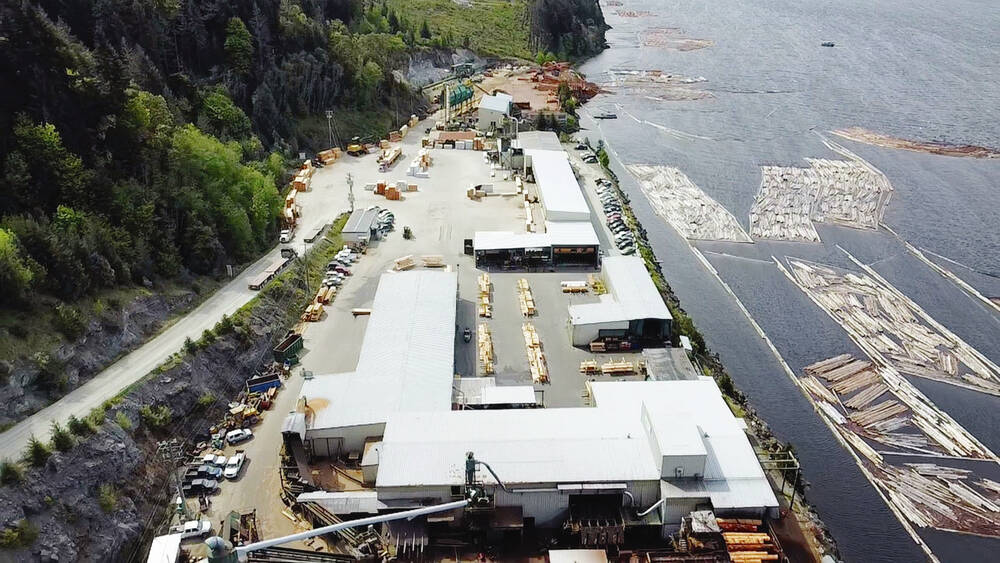



 New Westminster, BC — The Canadian Mill Services Association (CMSA) is announcing that it has completed a purchase agreement with the BC Council of Forest Industries (COFI) to acquire the COFI Quality Control (QC) operations and to merge them into CMSA. This has involved the transfer of the rights and trademarks to use the COFI grade stamps, and the Interior Lumber Manufacturers’ (ILMA) grade stamps as well as the transfer of the quality control employees from COFI to CMSA. As of December 31, 2024 COFI ceases to offer QC services and the former COFI customers who were using these services are encouraged to join CMSA as active Members. With completion of the merger, CMSA will now provide all the necessary Quality Control Services including Educational Training and Support to its active members. CMSA shall continue to be members of the NLGA, CLSAB and ALSC and will continue to represent its members with the Canadian Wood Council.
 Advisors on Trump’s incoming economic team are considering a gradual implementation of tariffs, increasing them incrementally each month. This approach is intended to strengthen their negotiating position while minimizing the risk of sudden inflation, according to sources familiar with the discussions. One concept involves a plan to raise tariffs by 2% to 5% per month, using executive powers granted under the International Emergency Economic Powers Act. The idea is still in its early stages and has not yet been formally presented to Trump, indicating that the strategy is in the initial phase of consideration. Trump has not yet approved of the plan. Supporters include Trump advisors Bessent, Haslett and Miran. [to access the full story a Bloomberg subscription is required]
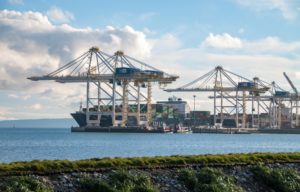 The union representing 45,000 dock workers on the U.S. East and Gulf Coasts and their employers on Wednesday said they reached a tentative deal on a new six-year contract, averting further strikes that could have snarled supply chains and taken a toll on the U.S. economy. The International Longshoremen’s Association (ILA) and the United States Maritime Alliance (USMX) employer group, called the agreement a “win-win.” The deal includes a resolution in automation, which had been the thorniest issue of on the table. …”This agreement establishes a framework for implementing technologies that will create more jobs while modernizing East and Gulf coast ports.” Terms of the deal were not disclosed. ILA and USMX have agreed to continue operating until the contract is ratified. …Employers at the ports stretching from Maine to Texas include terminal operators like APM, owned by Maersk, as well as China’s COSCO Shipping and Switzerland’s MSC.