 VANCOUVER, BC — CO280, a leading developer of large-scale carbon dioxide removal (CDR) projects, today announced a historic offtake agreement with Microsoft from a project that will capture and permanently store biogenic carbon emissions from a U.S. pulp and paper mill. Under the agreement, Microsoft will purchase 3.685 million tonnes of CDR over 12 years. This agreement represents one of the largest engineered CDR purchases to date. The agreement underscores Microsoft’s confidence in CO280’s approach to scaling permanent CDR by retrofitting existing pulp and paper mills to capture biogenic CO2 from boiler stack emissions for permanent geological storage. The capture technology for this project will be supplied by CO280 partner, SLB Capturi. CO280 is developing more than 10 projects, with five high-priority projects poised to deliver CDR by 2030.
- Additional coverage in Trellis: Why Microsoft is investing in a pulp and paper mill
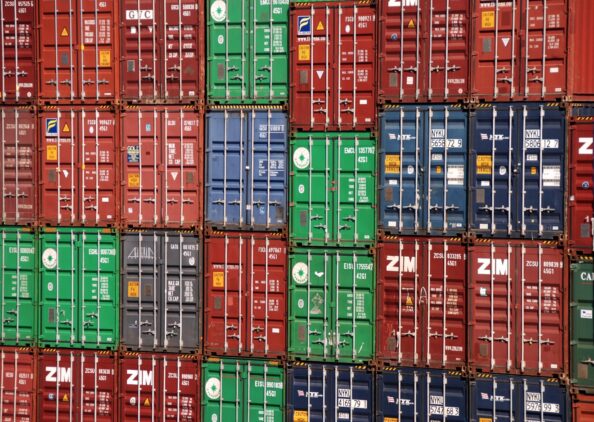 LONDON – The United States has withdrawn from talks in London looking at advancing decarbonisation in the shipping sector and Washington will consider “reciprocal measures” to offset any fees charged to U.S. ships, a diplomatic note said. Delegates are at the UN shipping agency’s headquarters this week for negotiations over decarbonisation measures, aimed at enabling the global shipping industry to reach net zero by “around 2050″. …”The U.S. rejects any and all efforts to impose economic measures against its ships based on GHG emissions or fuel choice,” according to a diplomatic demarche sent to ambassadors by the United States. …”Should such a blatantly unfair measure go forward, our government will consider reciprocal measures so as to offset any fees charged to U.S. ships and compensate the American people for any other economic harm from any adopted GHG emissions measures,” the note from Washington said.
 A new study led by researchers at Washington University in St. Louis and the Missouri Botanical Garden has uncovered a surprising layer of diversity in tropical forests. Not only are the forests populated by a dizzying number of tree species, but each of those species takes a different approach to chemistry, increasing the array of natural compounds that provide important functions for the plants — and potentially for humans. The research helped clarify the ecological and evolutionary forces that make tropical forests such hotbeds of biodiversity. While the team wasn’t specifically looking for compounds that could be useful for humans, their findings underscore the value of tropical forests as natural factories of plant chemicals that could have important uses in medicine and other fields, said Jonathan Myers, a professor of biology in Arts & Sciences at WashU. “Tropical plants produce a huge diversity of chemicals that have practical implications for human health.”
 Last week, Pindstrup – a global supplier of growing media for the horticultural industry – opened a wood fiber plant at its factory in Kongerslev, Denmark. This €4 million investment marks a significant step in Pindstrup’s transition towards a more sustainable future. The company is actively working to reduce the CO2 footprint of its growing media by replacing peat with renewable and circular raw materials. CEO René Gjerding says, “For decades, Pindstrup has incorporated wood fiber into its growing media and has been producing it at our factories in Northern Ireland and Latvia. We are pleased to now bring wood fiber production to our factory in Denmark, using locally sourced, PEFC-certified wood chips. The plant runs on renewable energy, further reducing our CO2 footprint.”
 The island of New Guinea is cloaked in the world’s third-largest rainforest belt, helping the planet breathe by sucking in carbon dioxide gas and turning it into oxygen. Foreign companies have in recent years snapped up tracts of forest in an attempt to sell carbon credits, pledging to protect trees that would otherwise fall prey to logging or land clearing. But a string of mismanagement scandals forced Papua New Guinea to temporarily shut down this “voluntary” carbon market in March 2022. Environment Minister Simo Kilepa told AFP that, with new safeguards now in place, this three-year moratorium would “be lifted immediately”. “Papua New Guinea is uplifting the moratorium on voluntary carbon markets,” Kilepa said.
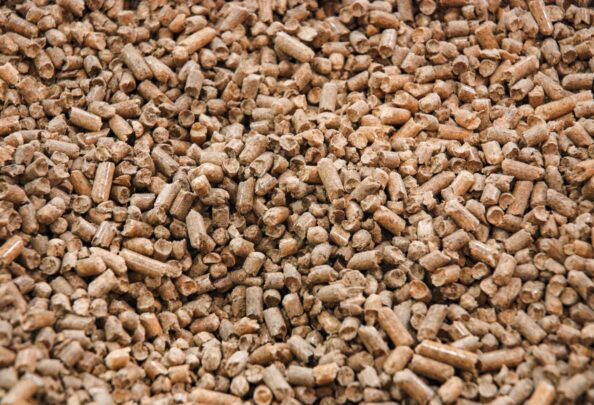 After over three hours and two executive sessions on Tuesday, the Mississippi Department of Environmental Quality’s Permit Board denied Drax’s application to become a “major” source of Hazardous Air Pollutants, or HAPs. The new permit would have allowed the company’s wood pellet facility, Amite BioEnergy, to release more potentially harmful air pollutants than what its currently allowed under state regulation. …Drax officials, though, told the Permit Board that in order to produce as much as its permit allows, it would need to exceed the “minor” source allowance for HAPs. After some confusion among the Permit Board over whether Drax’s actual output of HAPs would increase, Whitlock clarified: “There is a guarantee that actual emissions will increase (if Drax was given “major” source status), and based on my speculations, (HAP emissions) could very likely increase above those thresholds (that Drax currently has to stay under).”