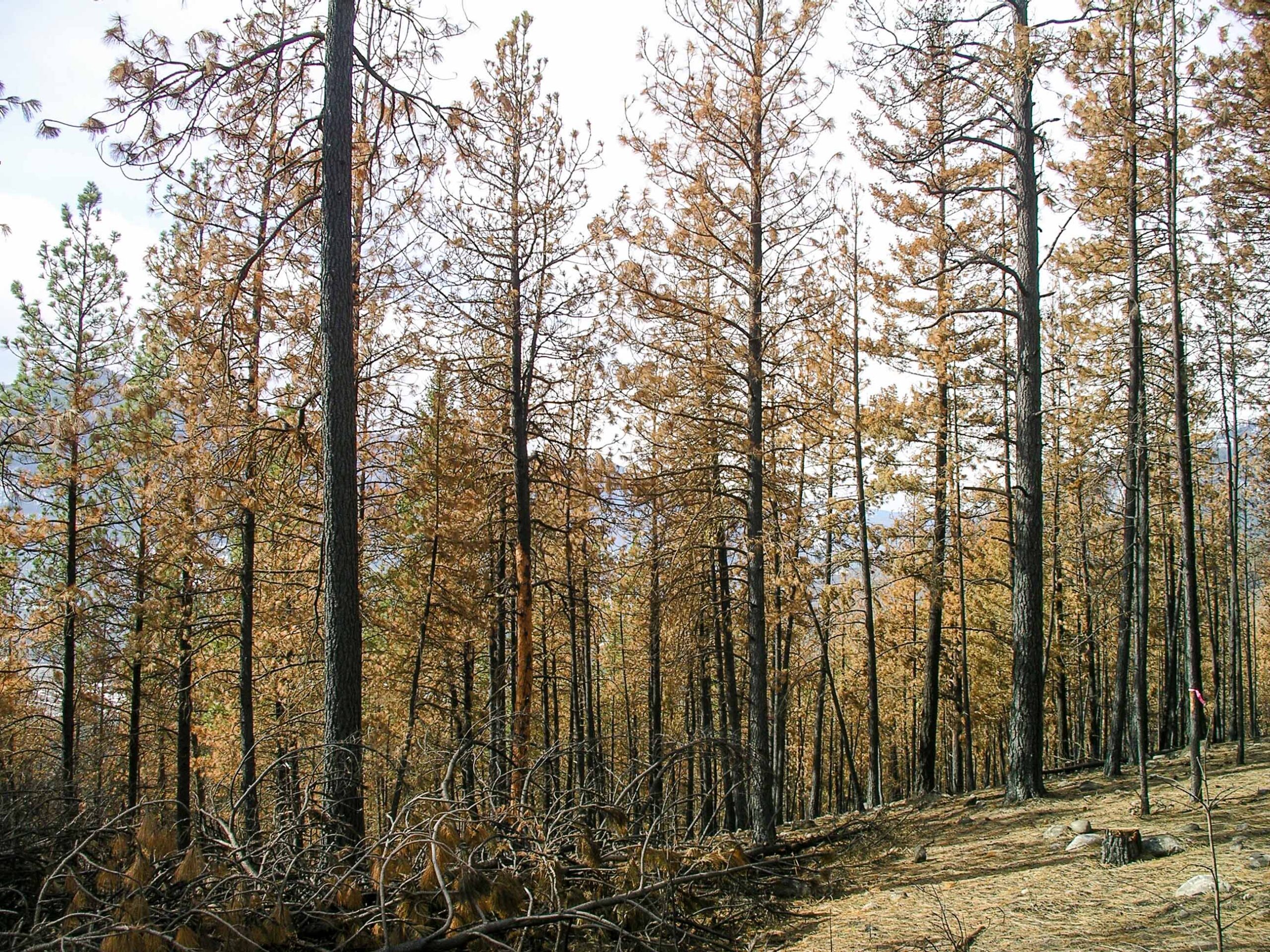
 A new satellite-based study indicates widespread drought stress and insect damage across the Apache-Sitgreaves National Forests, with significant implications for wildfire risk, forest management and long-term ecosystem change. Researchers found roughly one in four ponderosa pines are experiencing moderate to high levels of drought and insect damage. More than half show signs of “fading,” a condition tied to prolonged moisture loss, though the severity varies by ranger district. The study analyzed tree “greenness” across the forest, a key indicator of health derived from satellite imagery. The Apache-Sitgreaves spans roughly 6 million acres in northern Arizona, including the White Mountains, among the state’s wetter regions. Despite that reputation, the findings reinforce a growing body of research showing that decades of drought, increasingly severe wildfires and bark beetle infestations are reshaping these forests. In some areas, ponderosa pine stands have failed to recover following high-intensity fires, particularly where drought stress was already severe.