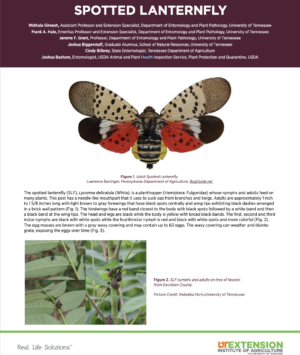
 The invasive spotted lanternfly, which can cause damage to many plants, has been detected in a few Tennessee counties. …The adult female spotted lanternfly lays egg masses in September through November on host plants and other smooth surfaces, such as railroad ties, rocks, lumber, downed limbs and logs. Egg masses survive cold winter temperatures, and the first instar nymphs begin emerging in the spring. The nymphs mature through the spring and early summer before becoming adults in the beginning of June. The first, second and third instars feed on a variety of host plants. The fourth instars and adults prefer tree of heaven, grapes, black walnut, silver maple, red maple and willow. …“The best way to control spotted lanternfly outbreaks is to prevent them,” said Midhula Gireesh, University of Tennessee Extension specialist in the Department of Entomology and Plant Pathology. For more, refer to the UT Extension publication Spotted Lanternfly.