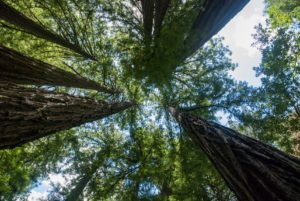
 CALIFORNIA — Tall trees are generally associated with high-biomass forests. This is particularly true for forests dominated by Sequoia sempervirens, the world’s tallest tree species. Extreme decay resistance, the ability to survive high-severity fires, shade tolerance and prolific trunk reiteration (resprouting) make the species unique, allowing tall redwood forests to accumulate more biomass and store more aboveground carbon than any other vegetation type. …A new study published in Forest Ecology and Management combined ground-based measurements and repeated (2007–2025) airborne laser scanning (ALS) to inventory the tallest redwoods and quantify forest biomass. …Forest biomass changed substantially over time. Large areas of primary forest gained biomass during the prestorm interval (2007–2022), averaging 10–13 metric tons per hectare annually. …These ALS-derived estimates of biomass change may be somewhat exaggerated. …Nonetheless, the amount of crown damage probably rivaled losses of live-tree biomass to treefall in California’s Redwood National and State Parks.