 Sector-specific trade agreements give way to broader negotiations, as Canada and US prepare for mid-January free-trade talks. In related news: Canada invests in Sault Ste. Marie’s port; BC invests to support wood product diversification; Western Forest secures government support for its Chemainus mill; Maine firms get access to $32M in federal grants; Domtar receives air permit in North Carolina; Mercer pursues carbon capture in Alberta; and Suzano expands fluff pulp production Brazil. Meanwhile: US lumber capacity remains flat; and the Softwood Lumber Board generates incremental demand.
In Forestry news: the Rainforest Action Network resigns from Forest Steward Council; a BC judge rules on Stanley Park logging approvals; Alberta considers lifting hunting ban on grizzlies; a US lawsuit challenges change to environmental reviews on public land; and US West leaders express concern over Trump’s wildfire mitigation cuts.
Finally, biologists find a new species of pumpkin toadlet in Brazil’s cloud forests. And Monday is our last news day before the Xmas break.
Kelly McCloskey, Tree Frog News Editor

 Canada and the U.S. will launch formal discussions to review their free trade agreement in mid-January, the office of Canadian Prime Minister Mark Carney said. The prime minister confirmed to provincial leaders that Dominic LeBlanc, the country’s point person for US-Canada trade relations, “will meet with U.S. counterparts in mid-January to launch formal discussions”. …Carney met with the leaders of Canada’s provinces on Thursday to give them an update on trade talks. Canada is one of the most trade-dependent countries in the world, and more than 75% of Canada’s exports go to the country’s southern neighbor. But most exports to the US are currently exempted by USMCA. …Canada is the top export destination for 36 US states. Nearly $3.6 billion Canadian worth of goods and services cross the border each day. About 60% of US crude oil imports are from Canada, as are 85% of US electricity imports.
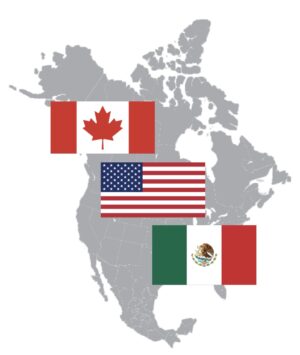 Prime Minister Mark Carney said Canada probably won’t reach a near-term deal with the United States to lower tariffs on sectors such as steel and aluminum, and negotiations are likely to be rolled into next year’s review of the US-Mexico-Canada Agreement. Canada and the US were close to a pact on metals tariffs, but President Donald Trump then terminated talks in October. …“My judgment is that that is now going to roll into the broader CUSMA negotiation, so we’re unlikely, given the time horizons coming together, to have a sectoral agreement,” Carney said on Thursday. “Although if the United States wants to come back on that in those areas, we’re always ready there — we’re very ready.” …Canada is “very ready on forest products to strike an agreement,” the prime minister added. The U.S. has placed roughly 45% duties and taxes on imports of Canadian softwood lumber, to the frustration of US homebuilders.
 CHEMAINUS, BC — Western Forest Products’ value-added division in Chemainus is receiving up to $7.5 million from the province to add two new continuous dry kilns to its manufacturing operations. The investment, from the province’s BC Manufacturing Jobs Fund, will allow WFP’s facility on River Road to expand the production of high-value products and create new opportunities for second-growth hemlock to produce higher-value products, as well as increasing the stability of the forest company’s operations on Vancouver Island. Minister of Jobs and Economic Growth Ravi Kahlon and Forest Minister Ravi Parmar joined Steven Hofer, CEO of WFP, to make the funding announcement, which is expected to strengthen Vancouver Island’s manufacturing sector. In addition, the ministers announced that
  Nine more forestry companies are being supported to modernize, innovate and diversify their product lines and fibre sources to make more high-value, made-in-BC products, and help protect and create jobs. “It’s no secret our forestry sector is facing many challenges, making these investments timely,” said Minister of Forests, Ravi Parmar. …Through the BC Manufacturing Jobs Fund, the Province is contributing $2.5 million to plan or complete capital projects. For example, Canadian Bavarian Millwork and Lumber in Chemainus will receive as much as $1.4 million to help build its new facility. …Additional investments include:
 The Court of International Trade on Dec. 18 again
 NORTH CAROLINA — After reviewing public comments, the
  Maine timber companies are in line to receive substantial incentives to manage forests and grow healthier, more valuable trees. A $32 million award to the New England Forestry Foundation was recently finalized by the US Department of Agriculture. The funding package, through the Advancing Markets for Producers initiative, replaces similar funding provided under the “climate smart commodities” program. While there are some adjustments to the program, it achieves the same purpose, according to the foundation Deputy Director Andi Colnes. The grant will largely subsidize commercial and pre-commercial thinning, Colnes said. It will also provide funding to expand market opportunities, particularly for mass timber construction, she added. …According to Colnes, the program is able to cover about 50,000 acres of New England forests, mostly commercial timberland in Maine. The foundation said 23 commercial, conservation and public forest owners are already enrolled in the project.
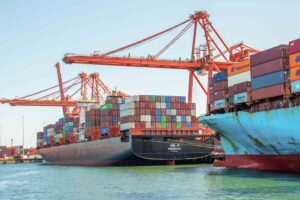 President Trump’s tariff and trade policies dominated the world’s political discourse through 2025. …The good news is that the BC economy has been fairly resilient through 2025. …BC trade resilience can also be attributed to a broader export commodity mix, dominated by forestry, agricultural and seafood products, as well as mining and oil and gas. …Forest products were tagged with a sectoral tariff of 10 per cent in October 2025, on top of new anti-dumping and countervailing tariffs on softwood lumber. …This has put tremendous pressure on an industry. …It’s difficult to disentangle the impact of tariffs from overall adverse trends in the BC forest industry, many mill closures and curtailments in recent years. BC forestry exports are among the most exposed to the US market, with about 75% of forestry exports headed south. Exports of softwood lumber were down 26% in August 2025 compared to August 2024. Pulp and paper exports were also down 9% on a year-to-date basis compared to 2024.

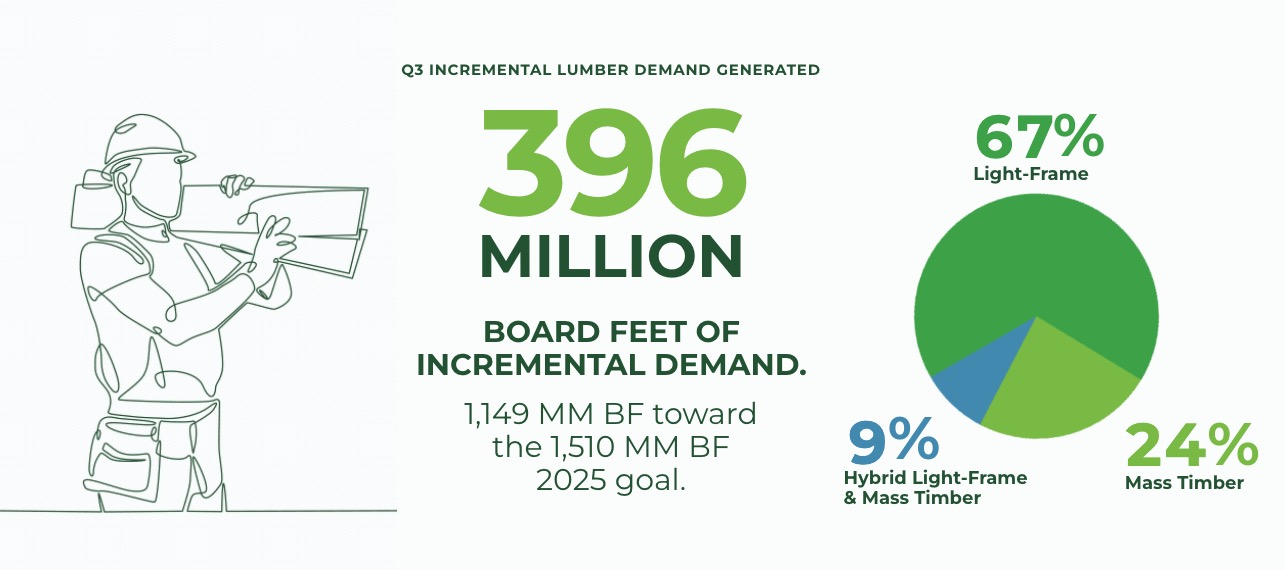 The Softwood Lumber Board has released its Q3 2025 Report, highlighting significant progress tied to its new strategic plan. This quarter, SLB-funded programs advanced a coordinated strategy centered on high-opportunity sectors—1-8 story multifamily, commercial, K-12 education, and the fast-growing industrial segment—while accelerating project conversions, strengthening building code support, scaling post-secondary education, and expanding outreach in key cities.
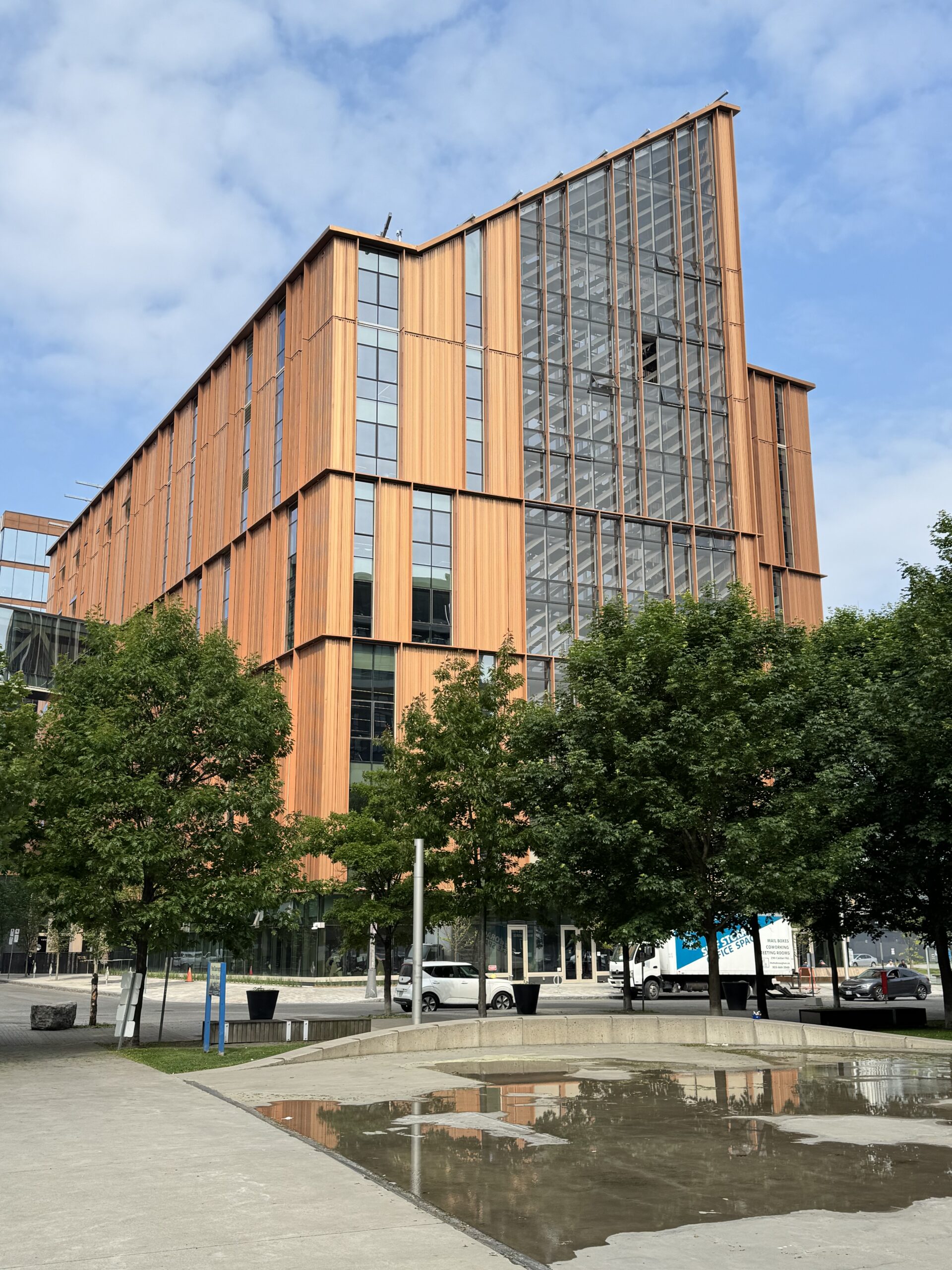 EDMONTON, AB – Celebrated for its pioneering mass timber design and construction, commitment to safety and collaborative excellence, Limberlost Place has been named the Global Best Project of the Year by Engineering News-Record (ENR). In addition to PCL Construction and partners taking home the top honour, PCL was also awarded ENR’s Global Best Projects Award for Limberlost Place in the Education/Research category. …Ontario’s first institutional building of its kind, George Brown Polytechnic’s Limberlost Place has set a new precedent for mass timber construction as a model for sustainable, green building innovation. Located in Toronto, Ontario, the 10-story mass timber, net-zero educational facility integrates first-of-its-kind solutions including: Groundbreaking slab band structural system that advances the use of mass timber in multi-storey buildings; North America’s largest mass timber columns soaring three stories tall; and a striking mass timber feature stair, spanning levels three to five as a centerpiece of architectural design.
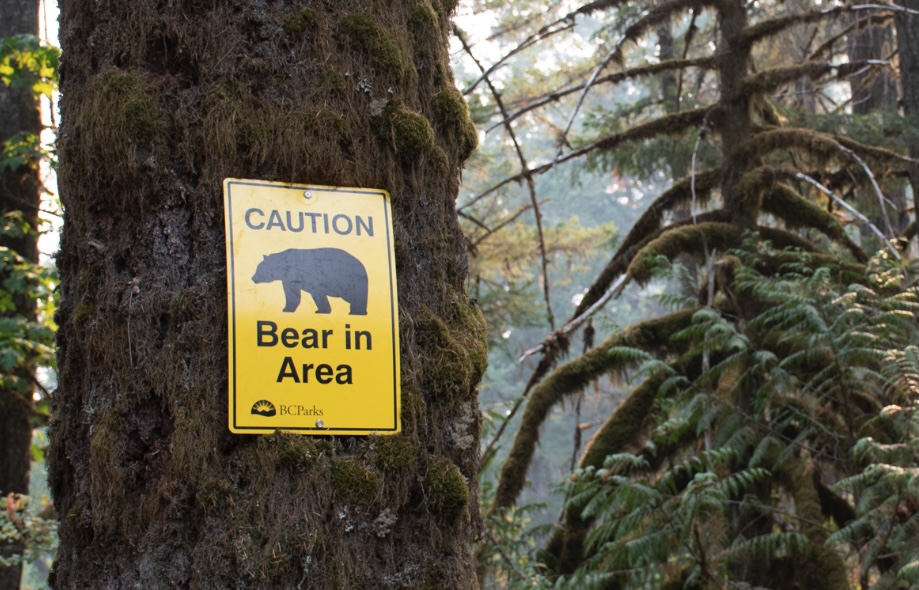 The Alberta government isn’t ruling out lifting a near 20-year ban on hunting grizzly bears, a divisive issue between conservationists, politicians, and hunters. Forestry and Parks Minister Todd Loewen says all options are on the table following several recent bear attacks and close encounters in the province. Grizzlies are being spotted in parts of the province they haven’t inhabited in more than a century. “There’s no plans at this time yet. We don’t want to take anything off the table. I think it would be irresponsible not to have all options on the table so we’re looking at everything,” Loewen said. There has been a ban on hunting grizzly bears in Alberta since 2006. …Loewen says there are several factors that would have to be considered …including the number of bears in the province and recent grizzly-human interactions, and their expansion into the foothills.


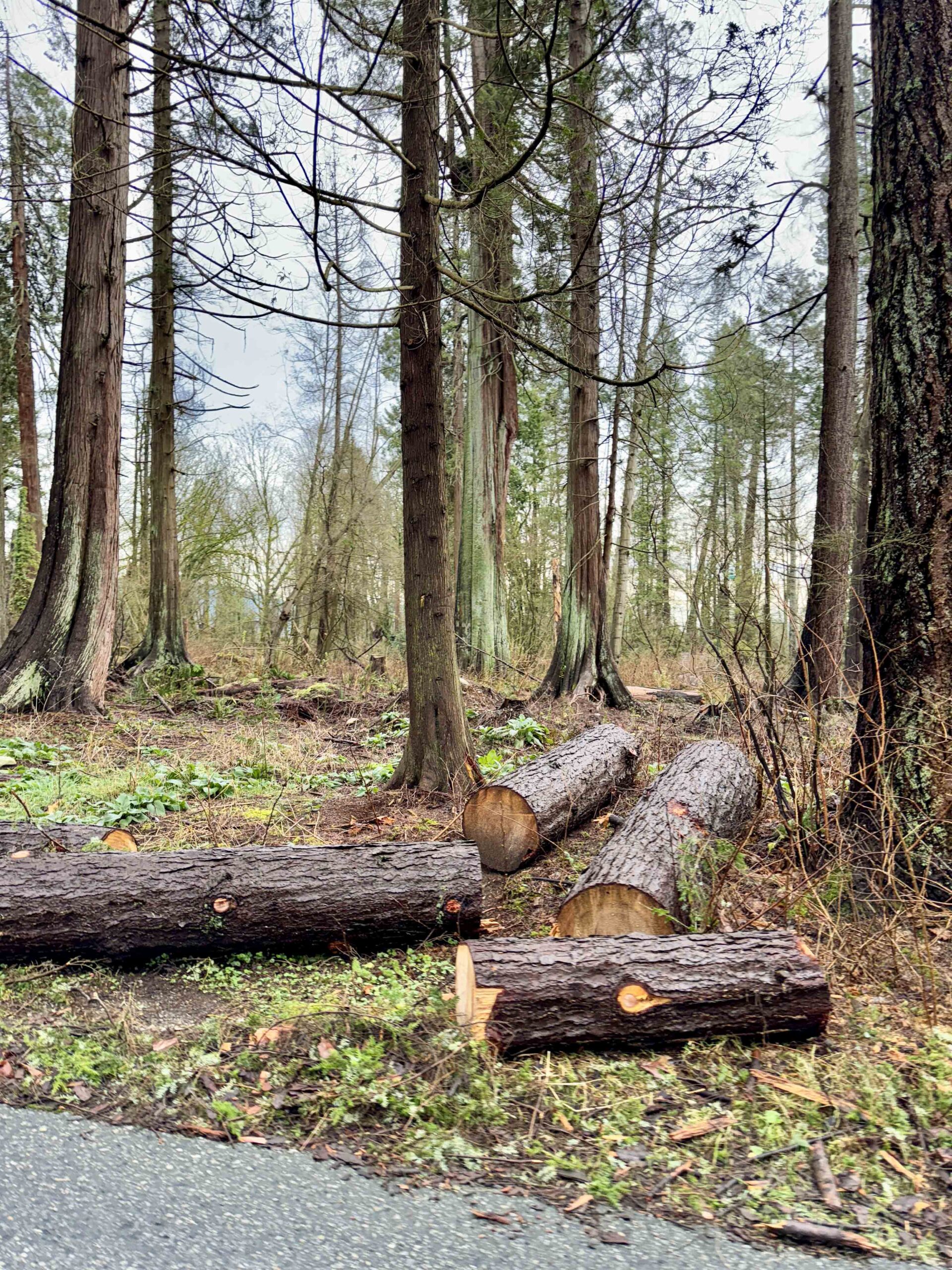 A B.C. court has issued a rebuke to the City of Vancouver, declaring it overstepped its authority when it authorized the cutting down of thousands of trees in Stanley Park without approval from the park board. Handed down Dec. 17, the decision from B.C. Supreme Court Justice Jasvinder Basran analyzed a multi-stage approval to cut down thousands of trees in Vancouver’s largest park. In 2023, the city entered into an $1.9-million supply agreement with B.A. Blackwell and Associates to remove an initial 7,000 trees over six months [due to] a hemlock looper moth infestation… According to Basran’s judicial review, the initial decision to cut down trees in Stanley Park … was made without the proper authority. …The judge found the city circumvented the park board’s authority in the first phase of the tree removal, but that it went through the proper channels to approve the second and third stages of the work.
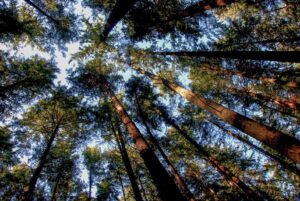 Over an hour of discussion followed BC Timber Sales’ (BCTS) presentation at the Sunshine Coast Regional District’s (SCRD) Dec. 11 committee of the whole meeting. …BCTS representatives, a delegation at the committee meeting, faced a direct ask from Gibsons area alternate director Annemarie De Andrade to pause harvesting activities on TA0519, in the Gibsons aquifer recharge area pending further study of the impacts of such logging. “We can continue to listen and continue with a light footprint, but we cannot pause,” was the response from BCTS’s Chinook Business Area timber sales manager Stacey Gould. She explained BCTS has a role as a revenue generator for the province. …That “lighter” BCTS footprint… is havesting about half of the volume it is permitted to on the lower Sunshine Coast. To make up for that, higher levels of harvesting need to be undertaking in other locations.


 Cutting red tape and streamlining project work have been marching orders for the U.S. Forest Service throughout the first year of the second Trump administration. Last week, a federal court ruling on a Greater Yellowstone landscape project showed how far those directives can backfire. …Initially proposed in 2020, it received a decision notice in 2023. Opponents referred to it by its acronym, SPLAT, and promptly sued to block it. In his December 11 opinion, U.S. District Judge Donald Molloy wrote that South Plateau failed to meet requirements of the National Environmental Policy Act, National Forest Management Act and Endangered Species Act. But he added the “primary challenge concerns the project’s conditions-based management approach.” Molloy generally agreed with the plaintiffs’ concern. “This approach,” he said, “conflates a promise of future statutory compliance with actual compliance.”
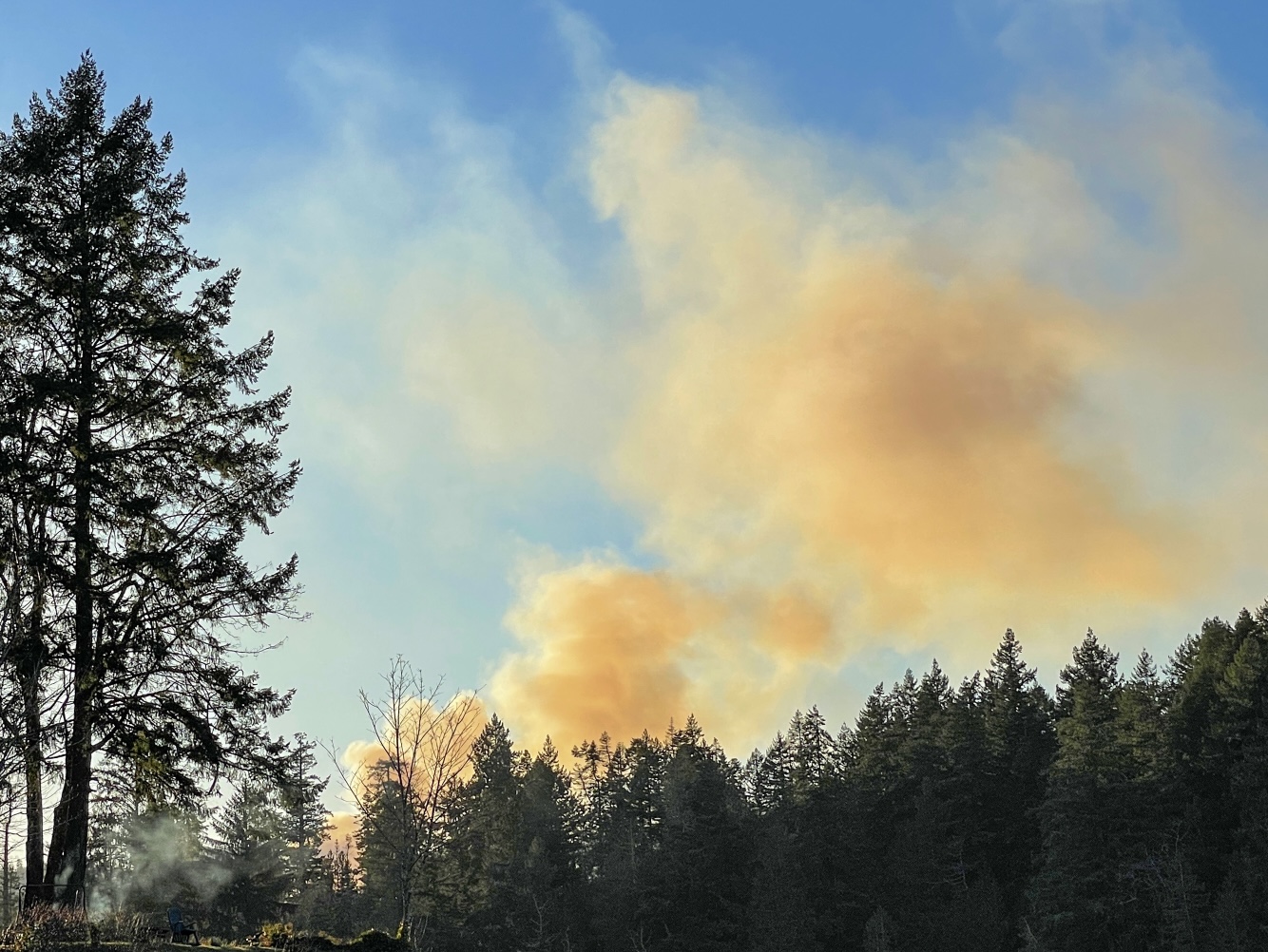 Wildfires are not always purely destructive. In many forests, fire can clear out built up dead material, return nutrients to the soil, and help ecosystems reset. For more than 100 years, the United States has spent billions of dollars on fire suppression to protect people, homes, and sensitive environments. But putting out too many fires can also prevent landscapes from getting the burns they need, allowing extra fuel to accumulate and raising the risk of larger fires later. New research … reports that nearly 38 million hectares of land in the western United States are historically behind on burning. The researchers describe these areas as being in a “fire deficit.” …”Conditions are getting so warm and dry that it’s causing huge amounts of fire compared to the historical record,” said Winslow Hansen, director of the Western Fire and Forest Resilience Collaborative and scientist at Cary Institute of Ecosystem Studies.
  NEW YORK, NY – Mercer International announced that its subsidiary, Mercer Peace River Pulp (MPR), and Svante Technologies (Svante) have commenced operation of a previously announced carbon dioxide (CO₂) capture demonstration unit at the Mercer Peace River pulp mill in northern Alberta. The pilot project is designed to evaluate Svante’s solid sorbent carbon capture technology on biogenic CO₂ emissions from the mill’s recovery boiler flue gas. As a cost-efficient step, this stage builds on the previously announced Front-End Engineering and Design Phase 2. …“Commissioning this demonstration unit… allows us to evaluate carbon capture performance in our operating environment and gather practical data on what would be required for any future scale-up,” said Bill Adams. “The results from this on-site demonstration will help us evaluate the decarbonization potential of this technology for biogenic emissions and inform longer-term planning across our pulp operations.”