
2025 is a ‘supply-side story’, says ERA’s Kevin Mason—as weak demand plagues all forest product segments. In related news: Russ Taylor highlights the looming 34.5% US duties on Canadian lumber; Metsä warns of a weak Q2 amid poor pulp demand; US homebuilders continue to consolidate; Fannie Mae sees housing sentiment slip; and 18 buyers have eyed Pixelle’s shuttered Ohio mill. Meanwhile: Ontario invests in forest biomass, Oregon researchers show that wood resists microbes better than plastic; and Wisconsin pulp mills are encouraging women to the workforce.
In Forestry/Wildfire news: BC’s wildfires fuel debate over thinning vs clearcutting, as new guides on hazard assessment and abatement are released; Ontario’s largest fire is now being held; the massive post-fire tree-clearing effort in Jasper; and Washington protects cool water in forest streams. Meanwhile: wildfire smoke brings a forgotten danger to the arctic; and solving one of forestry’s safety challenges—phase congestion.
Finally, a PBS video explores stone tree trunks in Canada’s arctic.
Kelly McCloskey, Tree Frog News Editor

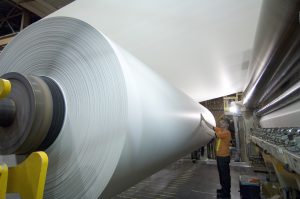 CHILLICOTHE, Ohio — Possibly 18 potential buyers have looked at the Pixelle facility before Thursday’s deadline to make offers. And again, the weekly Monday meeting of the ‘paper mill response team’ was in executive session to be free to hash out plans – as reminiscences from employees, as well as rumors about what is happening there and what is being removed, fill the internet. Mill operator Pixelle – based in Pennsylvania, and owned by H.I.G. Capital of Miami, Florida – has been cooperative with corporate tours of the facility that has been largely shut down. …“The deadline set by HIG for purchase offers to be submitted – July 3 – has passed. To date, no information has been shared with local leaders or regional economic development partners regarding a sale or the future of the mill.
 WASHINGTON, DC – Fannie Mae published the results of its June 2025
  The top ten builders captured a record 44.7% of all new US single-family home closings in 2024, up 2.4 percentage points from 2023 (42.3%). This is the highest share ever captured by the top ten builders since NAHB began tracking BUILDER magazine data on new single-family home closings in 1989. The 2024 share constitutes 306,932 closings out of 686,000 new single-family houses sold in 2024. However, closings by the top 10 builders only represent 30.1% of new single-family home completions, a wider measure of home building that covers not-for-sale home construction. Also of note, the top 15 builders accounted for more than half of all closings (51%) for the first time ever in 2024.
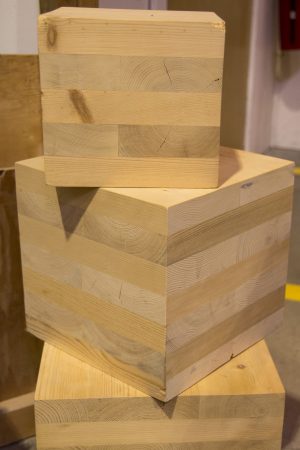 Picture a hospital and you might imagine concrete, stainless steel or plastic. But University of Oregon researchers hope to make wood—often overlooked in health care facilities—more commonplace in those settings. Exposed wood, they’ve found, can resist microbial growth after it briefly gets wet. During their study, wood samples tested lower for levels of bacterial abundance than an empty plastic enclosure used as a control. “People generally think of wood as unhygienic in a medical setting,” said assistant professor Mark Fretz, co-director of the UO’s Institute for Health in the Built Environment and principal investigator for the study. “But wood actually transfers microbes at a lower rate than other less porous materials such as stainless steel.” In a
  Nationwide, women made up 26.4% of the roughly 775,000 people who worked in the paper manufacturing and printing industry in 2021, according to the U.S. Bureau of Labor Statistics. At pulp, paper, and paperboard mills, they made up 14% of positions. That’s what brought the Wisconsin Paper Council and Ahlstrom — a global Finnish company that produces specialty papers and packaging at five plants in Rhinelander, Mosinee, Kaukauna, De Pere and Stevens Point — gifted $20,000 to establish the program in 2023. In 2024, Ashman received $1,000 from the program after graduating from Appleton East High School. Now, at 19, Ashman works as an intern with Thilmany mill in Kaukauna, helping with environmental compliance and coordinating cleanup efforts along the Fox River. The scholarship was used to help pay for her college tuition. She said what was even more valuable was the internship opportunity she landed at the award-giving reception in 2024.
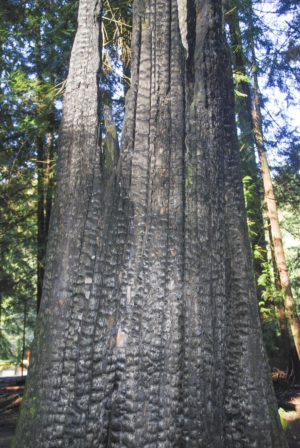 It’s a widely-accepted mystery: whether or not a tree that falls in the forest makes a sound. But what about the riddle that Jasper National Park officials were faced with last year: If hundreds of thousands of burned trees are down in high visitor use areas, who clears them away? Since the Jasper Wildfire Complex razed 33,000 ha of Jasper’s forests last July, Lethbridge’s Adam Ross and his team of arborists, foresters, danger tree specialists and wildlife tree assessors, have been cutting, pruning, clearing, mulching, sawing, chipping and generally making passable the area’s roads, right-of-ways and trails. “Bush surgeons, that’s who we are,” says Ross, who owns and operates Rossco’s Tree Service. Ross’ company has been contracted to clear all of Jasper’s campgrounds, day-use areas and roadways impacted by the fire. The enormity of the crews’ task is difficult to put into perspective, and not just because of the sheer volume of trees to be cleared.

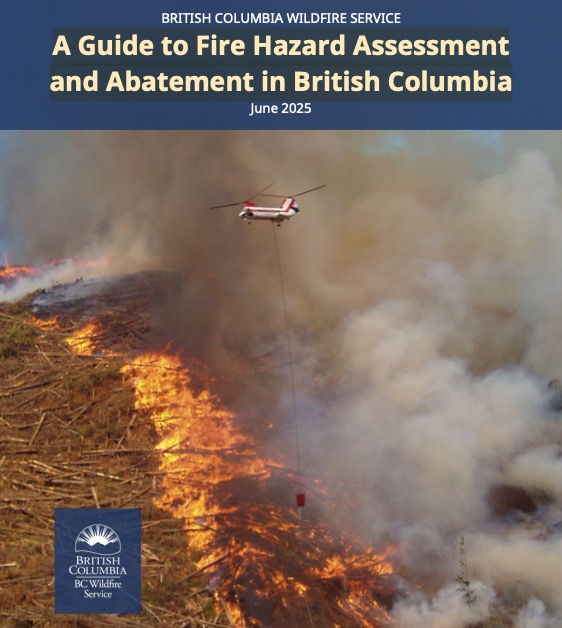 Fire hazard assessments and hazard abatement are key activities in reducing the potential threat of wildfires arising from fuels left on the land base following industrial activities. Under the Wildfire Act a person carrying out an industrial activity or prescribed activity is required to assess and abate fire hazards as necessary. The BC Wildfire Service has developed
 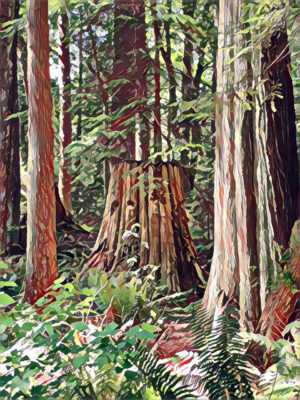 Our many stunning hiking and walking trails in the Columbia-Pacific region offer locals and visitors alike wondrous views of forests of many different stages of succession, from recent clearcuts attempting to come back to life, to ancient old growth stands that somehow avoided the ax and the saw. The beauty of our area is one of its most valuable assets — so it may seem odd to some people that these forests include significant numbers of dead trees. Some call them ugly, while others refer to them as beautiful, but they do in fact have formal names. A standing dead tree is known as a snag, but once it falls to the ground it is a nurse log, so named because its rotting wood nurses young plants and fungi in their first years of life. One could also refer to a decaying stump covered in mosses, lichens, and other green growing things as a nurse stump.
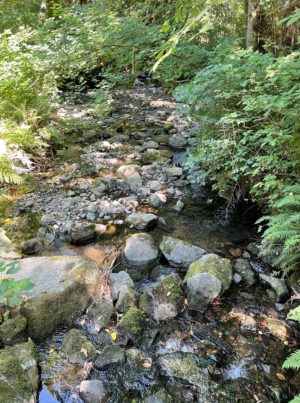 Streams that wind through Western Washington’s forests are essential habitat for frogs, bugs, and lots of other tiny critters. These streams are also a critical source of clean, cool water downstream. This means these streams are an important part of large watershed ecosystems. For the past 26 years, the timber industry, Tribes, environmental organizations, and Washington State agencies have worked together to address pollution and meet water quality standards through the “Forests and Fish Agreement.” The agreement aims to address pollution that can come from forestry activities like logging and forest road construction and maintenance, while maintaining both a viable timber industry and water quality. This coordination primarily happens through the Forest Practices Board, an independent state agency chaired by the elected Commissioner of Public Lands. Rules adopted by the Board are implemented and enforced by Washington’s Department of Natural Resources.
 In the face of a backlash, Utah Republican Sen. Mike Lee has revamped his public land sell-off measure to target only Bureau of Land Management holdings while also declaring, “we’re just getting started.” A reconciliation budget proposal revised by Lee’s Senate Energy and Natural Resources Committee targets BLM land within five miles of undefined “population centers.” It puts checkerboard BLM holdings back on a priority list for his “mandatory disposal” measure and takes lands under permit for grazing off the auction block. The revision would shift 15% of revenue to local governments and conservation. The bill would appropriate $5 million to carry out the mandatory sales, which are designed to be offered within 60 days of passage and regularly thereafter. …But opposition to Lee’s measure comes from “all walks of life,” said Land Tawney, former president and CEO of Backcountry Hunters and Anglers. That includes “Democrats, Independents, Republicans, hunters, anglers, bird watchers, kayakers, ranchers [and] loggers,” he said.
 Forestry Australia has welcomed the release of the Federal Government’s Timber Fibre Strategy, congratulating Minister Julie Collins and the Albanese Government for delivering a timely and important roadmap to support a sustainable, world-leading forest and wood products sector.
  In 2023, the Canada wildfires that incinerated more than 17 million hectares of boreal forest were so hot they … smoldered underground all winter. That heat created vast columns of rising air, carrying dust, volatile organic compounds, and huge quantities of a simple particle with the potential to exacerbate climate change: black carbon. Commonly known as soot, black carbon is a type of pollution formed by the incomplete combustion of fossil fuels or biomass such as trees. It’s a risk to human health, having been linked to respiratory and cardiovascular diseases. It’s also a potent short-term warming agent. Black carbon absorbs copious heat from the sun and, when it coats a layer of ice or snow, reduces its ability to reflect solar energy back into space. …The research on black carbon needs to be updated as more becomes known about the aerosol, and that makes tracking wildfire smoke even more important.
 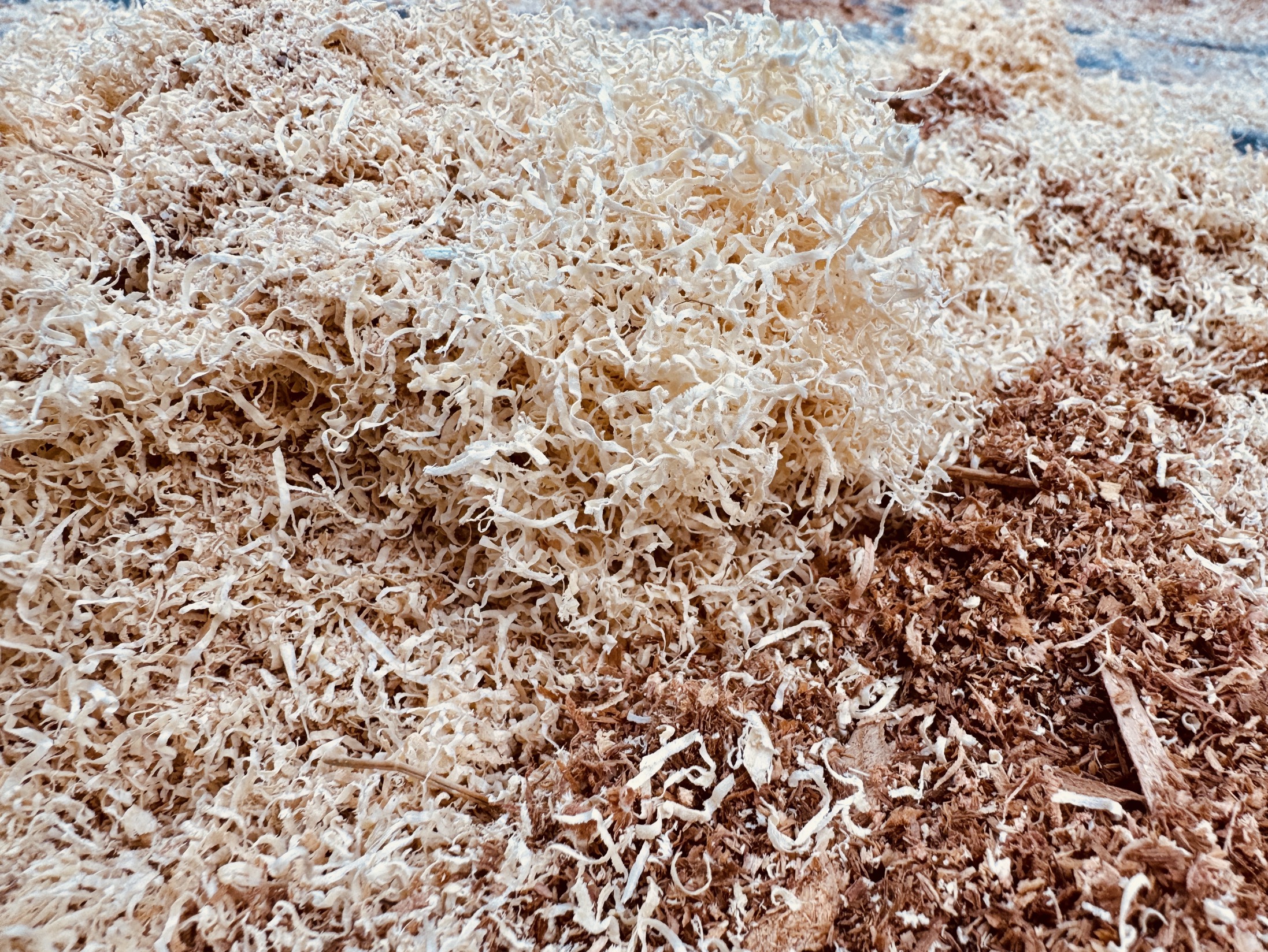 EGANVILLE, Ontario — The Government of Ontario is protecting workers and jobs in the forest sector by investing over $9.1 million in five research, innovation and modernization projects in Eastern Ontario. The investments from the Forest Biomass Program will help boost Ontario’s forest sector’s competitive advantage by creating new jobs, increasing productivity and opening up opportunities for revenue streams in new markets. …The government’s investment is supporting projects related to underused wood and mill by-products, known as forest biomass. …These projects will help create good-paying local jobs while supporting the delivery of high-quality, made-in-Ontario products to market at a lower cost. In addition, they will strengthen Eastern Ontario’s economy by creating added demand for the harvesting, hauling and trucking industries, and develop new opportunities for Indigenous communities to participate in the growing forestry industry.
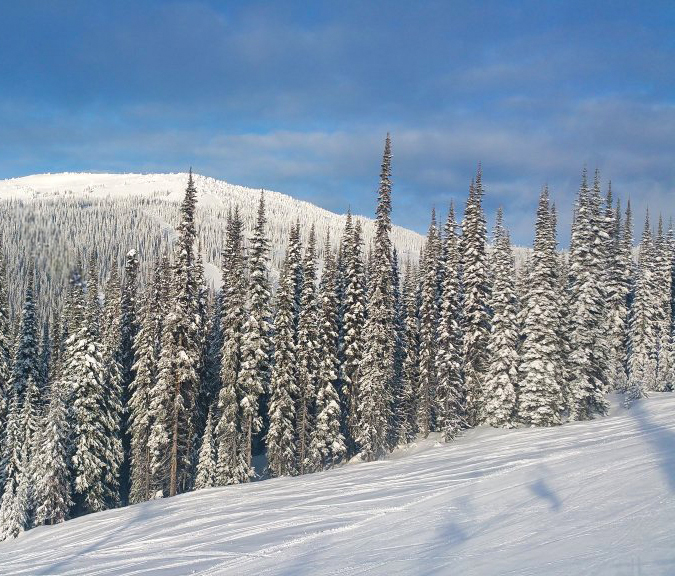 Many forests are losing their winter snowpack as global temperatures rise, and that could substantially slow their growth – and reduce the amount of carbon they remove from the atmosphere. Current projections “are not incorporating that complexity of winter climate change, so they are likely overestimating what the future carbon storage will be”, says
 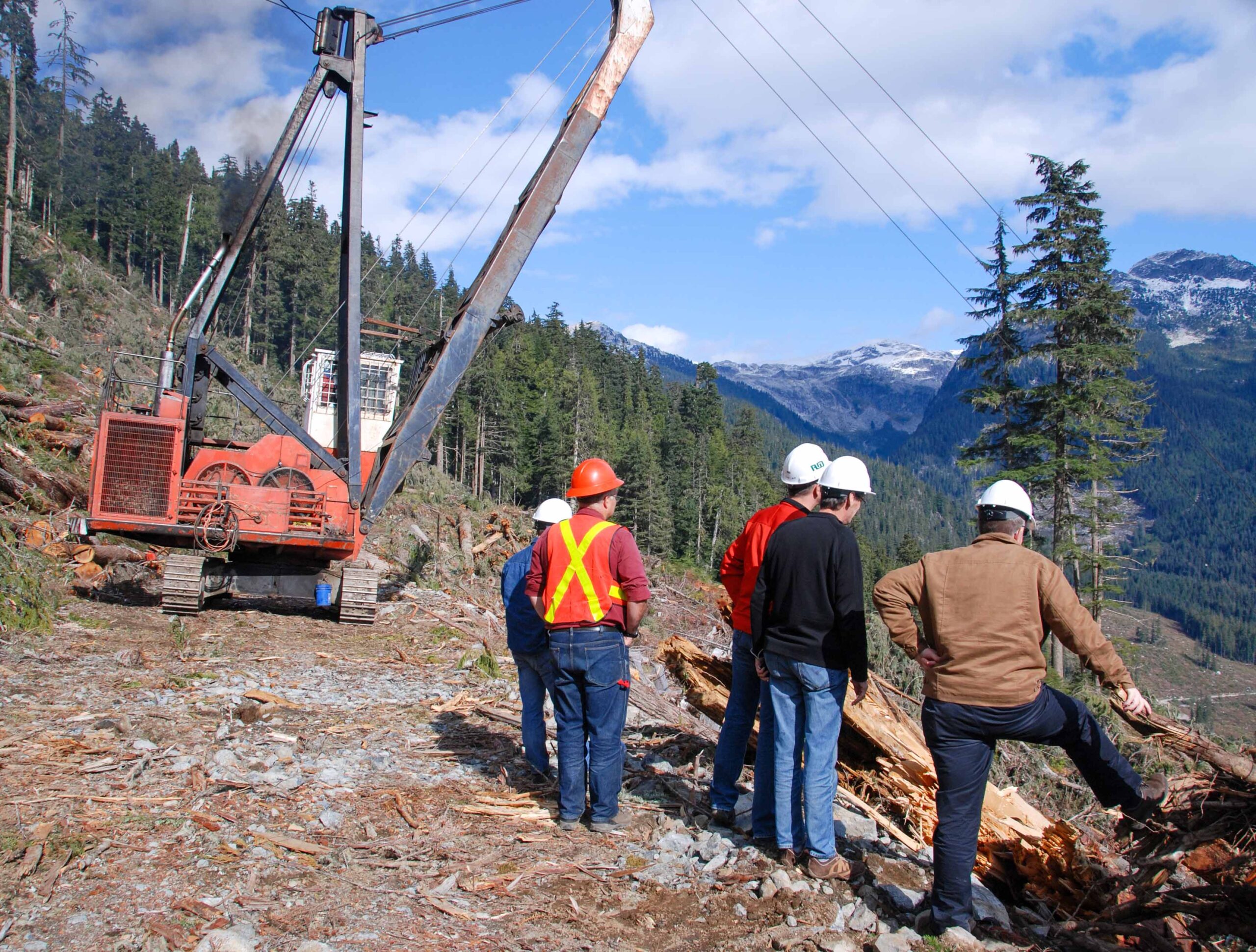 Overlapping work activities are one of forestry’s most complex safety challenges; without proper controls, phase congestion can pose serious hazards to workers. However, with proper management, forestry operations can achieve safe, efficient phase integration. “Preventing injuries and fatalities takes ongoing commitment to coordinated planning, qualified supervision, worker training, and clear communication, says Tom Pawloski, manager of prevention programs and services at WorkSafeBC. Phase congestion occurs when multiple harvesting phases overlap in the same or nearby area, often due to insufficient time or distance between phases. It often builds gradually and can go unnoticed until a serious incident occurs. …When phases aren’t properly coordinated, workers face greater risks of being struck by or caught between equipment or missing other hazards. …Safe phase integration begins before work starts. …”Phase congestion doesn’t always show up right away … staying proactive, adjusting plans as conditions change, and maintaining clear communication is essential to keeping workers safe,” Pawlowski says.
 Ontario Forest Fires says there are now six forest fires in the northeast region after four new ones were discovered Monday. One of the fires is under control while the other five are being held, the group said in its daily update on the area’s forest fire situation. “The fire hazard is low across the central and southern section of the region and moderate to high with a few pockets of extreme values across the northern section of the northeast region,” the update said. Wildland fires can affect communities when they occur in or near neighbourhoods near forested areas. The FireSmart program offers tangible tips on how to mitigate the risk of wildland fires spreading to your home, cottage, or community. “Aviation, Forest Fire and Emergency Services would like to remind the public to use caution when performing any outdoor burning,” the update said.
 The province’s biggest-ever forest fire is now considered unlikely to spread beyond its existing boundaries. The 196,000-hectare Red Lake 12 was declared “being held” by the Ministry of Natural Resources on Sunday. The MNR described it as “a significant milestone” for the fire that prompted the evacuation of both Deer Lake and Sandy Lake First Nations. Eighteen firefighting crews supported by seven helicopters are still assigned the task of bringing the fire under complete control, but some other equipment has now been demobilized. Logistic support staff will be shipping firefighting apparatus out of Deer Lake and Sandy Lake over the next few days.